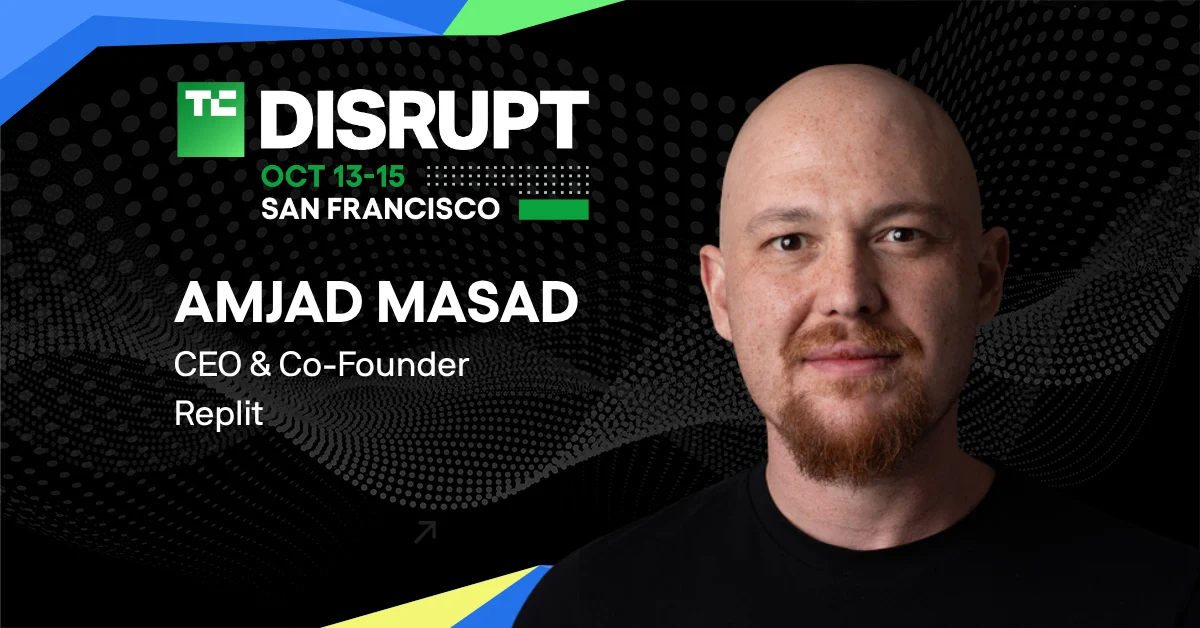
Replit, a platform that has strategically positioned itself at the nexus of this evolutionary shift, embodies much of the discussion Masad is expected to lead. His appearance at TechCrunch Disrupt, a premier event in the global startup ecosystem, promises to delve deep into the intricacies of this new era of programming, exploring how the democratization of development tools through AI is fostering a new wave of entrepreneurship and innovation. Attendees will gain insights into how the rapid advancements in AI are not just augmenting existing development processes but are fundamentally redefining what it means to be a programmer and how software is built, distributed, and monetized.
The AI Revolution: Democratizing Development and Redefining Roles
The past few years have witnessed an unprecedented surge in AI capabilities, particularly in generative AI and large language models (LLMs), which have found immediate and impactful applications in software development. Tools capable of generating code, debugging, refactoring, and even designing architectural components are becoming standard in many development workflows. According to a recent industry report by McKinsey & Company, the global market for AI in software development is projected to exceed $50 billion by 2027, growing at a compound annual growth rate (CAGR) of over 35%. This growth is fueled by increasing adoption rates among both professional developers and a burgeoning community of "citizen developers" – individuals without formal programming training who can now prototype and launch applications.
Surveys indicate that over 60% of professional developers currently use AI-powered coding assistants, with adoption rates projected to climb to over 85% within the next two years. The perceived benefits are substantial: increased productivity, faster time-to-market, and a reduced cognitive load, allowing developers to focus on higher-level problem-solving rather than boilerplate code. However, this shift also introduces new complexities. There are growing concerns about the quality and security of AI-generated code, the potential for job displacement, and the ethical implications of relying heavily on automated systems. A TechCrunch article from May 2026 highlighted a trend where "coders are refusing to work without AI," signaling a rapid and perhaps irreversible integration of these tools into professional practice, while simultaneously raising questions about over-reliance and the potential erosion of foundational coding skills. Masad’s discussion is anticipated to address these multifaceted implications, offering a balanced perspective on how developers can navigate this evolving landscape.
Replit’s Explosive Growth: A Reflection of the AI Era
Replit’s trajectory over the past 18 months serves as a powerful testament to the transformative potential of AI in development. While Masad founded the company a decade ago with a vision for collaborative, in-browser coding, it is the strategic integration of advanced AI capabilities that has propelled Replit into an entirely new growth phase. In 2024, the company reported a modest $2.8 million in revenue. Fast forward to 2026, and Replit’s current run-rate is tracking towards an astounding billion dollars annually, a near 35,000% increase in just two years. This meteoric ascent mirrors the broader proliferation of AI technologies and the companies driving their adoption.
This financial growth is underpinned by substantial investor confidence. Earlier this year, Replit secured a staggering $9 billion valuation, merely six months after achieving a $3 billion valuation. This rapid appreciation underscores the market’s belief in Replit’s value proposition for both non-technical users seeking to bring their ideas to life and professional coders looking for highly efficient, AI-augmented development environments. The platform has evolved beyond simply helping users prototype ideas; it now empowers them to fully flesh out and deploy robust applications, transforming mere concepts into tangible products. This ability to bridge the gap between ideation and execution, facilitated by AI, is a core reason for its explosive user growth and investor interest.
A Brief Chronology of Replit and the AI Integration
- 2014: Replit is founded by Amjad Masad and Haya Odeh, envisioning an online, collaborative IDE (Integrated Development Environment) to make coding more accessible.
- 2015-2022: Gradual growth, focusing on educational users and early-stage developers. Iterative improvements to the core platform, expanding language support and collaboration features. Secures initial seed funding and Series A rounds, establishing a loyal user base.
- Late 2023: Strategic pivot and aggressive integration of large language models (LLMs) and generative AI capabilities into the platform, beginning with code completion and debugging suggestions. This marks the beginning of the "AI era" for Replit.
- Early 2024: Introduction of advanced AI features like "Ghostwriter" (later renamed and expanded), offering context-aware code generation, explanation, and refactoring. User engagement and new sign-ups surge dramatically. Reported revenue for the year stands at $2.8 million.
- Mid-2025: Replit achieves significant milestones in user adoption, surpassing tens of millions of developers. Secures a substantial funding round, pushing its valuation to $3 billion, reflecting strong market validation for its AI-centric approach.
- Late 2025 – Early 2026: Continued rapid expansion of AI functionalities, including AI-powered project scaffolding, natural language to code generation, and automated deployment assistance. The platform becomes a full-cycle development environment for AI-native applications.
- March 2026: Replit’s valuation skyrockets to $9 billion in another funding round, showcasing unprecedented investor enthusiasm and market capture. The company’s annual run-rate begins tracking towards $1 billion.
- October 2026: Amjad Masad to headline TechCrunch Disrupt, discussing Replit’s journey and the broader implications of AI in programming, solidifying its position as a leader in the developer tools space.
TechCrunch Disrupt 2026: A Confluence of Innovation
TechCrunch Disrupt has long been recognized as a pivotal event for the startup ecosystem, drawing over 10,000 founders, investors, and technologists annually. It serves as a critical platform for showcasing groundbreaking innovations, fostering crucial connections, and dissecting the most pressing challenges facing the technology sector. The 2026 edition, with its overarching theme of "Building Sustainable Companies in the AI Era," is particularly relevant given the rapid technological shifts.
Masad’s keynote is just one highlight of an extensive lineup across six stages. These stages will host a diverse array of thought leaders from companies like Amazon, Tether, and numerous burgeoning startups, all addressing crucial questions pertinent to the current technological climate. Discussions will span topics from venture capital trends in AI, ethical AI development, scaling AI-native businesses, talent acquisition in a rapidly changing job market, and the future of various industry verticals transformed by AI. The event provides an unparalleled opportunity for attendees to glean actionable insights, network with peers and potential partners, and stay abreast of the cutting-edge developments shaping the future of technology and entrepreneurship.
Implications for the Future of Programming and Entrepreneurship
The narrative presented by Replit’s success and Masad’s anticipated address carries profound implications for the future. The rise of AI-powered development platforms signals a paradigm shift from traditional coding models. It suggests a future where:
- Democratization of Creation: The ability to turn ideas into functional products will become accessible to a much broader audience, fostering an explosion of innovation from non-traditional backgrounds. This could lead to a significant increase in the number of startups and independent developers globally.
- Elevated Developer Roles: While some routine coding tasks may be automated, the role of human developers will likely evolve towards higher-level architecture, complex problem-solving, ethical considerations of AI systems, and creative oversight. The demand for prompt engineering, AI model integration, and critical thinking skills will intensify.
- New Business Models: Companies like Replit are pioneering new ways to deliver development environments and tools, moving towards highly integrated, cloud-native, and AI-first platforms. This will drive innovation in developer tooling and infrastructure.
- Economic Impact: The enhanced productivity enabled by AI in development could significantly accelerate technological progress across all sectors, leading to new industries, services, and economic growth. However, it also raises questions about the future of work and the need for continuous upskilling.
- Educational Transformation: Programming education will need to adapt rapidly, shifting focus from syntax memorization to conceptual understanding, critical evaluation of AI-generated code, and the responsible application of AI tools.
Industry analysts like Sarah Chen from Quantum Ventures commented, "Replit’s valuation trajectory isn’t just about a single company; it’s a barometer for the entire AI-native software development market. Investors are clearly betting on platforms that not only integrate AI but are built around AI, fundamentally rethinking the developer experience. Masad’s insights at Disrupt will be crucial for understanding where this market is headed next." Similarly, Dr. Emily Thorne, a professor of computer science at Stanford, noted, "The ease with which Replit allows individuals to move from concept to deployment, powered by AI, is fundamentally reshaping our understanding of who can be a ‘developer.’ This has enormous implications for education and workforce development, requiring a re-evaluation of our curricula to prepare students for an AI-augmented future."
Sustaining Momentum: The Path Ahead
The question that naturally arises is whether Replit can sustain this extraordinary momentum. A $9 billion valuation, achieved in such a short span, places immense pressure on the company to continue innovating and expanding its market reach. The competitive landscape for developer tools is fierce, with established giants and new startups constantly vying for market share. Replit’s ability to maintain its lead will depend on its continued capacity to integrate cutting-edge AI, anticipate developer needs, and foster a robust, collaborative ecosystem. The company’s growth in 2026 might look "quaint" a year from now if it continues its current exponential trajectory, yet vigilance and continuous evolution will be paramount.
For those deeply interested in building within this dynamic AI era, TechCrunch Disrupt 2026 offers an unparalleled opportunity. Beyond Masad’s anticipated keynote, attendees will find numerous sessions across various stages dedicated to AI’s impact on startups, investment, and technological innovation. The event is not merely a showcase of current trends but a forum for shaping the future of technology itself.
To hear these discussions firsthand and in person, joining the more than 10,000 founders, investors, and technologists converging in San Francisco for Disrupt 2026 from October 13-15 is essential. Special promotional pricing extensions are currently available, offering up to $300 off tickets until 11:59 p.m. PT on Tuesday, August 25. Securing tickets now ensures access to the best available prices and a front-row seat to the conversations that will define the next wave of technological advancement.
For further information regarding TechCrunch Disrupt 2026, including the full lineup of headline speakers, a comprehensive guide for founders, details on hotel accommodations, opportunities to host side events, and information on exhibiting a startup, resources are available through the official event channels. The convergence of visionary leaders, cutting-edge technology, and the vibrant startup community at Disrupt 2026 promises to be an indispensable event for anyone navigating the complexities and opportunities of the AI-driven world.
About the Author