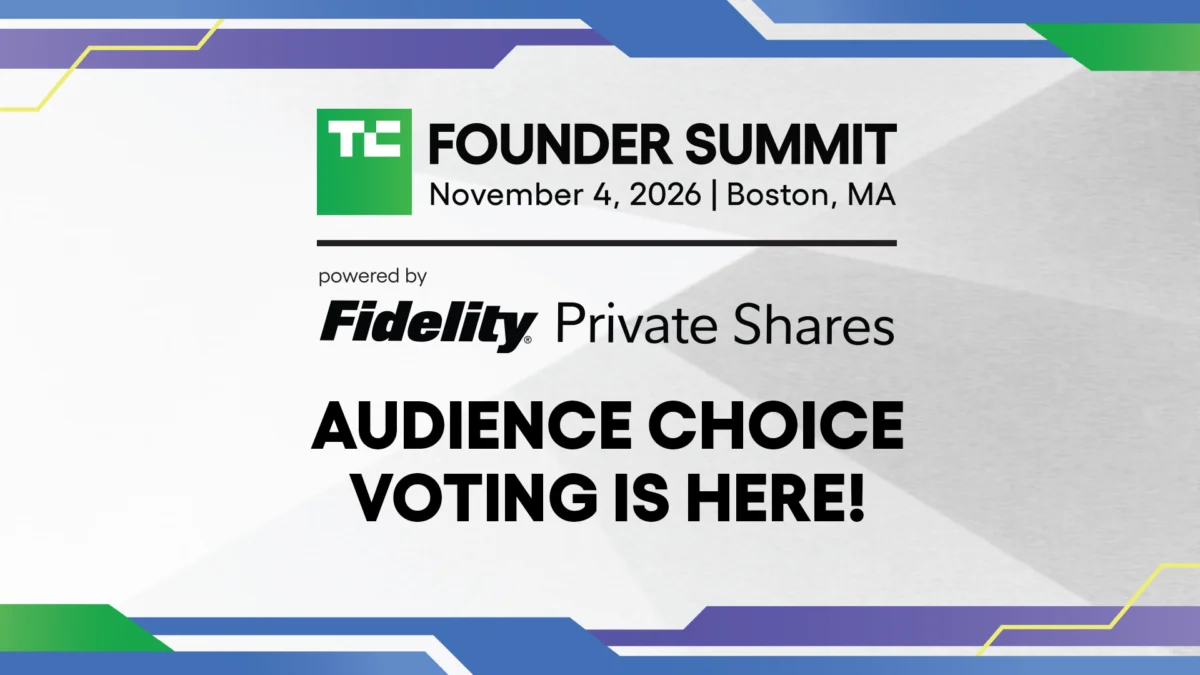
TechCrunch, a leading authority in startup and technology news, has announced the 11 finalists vying for four coveted speaker positions at its upcoming Founder Summit in Boston on November 4. The rigorous selection process, which saw a significant influx of applications from experts across various domains, culminates in a public voting phase designed to engage the startup community directly in shaping the event’s agenda. This initiative underscores TechCrunch’s commitment to delivering highly relevant, actionable insights from experienced founders and industry leaders.
The annual Founder Summit serves as a critical platform for early-stage entrepreneurs, offering intimate and exclusive sessions focused on practical strategies for building, scaling, and succeeding in the competitive startup landscape. The event is meticulously designed to provide attendees with direct access to experts whose real-world experiences can offer a significant competitive advantage. The selected topics for this year’s finalists reflect a diverse array of pressing challenges and innovative opportunities confronting modern founders, ranging from strategic event planning and domestic manufacturing to advanced AI applications and fundraising tactics.
The Selection Process and Public Engagement
Each year, the TechCrunch Founder Summit attracts a vast pool of accomplished individuals eager to share their expertise. This year was no exception, with countless applications submitted by founders, investors, and strategists. Following a thorough review by TechCrunch’s editorial and event teams, 11 exceptional candidates have been identified. These finalists have demonstrated a profound understanding of their respective fields and possess the unique ability to distill complex concepts into practical, essential insights.
In a move to foster community involvement and ensure the program resonates deeply with its audience, TechCrunch has opened the final selection to public vote. This democratic approach allows aspiring and established entrepreneurs to directly influence the content of the summit, ensuring the chosen sessions address the most pertinent needs and interests of the startup ecosystem. Voting commenced recently and will conclude on September 4, providing a limited window for the community to weigh in on which four sessions will ultimately make it to the main agenda. This interactive element not only builds anticipation for the event but also reinforces TechCrunch’s dedication to an audience-centric approach. Attendees are encouraged to cast their votes promptly and, if they haven’t already, secure their tickets for the summit to partake in these exclusive learning opportunities.
The TechCrunch Founder Summit: A Beacon for Startups
Scheduled for November 4 in Boston, the TechCrunch Founder Summit 2026 is poised to be an indispensable gathering for founders looking to elevate their ventures. Unlike larger conferences, the summit is curated to offer an environment conducive to deep learning and strategic networking. The focus is on delivering actionable intelligence that can be immediately applied to business challenges, whether it’s navigating early-stage growth, securing crucial funding, or leveraging emerging technologies.
The event’s emphasis on "intimate, exclusive sessions" means that attendees will have unparalleled access to thought leaders, enabling more direct engagement and personalized takeaways. This format is particularly beneficial for founders seeking to understand the nuances of specific strategies or to gain clarity on complex industry shifts. The insights shared by speakers, drawn from their experiences of building, iterating, and succeeding, are designed to equip participants with the knowledge to either outpace competitors or position themselves as pivotal figures in the next wave of innovation. Early bird discounts are currently available, offering significant savings for those who register in advance.
Spotlight on the Finalists: Diverse Insights for the Modern Entrepreneur
The 11 nominees represent a broad spectrum of expertise, addressing critical areas for startup success in today’s dynamic market. Each proposed session promises a deep dive into practical frameworks and strategies.
1. How to Build Events Strategy Before You Can Afford a Full-Time Events Team
- Speaker: Alexandra Ames, Founder and Chief Event Strategist, Blueprint Lab
- Significance: In an increasingly competitive landscape, events offer a powerful avenue for early-stage startups to build brand awareness, generate leads, and establish credibility without a massive marketing budget. However, navigating the myriad event opportunities and proving tangible ROI can be daunting for resource-constrained founders. Ames’s session aims to demystify event strategy, providing a structured approach to prioritizing investments, maximizing returns from founder-centric events, and understanding when events genuinely align with business objectives. This topic is particularly relevant as digital fatigue pushes companies back towards in-person engagement, making strategic event participation more crucial than ever for market penetration and community building.
2. How to Build a “Made in the USA” Hardware Company and Actually Scale It
- Speaker: Hannan Happi, CEO and Co-Founder, Exowatt
- Significance: The resurgence of interest in domestic manufacturing, fueled by geopolitical shifts, supply chain vulnerabilities, and government incentives like the IRA and CHIPS Act, presents both opportunities and challenges for hardware startups. Historically, "Made in the USA" has often been perceived as cost-prohibitive for scaling. Happi’s session directly tackles this misconception, offering a practical framework for designing hardware companies where domestic production is an economic advantage, not just a branding choice. This discussion is vital for founders looking to leverage policy tailwinds, optimize supply chain resilience, and build a competitive edge through localized production, addressing a growing market demand for domestically sourced goods.
3. Build Something We Don’t Have a Word for Yet
- Speaker: Andy Tang, Partner, Draper Associates
- Significance: Innovation often defies existing categories, yet many investors are predisposed to fund ideas that fit neatly into established market segments. Tang’s session challenges founders to think beyond incremental improvements and instead focus on creating genuinely new markets or categories. This is a critical lesson for visionary entrepreneurs whose groundbreaking ideas might initially be overlooked due to their novelty. The session will explore how to differentiate between a simple market insight and a truly market-creating idea, and more importantly, how to articulate and position such nascent concepts to attract pattern-matching investors who are often hesitant to back the truly unfamiliar. This topic speaks to the core of disruptive innovation and the mindset required to cultivate it.
4. GraphRAG in Action: Stop Hallucinations with Knowledge Graphs
- Speaker: Shishir Tewar, Head of Enterprise Data Engineering, Procore Technologies
- Significance: As Large Language Models (LLMs) become central to enterprise operations, the challenge of "hallucinations" – where AI generates plausible but incorrect information – remains a significant hurdle. Tewar’s session offers a concrete solution by leveraging GraphRAG (Retrieval Augmented Generation with Knowledge Graphs). This technical deep dive into building production-ready GraphRAG pipelines addresses a crucial pain point for companies deploying AI, particularly those dealing with complex, disjointed data sources. By demonstrating how to transform chaotic data into interconnected knowledge graphs, the session provides actionable steps for enhancing AI accuracy, reliability, and security, ensuring AI systems deliver foundational data structures for validated queries.
5. The Enterprise AI Playbook: How to Close L’Oreal and Vodafone Before You Raise a Series A
- Speaker: Merve Kitapci, Managing Partner and CGO, ADIN.AI
- Significance: Securing major enterprise clients at an early stage can be a game-changer for AI startups, providing crucial validation and revenue before a Series A round. Kitapci’s session offers a counter-intuitive approach to traditional startup growth, advocating for enterprise sales before achieving full product-market fit. This "playbook" is invaluable for founders targeting large organizations, detailing strategies for initial conversations with Fortune 500 executives, the power of agency partnerships in accelerating sales cycles, pricing models without established brand recognition, and how zero organic churn can bolster fundraising narratives. The session promises a repeatable framework for navigating the often-complex world of enterprise sales for pre-Series A AI companies.
6. Lessons from 20 Years of Bootstrapping an Open Source Business to $50M+
- Speaker: Peter Farkas, CEO, Percona
- Significance: In an era dominated by venture capital-backed growth, bootstrapping a company, especially an open-source one, to over $50 million in revenue is a rare feat. Farkas’s session offers a unique perspective on sustainable growth without external funding. His two decades of experience with Percona provide invaluable lessons on achieving product-market fit, effectively monetizing open source while maintaining its core accessibility, building distributed teams long before remote work became mainstream, and establishing a robust go-to-market engine. This session is crucial for founders considering alternative funding paths or those aiming for long-term, self-sufficient growth in competitive markets.
7. Small but Mighty: How AI Lets Lean Teams Outship the Giants
- Speaker: Linden Tibbets, CEO and Co-Founder, IFTTT
- Significance: The advent of advanced AI tools has dramatically shifted the landscape of product development, enabling small, agile teams to achieve output levels previously only possible for large corporations. Tibbets’s session, drawing from IFTTT’s firsthand experience, explores the tactical realities of running a lean, AI-powered team. This includes identifying essential AI tools, designing workflows that foster compounding growth rather than bloat, and avoiding common pitfalls where AI investments yield little return. For founders aiming to maximize efficiency and innovation with limited resources, this session offers a strategic advantage by demonstrating how to leverage small size as a strength.
8. The Demo Trap: Why Impressive AI Doesn’t Always Build Real Companies
- Speaker: Jeff Mahler, Co-Founder and CTO, Ambi Robotics
- Significance: The current AI boom is characterized by dazzling demos that often secure headlines and funding but fail to translate into sustainable businesses. Mahler’s session critically examines the significant gap between a compelling AI prototype and a viable, scalable real-world deployment. This discussion is essential for both founders and investors to accurately assess the readiness and true potential of AI systems. It will delve into the operational and reliability metrics that truly matter beyond superficial performance, guiding attendees on how to build companies that move beyond mere hype to achieve durable, real-world impact and long-term viability.
9. From CentOS to Rocky Linux: Building Movements That Outlast You
- Speaker: Gregory Kurtzer, CEO and Founder, CIQ
- Significance: Gregory Kurtzer, a visionary in the open-source community, offers profound lessons on building enduring movements. Having created CentOS and subsequently launching Rocky Linux after CentOS’s discontinuation, Kurtzer’s journey provides a unique blueprint for fostering community, navigating transitions, and building resilient organizations. His session explores critical leadership principles, including the importance of humility, the evolution from generalist to specialist teams, and the foundational role of culture and core values in long-term success. This is an invaluable session for founders looking to build something that transcends individual contributions and leaves a lasting legacy.
10. The Healthcare AI Companies That Will Actually Matter
- Speaker: Vikram Chaudhery, PhD, CEO and Founder, Genoa Ventures
- Significance: While healthcare AI demos abound, few translate into tangible improvements in patient care or clinical workflows. Chaudhery’s session cuts through the hype, identifying the true indicators of impactful healthcare AI companies. He emphasizes that the most relevant companies aren’t those with the most sophisticated models, but those that deliver actionable insights to clinicians within critical windows, genuinely altering patient outcomes. This roundtable will provide a crucial framework for evaluating investable healthcare AI, distinguishing valuable agentic systems from mere copilots, and highlighting common missteps founders make before Series A. It sets a high bar for anyone involved in funding, founding, or joining a healthcare AI venture.
11. How Technical AI Founders Get Into YC, a16z Speedrun, and Raise from Top-Tier VCs
- Speaker: George Bandarian, Founder and General Partner, Untapped Ventures
- Significance: Technical AI and robotics founders often possess brilliant product ideas but struggle with fundraising due to a misalignment with investor expectations. Bandarian’s session addresses this critical gap, demystifying what top-tier VCs, including Y Combinator and a16z, truly seek beyond a strong pitch deck. It will cover essential elements like founder-market fit signals, the often-underestimated need for a business counterpart, strategic positioning for autonomous economy companies, and the realities of the fundraising process before achieving significant traction. This is a must-attend for technical founders aiming to navigate the competitive world of venture capital successfully.
Emerging Themes and Industry Relevance
The selection of these 11 finalists highlights several overarching trends shaping the current startup ecosystem. Artificial intelligence, in its various applications – from enterprise solutions and data integrity to lean team empowerment and healthcare innovation – is clearly a dominant force. The discussions around AI emphasize not just its potential, but also the critical challenges of deployment, ethical considerations, and the path to real-world impact beyond impressive demonstrations.
Another significant theme is the evolving nature of company building. Sessions on bootstrapping open-source businesses, building "Made in the USA" hardware, and fostering community movements reflect a renewed focus on sustainable growth, operational resilience, and the power of distributed collaboration. The emphasis on strategic planning, whether for events or enterprise sales, underscores the need for founders to be highly intentional and resourceful, especially in resource-constrained environments. Finally, the inclusion of topics on fundraising and investor relations indicates the perpetual importance of securing capital and understanding the investor mindset, particularly for those building truly novel, market-creating solutions.
Key Dates and Participation
The public voting period for these compelling sessions is a unique opportunity for the startup community to directly influence the content of a premier industry event. Submissions will close promptly on September 4. TechCrunch urges all interested parties to review the nominees’ proposals and cast their votes via the provided online form.
The TechCrunch Founder Summit 2026 on November 4 in Boston promises to be an invaluable experience for entrepreneurs at all stages. With a lineup of speakers dedicated to providing actionable insights and fostering genuine learning, the event is set to empower the next generation of innovators. Don’t miss the chance to be part of this exclusive gathering. Attendees can still take advantage of discounts on tickets, offering savings of up to $100. Your participation, both in voting and attendance, is crucial in making this year’s summit a resounding success.
About the Author