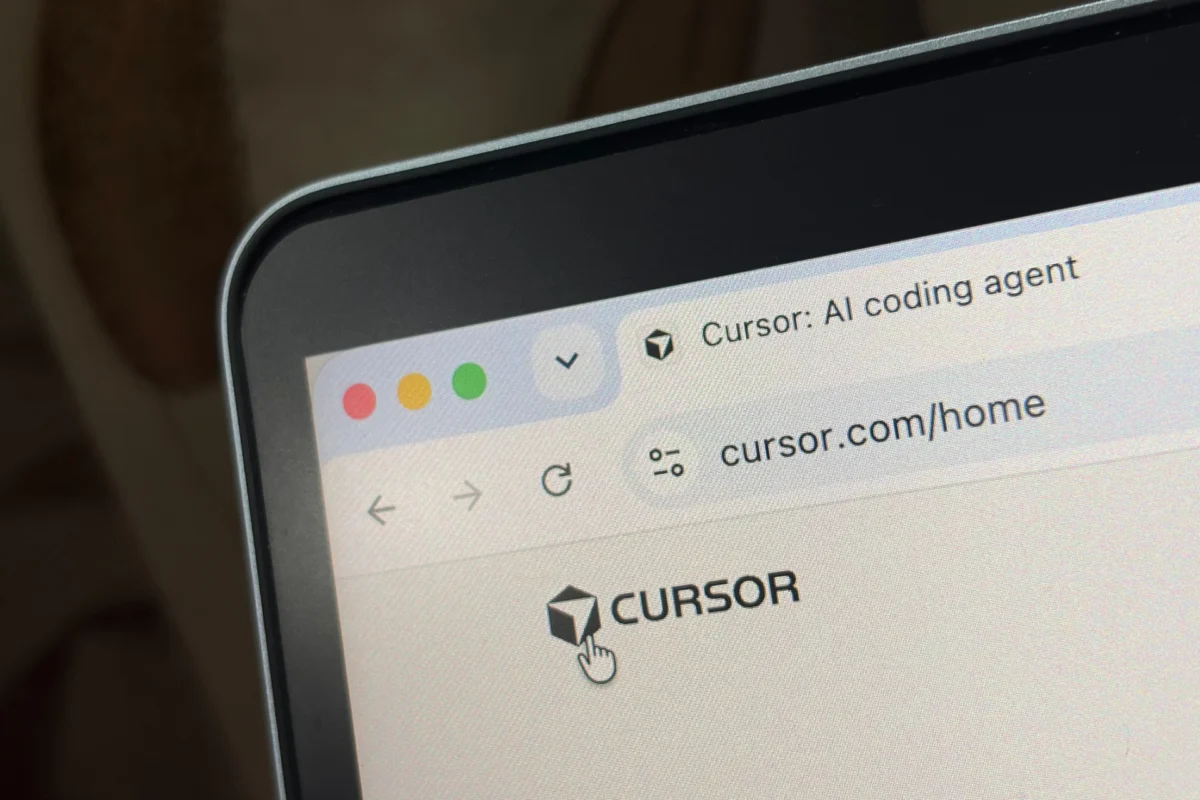
In a significant development that underscores the accelerating convergence of aerospace and artificial intelligence, AI coding startup Cursor has officially become a part of Elon Musk’s SpaceX. The acquisition, confirmed through an announcement on the Cursor blog on August 15, 2026, culminates a multi-stage deal first revealed in April, valuing the AI company at an estimated $60 billion. This strategic integration positions Cursor at the heart of SpaceX’s rapidly expanding computing infrastructure, which the aerospace giant asserts is on track to become the largest fleet of Graphics Processing Units (GPUs) globally.
The integration of Cursor into SpaceX is more than a mere corporate transaction; it represents a bold move by Musk’s conglomerate to internalize and scale advanced AI capabilities crucial for its ambitious projects across space exploration, satellite internet, and burgeoning AI initiatives. For Cursor, a company known for its innovative AI-powered developer tools designed to enhance coding efficiency and productivity, the acquisition provides unparalleled access to vast computational resources, a critical enabler for the next generation of AI development.
A Strategic Timeline of Integration
The path to Cursor’s integration into SpaceX has been a meticulously planned process, unfolding over several months in 2026. The initial groundwork for this landmark acquisition was laid on April 21, 2026, when SpaceX first announced a collaborative agreement with Cursor. This initial deal was multifaceted: it established a framework for the two companies to jointly develop cutting-edge technology, presumably centered around AI-driven software development tools, and, crucially, it included an option for SpaceX to acquire Cursor outright for a staggering $60 billion. This early announcement signaled SpaceX’s serious intent to bolster its AI capabilities and integrate advanced coding intelligence into its operational fabric.
The financial contours of the deal became clearer and more concrete approximately two months later. On June 16, 2026, coinciding with SpaceX’s highly anticipated public offering, the companies confirmed their decision to move forward with the acquisition. The terms stipulated that the acquisition would be executed for $60 billion in stock, a valuation that immediately placed Cursor among the most valuable AI startup acquisitions to date and highlighted the premium placed on its technology and potential. The transition from an option to a definitive acquisition agreement shortly after SpaceX’s blockbuster IPO underscored the strategic importance of Cursor to the newly public aerospace titan.
The final chapter of this acquisition saga was written on August 15, 2026, when Cursor officially announced on its corporate blog that the deal had closed. This formal declaration marked Cursor’s full integration into the SpaceX ecosystem, completing a journey from independent AI startup to a core component of one of the world’s most innovative and resource-rich technology companies. The rapid progression from initial partnership to full acquisition within a few months demonstrates the urgency and strategic imperative behind SpaceX’s drive to consolidate AI talent and infrastructure.
Cursor’s Core Technology and Its Value Proposition
Before its acquisition, Cursor had established itself as a pioneering force in the realm of AI-assisted coding. The startup developed an advanced integrated development environment (IDE) that leveraged large language models (LLMs) to provide developers with a suite of powerful tools designed to streamline the software development lifecycle. These capabilities included intelligent code generation, real-time debugging assistance, automated code refactoring, and natural language-to-code translation, allowing developers to describe their desired functionality in plain English and have the AI generate or modify the corresponding code.
The fundamental value proposition of Cursor’s technology lay in its ability to significantly enhance developer productivity, reduce development cycles, and improve code quality. By automating repetitive tasks, identifying potential errors proactively, and offering intelligent suggestions, Cursor aimed to free developers from mundane coding chores, allowing them to focus on higher-level architectural design and complex problem-solving. This made Cursor an attractive asset for any technology company with a substantial software development footprint, particularly one like SpaceX, which relies heavily on sophisticated software for everything from rocket telemetry and satellite constellation management to autonomous landing systems and internal operational tools.
The integration of Cursor’s AI coding prowess is expected to revolutionize software development within SpaceX. Engineers and developers working on Starship, Starlink, advanced propulsion systems, and mission control software will now have access to cutting-edge AI assistance, potentially accelerating the development and iteration of critical software components. This internal application of Cursor’s technology is a key driver behind the acquisition, as it directly supports SpaceX’s core missions and long-term technological roadmap.
SpaceX’s Ambitious Computing Infrastructure and AI Strategy
The Cursor acquisition cannot be viewed in isolation; it is a critical piece of SpaceX’s broader and increasingly aggressive strategy in artificial intelligence and high-performance computing. The company has been making substantial investments in building out a formidable computing infrastructure, driven by the insatiable demands of advanced AI model training and inference. This infrastructure, heavily reliant on GPUs, is not only for internal use but has also become a revenue-generating asset.
As highlighted in Cursor’s acquisition announcement, SpaceX is rapidly scaling its computing capacity, aiming to possess the "largest fleet of GPUs in the world." This claim, while ambitious, reflects the immense capital and strategic focus being directed towards securing and deploying top-tier AI hardware. The global demand for GPUs, particularly from NVIDIA, has skyrocketed due to the generative AI boom, making access to such a vast fleet a significant competitive advantage. For Cursor, this translates into unprecedented computational power to train more sophisticated AI models, develop more complex features, and refine its existing tools at a scale that would be unattainable for most independent startups.

This expansion of computing resources is not merely theoretical. SpaceX has already begun leveraging its infrastructure by renting out its substantial GPU clusters to other leading AI companies. Reports in early August 2026 indicated that SpaceX had doubled its revenues partly due to significant compute deals with major players like Anthropic and Google. These partnerships demonstrate not only the scale of SpaceX’s computing power but also its strategic intent to become a key provider in the burgeoning AI compute market, diversifying its revenue streams beyond aerospace and satellite internet. This move also positions SpaceX as a central player in the AI ecosystem, not just as a consumer but also as a fundamental enabler of AI innovation across the industry.
The Cursor acquisition also follows another significant AI-related move by Elon Musk: the earlier acquisition of xAI by SpaceX. While xAI focuses on developing foundational large language models and general artificial intelligence, Cursor specializes in applying AI specifically to software development. The synergy between these two acquisitions is evident: xAI provides the core AI intelligence, while Cursor offers the tools to make that intelligence "useful" for developers, directly aligning with Cursor’s blog statement that it "will be one place where that intelligence becomes useful." This creates a powerful internal AI ecosystem within SpaceX, capable of both developing cutting-edge AI and deploying it efficiently across its vast engineering operations.
Challenges and Criticisms: The Environmental Footprint of AI Compute
While SpaceX’s expansion into AI and computing infrastructure presents a vision of technological advancement, it has not been without its challenges and criticisms, particularly concerning the environmental impact of such large-scale operations. The massive data centers required to house and power thousands of GPUs consume enormous amounts of energy, often leading to significant carbon footprints.
In a notable development from June 2025, SpaceX faced a lawsuit concerning the environmental impact of its data centers. The suit alleged that the company was operating over 400 megawatts of gas turbines without proper permits, leading to substantial air pollution. Gas turbines, while capable of generating considerable power, are known emitters of greenhouse gases and other pollutants. This lawsuit highlights a growing concern within the tech industry and among environmental advocacy groups regarding the sustainability of the AI revolution. The energy demands of training and running increasingly complex AI models are escalating, prompting questions about where this power will come from and at what environmental cost.
For SpaceX, a company deeply involved in endeavors like Starlink, which aims to provide global internet access, and Starship, designed for interplanetary travel, the environmental implications of its terrestrial operations present a complex public relations and regulatory challenge. As Cursor integrates into this infrastructure, it also becomes part of this broader environmental discussion. The imperative for sustainable computing solutions, including the use of renewable energy sources and more efficient cooling technologies, will likely become an increasingly prominent factor in the development and operation of such large-scale AI facilities. The lawsuit serves as a stark reminder that the pursuit of technological advancement must be balanced with environmental responsibility.
Implications for the AI Industry and Beyond
The acquisition of Cursor by SpaceX carries significant implications for the broader AI industry, the future of software development, and the competitive landscape of high-performance computing.
For the AI industry, this move by SpaceX signals a further consolidation of talent and resources under the umbrella of a few powerful tech giants. As the cost of developing and deploying advanced AI models continues to skyrocket, fueled by the demand for expensive GPUs and specialized expertise, smaller startups may find it increasingly difficult to compete independently. The trend of major companies acquiring promising AI startups to secure talent, technology, and compute access is likely to intensify.
The future of software development is also poised for a transformation. With Cursor’s technology integrated into a company as ambitious as SpaceX, the potential for AI-powered coding tools to become indispensable for developers is immense. We can anticipate accelerated advancements in code generation, automated testing, and even the creation of more autonomous development agents. This could lead to a paradigm shift in how software is conceptualized, designed, and implemented, potentially allowing smaller teams to achieve what previously required large engineering departments.
Moreover, SpaceX’s emergence as a major player in the AI compute market, evidenced by its GPU fleet and rental deals, could reshape the cloud computing landscape. While traditional cloud providers like AWS, Azure, and Google Cloud have dominated, SpaceX’s focused investment in AI-specific compute could offer a specialized alternative, particularly for companies engaged in demanding AI research and development. This diversification of compute providers could foster greater competition and potentially drive innovation in infrastructure design and cost efficiency.
From a strategic perspective, Elon Musk’s vision of an interconnected technological ecosystem, spanning space exploration, electric vehicles, neural interfaces, and now advanced AI development tools, becomes even clearer. Cursor’s technology can enhance the coding capabilities for Tesla’s autonomous driving software, Neuralink’s brain-computer interfaces, and the complex operational systems across all Musk’s ventures. This vertical integration of AI capabilities across his companies aims to create a powerful synergy, allowing each entity to benefit from shared AI advancements and infrastructure.
In conclusion, Cursor’s official entry into SpaceX marks a pivotal moment in the intersection of aerospace, AI, and high-performance computing. It underscores SpaceX’s aggressive push into artificial intelligence, leveraging its immense resources to build a leading compute infrastructure and integrate advanced AI tools into its core operations. While promising unprecedented advancements in software development and AI research, this ambitious expansion also brings to the forefront critical discussions around environmental sustainability and the responsible scaling of AI’s computational demands. The full impact of this $60 billion acquisition will unfold in the coming years, but it unequivocally positions SpaceX as a formidable force in shaping the future of AI.
About the Author