
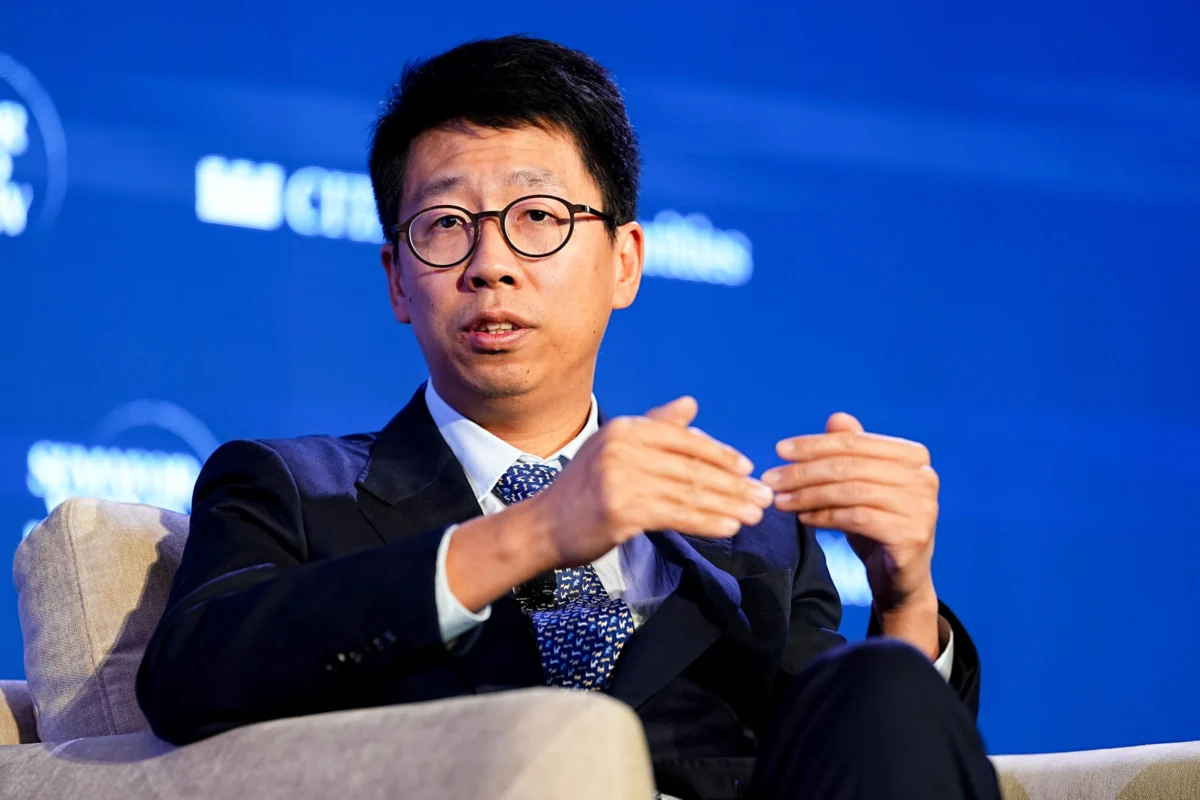
Jack Zhang, at 34 years old and three and a half years into his entrepreneurial journey with Airwallex, found himself in a situation many startup founders only dream of. He was seated across from Michael Moritz, a titan of Silicon Valley investing from Sequoia Capital, at Moritz’s opulent home overlooking the Golden Gate Bridge. The purpose of the meeting was stark: to convince Zhang to sell his burgeoning fintech company, Airwallex, to Stripe for a staggering $1.2 billion. At the time, Airwallex, a Melbourne-based startup, was generating approximately $2 million in annualized revenue. The proposed acquisition represented a revenue multiple of nearly 600x, a number almost impossibly attractive. Moritz, representing Stripe’s formidable founder Patrick Collison, argued that the deal would "compound" into something truly extraordinary. Zhang listened, a decision weighing heavily on him. He spent two weeks in a state of restless contemplation, walking the streets of San Francisco, his mind a whirlwind of possibilities. Ultimately, he said yes to the acquisition.
Then, he flew nearly 8,000 miles back home, the weight of that "yes" a stark contrast to the immense potential he felt his company possessed. "I really went deep on what motivates me to build Airwallex," Zhang stated in a recent interview. "I was three and a half years into the business. The business was growing 100 times in 2018. And I only just sort of tasted what it [was like] to be an entrepreneur. And that’s what I’d been dreaming about." This profound introspection, coupled with the dissent from two of his three co-founders, solidified his resolve. The clearest signal, however, came from a glance at the unfinished vision on his office whiteboard: to construct the financial infrastructure that empowers any business to operate globally as if it were a local entity.
This decision, made years ago, is now proving to be remarkably prescient. Airwallex has since announced annualized revenue exceeding $1.3 billion, maintaining an impressive year-over-year growth rate of 85%. The company now processes close to $300 billion in annualized transaction volume. Zhang readily acknowledges that this success has not been achieved without significant challenges, a fact he sees as integral to the company’s robust foundation.
The Genesis of Resilience: A Life Forged in Adversity
Zhang’s unwavering conviction is deeply rooted in his personal history. His upbringing in Qingdao, a bustling port city in northeastern China, was marked by early upheaval. At the age of 15, he relocated to Melbourne, Australia, without his parents, his English proficiency rudimentary, and his living situation with a host family. When his family’s financial circumstances deteriorated, Zhang shouldered the burden, taking on four jobs simultaneously to fund his computer science degree at the University of Melbourne. His early career was a testament to his tenacity, involving roles as a bartender, a dishwasher, graveyard shifts at a petrol station, and even picking lemons on a farm during school holidays, a job he has described as the most arduous he ever undertook. He later spent years meticulously crafting trading code at an Australian investment bank, a position that offered financial security but lacked the profound sense of purpose he craved.
A Trail of Ventures: From Coffee Shops to Global Ambitions
Prior to co-founding Airwallex, Zhang had already embarked on the creation of approximately ten different businesses. His entrepreneurial spirit manifested early, with the launch of a magazine at the tender age of 14. He ventured into real estate development, established import-export operations trading wine and olive oil from Australia to Asia, and engaged in the textile trade in the opposite direction. He even delved into the competitive fast-food industry with a burger chain.
It was while managing a coffee shop in Melbourne that the foundational idea for Airwallex began to take shape. His co-founder, Max Li, observed firsthand the inefficiencies and frustrations of international payments. When attempting to pay coffee bean suppliers in Brazil, Indonesia, and Guatemala, payments frequently vanished into the labyrinthine correspondent banking system. These transactions were often flagged and frozen by intermediary banks in the United States, enforcing OFAC sanctions, and sometimes reappeared weeks after their initial dispatch. "That pushed me to really look at how correspondent banking works," Zhang explained, "how SWIFT works, and how we could build our own global money movement network."
Building the Infrastructure: The "Path of Maximum Resistance"
This vision of a seamless global money movement network remains central to Airwallex’s mission, albeit significantly amplified. The company has meticulously cultivated a network of nearly 90 financial licenses across 50 markets. Zhang estimates that Stripe possesses roughly half that number, at best. The acquisition of these licenses has been an arduous and time-consuming endeavor. In Japan, for instance, the licensing process alone took seven years to complete. In certain emerging markets, Airwallex found it necessary to acquire existing shell companies whose licenses were no longer being issued by central banks, subsequently rebuilding the underlying technology infrastructure from the ground up.
"You can’t really vibe-code an integration with Mexico’s central bank," Zhang remarked, illustrating the complexities involved. "We have to have a secure room – you have to do a biometric scan just to walk in to access the central bank integration." The strategic imperative behind securing these licenses extends far beyond mere regulatory compliance. In Japan, for example, while Stripe and Square can facilitate payments, they are mandated to immediately transfer funds to the merchant’s bank account. Airwallex, however, with its fund transfer operator license, possesses the capability to retain these funds within its own ecosystem. This allows customers to issue bank accounts, create cards, and conduct transactions without the funds ever leaving the Airwallex platform.
The economic advantages of this model are substantial, particularly in foreign exchange. A U.S. merchant settling transactions in Australian dollars can circumvent the typical 2% to 3% conversion fees charged by processors like Stripe for converting funds back into U.S. dollars. These local balances can then be utilized for payments to local vendors, managing payroll, and covering digital marketing expenses, all at interbank rates. "You don’t really operate like a U.S. company anymore," Zhang stated. "You operate like a company with entities around the world, but without needing to physically set up those entities."
This deliberate, slow-burn approach to building infrastructure is guided by a principle Zhang frequently articulates: the "path of maximum resistance." Each license obtained, each bank integration secured, and each local payment rail meticulously established by Airwallex creates a formidable barrier to entry for competitors. "It took us six and a half years to get to $100 million in annual recurring revenue," Zhang shared. "But after that, it took just over three years to get to a billion." The competitive advantage, in his view, stems from the fundamental difference between owning the end-to-end payment workflow and merely operating on another company’s platform. Without direct control over the entire process, troubleshooting issues and explaining them to customers becomes challenging, and the seamless extension of new products onto a third-party stack is fundamentally limited. "Building on top of other infrastructure," he concluded, "is simply not scalable."
Evolving Competitive Landscape: From Separate Spheres to Direct Confrontation
For a significant portion of their existence, Airwallex and Stripe operated in largely distinct geographical territories and catered to different customer segments. However, this dynamic is evolving. As Stripe increasingly ventures into international markets and Airwallex makes its initial significant incursions into the United States, the areas of overlap are expanding.
Historically, Airwallex’s primary customer base has resided in Australia and Southeast Asia, where the company holds a strong market presence. These clients typically comprise CFO offices, finance directors, and treasury teams. This contrasts with Stripe’s customer acquisition strategy, which has been largely driven by U.S. developers who often select Stripe as their initial default payment solution for new ventures. Currently, over 90% of Airwallex customers initially engage with a business account product, with payments and spend management functionalities following thereafter. Zhang notes that more than half of their customers utilize multiple Airwallex products.
Navigating the Titans: Brand Recognition and Market Perception
Despite its impressive growth and robust infrastructure, Zhang readily acknowledges the challenges Airwallex faces. The most significant may be Stripe’s status as Silicon Valley’s "golden child," a privately held entity whose shares have generated substantial wealth for numerous individuals within the tech industry. Furthermore, the brand recognition gap presents a considerable hurdle. Airwallex aims to embed itself in the consciousness of engineers and developers, not solely finance teams, to ensure that founders instinctively consider it as a viable solution. "Our brand is just not there yet," Zhang admitted. "That’s a harder competition to win."
This intensifying competition is being closely observed from various perspectives. Sequoia, through its now-independent Sequoia Capital China arm (rebranded as Hongshan), was an early backer of Airwallex and remains one of its largest shareholders. Greenoaks Capital, another investment firm, holds stakes in both companies, a fact Zhang dismisses as an indication of the immense market potential that investors are betting on.
The differing valuations between the two companies are a subject of considerable discussion. Stripe was valued at $159 billion in a February tender offer, a 74% increase from the previous year, following its processing of $1.9 trillion in total payment volume in 2025. Airwallex, with an $8 billion valuation in December 2023, is valued at approximately one-twentieth of Stripe’s valuation. However, Zhang contends that Stripe’s payment volume is only about six times that of Airwallex, not twenty times. With an 85% annual growth rate and projections of reaching $2 billion in revenue within the next year, Airwallex is closing the revenue gap at a pace that outstrips the valuation disparity.
The question of whether the broader market will fully recognize Airwallex’s trajectory remains to be seen. An initial public offering (IPO), which Zhang anticipates is at least three to five years away, would undoubtedly bring this into sharper focus.
The Road Ahead: Ambitious Targets and AI-Driven Innovation
In the interim, Zhang remains focused on long-term objectives. Airwallex aims to serve a million customers by 2030, achieve $20 billion in annual revenue, and increase the average revenue per customer from approximately $12,000-$13,000 today to around $20,000. The company is currently rolling out a suite of AI-powered autonomous finance products. These agents are designed not merely to present data but to actively execute transactions. The underlying thesis is that a decade of accumulating financial data across the entire corporate finance stack – from revenue collection and treasury management to vendor payments and expense management – has created a unique training dataset that no competitor can readily replicate.
The ultimate test will be whether this relentless pursuit of building foundational infrastructure proves sufficient to capture market share from Stripe. For now, the competition appears to be playing out from a distance. While Zhang and Patrick Collison were never close friends, they maintained a cordial relationship during the past merger discussions. Last year, both Zhang and Collison attended Greenoaks Capital’s annual gathering. They did not speak.
About the Author





