The San Francisco-based artificial intelligence startup Anthropic is currently grappling with a severe commercial crisis and a high-stakes legal battle following the United States Department of Defense’s decision to label the company a supply-chain risk. According to recent court filings, the designation has triggered a wave of contract cancellations, stalled negotiations, and deep-seated apprehension among both current and prospective clients. Anthropic executives allege that the federal government’s actions have not only jeopardized hundreds of millions of dollars in immediate revenue but could ultimately result in billions of dollars in lost sales if the current trajectory of administrative pressure continues.
The fallout centers on a designation issued by the Pentagon late last month, which has effectively signaled to the market that doing business with Anthropic carries significant regulatory and political risk. In a series of declarations filed in support of a preliminary injunction, Anthropic’s leadership team detailed the immediate and cascading effects of this label. The company is now seeking a temporary reprieve from the courts to allow it to continue its operations with the Department of Defense (DoD) while broader legal challenges against the Trump administration proceed.
The Escalation of a Public-Private Conflict
The friction between Anthropic and the Department of Defense is rooted in a fundamental disagreement over the operational boundaries of artificial intelligence. For weeks, the two entities have been locked in a dispute regarding the use of Anthropic’s Claude models for sensitive military applications. Specifically, the Pentagon has expressed interest in utilizing AI for mass domestic surveillance and the development of autonomous lethal weapon systems.
Anthropic, which was founded on the principles of AI safety and "Constitutional AI," has resisted these demands. The company maintains that current AI technology is not yet capable of performing such tasks safely or ethically. However, the Pentagon has countered that it should retain the ultimate authority to determine the safety and utility of these technologies within a military context. This philosophical and operational rift culminated in the DoD’s decision to designate Anthropic as a supply-chain risk, a move the company characterizes as retaliatory and discriminatory.
Quantifying the Financial Fallout: A Multi-Billion Dollar Threat
The financial implications of the "supply-chain risk" label are staggering for a company that, despite its rapid growth, remains deeply unprofitable due to the astronomical costs of AI development. Anthropic’s Chief Financial Officer, Krishna Rao, revealed in court documents that the company has spent more than $10 billion to train and deploy its generative AI models. While the company has seen significant commercial success, with all-time sales exceeding $5 billion since 2023, its future viability depends on maintaining market confidence and securing large-scale enterprise contracts.
Rao noted that hundreds of millions of dollars in expected revenue for the current year, specifically tied to work with the Pentagon, is already at risk. More alarmingly, the CFO stated that if the government successfully pressures a broader range of commercial entities to avoid Anthropic—regardless of their involvement with the military—the company could face a total loss of billions of dollars in potential sales.
The public sector outlook has also dimmed significantly. Thiyagu Ramasamy, Anthropic’s head of public sector, projected that the company’s anticipated annual recurring revenue from government contracts for 2026, originally estimated at over $500 million, is now expected to drop by at least $150 million. This decline reflects a growing hesitation among federal agencies and their contractors to integrate Anthropic’s technology into their long-term infrastructure.
Specific Contractual Disruptions and Private Sector Panic
The impact of the Pentagon’s designation has extended far beyond government corridors, reaching deep into the private sector. Paul Smith, Anthropic’s Chief Commercial Officer, provided several documented instances of partners and clients backing away from the company.
Among the most notable disruptions:
- Financial Services: A major financial services customer paused negotiations on a deal valued at $15 million. Furthermore, two leading firms in the sector have refused to finalize contracts totaling $80 million unless they are granted the right to unilaterally cancel the agreements for any reason, a demand that underscores the perceived volatility of the Anthropic brand.
- Retail and Consumer Goods: A prominent grocery store chain canceled a scheduled sales meeting specifically citing the supply-chain-risk designation as the reason for the withdrawal.
- Pharmaceuticals and Fintech: A large drugmaker has moved to shorten its existing contract with Anthropic by 10 months. Simultaneously, a financial technology client requested a $5 million reduction on a planned $10 million deal, citing an unwillingness to commit further resources to Claude amidst the Pentagon dispute.
- Fortune 20 Apprehension: Smith highlighted that a "Fortune 20" company with existing government contracts informed Anthropic that its legal team was "freaked out" by the prospect of maintaining a business relationship under the current circumstances.
Smith’s filings paint a picture of "deep distrust and a growing fear" among corporate leaders. This fear is exacerbated by reports that federal agencies have directly reached out to private companies—including an electronics testing firm and a cybersecurity company—to instruct them to stop using Anthropic’s tools. In one instance, a company reportedly acknowledged that while there was no legal basis for the directive, the "political pressure" left them with no choice but to comply.
The Legal Offensive: Constitutional and Regulatory Challenges
In response to these pressures, Anthropic has initiated a two-pronged legal strategy against the Trump administration. On Monday, the company filed a lawsuit in the San Francisco federal court alleging that the government’s actions violate its First Amendment rights. The core of this argument rests on the premise that AI code and the outputs of generative models constitute a form of protected speech, and that the government’s efforts to suppress or discriminate against the company based on its refusal to facilitate certain types of surveillance or weaponry represent unconstitutional viewpoint discrimination.
A second case was filed in the federal appeals court in Washington, D.C. This lawsuit accuses the Department of Defense of unfairly discriminating and retaliating against Anthropic in violation of the Administrative Procedure Act. Anthropic argues that the "supply-chain risk" designation was applied without due process and serves as a punitive measure for the company’s stance on AI safety.
The company is currently pushing for an expedited hearing, seeking a temporary reprieve that would allow it to maintain its current commercial and governmental relationships while the merits of the lawsuits are debated.
Broader Implications for the Silicon Valley Defense Nexus
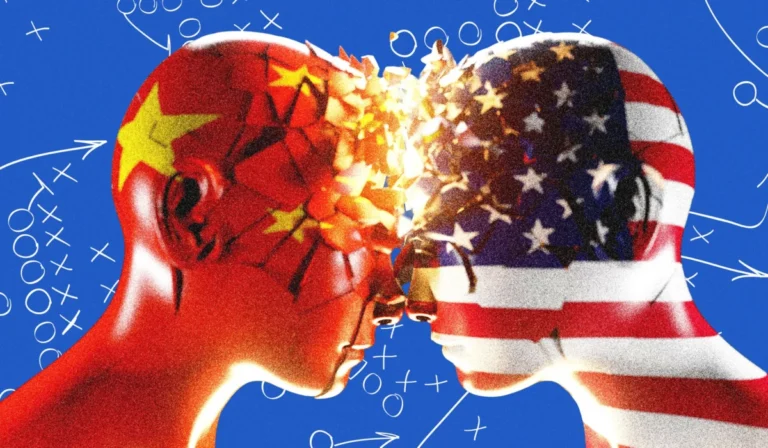
The conflict between Anthropic and the Pentagon highlights a growing tension between Silicon Valley’s "safety-first" AI labs and the U.S. government’s desire for rapid military modernization. While other major AI players, such as Microsoft and Amazon, have announced they will continue to provide Anthropic’s tools to their commercial customers (excluding DoD-related work), the situation creates a precarious precedent for the industry.
Defense Secretary Pete Hegseth has taken an unusually public and aggressive stance on the matter. In a post on the social media platform X, Hegseth declared that no contractor, supplier, or partner doing business with the U.S. military may conduct any commercial activity with Anthropic, effective immediately. This "wider net" approach has sent shockwaves through the startup ecosystem. CFO Krishna Rao noted that several smaller startups that use Claude have expressed concern about their own standing with the government, fearing that their association with Anthropic could lead to their own blacklisting.
If the government’s designation remains in place, it could fundamentally alter the competitive landscape of the AI industry. Anthropic’s ability to raise the capital necessary to train next-generation models is now in jeopardy. As the "AI frontier" race intensifies, the loss of market confidence and the restriction of revenue streams could prevent Anthropic from keeping pace with well-funded rivals who may be more willing to accommodate the military’s technical requirements.
Chronology of the Dispute
- Early 2024: Anthropic and the Department of Defense engage in discussions regarding the integration of Claude into military systems. Disagreements emerge over the use of AI for autonomous weapons and domestic surveillance.
- Mid-2024: Anthropic formalizes its refusal to allow certain high-risk military applications, citing safety concerns and its "Constitutional AI" framework.
- Late last month: The Department of Defense officially labels Anthropic a "supply-chain risk." Defense Secretary Pete Hegseth issues a public directive via X (formerly Twitter) banning military contractors from doing business with the startup.
- Early this month: Major cloud providers (Microsoft, Amazon) clarify their stance, supporting Anthropic for commercial use but complying with the DoD ban for defense-related work.
- Current week: Anthropic files dual lawsuits in San Francisco and Washington, D.C. Court papers reveal the loss of $5 billion in potential long-term sales and immediate disruptions to deals worth nearly $100 million.
- Upcoming: Anthropic seeks a temporary restraining order and a preliminary injunction to halt the effects of the designation.
The outcome of this legal and commercial battle will likely serve as a landmark case for the relationship between the federal government and the emerging AI sector. At stake is not only the survival of one of the world’s most prominent AI startups but also the degree to which private companies can resist government mandates on the ethical and operational deployment of transformative technologies. For now, Anthropic remains in a defensive crouch, attempting to salvage its reputation and its revenue in the face of an unprecedented administrative offensive.
About the Author