
Blake Resnick, CEO of Brinc, a burgeoning drone startup, offered a glimpse into the company’s ambitious future from its expansive new 50,000-square-foot office space in Seattle. While still in the process of being fully outfitted and expected to be operational by November, the cavernous facility underscores Brinc’s rapid growth and its determined strategy to dominate the public safety drone sector. Resnick envisions Brinc as the "DJI of the West," a clear aspiration to achieve the same level of market recognition and ubiquity as the dominant Chinese drone manufacturer, but for a Western audience and market.
Founded in 2017 by Resnick, a Thiel Fellow—a prestigious program that supports young entrepreneurs by allowing them to pursue their ventures instead of traditional higher education—Brinc quickly attracted significant attention. Notably, Sam Altman, a co-founder of OpenAI at the time, became one of Brinc’s earliest seed investors. Since its inception, Brinc has secured multiple funding rounds, with its most recent valuation approaching half a billion dollars, according to Resnick. This financial backing has fueled the company’s aggressive development and expansion efforts, positioning it as a serious contender in a market ripe for disruption.
The Guardian: A New Era in Public Safety Drones
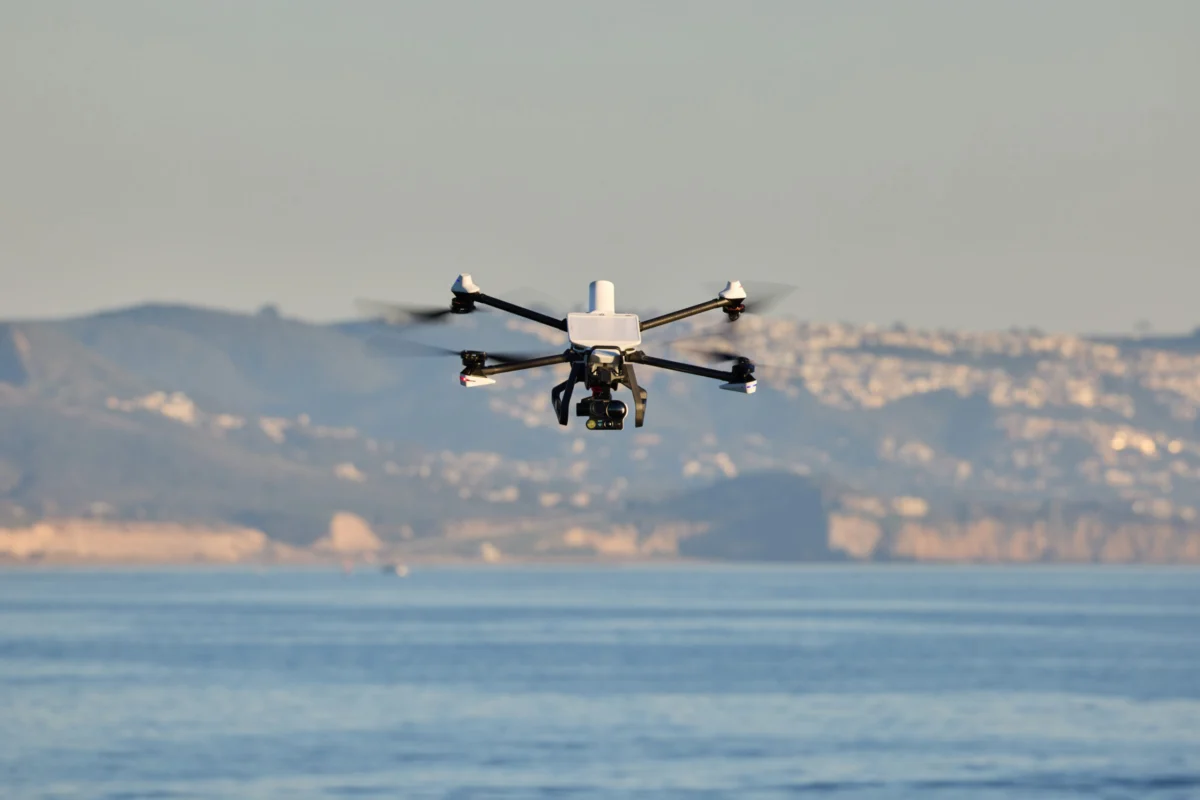
The company’s latest innovation, the Guardian public safety drone, launched this week, represents a significant leap forward in drone technology for law enforcement and emergency response agencies. Resnick boldly claims the Guardian is "the closest thing to a police helicopter replacement that the drone industry has ever produced," further asserting it as the "world’s most capable 9-11 response drone." This ambitious declaration is backed by a suite of formidable specifications designed to address critical needs in public safety operations.
The Guardian boasts an impressive flight speed of up to 60 mph and an extended flight time of 62 minutes, allowing for extended surveillance and response missions. Its advanced sensor package includes thermal imaging cameras alongside two additional 4K cameras, all equipped with powerful zoom capabilities. "Even from significant altitude, a police department could read, like, license plate details," Resnick explained, highlighting the drone’s capacity for detailed reconnaissance. Complementing its visual capabilities, the Guardian features a powerful spotlight and a loudspeaker capable of emitting sound exceeding the volume of a police siren, offering versatile tools for communication and deterrence.
Revolutionary Infrastructure for Uninterrupted Operations
A key differentiator for the Guardian is its integrated operational ecosystem, particularly its "charging nest"—the landing and recharging station. This automated system facilitates seamless battery swapping, eliminating the need for manual intervention and ensuring the drone is ready for immediate deployment. Furthermore, the charging nest can be pre-stocked with vital emergency supplies such as defibrillators, flotation devices, and Narcan. This capability transforms the drone and its base into a mobile emergency response hub, capable of delivering critical aid rapidly and efficiently to those in need.
Global Connectivity Redefined with Starlink Integration
In a groundbreaking development, the Guardian drone incorporates a Starlink panel directly into its airframe, marking it as the first public safety drone to feature such an integration. This partnership with SpaceX’s satellite internet service provides the drone with unparalleled connectivity, enabling operations anywhere in the world, irrespective of terrestrial network availability. "Starlink has never been built into a commercially produced quadcopter before, so [it] gives this airframe unlimited range anywhere in the world," Resnick stated, emphasizing the strategic advantage this offers for remote or disaster-stricken areas. This global reach addresses a critical limitation of existing drone technology, which is often constrained by local network infrastructure.
Market Opportunity and Strategic Partnerships
Resnick identifies a vast market opportunity within the public safety sector. He estimates that within the United States alone, there are approximately 20,000 police departments and 30,000 fire departments, with a significant number of these agencies potentially equipping themselves with 911 response drones. Brinc projects this market to be worth between $6 billion and $8 billion globally, a figure that underscores the strategic importance of its mission.
To accelerate the adoption of its technology and foster a "drone as first responder" model, Brinc has recently entered into a partnership with the National League of Cities. This collaboration aims to scale drone deployment programs in communities across the nation, building crucial relationships with potential municipal clients and demonstrating the tangible benefits of integrated drone solutions in emergency services. Such partnerships are vital for navigating the complexities of public sector procurement and gaining the trust of agencies that are often risk-averse.
Geopolitical Shifts Favoring Domestic Drone Development
Recent geopolitical developments have also created a more favorable environment for Brinc. Historically, DJI, a Chinese company, has held an unofficial monopoly in the global drone market, with U.S. safety agencies heavily reliant on its products for many years. However, a ban on foreign-made drones implemented by the Trump administration has effectively closed off the U.S. market to new DJI models. This policy shift has created a significant void and a substantial opening for domestic drone manufacturers like Brinc to step in and fill the demand for advanced, secure, and reliable drone solutions for public safety.
"There is this huge need for a DJI of the West, or a leading drone manufacturer for the free world, and ultimately, that’s what we want to be," Resnick articulated, clearly recognizing the strategic advantage presented by these policy changes. This sentiment reflects a broader trend towards bolstering domestic technological capabilities and reducing reliance on foreign suppliers, particularly in critical sectors like national security and public safety.
Implications for Public Safety and Emergency Response
The introduction of the Guardian drone, coupled with Brinc’s strategic vision, has several significant implications for the future of public safety and emergency response.
-
Enhanced Situational Awareness: The Guardian’s advanced sensors and extended flight capabilities will provide first responders with unprecedented real-time aerial intelligence. This improved situational awareness can lead to more informed decision-making, faster response times, and potentially safer outcomes for both civilians and emergency personnel. For instance, during active shooter events or natural disasters, drones can provide a bird’s-eye view of the unfolding situation, identifying threats, locating victims, and assessing damage before ground teams arrive.
-
Cost-Effectiveness and Efficiency: While the initial investment in drone technology may be substantial, the long-term cost savings compared to maintaining and deploying manned aircraft like helicopters can be considerable. The Guardian’s automated systems and rapid deployment capabilities can also increase operational efficiency, allowing agencies to do more with fewer resources. The ability to deliver critical supplies like defibrillators or Narcan via drone could also save crucial minutes in life-or-death scenarios, representing an incalculable return on investment.
-
Bridging the Digital Divide in Emergency Services: The integration of Starlink connectivity addresses a critical challenge in rural or remote areas where reliable internet and cellular coverage are often lacking. This ensures that even in the most isolated locations, emergency responders can leverage advanced drone technology for critical missions, effectively bridging the digital divide in emergency service provision.
-
Data Security and Privacy Concerns: As drone technology becomes more integrated into public safety operations, concerns regarding data security and privacy will inevitably arise. Brinc’s positioning as a "Western" alternative to DJI may alleviate some concerns about data being accessed by foreign governments. However, agencies will need robust protocols and policies in place to ensure that data collected by these drones is handled responsibly and ethically, adhering to privacy regulations and public trust. The transparency of Brinc’s operations and its commitment to data security will be paramount in gaining widespread adoption.
-
The Evolving Role of First Responders: The advent of sophisticated drones like the Guardian signals a shift in the operational landscape for first responders. While these technologies are designed to augment human capabilities, they also necessitate new training protocols, operational procedures, and an understanding of the legal and ethical frameworks governing drone use. The successful integration of these systems will require ongoing investment in training and a forward-thinking approach to public safety modernization.
Brinc’s ambitious trajectory, marked by technological innovation, strategic partnerships, and a keen understanding of market dynamics, positions the company as a significant player poised to redefine the role of drones in public safety. The successful execution of its vision could usher in a new era of emergency response, characterized by enhanced capabilities, greater efficiency, and improved outcomes for communities across the globe. The company’s rapid ascent and its clear articulation of a "DJI of the West" ambition suggest that the drone industry, particularly within the public safety sector, is on the cusp of significant transformation.
About the Author





