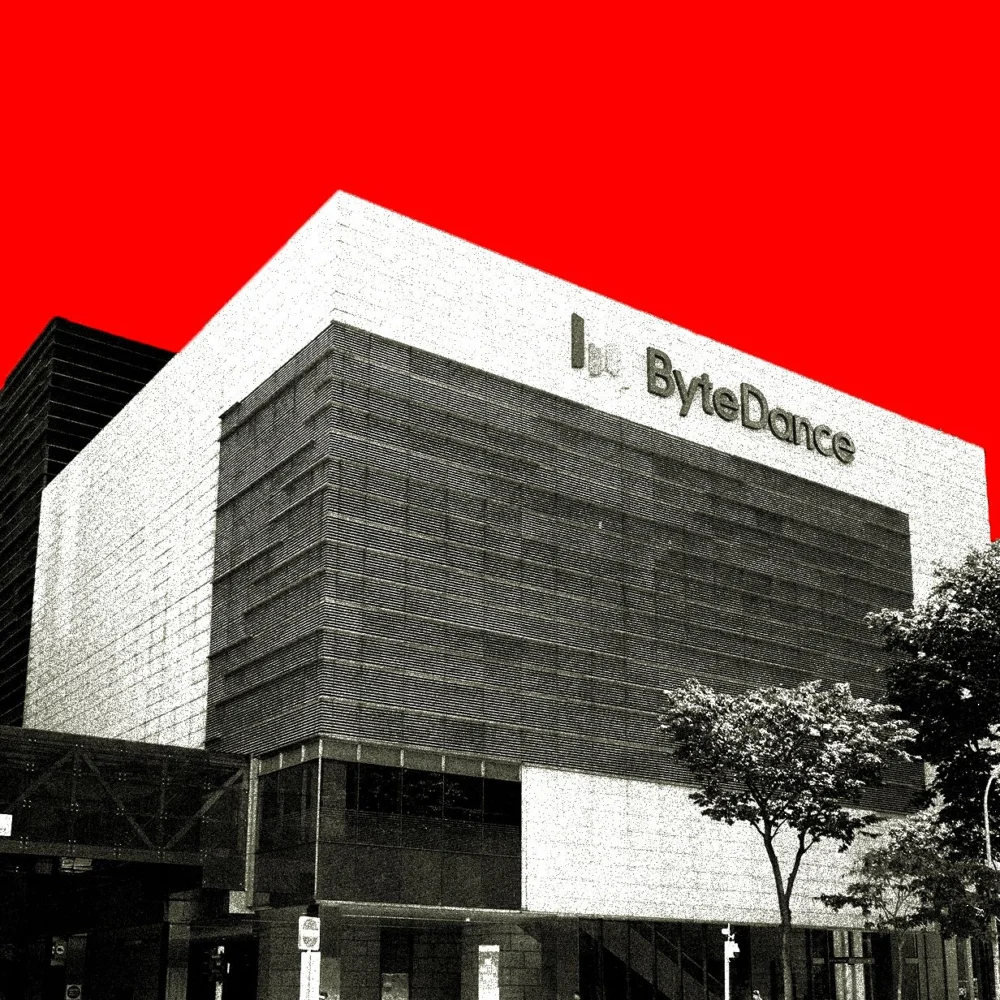
ByteDance, the Beijing-based parent company of TikTok and Douyin, has fundamentally shifted the landscape of the generative artificial intelligence sector with the unveiling of Seedance 2.0. Originally a relatively obscure project within the company’s vast research and development ecosystem, the upgraded model has rapidly emerged as a formidable competitor to Western counterparts like OpenAI’s Sora. In early February, ByteDance transitioned Seedance from a technical curiosity into a centerpiece of its AI strategy, shocking industry observers with its ability to generate high-fidelity, cinematically coherent video content. The release has sparked a dual narrative: one of immense creative potential that has captivated China’s entertainment elite, and another of significant infrastructure and legal hurdles that threaten to dampen its global rollout.
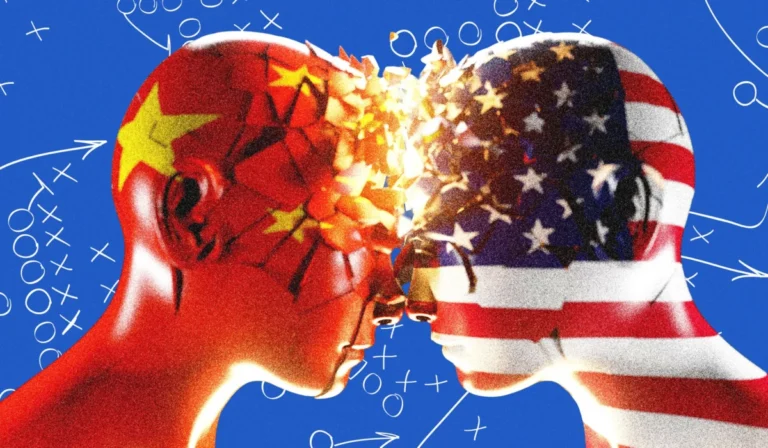
The arrival of Seedance 2.0 marks a critical juncture in the ongoing technological rivalry between the United States and China. While American firms have largely dominated the conversation around Large Language Models (LLMs) and AI-assisted coding tools, Chinese developers have carved out a dominant niche in the creative video space. Analysts suggest that Seedance 2.0 represents the pinnacle of this trend, offering a "director-centric" approach to video generation that prioritizes temporal consistency and aesthetic depth. However, the model’s debut has also exposed the acute pressure on China’s domestic computing power and the fragility of international intellectual property frameworks in the age of generative media.
Technical Capabilities and Industry Reception
Seedance 2.0 distinguishes itself through what industry experts describe as an advanced understanding of cinematic language. Unlike earlier models that often produced "slop"—a term used to describe AI-generated content characterized by hallucinatory glitches and lack of logical flow—Seedance 2.0 demonstrates a sophisticated grasp of lighting, physics, and character continuity. Pan Tianhong, a prominent Chinese video production lead with a social media following exceeding 15 million, noted that the model "thinks like a director," suggesting it understands the nuances of framing and scene progression rather than merely predicting the next pixel in a sequence.
The impact of these capabilities was felt most strongly within the high-stakes world of Chinese software and game development. Feng Ji, the founder of Game Science—the studio behind the record-breaking global hit Black Myth: Wukong—expressed profound surprise at the model’s proficiency. Feng’s endorsement is particularly noteworthy given his role in elevating China’s reputation for high-end digital production. His assessment, however, came with a caveat: he warned that the model’s ability to replicate complex visual styles would pose "significant challenges" to existing content moderation systems and copyright regulations, which were not designed to handle the rapid-fire generation of professional-grade assets.
A Chronology of the Seedance 2.0 Rollout
The trajectory of Seedance 2.0 from a niche internal tool to a public-facing phenomenon followed a calculated but turbulent path.
- Early February: ByteDance officially unveils the Seedance 2.0 upgrade. Initial demonstrations show a marked improvement in video duration and character stability compared to version 1.0.
- Mid-February: The model is integrated into ByteDance’s domestic AI ecosystem, including the flagship Doubao chatbot and creative apps like Jimeng and Xiaoyunque. Access is restricted to users with Chinese phone numbers and verified accounts.
- February 16: Acclaimed director Jia Zhangke releases a collaborative video created with the Doubao chatbot, signaling the Chinese film industry’s willingness to experiment with the technology.
- Late February: Global attention intensifies as "leaked" clips appear on Western social media platforms like X (formerly Twitter). These clips include AI-generated mashups of Hollywood characters, such as Wolverine fighting the Hulk.
- Early March: ByteDance updates its API platform, providing the first concrete data on the model’s commercial viability. Estimates suggest a 15-second video costs approximately $2 to generate.
- Current Phase: The model faces a "compute wall." Users report wait times exceeding eight hours for a single five-second clip, as ByteDance struggles to allocate enough Graphics Processing Units (GPUs) to meet overwhelming demand.
The Infrastructure Crisis: The GPU Bottleneck
Despite ByteDance’s status as one of the world’s most valuable private tech companies, the rollout of Seedance 2.0 has been hampered by a severe lack of computational resources. Generating high-resolution video is exponentially more "compute-heavy" than generating text. While a chatbot can process thousands of requests per minute, a video model must calculate the physics and lighting for 24 to 60 frames per second of footage.
The current user experience highlights this disparity. Reports indicate that the queue for video generation can exceed 90,000 users at any given time. For many, the process is prohibitive; a user attempting to generate a five-second clip may be told they are at the end of a four-hour queue, only to find the wait time has doubled several hours later due to the prioritization of paid subscribers. ByteDance has introduced tiered subscription models, with the highest tier costing upwards of $70 per month, yet even these premium users are not immune to delays.
This bottleneck is partly a reflection of the broader geopolitical landscape. US-led export restrictions on high-end AI chips, such as the Nvidia H100 and A100, have forced Chinese tech giants to rely on stockpiled hardware or domestic alternatives that may not yet match the efficiency of Western silicon. While ByteDance has invested heavily in its own data centers, the sheer scale of public interest in Seedance 2.0 has outpaced its current capacity. Furthermore, users have expressed frustration with a "final review" stage. After waiting hours for a video to reach 99% completion, the model’s internal safety filters may flag the content as a violation of moderation policies, resulting in a total loss of the generated asset and forcing the user to restart the process.
Economic Feasibility and API Integration
As ByteDance prepares to move Seedance 2.0 toward a broader commercial release, the pricing of the model has become a subject of intense scrutiny. According to estimates from the Chinese publication IT Home, based on ByteDance’s recent API disclosures, a 15-second video—the maximum duration currently supported—would cost roughly 15 Chinese yuan (approximately $2.10).
While this price point is significantly lower than the cost of traditional live-action filming or manual CGI production, it remains high for casual consumers and small-scale creators. For professional studios, however, the ability to generate a high-quality 15-second sequence for $2 represents a potential paradigm shift in pre-visualization and background asset creation. ByteDance has not yet opened API access to third-party developers, but the disclosure of these pricing structures suggests that the company is moving toward a B2B (Business-to-Business) model where Seedance could power external creative suites and marketing platforms.
Legal Contention and Intellectual Property Risks
The most significant threat to the global expansion of Seedance 2.0 is not technical, but legal. Shortly after the model began gaining traction, major Hollywood entities—including Disney, Netflix, and Paramount—reportedly issued cease-and-desist letters to ByteDance. The core of the dispute lies in the model’s training data and its output. Social media has been flooded with Seedance-generated videos featuring copyrighted characters and the likenesses of famous actors, often in scenarios that would never be authorized by the rights holders. Examples include a "dance-off" between Michael Jackson and historical figures, and battle sequences between Marvel and DC characters.
In China, the legal environment for intellectual property is notably different from that of the United States. Chinese creators have historically operated under more flexible IP protections, and the domestic entertainment industry has been more permissive regarding the use of AI to "remix" existing content. For instance, Pan Tianhong discovered that Seedance 2.0 could perfectly mimic his speaking voice without his explicit consent. His reaction—brushing it off as an inevitable consequence of modern terms of service—stands in stark contrast to the litigation-heavy environment of Hollywood, where actors and writers recently engaged in months-long strikes to secure protections against AI replication.
Afra Wang, a tech analyst and author of the Concurrent newsletter, suggests that this divergence in IP philosophy has given Chinese AI models a temporary advantage in popularity. By allowing users to generate content involving familiar characters and celebrities, ByteDance has fostered a viral ecosystem that drives adoption. However, Wang warns that this "wild west" approach will likely lead to a "hard ceiling" when these models attempt to enter Western markets, where copyright infringement carries heavy financial and reputational penalties.
Cultural Divergence: Hollywood vs. China’s Entertainment Industry
The reaction of the Chinese film industry to Seedance 2.0 has been surprisingly optimistic compared to the apprehension felt in the West. While Hollywood directors like Guillermo del Toro have expressed concerns that AI will erode the human soul of cinema, Chinese icons like Jia Zhangke are leaning into the technology. Jia’s five-minute experimental clip, featuring AI avatars of himself, was presented as a "collaboration" rather than a replacement for human creativity.
This sentiment was echoed during this year’s Spring Festival Gala, China’s most-watched annual television broadcast. The state-sponsored event utilized Seedance 2.0 to generate digital backdrops, providing a powerful endorsement from the highest levels of Chinese media. This suggests that in China, AI video is being framed as a tool for national technological pride and industrial efficiency, whereas in the US, it is often viewed through the lens of labor displacement and artistic devaluation.
Implications for the Global AI Landscape
The development of Seedance 2.0 underscores a growing specialization in the global AI race. As Afra Wang notes, China has yet to produce a dominant AI coding tool on par with Claude or GitHub Copilot, leaving Chinese developers dependent on American software. Conversely, in the realm of video AI, China appears to be "miles ahead" in terms of consumer accessibility and creative output.
The success of Seedance 2.0, however, remains tethered to ByteDance’s ability to solve its infrastructure and moderation issues. If the company can secure the necessary compute power and navigate the minefield of international copyright law, Seedance 2.0 could become the standard-bearer for the next generation of digital media. For now, the model serves as a high-resolution glimpse into a future where the line between synthetic and reality is increasingly blurred, even as the hardware and laws of the present struggle to keep pace.
About the Author