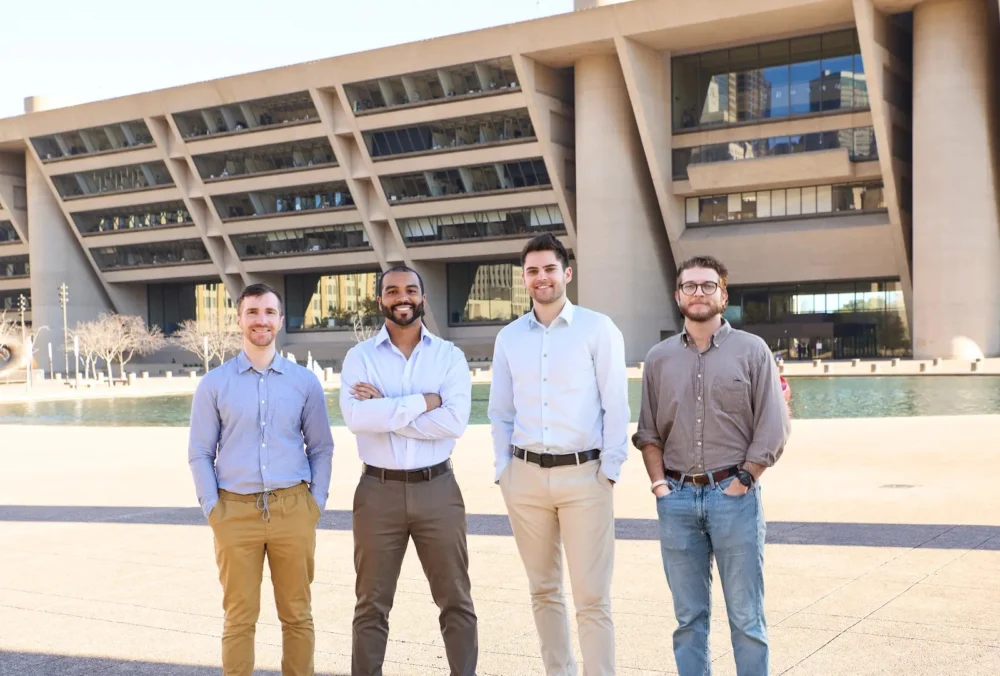
City Detect, a pioneering company leveraging vision artificial intelligence to empower local governments in monitoring the health and integrity of urban infrastructure and neighborhoods, announced on Friday the successful closure of a $13 million Series A funding round. This significant investment was spearheaded by Prudence Venture Capital, a firm renowned for its strategic investments in proptech and urban innovation. The capital infusion underscores growing investor confidence in technology solutions aimed at modernizing public services and enhancing urban resilience.
Addressing the Pervasive Challenge of Urban Decay
The startup, which officially launched its operations in 2021, was co-founded by Gavin Baum-Blake, who now serves as its Chief Executive Officer. Baum-Blake articulated the company’s foundational premise: a direct response to the persistent struggles faced by municipalities in combating "urban blight and decay." These issues, ranging from neglected infrastructure and dilapidated properties to pervasive litter and illegal dumping, not only detract from the aesthetic appeal of communities but also pose significant economic and social challenges. Traditional methods of identifying and addressing these problems are often manual, resource-intensive, and inherently reactive, leading to delays and inefficiencies that exacerbate the cycle of urban decline. City Detect emerged from the vision that advanced computer vision and artificial intelligence technologies could offer a proactive, scalable, and systematic approach to track and rectify these widespread urban challenges, transforming how cities manage their physical environments.
The problem of urban blight is a complex, multifaceted issue with profound implications for community well-being and economic vitality. According to a 2017 study by the National Community Stabilization Trust, vacant and abandoned properties alone can reduce the value of nearby homes by 10-20%, collectively costing homeowners billions of dollars annually. Beyond financial implications, blight contributes to increased crime rates, reduced public safety, and a diminished sense of community pride. Historically, city code enforcement departments have relied on citizen complaints or manual inspections—often conducted by a small team of inspectors physically patrolling designated areas. This method is not only slow and costly but also often inconsistent, leaving vast areas of a city unmonitored for extended periods, allowing minor issues to escalate into significant problems. City Detect’s solution aims to disrupt this inefficient status quo by providing a data-driven, continuous monitoring system.
A Technological Leap in Urban Surveillance and Management
City Detect’s innovative operational model involves mounting high-resolution cameras on public vehicles already traversing city streets, such as garbage trucks and street sweepers. As these vehicles perform their regular routes, the cameras continuously capture detailed photographic imagery of surrounding buildings and public spaces. This vast stream of visual data is then fed into City Detect’s proprietary computer vision platform, which employs sophisticated AI algorithms to analyze the images in real-time. The system is designed to identify a broad spectrum of urban issues that indicate neglect or non-compliance with municipal codes.
Baum-Blake elaborated on the specific types of problems the AI is trained to detect, telling TechCrunch, "The problems could be graffiti, illegal dumping, litter that’s on the side of the road." However, the system’s capabilities extend far beyond these surface-level issues. It can also identify structural deficiencies in buildings, such as damaged roofs or deteriorating facades, and even detect the aftermath of significant weather events like storm damage. Furthermore, the technology aids local governments in tracking landlord compliance, ensuring that property owners are properly maintaining their buildings and adhering to housing standards. The analogy to Google Maps Street View is apt, but with a crucial distinction: while Street View offers a general visual record, City Detect’s system is purpose-built and highly specialized, focusing specifically on ensuring buildings and public spaces are up to code and well-maintained.
Upon detecting an issue, City Detect’s platform processes the information, categorizes it, and then collaborates with local governments to initiate a resolution process. This typically involves local officials dispatching a crew to address the identified problem, whether it’s cleaning up litter, removing graffiti, or notifying property owners of necessary repairs. The efficiency gains are stark. Baum-Blake highlighted the dramatic difference, noting that human inspectors might realistically track "50 [issues] per week," whereas City Detect’s automated system is "able to do thousands per week." This exponential increase in detection capability allows cities to transition from a reactive, complaint-driven model to a proactive, preventative approach to urban management.
Precision, Privacy, and Patented Innovation
A critical aspect of City Detect’s technology, particularly given the sensitive nature of public surveillance, is its robust commitment to privacy and ethical AI use. The company’s patented product incorporates essential features designed to safeguard individual privacy: all identifiable information, such as faces and license plates captured in the imagery, is automatically blurred by the system. This ensures that while urban conditions are monitored, personal anonymity is preserved, addressing a significant concern often associated with pervasive camera networks.
Beyond privacy, the AI exhibits remarkable discernment. One of its more "fun and essential features," as described by Baum-Blake, is its ability to differentiate between legitimate street art and mere vandalism. This nuanced capability is vital for cities seeking to preserve cultural expression while simultaneously combating destructive defacement. Such sophisticated analysis minimizes false positives and ensures that municipal resources are directed precisely where they are needed, rather than misallocated to misidentified issues. This precision is crucial for building trust with communities and ensuring the effective deployment of the technology.
Furthermore, the system’s capacity to identify complex issues like structural roof damage or storm damage represents a significant leap forward in preventative urban maintenance. By detecting these problems early, cities can intervene before they escalate into costly emergencies or safety hazards, thereby protecting property values and public safety. This proactive identification of potential hazards positions City Detect not just as a clean-up facilitator but as a vital tool for long-term urban infrastructure health.
Strategic Investment for Widespread Impact
The $13 million Series A round, bringing City Detect’s total funding to $15 million to date, is a testament to the venture capital community’s belief in the company’s vision and market potential. Prudence Venture Capital’s lead in the round is particularly noteworthy, given its expertise in identifying disruptive technologies within the real estate and urban development sectors. Their investment signals confidence in City Detect’s ability to scale its operations and cement its position as a leader in the GovTech landscape. Additional participation from Zeal Capital Partners, Knoll Ventures, and Las Olas Venture Capital further solidifies this vote of confidence, bringing diverse strategic insights and networks to the company’s growth trajectory.
Gavin Baum-Blake outlined the strategic deployment of the newly acquired capital. A primary focus will be on aggressively expanding the engineering team. This expansion is critical for enhancing the core AI platform, refining existing detection capabilities, and developing new features. A specific area of advanced development slated for investment is the storm-detection damage technology, which will enable cities to rapidly assess the extent of damage after natural disasters, facilitating quicker and more targeted recovery efforts. Beyond technological advancements, the funding will fuel City Detect’s ambitious expansion plans throughout the United States, aiming to bring its transformative solution to a broader array of municipalities grappling with urban blight.
The economic implications of this expansion are considerable. As more cities adopt City Detect’s platform, the market for GovTech solutions, particularly those involving AI and data analytics, is expected to grow significantly. The global smart cities market, already valued at hundreds of billions of dollars, is continuously seeking innovative solutions to improve urban living. City Detect positions itself squarely within this burgeoning market, offering a tangible, quantifiable return on investment for municipalities through increased efficiency, improved urban aesthetics, and enhanced public safety.
Pioneering Responsible AI in Public Service
Recognizing the ethical complexities inherent in deploying AI-powered surveillance technologies in public spaces, City Detect has proactively embraced a strong stance on responsible AI and data governance. The company is a proud member of the GovAI Coalition, an AI governance collective dedicated to fostering ethical and transparent AI deployment in government. Furthermore, City Detect has achieved SOC 2 Type II compliance, an independent certification that attests to its rigorous controls over data security, availability, processing integrity, confidentiality, and privacy. This certification provides critical assurance to government partners that their data, and the data of their citizens, is handled with the highest standards of security and privacy.
Perhaps most significantly, City Detect has published its own comprehensive Responsible AI policy. Baum-Blake emphasized the impetus behind this initiative: "We published our Responsible AI policy in response to a consortium of local governments that stated they were looking for clarity on what vendors were actually willing to commit to." He added, "We committed to this policy so that our local government partners could know what to expect from us." This transparency and commitment to ethical guidelines are paramount in building trust with public sector clients and the communities they serve. The policy outlines City Detect’s principles regarding data usage, algorithm bias mitigation, transparency, and accountability, setting a benchmark for responsible innovation in the GovTech space. Such proactive measures are crucial for navigating the evolving landscape of AI regulation and public perception, positioning City Detect as a trustworthy partner for governments.
Transforming Urban Operations and Future Outlook
City Detect’s impact is already being felt in the municipalities where it operates. The company currently partners with local governments in at least 17 cities, including prominent urban centers like Dallas and Miami. The tangible benefits reported by these early adopters are compelling. Baum-Blake highlighted the observed outcomes: "We are seeing huge efficiency gains across the departments that we work with, we’re seeing more instances of blight being solved without anyone receiving a citation, we’re seeing tires and litter, and illegal dumping being abated quicker and detected quicker." These results demonstrate the platform’s ability not only to identify problems but also to facilitate their resolution in a more efficient and less punitive manner, fostering community cooperation rather than adversarial enforcement.
The shift towards "predictive AI" is a cornerstone of City Detect’s long-term vision. By continuously monitoring and analyzing urban data, the system can potentially identify patterns and predict areas where blight is likely to emerge, allowing cities to intervene even before problems manifest. This proactive and preventative approach represents a paradigm shift in urban management, moving beyond reactive problem-solving to anticipatory governance. Baum-Blake expressed enthusiasm for this trend, stating, "It’s exciting to see technology-forward municipalities lean into predictive AI like City Detect’s models."
The broader implications for urban development are profound. By providing a comprehensive, real-time understanding of urban conditions, City Detect empowers city planners and officials with unprecedented data-driven insights. This can inform resource allocation, urban planning initiatives, and policy development, leading to more equitable and sustainable urban environments. As the company expands its reach and refines its technology, it holds the potential to become an indispensable tool for cities striving to enhance livability, economic vitality, and overall quality of life for their residents. The journey from manual inspections to AI-powered urban intelligence marks a significant evolution in municipal governance, with City Detect at its forefront.
About the Author