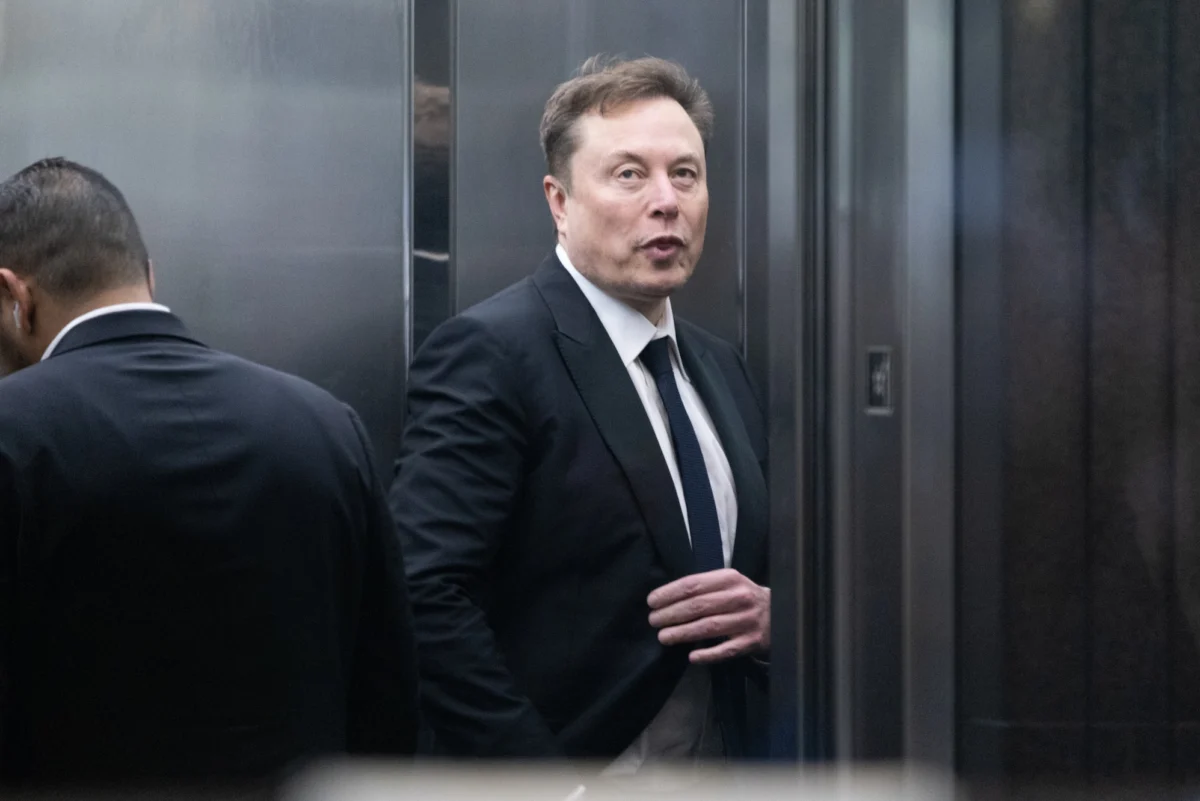
Elon Musk, the often-audacious CEO of Tesla and SpaceX, and founder of The Boring Company, has once again ignited public discourse with a bold proposal: a "simple precursor Hyperloop" connecting Austin and San Antonio, Texas. In a recent social media post on September 20, 2026, Musk claimed this ambitious infrastructure project could slash the travel time between the two major Texas cities to under 30 minutes. The announcement, shared across his personal platform and subsequently amplified by The Boring Company’s official account, has sparked a renewed wave of both excitement and skepticism regarding the feasibility and realization of such high-speed transit systems.
The Boring Company, in its own statement, expressed enthusiasm for the potential undertaking, noting they "would be excited and honored to build this massive infrastructure project." This declaration comes at a pivotal moment for the tunneling and infrastructure firm, which has recently secured a significant $3 billion funding round, reportedly led by investors from the United Arab Emirates. This infusion of capital suggests a renewed commitment and potentially expanded capacity for The Boring Company to pursue large-scale ventures.
However, the history of The Boring Company’s announced projects is marked by a series of ambitious plans that have yet to reach fruition. Past proposals for extensive tunnel systems in major metropolitan areas such as Chicago, Los Angeles, and a transcontinental link between New York City and Washington D.C. have faced considerable delays or have not materialized as initially envisioned. This pattern has led to a degree of public wariness when confronting new, grand-scale initiatives from the company. Despite these unfulfilled promises, The Boring Company does operate a functional transportation system in Las Vegas, which integrates both underground tunnels and surface routes, demonstrating a capacity for operational deployment.
Musk’s latest pronouncement regarding the Austin-San Antonio Hyperloop emerged as a response to an AI-generated video depicting a futuristic vision of interstellar colonization. Musk, who had re-posted the video with the declarative statement, "This is the future we shall bring into being," appears to be drawing inspiration from expansive, science-fiction-esque narratives. This alignment with speculative futures has drawn commentary from critics, including historian Jill Lepore, who has previously articulated concerns that such visions, often rooted in pulp science fiction and comic books, may be detached from practical realities and even contradict the proponents’ stated ideologies.
The Hyperloop Concept: A Technological Evolution
The Hyperloop concept, first publicly outlined by Elon Musk in a 2013 white paper, envisions a revolutionary mode of transportation that propels passenger and cargo pods through a low-pressure tube at extremely high speeds, potentially exceeding 700 miles per hour. The system aims to overcome the limitations of traditional rail and air travel by minimizing air resistance and friction. Musk’s initial proposal envisioned a system that could connect cities hundreds of miles apart within minutes, a stark contrast to current transit times.
The technical underpinnings of a Hyperloop system typically involve several key components:
- Low-Pressure Tubes: A sealed tube network where air has been significantly evacuated to create a near-vacuum environment. This drastically reduces aerodynamic drag, allowing for higher speeds with less energy expenditure.
- Levitation Technology: Pods are designed to levitate within the tube, either through magnetic levitation (maglev) or air bearings, eliminating friction with a track.
- Propulsion Systems: Electric linear motors or compressors are employed to accelerate the pods to high speeds.
The proposed Austin-San Antonio link, described by Musk as a "simple precursor Hyperloop," suggests a scaled-down or foundational version of the full concept. This could imply a focus on essential infrastructure and operational testing rather than a fully realized, long-distance passenger network. The distance between Austin and San Antonio is approximately 80 miles, a considerably shorter span than the transcontinental routes initially theorized. This more manageable distance might present a more achievable testbed for Hyperloop technology and its associated challenges.
The Boring Company’s Trajectory and Funding Landscape
The Boring Company, founded in 2016, has primarily focused on developing cost-effective tunneling technologies. Its initial goal was to alleviate urban traffic congestion through the construction of underground "Loop" systems, which utilize electric vehicles traveling at moderate speeds within tunnels. While some Loop systems have been deployed, such as the one at the Las Vegas Convention Center, the broader vision of a city-wide underground transit network has faced significant hurdles, including regulatory approvals, community opposition, and economic viability concerns.
The recent $3 billion funding round is a substantial development for The Boring Company. While the specific terms and the full composition of the investor group have not been publicly disclosed, the significant capital injection signals strong investor confidence. This influx of funds could be critical for accelerating research and development, scaling up manufacturing capabilities, and undertaking pilot projects like the proposed Texas Hyperloop. The involvement of UAE-based investors might also point towards potential international expansion or collaboration opportunities for The Boring Company.

However, the company’s financial history has also been characterized by periods of fundraising and reliance on founder investment. Prior to this latest round, The Boring Company had raised funds through various means, including debt financing and equity rounds. The successful closure of this large funding round provides a crucial financial runway for ambitious projects.
Historical Context of Ambitious Transit Projects
Elon Musk’s ventures are often characterized by their ambitious scope and a tendency to challenge established norms. The Hyperloop concept itself was born out of a desire to revolutionize intercity travel, offering a potentially faster and more energy-efficient alternative to existing modes of transport. The idea has captured the imagination of many, with numerous companies and research institutions exploring various aspects of the technology.
However, the path to realizing such advanced transportation systems is fraught with challenges. These include:
- Technological Hurdles: Achieving and maintaining the near-vacuum conditions in long tubes, ensuring the safety and reliability of high-speed levitating pods, and developing robust control systems are complex engineering feats.
- Economic Viability: The immense upfront cost of constructing and maintaining Hyperloop infrastructure, including tunneling, tube fabrication, and station development, is a significant barrier. Demonstrating a clear return on investment and competitive pricing for passengers is crucial.
- Regulatory and Environmental Approvals: Securing land rights, navigating environmental impact assessments, and obtaining permits for large-scale infrastructure projects can be a lengthy and complex process, especially for novel technologies.
- Public Acceptance and Safety Concerns: Ensuring public trust in the safety of traveling at such high speeds in enclosed environments is paramount. Any perceived risks could severely hinder adoption.
The history of large-scale transportation projects globally is replete with examples of ambitious plans that have faced significant delays, cost overruns, or have been ultimately abandoned due to these multifaceted challenges. From high-speed rail networks to advanced aviation concepts, innovation in transportation often requires sustained commitment, technological breakthroughs, and broad societal support.
Analysis of Implications: Austin-San Antonio Corridor
The Austin-San Antonio corridor is a rapidly growing region in Texas, experiencing significant population and economic expansion. The increasing demand for transportation between these two metropolitan areas, coupled with the existing traffic congestion on Interstate 35, makes it a logical candidate for advanced transit solutions.
Potential Positive Implications:
- Economic Boost: The construction of such a project would create numerous jobs, from engineering and manufacturing to construction and operations. It could also spur economic development in areas surrounding potential stations.
- Reduced Commute Times: A sub-30-minute commute would fundamentally alter the way people live, work, and interact within the region, potentially blurring the lines between the two cities and fostering greater integration.
- Environmental Benefits: If powered by renewable energy sources, a Hyperloop system could offer a more sustainable alternative to current modes of transportation, reducing carbon emissions.
- Technological Advancement: A successful deployment would serve as a significant milestone in the development and validation of Hyperloop technology, paving the way for its wider adoption globally.
Potential Challenges and Considerations:
- Feasibility and Cost: The primary challenge remains the immense cost and technical complexity of building a functional Hyperloop system, even a "precursor" version. Securing the necessary private and public funding will be critical.
- Land Acquisition and Rights-of-Way: Acquiring the land needed for the tube infrastructure and stations along the 80-mile stretch will likely involve complex negotiations and potentially eminent domain proceedings.
- Environmental Impact: While potentially more sustainable than current options, the construction phase could have significant environmental impacts, including land disruption and resource consumption.
- Integration with Existing Infrastructure: The system would need to be seamlessly integrated with existing urban transportation networks in both Austin and San Antonio to maximize its utility.
- Public Perception and Safety: Addressing public concerns about safety and reliability will be crucial for widespread adoption.
The statement by The Boring Company that they would be "excited and honored to build this massive infrastructure project" suggests a strong internal desire to pursue this endeavor. Given the recent substantial funding, the company appears to be positioning itself to take on such large-scale projects. However, the historical precedent of unfulfilled announcements necessitates a cautious approach to assessing the immediate likelihood of this Hyperloop becoming a reality.
Looking Ahead: A Future of High-Speed Transit?
Elon Musk’s vision of the future, often intertwined with science fiction and ambitious technological leaps, continues to push the boundaries of what is considered possible. The proposal for a Hyperloop between Austin and San Antonio, while ambitious, is grounded in a technological concept that has been under development for years. The recent significant investment in The Boring Company provides a tangible basis for the company to pursue such groundbreaking initiatives.
Whether this particular Hyperloop project will materialize remains to be seen. It will undoubtedly face rigorous scrutiny regarding its technical feasibility, economic viability, and regulatory hurdles. However, the mere articulation of such bold ideas serves to stimulate innovation and public dialogue about the future of transportation. As The Boring Company navigates the complexities of this potential project, the world will be watching to see if this latest audacious proposal can overcome the historical challenges and pave the way for a new era of high-speed intercity travel in Texas and beyond. The success or failure of this endeavor will offer valuable insights into the practical application of Hyperloop technology and the broader landscape of disruptive infrastructure development in the 21st century.
About the Author