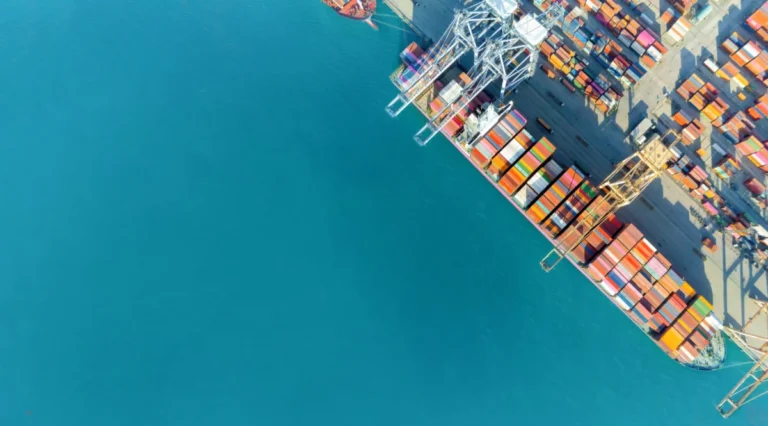
The International Chamber of Commerce (ICC) has issued a stark warning to global policymakers, asserting that the reflexive imposition of export restrictions in response to supply chain shocks often exacerbates the very instability they are intended to mitigate. As recent geopolitical tensions and maritime disruptions—most notably in the Strait of Hormuz—threaten the flow of food, fertilizers, and critical agricultural inputs, the ICC argues that these unilateral trade barriers risk transforming localized market fluctuations into full-scale global emergencies. History has shown that while governments frequently turn to export bans or taxes to protect domestic consumers from rising prices, these measures frequently backfire, triggering a "domino effect" that drives international prices to record highs and undermines the long-term resilience of the global food system.
The Paradox of Export Restrictions and Market Stability
The core of the ICC’s argument rests on the observation that export restrictions are a counterproductive tool for ensuring food security. In theory, a government limits exports to increase domestic supply and lower local prices. However, when a major producer withdraws from the global market, the sudden reduction in supply causes international prices to surge. This often prompts other exporting nations to follow suit to protect their own stocks, creating a cycle of protectionism that chokes global trade.
According to data from the World Bank and the International Food Policy Research Institute (IFPRI), the proliferation of export restrictions during times of crisis has historically accounted for a significant portion of price spikes. During the 2007–2008 global food crisis, it was estimated that export restrictions were responsible for roughly 45% of the increase in the world price of rice and nearly 30% of the increase in wheat prices. These statistics underscore a fundamental reality of modern trade: in an interconnected global economy, no nation is an island, and domestic "solutions" often carry heavy international costs.
A Chronology of Trade Disruptions and Policy Reactions
To understand the current risks, it is essential to examine the timeline of recent market shocks and the subsequent policy failures that have shaped the contemporary trade landscape.
The 2007–2008 Food Price Crisis
The 2007–2008 period serves as a primary case study for the dangers of export bans. A combination of rising energy costs, increased demand for biofuels, and poor harvests led to a tightening of global grain supplies. In response, more than 30 countries imposed some form of export restriction. India and Vietnam, two of the world’s largest rice exporters, implemented bans that sent the price of rice soaring by 70% in a matter of months. This did little to help the domestic poor in the long run, as the resulting global price volatility made imported goods more expensive and disrupted local agricultural incentives.
The COVID-19 Pandemic (2020–2021)
At the onset of the COVID-19 pandemic, fears of food shortages led several nations to restrict exports of staples like wheat and buckwheat. However, unlike previous crises, the global community responded with greater transparency, and many of these measures were short-lived. Organizations like the WTO and the G20 urged restraint, which prevented a total collapse of the food trade. Nevertheless, the logistics of the pandemic highlighted the fragility of "just-in-time" supply chains.
The 2022 Russia-Ukraine Conflict
The invasion of Ukraine in February 2022 represented a "perfect storm" for global agriculture. Ukraine and Russia together accounted for nearly 30% of global wheat exports and a significant portion of the world’s sunflower oil and fertilizer. The sudden removal of these supplies from the market, coupled with subsequent export bans from other nations (such as India’s ban on wheat exports in May 2022), sent the FAO Food Price Index to an all-time high in March 2022. The crisis was particularly acute in the fertilizer sector, where Russia’s restricted exports of potash and ammonia caused prices to triple, threatening future crop yields in developing nations.
Current Tensions in the Strait of Hormuz (2023–2024)
Today, the focus has shifted toward maritime chokepoints. The Strait of Hormuz is a vital artery for the transit of energy, but it is also a critical corridor for agricultural inputs moving into the Middle East and North Africa. Disruptions in this region, whether due to piracy, regional conflict, or state-led seizures, create immediate pressure on shipping insurance and transit times. When governments react to these logistical delays by hoarding supplies or restricting exports, they amplify the logistical shock into a price shock.
Analyzing the Multiplier Effect on Supply Chains
The impact of export restrictions extends far beyond the immediate price of bread or rice. The ICC highlights several "hidden" costs that erode the foundations of global trade:
- Contractual Breaches and Legal Uncertainty: When a government suddenly bans exports, it often forces domestic companies to declare force majeure, defaulting on long-standing international contracts. This leads to costly legal disputes and undermines the sanctity of commercial agreements.
- Financing and Insurance Risks: Increased market volatility makes it more difficult and expensive for traders to secure the financing necessary to move large quantities of food. Banks are less willing to provide credit for shipments that might be seized or blocked at a port of exit.
- Disincentivizing Production: If farmers are prevented from selling their crops at international market prices, their profit margins shrink. This reduces their ability to invest in better seeds, fertilizers, and equipment for the following season. Over time, export restrictions can lead to a decrease in domestic production, ironically making the country more dependent on imports.
- Reputational Damage: Countries that frequently resort to export bans gain a reputation as unreliable trade partners. In the long term, importing nations will seek to diversify their suppliers, leading to a permanent loss of market share for the restricting nation.
Supporting Data: The Magnitude of the Problem
Evidence from the World Trade Organization (WTO) suggests that as of late 2023, dozens of export-restrictive measures on food and fertilizers remain in place globally. While some of these are "temporary" measures, their persistence creates a "new normal" of trade fragmentation.
| Commodity Group | Average Price Increase during Restrictions (2022) | Number of Countries with Active Bans (Peak 2022) |
|---|---|---|
| Wheat | 25% – 40% | 18 |
| Vegetable Oils | 30% – 50% | 12 |
| Fertilizers | 60% – 100% | 15 |
| Rice | 15% – 20% | 8 |
Source: Compiled from WTO and IFPRI Trade Tracker data.
The data indicates that fertilizers are particularly sensitive to trade policy. Because fertilizer production is concentrated in a few energy-rich nations, any restriction in those regions has an immediate and devastating impact on the productivity of farmers globally, particularly in sub-Saharan Africa and parts of Asia.
Official Responses and the ICC’s Strategic Recommendations
In response to these challenges, the ICC is calling for a fundamental shift in how governments approach trade policy during crises. The organization argues that export restrictions should be viewed as a "last resort" rather than a first response. The ICC’s recommendations include:
- Mandatory Transparency and Notification: Governments must notify the WTO and their trade partners well in advance of any planned restrictions. This allows markets to adjust and prevents "panic buying" by importing nations.
- Exemptions for Humanitarian Aid: The ICC advocates for a universal agreement that food destined for humanitarian purposes, such as the World Food Programme (WFP), should never be subject to export restrictions or taxes.
- Targeted Social Safety Nets: Instead of broad export bans that distort markets, the ICC suggests that governments should use targeted subsidies or cash transfers to help their most vulnerable citizens cope with rising food prices. This protects the poor without destroying the international trade system.
- International Coordination: Platforms like the Agricultural Market Information System (AMIS) should be strengthened to provide real-time data on global stocks, reducing the uncertainty that often drives protectionist policies.
Dr. Ngozi Okonjo-Iweala, Director-General of the WTO, has echoed similar sentiments, frequently stating that "trade is a tool for resilience." At recent ministerial conferences, the WTO has pushed for a commitment from member states to exercise restraint, though achieving a binding global agreement remains a significant diplomatic challenge.
Broader Implications for Global Food Security
The long-term implications of continued export volatility are profound. We are entering an era of "polycrisis," where climate change, geopolitical rivalry, and economic instability converge. Climate-driven events—such as the 2023 heatwaves that impacted Indian wheat yields or the droughts affecting the Panama Canal—will continue to create supply shocks. If the global response to every climate shock is a new round of export bans, the world will face a permanent state of food price inflation.
Furthermore, the transition to sustainable agriculture requires massive investment. For the private sector to fund the "Green Revolution 2.0," it needs a predictable trading environment. Export restrictions create a "risk premium" that deters investment in the very technologies—such as precision farming and drought-resistant seeds—that could help solve the supply problem.
Conclusion: The Path Toward a More Resilient System
The International Chamber of Commerce’s position is clear: the path to domestic stability lies through international cooperation, not isolation. The lessons of the 2008 and 2022 crises demonstrate that protectionism is a short-term sedative with long-term toxic effects. By treating export restrictions as a last resort and focusing on transparency and targeted support, governments can prevent local disruptions from spiraling into global catastrophes.
As the situation in the Strait of Hormuz and other maritime corridors remains fluid, the international community must decide whether it will repeat the mistakes of the past or build a more robust, rules-based trade system that can withstand the shocks of the 21st century. The stability of the global food system, and the livelihoods of billions, depends on that choice.
About the Author