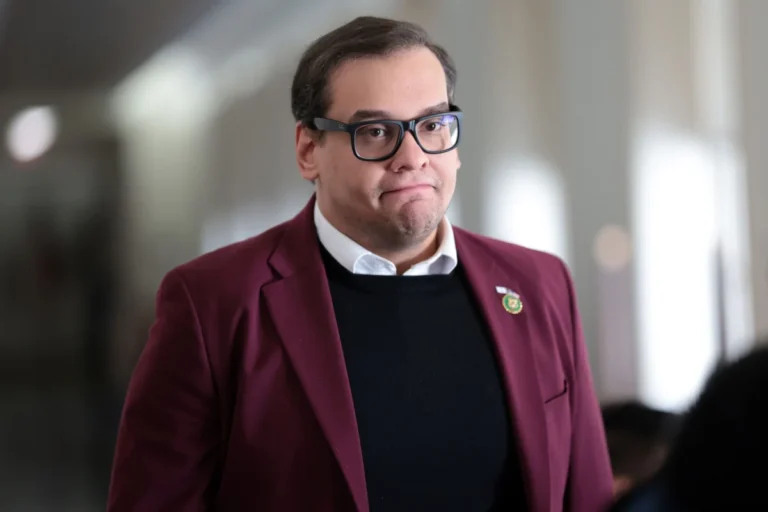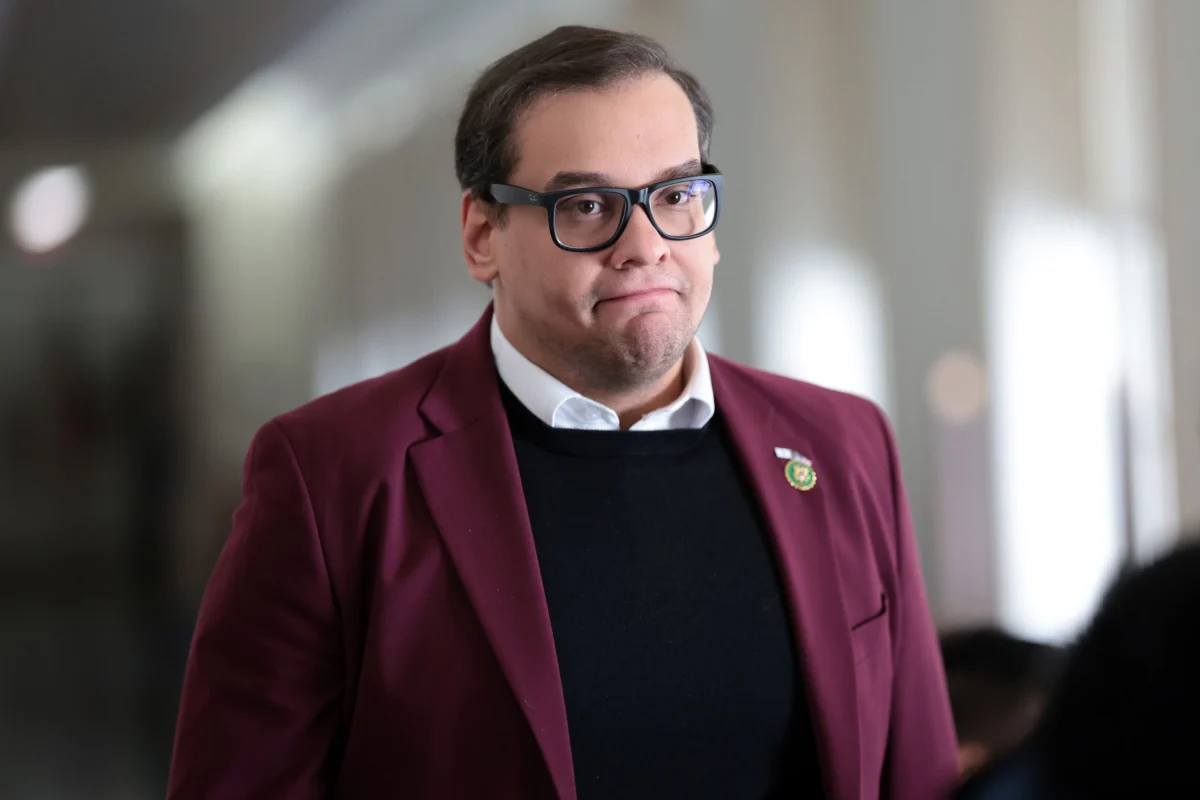
In a landmark disciplinary action that underscores the growing regulatory scrutiny of event-based betting, the prediction market platform Kalshi has issued a permanent lifetime ban against former Republican Congressman George Santos. The move, announced via an official notice of disciplinary action, includes a substantial fine of $71,356 levied against the former New York representative for what the platform describes as a calculated effort to manipulate market prices through insider information and deceptive public statements. This enforcement action marks the first time Kalshi has permanently barred a high-profile political figure, signaling a zero-tolerance policy toward participants who attempt to leverage their own actions to influence financial outcomes on the exchange.
The controversy centers on a series of trades executed by Santos in early 2026, specifically targeting contracts tied to his own attendance at President Donald Trump’s State of the Union address. According to Kalshi’s regulatory filings, Santos established significant positions in markets predicting whether he would be present in the gallery during the high-profile speech. Following the placement of these trades, the former congressman allegedly engaged in a deliberate campaign to sway the market’s perception. By issuing public statements regarding his intentions—some of which were later determined to be intentionally misleading—Santos was able to create price volatility that favored his financial positions.
The State of the Union Incident and Market Manipulation
The specific timeline of the manipulation began on the eve of the 2026 State of the Union address. Santos took to the social media platform X (formerly Twitter) to declare his intentions to the public, stating, "I’m going to be there for the State of Union in the gallery, guys." This announcement caused an immediate spike in the price of "Yes" contracts on Kalshi, as traders reacted to what appeared to be a definitive confirmation of his attendance. Because Santos was the primary actor in the event being traded, his public declaration carried the weight of insider certainty, driving the market toward a specific outcome.
However, as the presidential address commenced, the reality of the situation diverged sharply from Santos’s public claims. While the event was underway, Santos posted a follow-up message revealing that he was not at the Capitol but was instead at an airport, watching the broadcast on a television screen. His post, which concluded with the acronym "FML," effectively crashed the value of the "Yes" contracts he had previously inflated. Kalshi’s enforcement team, which monitors for suspicious trading patterns and "wash trading," immediately flagged the activity. The platform determined that Santos had used his public platform to create a "pump and dump" scenario within the prediction market, profiting from the artificial price movements he generated.
Regulatory Intervention and Previous Legal Settlements
The internal investigation by Kalshi led to the immediate freezing of Santos’s account and a formal referral to the Commodity Futures Trading Commission (CFTC), the federal agency tasked with overseeing derivatives and prediction markets in the United States. This referral followed a prior settlement between Santos and the CFTC earlier in the summer of 2026. In that instance, Santos agreed to pay $35,000 to resolve allegations involving suspicious trading activity. The settlement figure included $17,500 in disgorgement—representing the illicit profits he earned from the trades—and an additional $17,500 civil penalty.
At the time of the CFTC settlement, legal counsel for Santos emphasized that the agreement was reached to "put this matter behind him" and noted that the former congressman did not admit to any findings of fact or conclusions of law. Despite this attempt to settle the federal inquiry, Kalshi’s independent disciplinary board determined that the severity of the breach warranted a separate and more permanent internal sanction. The $71,356 fine issued by Kalshi today is intended to serve as both a punitive measure and a deterrent to other political figures who might seek to commodify their own public appearances.
A History of Legal and Ethical Turbulence
The ban from Kalshi is merely the latest chapter in the tumultuous career of George Santos, whose tenure in the public eye has been defined by a series of high-profile legal battles. Santos rose to national prominence in 2022 after winning a seat in New York’s 3rd Congressional District, only to face immediate scrutiny over extensive fabrications regarding his biography, education, and professional history. In late 2023, following an exhaustive House Ethics Committee investigation that uncovered evidence of systemic fraud, Santos became only the sixth member of the House of Representatives to be expelled by his peers.
Following his expulsion, Santos faced a multi-count federal indictment. He eventually pleaded guilty to charges including wire fraud, aggravated identity theft, and embezzling funds from campaign donors. He was sentenced to 87 months in federal prison but served only a portion of that time. In early 2025, President Donald Trump exercised his executive clemency powers to commute Santos’s sentence, allowing him to return to the public sphere. Since his release, Santos has attempted to re-establish himself as a media personality and influencer, often engaging with the burgeoning industry of prediction markets and crypto-assets.
Broader Crackdown on Political Insider Trading
While Santos is the most prominent figure to be penalized, he is not the only politician caught in Kalshi’s recent enforcement sweep. The platform also issued disciplinary notices to several other candidates and political figures who attempted to trade on the outcomes of their own elections or related political events. Among those disciplined were:
- Laurie Buckhout: A retired military officer and North Carolina congressional candidate, who was fined and suspended for trading on contracts related to her own race. Buckhout admitted to the trades, describing them as a "dumb mistake" born from a desire to "bet on herself."
- Stephen Cloobeck: A California gubernatorial candidate who faced suspension for similar trading activity.
- Ben Midgley: A Maine gubernatorial candidate also cited for violating market integrity rules.
- Mark Moran: A U.S. Senate candidate who was previously fined for insider trading. Unlike Buckhout, Moran reportedly told investigators he performed the trades "on purpose" and signaled a refusal to cooperate with the platform’s recovery efforts.
These actions reflect a broader effort by Kalshi to maintain its standing as a regulated, transparent exchange. Unlike offshore, decentralized platforms like Polymarket—which have also had a complicated relationship with Santos—Kalshi operates under the direct oversight of U.S. regulators. This requires the platform to implement rigorous anti-manipulation protocols and "Know Your Customer" (KYC) standards to prevent participants from using non-public information to gain an unfair advantage.
Industry Implications and the Future of Prediction Markets
The lifetime ban of George Santos highlights a fundamental tension within the prediction market industry: the thin line between "skin in the game" and market manipulation. Proponents of prediction markets argue that they provide more accurate forecasts than traditional polling because participants have a financial incentive to be right. However, when the subjects of the bets—politicians, CEOs, or celebrities—become the traders, the integrity of the "wisdom of the crowds" is compromised.
Kalshi spokesperson Elisabeth Diana indicated that the company attempted to resolve the matter with Santos directly, but the former congressman "actively dodged" their inquiries. The company has warned that if the $71,356 fine remains unpaid, it will pursue further legal action through the court system. Santos, for his part, has remained defiant. In a social media post, he sarcastically thanked the platform for the ban and questioned the long-term viability of the exchange, referencing Kalshi’s ongoing legal battles with various state authorities over the classification of event contracts.
As prediction markets continue to gain mainstream popularity, the "Santos Precedent" will likely serve as a foundational case study for regulators. The incident underscores the necessity of strict "insider trading" definitions that apply not just to corporate boardrooms, but to the halls of government and the social media feeds of public figures. For Kalshi, the move is a clear attempt to distance the industry from the "gambling" label and reinforce its utility as a legitimate tool for economic hedging and information gathering. For George Santos, it represents yet another door closed in a career marked by the erosion of institutional trust.
About the Author