The evolution of commerce has always been intertwined with the art of inquiry. From the earliest marketplaces where patrons questioned vendors to the digital age dominated by search engines, the fundamental human desire for information has driven innovation. Now, Artificial Intelligence (AI) has introduced a seismic shift, prompting a critical question for marketers: how can we ascertain the effectiveness of our efforts in this new AI-driven information landscape? Understanding and quantifying the return on investment (ROI) of a brand’s presence within AI-generated answers is becoming paramount.
AI search visibility ROI quantifies the business impact of a brand appearing in AI-generated responses across platforms such as ChatGPT, Gemini, and emerging Google Overviews. It seeks to bridge the gap between the frequency of brand mentions or citations by AI systems and tangible business outcomes, including website traffic, sales pipeline generation, and ultimately, closed revenue. The challenge lies in the inherent opacity of AI interactions, making direct attribution difficult and potentially costly for businesses that fail to adapt. This comprehensive guide aims to demystify AI search measurement by introducing a three-layer framework designed to illuminate the impact of AI search, enable the calculation of AI search visibility ROI, and facilitate effective reporting to leadership. For those new to the concepts of AI search and AI Engine Optimization (AEO), understanding the fundamental differences between AI search engines and traditional search is a crucial starting point.
The Attribution Conundrum in AI Search
A significant hurdle in measuring AI search visibility lies in the nature of user journeys. While some AI answers provide direct citations that generate referral traffic, many users may engage with the information without a traceable click. Consider a common AI-influenced scenario: a buyer queries an AI for product recommendations, their brand is mentioned, and a few days later, they independently search for the brand on Google. If this leads to a conversion via a paid search ad, traditional last-click attribution models will solely credit the paid search campaign, leaving AI’s influence unacknowledged. This disconnect is further exacerbated by the evolving search landscape. Data from January 2026 indicated a 2.5% year-over-year decline in U.S. organic search traffic, while AI referral traffic to retail sites surged by an astonishing 693% during the same period. This dramatic shift underscores a fundamental change in how consumers initiate their research, even if the notion that "organic search is dead" is an overstatement. The scarcity of referral data shared by AI search engines means their impact is often lost in the intricate pathways of the buyer’s journey. The solution is not to abandon attribution altogether, but to enhance it by incorporating awareness metrics and a measurement layer capable of capturing these elusive AI touchpoints.
Key Metrics for Demonstrating AI Search Visibility ROI
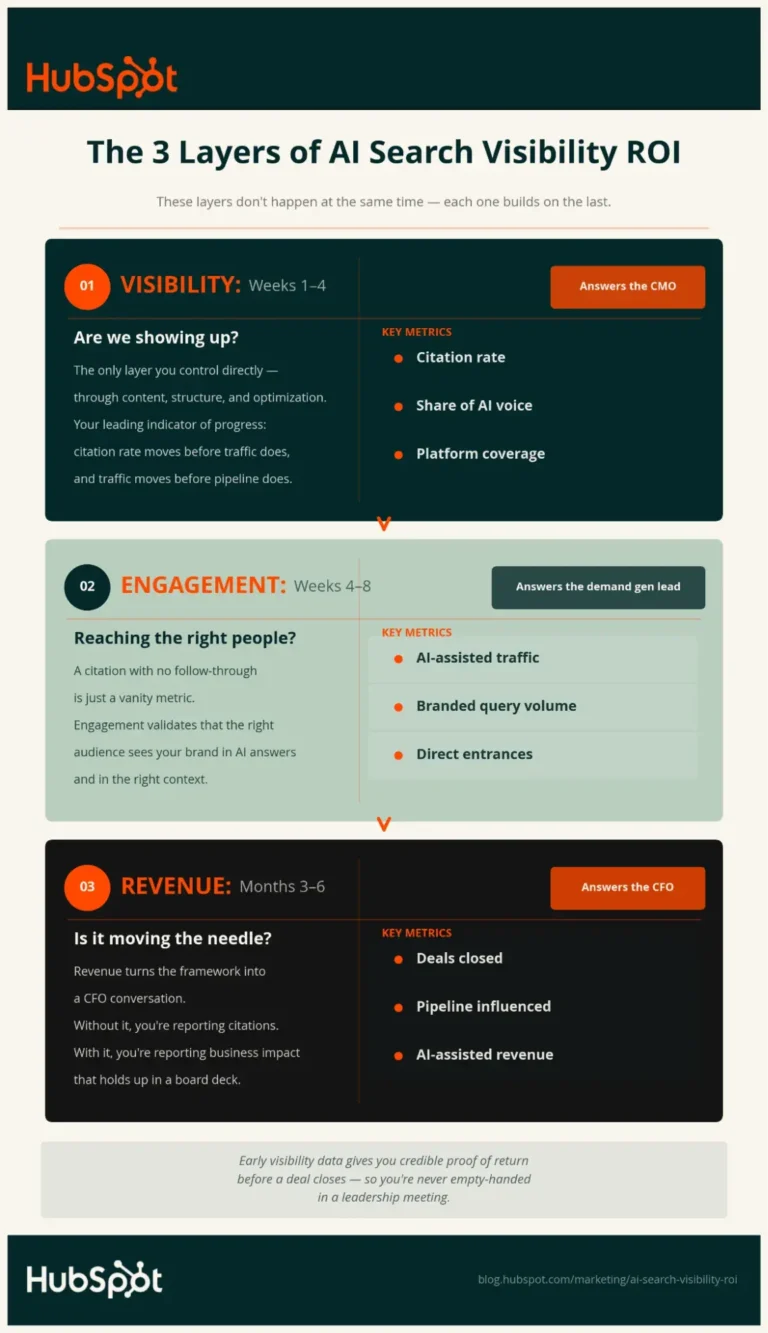
AI search visibility ROI represents the financial return generated from a brand’s inclusion in AI-generated answers. While specific metrics may vary across organizations, a robust AI search ROI analysis typically encompasses three core layers, each serving a distinct analytical purpose:
- Visibility: This foundational layer focuses on how often and how prominently a brand is featured within AI-generated content. It addresses the initial awareness stage, confirming whether the brand is even considered by the AI.
- Engagement: Moving beyond mere presence, this layer assesses how users interact with the AI-provided information about a brand. It seeks to understand if the AI mention translates into a deeper interest or further investigation by the potential customer.
- Revenue: The ultimate layer connects AI-driven visibility and engagement to measurable business outcomes. It aims to attribute a portion of pipeline and closed revenue to AI touchpoints throughout the customer journey.
It is crucial to recognize that these three layers form a delayed funnel; their impact does not occur simultaneously. This temporal lag is essential for accurate reporting and analysis. Each layer also serves to address different concerns and provide context for the others. Understanding the progression and interplay of these layers is vital. Without visibility, shifts in user engagement become inexplicable. Without engagement context, leadership may dismiss data as mere vanity metrics. The advantage of early visibility metrics is their ability to provide credible data on return even before a deal is finalized, offering valuable insights for leadership discussions. By diligently working through all three layers over time, organizations can establish a comprehensive measurement framework suitable for executive-level presentations.
Layer 1: Visibility Metrics – Tracking Share of AI Voice and Citations
Share of AI Voice (SAIV) quantifies the percentage of tracked prompts where a brand’s mention appears within an AI-generated answer. Citation tracking delves deeper, indicating whether the brand is directly linked as a source, signaling that AI systems recognize its content as authoritative.
Calculating SAIV and Citations:
- Prompt Selection: Curate a representative set of prompts that align with how potential customers research your product or service across different stages of the buyer’s journey.
- AI Platform Analysis: Run these prompts through key AI platforms such as ChatGPT, Gemini, and Perplexity.
- Brand Mention & Citation Tracking: For each prompt, meticulously record whether your brand is mentioned and, if so, whether it is cited as a source.
- Competitor Analysis: Simultaneously track competitor mentions and citations within the same prompt set to establish a competitive benchmark.
- Aggregation and Reporting: Aggregate this data by topic cluster or product category to calculate your Share of AI Voice and benchmark it against competitors.
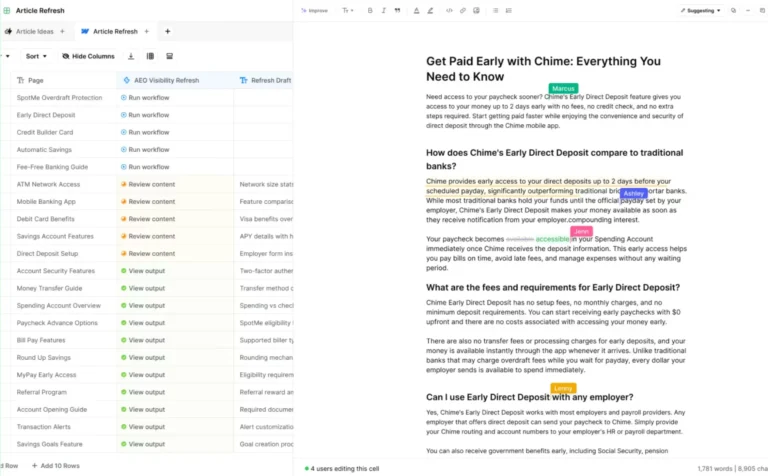
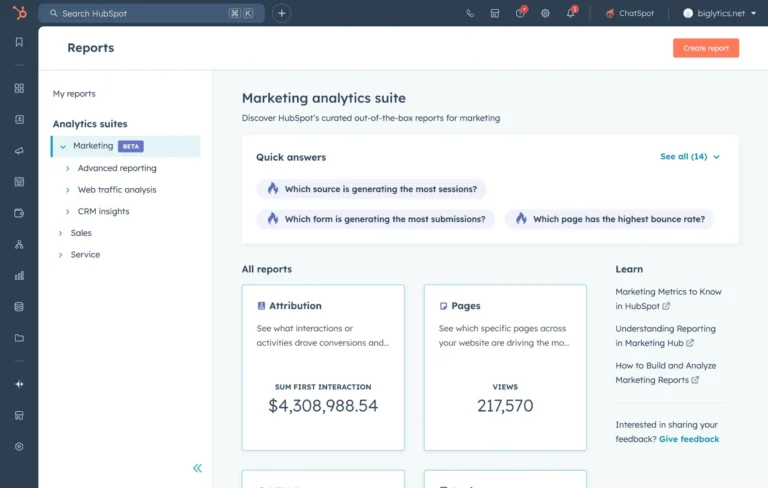
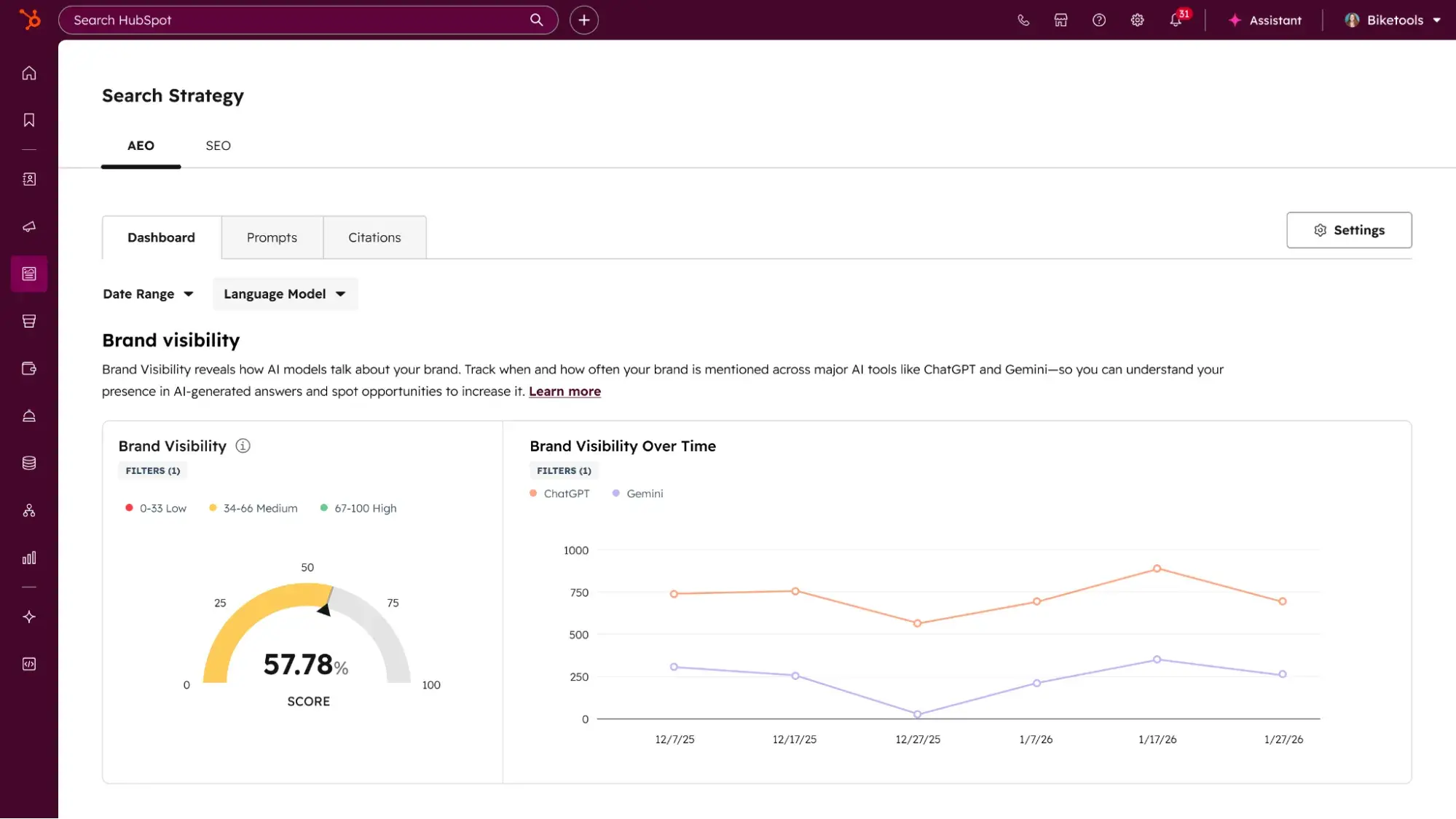
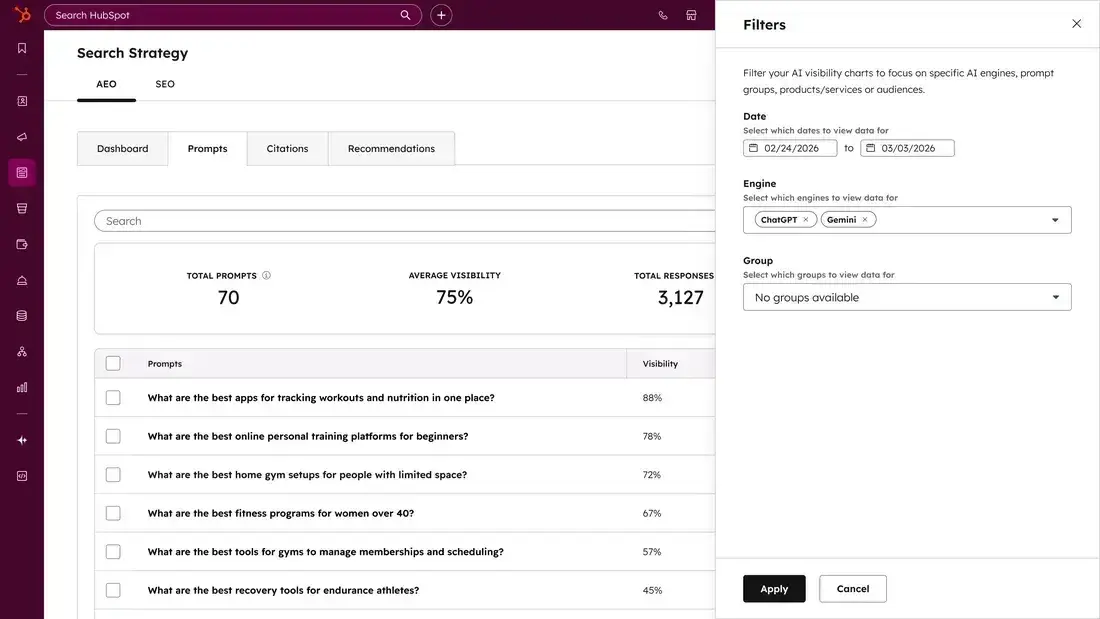
Tools like HubSpot’s AI Engine Optimization (AEO) offer sophisticated tracking capabilities, monitoring a brand’s Visibility Score across platforms like ChatGPT and Gemini. These tools can identify competitor mentions within your defined prompt sets, flag content gaps, and directly link visibility data to your CRM for a more integrated approach.

Layer 2: Engagement Metrics – Leveraging Branded Search Lift and Direct Traffic
A significant indicator of AI search influence is the subsequent increase in branded search queries and direct website traffic. When a brand is prominently featured in AI answers, users often conduct independent searches for that brand later, which can be observed in search console data and website analytics.
Measuring Branded Search Lift and Direct Traffic:
- Google Search Console Monitoring: Track the performance of your branded keywords. A sustained increase in impressions and clicks for your brand name, especially without a corresponding increase in paid brand campaigns, suggests AI-driven awareness.
- Google Analytics 4 (GA4) Analysis: Monitor direct traffic to your website. An uptick in direct traffic, particularly from users who may have previously engaged with AI-generated content, can be a strong correlation.
- Correlation Analysis: Analyze periods of increased AI visibility against upticks in branded search and direct traffic to establish a correlation.
A consistent lift in branded search activity, independent of paid marketing efforts, serves as a powerful signal that AI awareness campaigns are achieving their intended effect.
Layer 3: Revenue Metrics – Attributing Pipeline Influence in Your CRM
Achieving perfect AI attribution is an ongoing challenge due to the indirect nature of AI influence. Sessions often originate from direct searches or branded queries, if tracked at all. The objective, therefore, is to establish assisted attribution.
The data unequivocally supports the strategic importance of AI search. A comprehensive HubSpot survey in January 2026, encompassing over 3,000 CRM purchase decision-makers, identified AI search as the single most potent predictor of purchase intent, outperforming demos, review sites, and sales calls. Buyers who utilized AI search were found to be 36% more likely to make a purchase.
Calculating AI-Assisted Revenue:
- CRM Integration: Ensure your CRM system is configured to track AI touchpoints, either through direct integrations or by flagging contacts who have demonstrated AI-influenced behavior.
- Assisted Conversion Modeling: Develop a model that assigns partial credit to AI touchpoints within the customer journey. This can be achieved by analyzing the paths of converted leads and identifying where AI interactions played a role, even if not the final touchpoint.
- Pipeline Influence Analysis: Within your CRM, analyze the pipeline value of opportunities where AI touchpoints were identified. This provides an early indication of AI’s impact on revenue generation.
By employing a multi-touch attribution model that incorporates AI interactions, businesses can gain a more accurate understanding of AI’s contribution to their sales pipeline and revenue.
Benchmarking Brand Visibility in AI Search
Benchmarking provides crucial context for AI visibility data, offering both a competitive reference point and a historical trend line. A competitive benchmark reveals how your brand’s Share of AI Voice compares to that of competitors your buyers consider. The trend line, on the other hand, indicates whether your optimization efforts are yielding tangible improvements over time. Without both, it is difficult to:
- Justify investment: Demonstrate the value of AI optimization to stakeholders.
- Identify opportunities: Pinpoint areas where your brand is underperforming relative to competitors.
- Measure progress: Track the effectiveness of your AI search strategies.
With both elements in place, a compelling narrative can be constructed: "We dominate these topic clusters, are losing ground in others, and here is our strategic plan to address these discrepancies."

1. Identifying Your AI Answer Competitors
Unlike traditional search engine results pages (SERPs), where competitors might align with product competitors, AI answer competitors are determined by content authority and clarity. These often include industry media outlets, analyst blogs, review platforms (like G2 and Yelp), and niche newsletters. Even lesser-known blogs and aggregators can emerge as significant AI answer competitors. Understanding these entities is vital for strategic planning and resource allocation. For instance, if a media site consistently ranks higher than your brand for buying-stage prompts, it signifies a content gap that can be addressed through content strategy adjustments, rather than a product deficiency.
For each key topic cluster relevant to your business, meticulously document all sources that appear in AI answers, not just direct brand competitors. This comprehensive mapping of the citation landscape provides a clearer picture of who is influencing AI-generated responses.
2. Constructing a Share of Citations Chart
Regularly running your defined prompt set and documenting every cited source, aggregated by topic cluster, will yield a clear view of your competitive standing. A simple chart can illustrate where your brand leads, where it trails, and where the disparities are most pronounced.
| Topic Cluster | Your Brand Citations | Top Competitor Citations |
|---|---|---|
| CRM software comparisons | 12/20 prompts | 8/20 prompts |
| Sales pipeline management | 6/20 prompts | 14/20 prompts |
| Marketing automation | 9/20 prompts | 11/20 prompts |
| Email marketing tools | 15/20 prompts | 5/20 prompts |
In this example, "Sales pipeline management" emerges as a critical area for improvement, with your brand being outranked significantly. This cluster would then receive priority in content development. Conversely, "Email marketing tools" represent a strong position, but one that requires sustained effort to defend against potential competitor investment.
3. Interpreting Trends for Strategic Adjustment
An increase in citation share within a specific cluster can stem from improvements in your content, a decline in competitor content quality, or updates to AI model algorithms that alter source preferences. It is prudent to establish a fresh baseline after significant AI model releases (e.g., GPT, Gemini, Perplexity), as these updates can independently reshape citation patterns. The overarching trend line is more informative than any single data snapshot. While a month’s data indicates your current position, three months of data reveal the efficacy of your strategy. Integrating this benchmark data with marketing automation platforms can consolidate AI citation share alongside other marketing channel metrics for a unified view.
Planning for Sustained AI Search Visibility Measurement
A systematic approach to measuring AI search visibility over time is crucial for long-term success.
1. Defining Your Prompt Set
The foundation of any AI measurement strategy lies in a well-defined prompt set. This set should comprise 20-30 prompts that accurately reflect how potential buyers research your category across all stages of the funnel. These prompts should cover:
- Awareness Stage: Broad queries related to industry problems or needs.
- Consideration Stage: Comparative queries that evaluate different solutions or approaches.
- Decision Stage: Specific vendor- or product-focused queries.
2. Inputting Prompts into AI Visibility Tools
While manual testing across AI platforms is possible, specialized tools like HubSpot AEO automate the process, providing daily updates on citations across ChatGPT, Gemini, and Perplexity. This multi-platform approach is vital, as AI search visibility is no longer confined to a single engine. Reports indicate a significant shift in referral traffic distribution, with ChatGPT’s share decreasing while platforms like Claude and Gemini gain traction. Therefore, prompt tracking must encompass all major AI surfaces. For deeper insights into the retrieval logic and citation behavior of different platforms, dedicated guides on AI search engines are invaluable.
3. Recording Brand Visibility Scores
Each prompt should be scored based on the brand’s presence: not mentioned, mentioned, cited as a source, or recommended. Aggregating these scores across all prompts and platforms yields a Brand Visibility Score, serving as your baseline. Rerunning this analysis monthly will track progress.
4. Auditing Existing Content and Performance
Tools like HubSpot’s AI Search Grader can provide an immediate audit of your brand’s visibility and identify areas where competitors are gaining ground. A detailed table documenting AI performance for each prompt, platform, and model version is essential for tracking changes and understanding the nuances of AI responses.
| Date | Prompt | Platform | Model Version | Brand Mention? (Y/N) | Brand Cited? (Y/N) | Competitor Cited? | Answer Sentiment (Positive/Neutral/Negative) | Response (verbatim or summary) |
|---|---|---|---|---|---|---|---|---|
| [Date] | [Prompt Text] | [Platform] | [Version] | [Y/N] | [Y/N] | [Competitor Name] | [Sentiment] | [Summary/Verbatim] |
| [Date] | [Prompt Text] | [Platform] | [Version] | [Y/N] | [Y/N] | [Competitor Name] | [Sentiment] | [Summary/Verbatim] |
| … | … | … | … | … | … | … | … | … |
This granular tracking, ideally for 5-10 prompts per topic cluster across multiple platforms, provides a comprehensive dataset for analysis.
5. Repeating the Process for Continuous Improvement
After implementing content or strategy adjustments based on insights, the same prompts should be rerun consistently to track and analyze performance. Weekly or biweekly tracking is recommended to capture emerging trends promptly.
Calculating AI Search Visibility ROI
The ambiguity surrounding AI attribution makes calculating AI Search Visibility ROI a complex, yet achievable, endeavor. While AI tools may not readily share referral data, and SEO and PR efforts significantly influence AI mentions, a robust gauge can be obtained through a combination of visibility, engagement, and revenue metrics using the following formula:
*ROI (%) = ((AI-Assisted Revenue – AI Costs) / AI Costs) 100**
AI-Assisted Revenue
Since AI search rarely yields direct click attribution, marketers must develop an assisted revenue model that accounts for AI touchpoints preceding a conversion. This model relies on:
- CRM Data: Identifying contacts with a confirmed AI touchpoint in their history.
- Attribution Modeling: Implementing a multi-touch attribution framework that assigns partial credit to AI interactions.
- Assisted Conversion Credit: Determining a reasonable percentage of credit to allocate to AI influence within the customer journey.
For a deeper understanding of setting up these channels and tracking KPIs, refer to specialized articles on AI search performance metrics, which build upon traditional SEO KPI frameworks.
Pro Tip: Unifying visibility and pipeline data within your CRM using custom fields and leveraging marketing automation platforms for multi-touch attribution provides a consolidated view of AI’s impact across all channels.
AI Costs
AI costs are more straightforward to define and typically encompass:
- AI Visibility Tools: Subscription fees for AI tracking and optimization software.
- Content Creation & Optimization: Investment in producing and refining content for AI prominence.
- Agency or Consulting Fees: Costs associated with external expertise in AI search strategy.
Illustrative Example:
Consider a team investing $2,000 per month in AI visibility tools and content efforts. Over a quarter, their CRM identifies $30,000 in pipeline value where contacts exhibited AI-influenced behavior before converting. Applying a 25% assisted credit for AI’s contribution (acknowledging it as one of several influences) results in $7,500 in AI-assisted revenue.
Using the ROI formula:
*ROI (%) = (($7,500 – $6,000) / $6,000) 100 = 25% ROI**
This provides a tangible, defensible metric to present to leadership.
Making the Leadership Case for AI Search
Presenting to leadership requires a structured argument centered on three pillars: opportunity cost, competitive risk, and a clear measurement plan. The emphasis should be on the cost of inaction rather than solely on the promise of future results.
Opportunity Cost
HubSpot data reveals that AI-referred leads convert at three times the rate of traditional search leads. Each month of inaction in measuring or optimizing for AI visibility represents a significant loss of high-intent buyers who may be making decisions without your brand’s input, translating directly to lost revenue.
Competitive Risk
Organizations actively optimizing for AI search are demonstrating superior performance. HubSpot customers engaged in AI search optimization are generating 170% more Marketing Qualified Leads (MQLs) and 82% more deals compared to their counterparts who are not. The gap between proactive and reactive organizations in the AI space is widening rapidly.
Measurement Plan
Leadership requires concrete strategies, not vague promises. A clear 30/60/90-day roadmap, including a defined baseline, a comprehensive prompt set, a transparent metric framework, and a CRM attribution model that links visibility signals to pipeline development, is essential. This plan should clearly articulate how success will be measured and when.
Expected Timelines for AI Search Visibility Milestones
A common pitfall in AI search visibility initiatives is expecting results on the same accelerated timeline as paid media or even traditional SEO. AI visibility strategies require time to mature. Results are typically layered, with visibility metrics appearing first, followed by engagement and then revenue data for ROI calculation. Understanding this pacing is critical for sustained investment and success.
| Timeframe | What You Should See | What to Report |
|---|---|---|
| Days 1-30 | Baseline established, prompt set running | Visibility score, competitor benchmark |
| Days 30-60 | First citation data, branded search trend | Share of AI voice, direct traffic delta |
| Days 60-90 | AI-influenced contacts appearing in CRM | AI-influenced MQL rate, pipeline touch data |
| Days 90-180 | Pipeline influence data, revenue model live | AI-assisted close rate, deal velocity |
Leading Indicators to Monitor
While pipeline data accumulates, leading indicators offer early insights into the strategy’s effectiveness. These include:
- Increased Share of AI Voice: A rising percentage of mentions and citations in AI answers.
- Growth in Branded Search Queries: More users directly searching for your brand.
- Uptick in Direct Website Traffic: An increase in visitors arriving without a referral source.
- Positive Sentiment in AI Answers: Favorable mentions and descriptions of your brand.
- Emergence of AI-Influenced Contacts in CRM: Early identification of leads with AI touchpoints.
If two or more of these indicators move positively within the first 60 days, it provides a credible basis for reporting progress and validating the strategy’s direction, even before substantial pipeline data is available.
Frequently Asked Questions About AI Search Visibility ROI
How can I improve visibility with an AI search optimization strategy?
Begin by optimizing your content structure. AI systems favor content that provides direct, clear answers upfront. Rewrite key pages to address prompts within the first 150 words, utilize question-based headings, and implement FAQ and Article schema. Furthermore, focus on your brand’s reputation and citations on authoritative third-party sources, as AI answers draw from these as well. Avoid optimizing for a single AI engine; a multi-platform strategy is essential.
What timeline should I expect for improvements in AI search visibility?
Content improvements typically reflect in citation rates within 30-60 days, with measurable pipeline influence emerging in 90-180 days. Branded search lift and direct traffic can show shifts in four to six weeks. High-intent buying prompts may take longer, especially in competitive landscapes. Consistent tracking and reporting on leading indicators are crucial during this maturation period.
How should I pick prompts to track AI share of voice?
Draw prompts from sales call recordings, customer support tickets, and existing keyword research to capture genuine buyer inquiries. Prioritize specificity over brevity. Structure your prompt set to cover awareness, consideration, and decision stages of the funnel. Revisit and refresh your prompt set quarterly to align with evolving buyer language.
What if my brand is rarely mentioned today?
A low visibility score presents a clear opportunity. Audit topic clusters with minimal citations and identify who is currently being cited. This reveals winning content strategies and content gaps to address. Focus on your highest-priority pages and address content clarity, direct answers, and E-E-A-T signals. Begin by targeting two to three topic clusters with the smallest competitive gaps and highest buyer intent, then expand. Visibility compounds over time.
Conclusion: Secure Your Brand’s Place in AI Answers
Buyers have always sought answers, and whoever provides the clearest, most credible, and timely information wins business. AI search has redefined where those answers originate but has not altered this fundamental truth. The good news is that a significant investment or dedicated AI team is not a prerequisite to begin. Start by running your first prompts using tools like HubSpot AEO, which offers daily tracking of your Brand Visibility Score across key AI platforms. Flag your initial AI-influenced contacts in your CRM and monitor branded search trends for the next 30 days. The picture of AI’s impact will become clearer faster than anticipated, and every data point collected now forms the foundation for future leadership presentations. The shift in how information is accessed and consumed is already underway. The critical question for businesses is whether their brand will be part of the answer.
About the Author