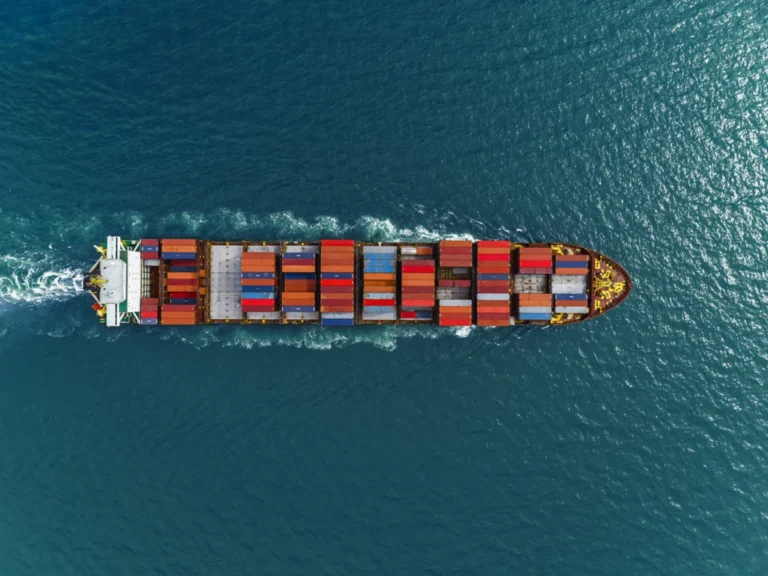
The Secretary General of the International Chamber of Commerce, John Denton, delivered a stark warning to global trade ministers and diplomats gathered in Yaoundé, Cameroon, for the 14th World Trade Organization Ministerial Conference, asserting that the global economy faces its most severe industrial crisis in living memory. Speaking before an audience that included WTO Director-General Ngozi Okonjo-Iweala and various national trade ministers, Denton linked the current instability in the Strait of Hormuz to a broader systemic erosion of the rules-based multilateral trading system. The ICC representative, speaking on behalf of over 45 million businesses across 170 countries, emphasized that the intersection of geopolitical conflict, surging energy costs, and institutional paralysis at the WTO has created an existential threat to global economic stability and food security.
The Strait of Hormuz and the Specter of Industrial Collapse
A central pillar of Denton’s address was the escalating crisis in the Strait of Hormuz, a critical maritime chokepoint through which approximately one-fifth of the world’s total oil consumption passes. Denton noted that the head of the International Energy Agency has already signaled that the world is currently navigating an energy crisis more profound and complex than the oil shocks of the 1970s. For the global business community, this is not merely an issue of rising prices at the pump but a fundamental disruption of industrial production.
The ICC reported that major corporations have begun invoking force majeure clauses in their supply contracts—a legal declaration that unforeseeable circumstances prevent them from fulfilling contractual obligations. These disruptions are rippling through essential sectors, including chemicals, energy, and manufacturing. As gas shortages and input dislocations persist, the "real economy"—the tangible production of goods and services—is facing a level of volatility that undermines long-term investment and operational planning. Denton’s participation in the United Nations Secretary-General’s Hormuz crisis initiative underscores the gravity of the situation, as the international community seeks to restore safe passage for commercial shipping to prevent deep economic dislocation.
Agricultural Yields and the Impending Food Security Crisis
The industrial crisis in the energy and chemical sectors has a direct and devastating corollary in global agriculture. Denton highlighted that the disruption of trade in agricultural fertilizers is creating a "very real risk" for upcoming harvest seasons. This is particularly acute on the African continent, where farmers are grappling with a dual burden: physical supply shortages and prohibitive price increases.
The economic logic presented by the ICC is as simple as it is grim: higher fertilizer prices and lower application rates inevitably lead to lower agricultural yields. This cycle is expected to translate into significant food security risks later this year. The ICC argues that without a concerted international response to stabilize shipping and supply chains, the world’s most vulnerable populations will bear the brunt of a crisis manufactured by geopolitical tension and trade dysfunction.
The Stagnation of the WTO: A Systemic Analysis
Transitioning from immediate geopolitical shocks to the structural health of the WTO, Denton offered a candid assessment of the organization’s decline. Since the 2008 financial crisis, the rules-based system that facilitated decades of global growth has been steadily eroding. The WTO’s three core pillars—negotiation, dispute settlement, and deliberation—have effectively stalled, leaving the organization struggling to remain relevant in a 21st-century economy.
The ICC identifies several systemic blockages that have plagued the WTO for nearly two decades:
- Negotiation Paralysis: The inability of members to reach a consensus on new trade rules, particularly regarding digital trade and agriculture.
- Dispute Settlement Crisis: The ongoing vacancy in the Appellate Body, which has left the "supreme court" of international trade unable to function, allowing trade disputes to remain unresolved.
- Deliberative Stasis: A lack of common purpose among members, who increasingly view the WTO as an inadequate tool for their specific national interests.
Denton pointed out that the ground has shifted fundamentally since the WTO’s founding in 1995. The rise of unilateral trade measures and the shift toward "risk and resilience" rather than "growth and opportunity" in business planning reflect a world where trade policy uncertainty has surged to ten times its decade-long average.
Quantifying the Cost of Inaction
To support these assertions, the ICC presented data from an Oxford Economics study illustrating the catastrophic potential of a total WTO collapse. The study suggests that the dissolution of the multilateral trading system would permanently lower the GDP of developing countries by over 5%. For regions like Sub-Saharan Africa and South and Central Asia, the projected losses are even higher, ranging between 6% and 6.5%.
Furthermore, the share of world trade conducted under Most Favored Nation (MFN) treatment—the foundational principle that trade should be conducted without discrimination—has plummeted from 80% to 72% in just the last two years. This shift indicates a move toward fragmented trade blocs and bilateral deals that exclude smaller, developing economies. The WTO’s own forecasts project merchandise trade growth of under 2% for the current year, with warnings of further declines if Middle Eastern conflicts continue to disrupt energy markets.
A Roadmap for "Surgery": The ICC’s Reform Proposals
Denton’s message to the ministers at MC14 was clear: the WTO does not need a "patch"; it needs "surgery." The ICC is calling for the formal launch of a comprehensive reform round at the Yaoundé conference. This reform must be governed by a time-bound work program with clear milestones to ensure accountability.
Key components of the ICC’s proposed reform include:
- Variable Geometry: Adopting flexible approaches that allow groups of willing members to move forward with agreements (plurilateral agreements) even if a full consensus cannot be reached immediately, provided these agreements remain open and inclusive.
- Systemic Unblocking: Prioritizing reforms in decision-making processes and special and differential treatment for developing nations to unlock the broader negotiating function.
- Trade Standstill: A call for a moratorium on new trade-restrictive measures that violate WTO rules for the duration of the reform negotiations, serving as a signal of good faith.
- Institutionalized Business Engagement: The ICC proposes that the private sector—the actual end-users of the trading system—be permanently integrated into the WTO’s deliberative processes, similar to the structures found in other international organizations.
The Digital Moratorium: A Litmus Test for MC14
One of the most immediate points of contention at MC14 is the Moratorium on customs duties on electronic transmissions. Since 1998, WTO members have agreed not to impose tariffs on digital products like software, e-books, and cloud services. The ICC argues that this moratorium is essential for Small and Medium-sized Enterprises (SMEs), particularly in Africa, which rely on affordable digital tools to compete globally.
The global business community is no longer satisfied with temporary extensions of this moratorium. Denton called for the moratorium to be made permanent, arguing that the uncertainty created by the biennial cycle of last-minute renewals stifles investment. Allowing the moratorium to lapse would, in the ICC’s view, send a signal that the WTO is incapable of protecting the basic commitments of the modern digital economy.
Global Business Consensus: The Yaoundé Declaration
In an unprecedented show of unity, the ICC brought together over 230 chambers of commerce and business associations from around the world to sign a single statement addressed to the WTO ministers. This collective resolve highlights that the concerns expressed are not limited to multinational corporations but are shared by the "backbone" of every economy: the SMEs.
As MC14 continues in Yaoundé, the pressure on ministers to deliver more than just rhetorical commitments is mounting. The ICC’s stance is that doing nothing will not preserve the status quo; it will entrench dysfunction. For countries like Cameroon and its neighbors, the multilateral trading system is described not as a geopolitical chess piece, but as a "development lifeline."
Implications and Outlook
The outcome of MC14 will likely determine the trajectory of global trade for the next decade. If the conference fails to produce a concrete roadmap for reform and a permanent solution for digital trade, the trend toward fragmentation and protectionism is expected to accelerate. This would result in higher costs for consumers, lower growth for developing nations, and increased volatility in global supply chains.
Conversely, a successful "Yaoundé Round" of reform could restore the WTO’s credibility as a forum for resolving trade disputes and setting rules for the digital and green economies. As John Denton concluded, the direction taken from here is a choice. The global business community has signaled its readiness to partner with governments, but the window for meaningful action is narrowing as the "real economy" continues to reel from the shocks of a destabilized world.
About the Author