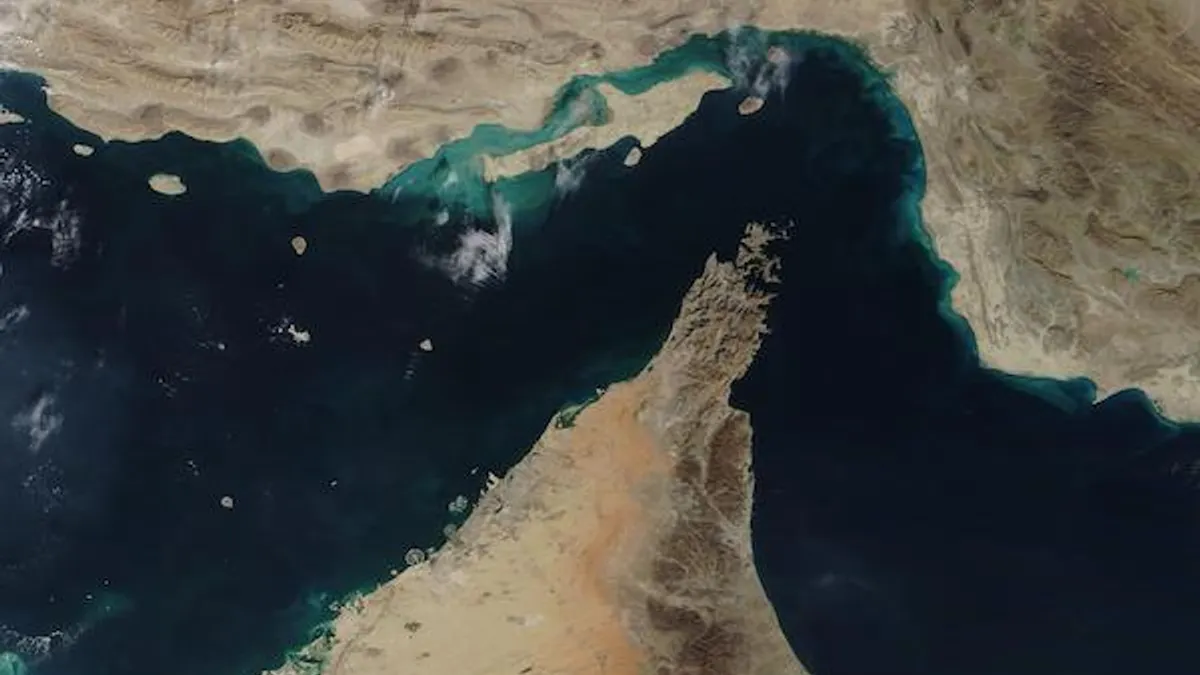
The global energy landscape and international shipping industry are grappling with severe volatility following a significant military escalation in the Middle East that has placed the world’s most critical oil transit point at risk. On March 4, 2026, market analysts and logistics experts warned of prolonged disruptions after U.S. and Israeli military forces conducted a series of targeted strikes against Iranian strategic assets. The operation, which took place on Saturday, March 1, resulted in the death of Iran’s Supreme Leader, Ayatollah Ali Khamenei, and has led to an immediate closure or severe restriction of traffic through the Strait of Hormuz.
The military action, described by officials as part of a mission titled "Epic Fury," was reportedly launched to neutralize Iran’s burgeoning nuclear capabilities. Defense Secretary Pete Hegseth stated that the objectives were "laser-focused" on preventing the development of nuclear weapons that could destabilize the region further. However, the immediate fallout has transcended military boundaries, manifesting as a sharp spike in crude oil prices and a looming crisis for the global supply chain, particularly within the trucking and freight sectors.
Immediate Market Reactions and Crude Oil Volatility
In the wake of the weekend’s events, Brent crude oil prices, the international benchmark, saw an immediate and aggressive surge. While prices had already been on a gradual upward trajectory throughout the early months of 2026, the military strikes acted as a catalyst for a dramatic price jump. On Monday, March 2, Brent crude hovered near the $80-per-barrel mark before surpassing $83 per barrel during Tuesday morning trading sessions.
This price action stands in stark contrast to earlier economic forecasts. At the beginning of the year, the Energy Information Administration (EIA) and various private analysts had projected an average cost of approximately $58 per barrel for 2026. The current reality represents a nearly 43% increase over those projections, a shift that threatens to reignite inflationary pressures across Western economies.
The volatility is primarily driven by the uncertainty surrounding the Strait of Hormuz. As a narrow waterway connecting the Persian Gulf with the Gulf of Oman and the Arabian Sea, the Strait serves as the primary artery for the world’s oil supply. According to data from the EIA, approximately 20% of the world’s total petroleum liquids consumption passes through this choke point daily. Any sustained closure or threat to maritime safety in these waters sends immediate shockwaves through commodity trading floors in London, New York, and Singapore.
Chronology of the Escalation
The events leading to the current crisis began to accelerate in late 2025, as intelligence reports suggested a rapid advancement in Iran’s uranium enrichment programs. While diplomatic efforts had been ongoing, the rhetoric between Washington, Tel Aviv, and Tehran reached a breaking point in February 2026.
- February 15, 2026: International monitors report a breach in enrichment protocols at several Iranian facilities.
- February 20, 2026: The U.S. Department of Defense moves additional carrier strike groups into the North Arabian Sea.
- March 1, 2026 (Saturday): U.S. and Israeli air assets conduct synchronized strikes on Iranian military installations and command centers. The Iranian government confirms the death of Ayatollah Ali Khamenei shortly thereafter.
- March 2, 2026 (Monday): Iranian naval proxies and regular forces begin maneuvers near the Strait of Hormuz, leading to a de facto halt in commercial tanker traffic. Brent crude jumps to $80.
- March 3, 2026 (Tuesday): Oil prices hit $83.30 in early trading. Shipping giants like Maersk and Hapag-Lloyd announce temporary diversions or "wait-and-see" stances for vessels bound for the Persian Gulf.
- March 4, 2026: Logistics analysts warn of a "weeks-long" recovery period for every day the Strait remains contested.
Strategic Importance of the Strait of Hormuz
The Strait of Hormuz is widely considered the world’s most important oil transit choke point. At its narrowest, the shipping lanes are only two miles wide in either direction, making tankers highly vulnerable to surface-to-ship missiles, mines, or harassment by fast-attack craft.
Keith Prather, managing partner and co-founder of Armada Corporate Intelligence, emphasized the gravity of the situation in a recent briefing. "Every day the Strait of Hormuz is closed is a few days longer for recovery," Prather noted. "In similar historical situations, days in disruption can equal weeks in recovery time."
Despite the immediate panic, some analysts remain cautiously optimistic about the U.S. military’s ability to restore order. Prather suggested that there is no "permanent cutting of capacity" and that it is likely only a matter of time before the U.S. military can suppress Iran’s ability to target assets in the Gulf. "Energy will flow," he added. "You can bet that’s a key objective of all parties in the Gulf region."

Impact on the U.S. Trucking and Logistics Sector
While the conflict is centered thousands of miles away, the economic repercussions are being felt acutely on American highways. The U.S. trucking industry, which serves as the backbone of the domestic economy, is particularly sensitive to fluctuations in diesel prices.
Data indicates that on-highway diesel prices have risen nearly every week of 2026, even prior to the March strikes. However, the current geopolitical turmoil threatens to push these costs to unsustainable levels for many operators. Dean Croke, a principal analyst at DAT Freight & Analytics, highlighted that small carriers and owner-operators are the most exposed to this supply disruption.
Unlike large fleets that have robust fuel surcharge programs and long-term contracts, smaller firms often operate on thinner margins. "A prolonged shutdown of the strait could cause a significant jump in diesel prices, potentially adversely affecting smaller firms that don’t have the cash to fend off steeper operating costs," Croke stated.
One potential saving grace for the industry is the current state of spot rates. Croke noted that spot rates are currently high enough to act as a "buffer" against rising fuel costs. For the impact of diesel to truly cripple the sector, Croke estimates that operating costs would have to reach an extraordinary $5.20 per mile. Nevertheless, the timing is poor; March is traditionally a "lull point" in the freight calendar, making it difficult for carriers to negotiate higher prices to compensate for fuel surcharges.
Broader Economic and Geopolitical Implications
The death of Ayatollah Ali Khamenei marks a watershed moment in Middle Eastern politics, creating a power vacuum that could lead to further instability or a radical shift in Iranian foreign policy. For the global economy, the primary concern remains the "supply-based recovery" of the freight sector. Unlike a demand-led recovery, where consumer spending drives growth, a supply-based recovery is dictated by the availability and cost of moving goods.

If energy prices remain elevated above $80 per barrel for a fiscal quarter, economists warn of a "tax" on the global consumer. Increased shipping costs lead to higher prices for everything from produce to electronics, potentially forcing central banks to reconsider interest rate cuts that were planned for later in the year.
Furthermore, the maritime insurance market is seeing a spike in "War Risk" premiums. Insurance underwriters have reportedly increased rates for vessels entering the Gulf of Oman by as much as 500% since the Saturday strikes. These costs are invariably passed down through the supply chain, eventually reaching the end consumer.
Official Responses and Tactical Objectives
The Pentagon has maintained that its actions were defensive and preemptive. In a press conference following the strikes, military spokespeople emphasized that the goal of "Epic Fury" was to ensure long-term regional stability by removing the nuclear threat. However, they acknowledged that the short-term "kinetic" environment in the Strait of Hormuz would require a significant naval presence to protect commercial interests.
The Israeli government has remained relatively quiet since the initial strikes, though Prime Minister-level statements have reiterated that the "era of nuclear blackmail is over." Meanwhile, interim leadership in Tehran has vowed "crushing revenge," though their current capability to launch a full-scale conventional war is being questioned by Western intelligence agencies following the loss of their top leadership and key infrastructure.
Outlook for the Coming Weeks
The path forward depends heavily on the speed with which the U.S. Navy and its allies can guarantee safe passage through the Strait. If the "days to weeks" recovery ratio holds true, a three-day total closure could result in a nearly month-long backlog of tanker traffic, leading to localized fuel shortages in regions heavily dependent on Middle Eastern crude, such as East Asia and parts of Europe.
For the American logistics provider, the focus remains on resilience. Companies are being urged to optimize routes, utilize fuel-efficient technologies, and prepare for a period of sustained high operating costs. While the "spot rate buffer" provides some protection, the underlying volatility of the global energy market suggests that the "cheap energy" era of the early 2020s remains a distant memory.
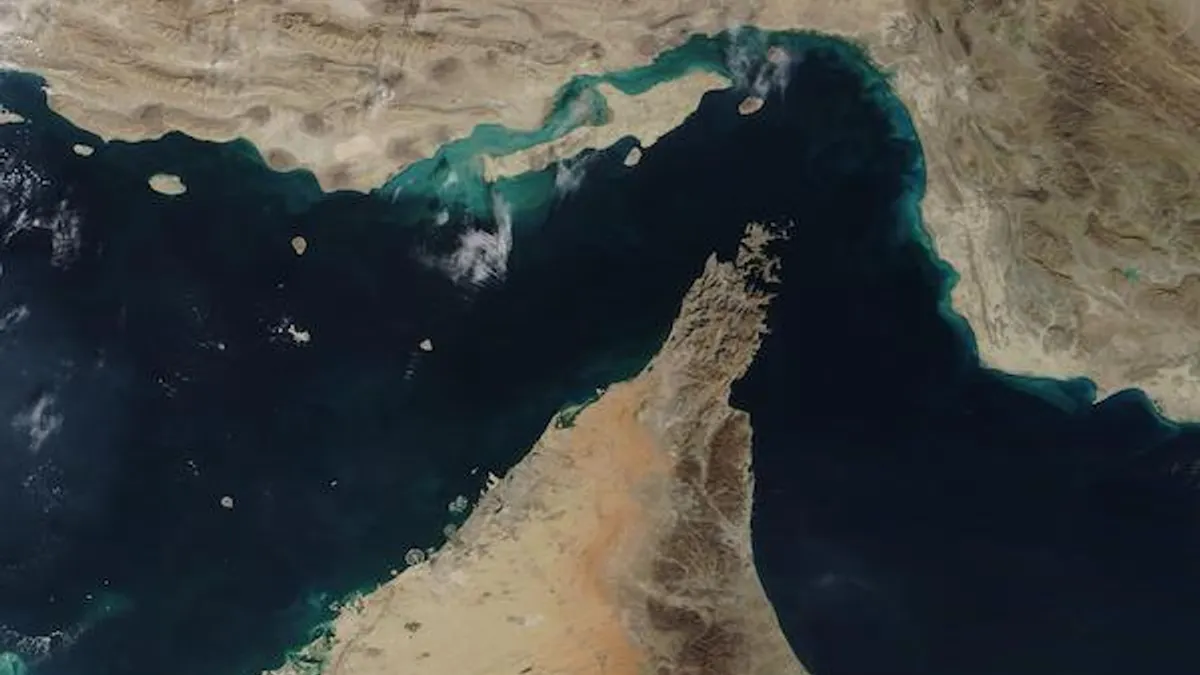
As of March 4, the eyes of the world remain fixed on the 21-mile-wide stretch of water that separates Iran from the Arabian Peninsula. The resolution of this crisis will not only determine the price of a gallon of diesel in the American Midwest but will also redefine the geopolitical order of the 21st century.
About the Author