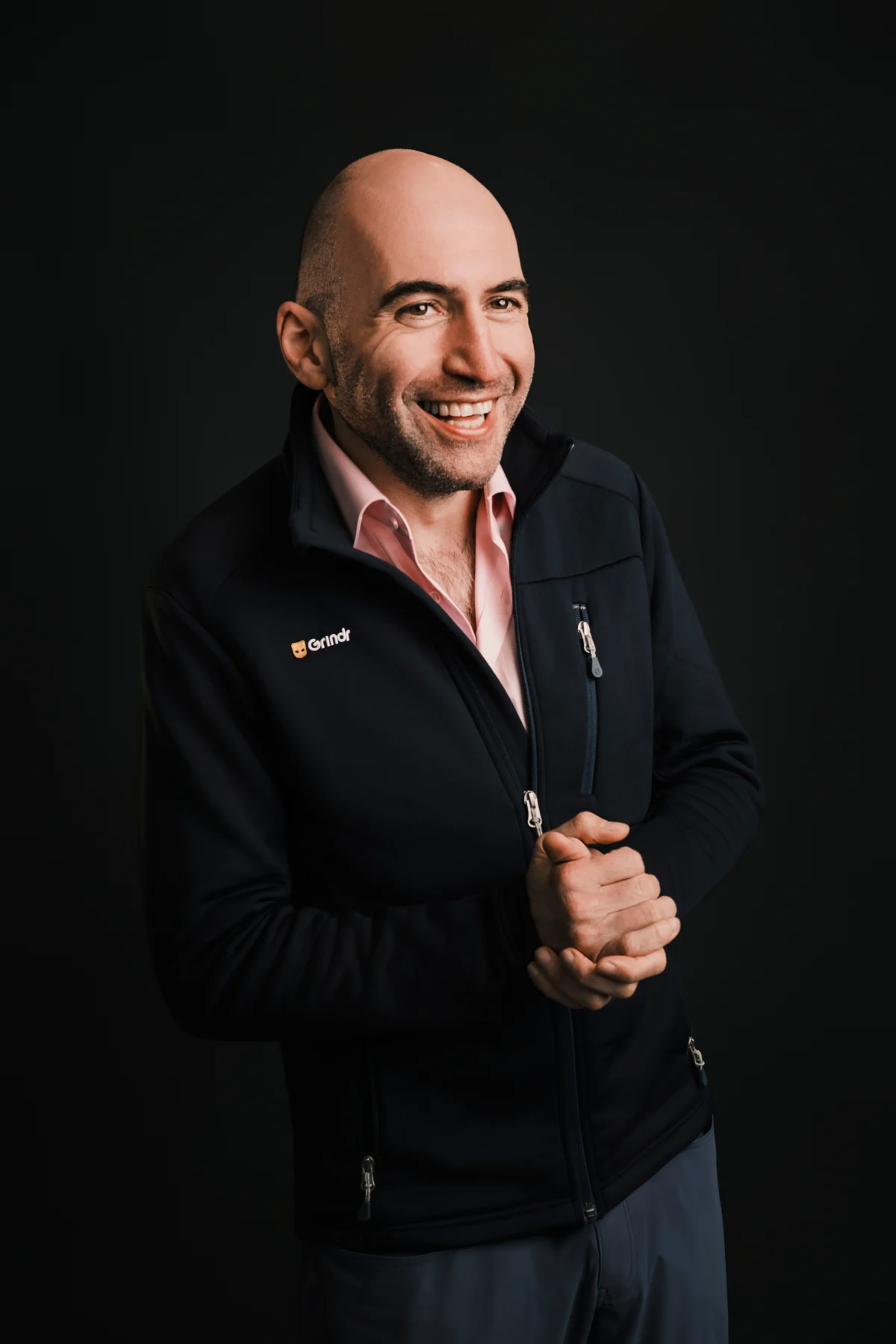
When George Arison assumed leadership of Grindr in 2022, the popular gay dating app found itself at a critical juncture. The company had navigated a tumultuous ownership history, transitioning from Chinese control to a forced divestiture driven by national security concerns, and subsequently a private equity acquisition. While Grindr was a profitable entity, it lacked a cohesive product vision and a clear business strategy. In the intervening four years, marked by a special purpose acquisition company (SPAC) listing and a notable return-to-office mandate, Arison has steered Grindr towards a compelling growth narrative. The company is projected to nearly triple its revenue, from $195 million in 2022 to an anticipated $540 million-plus this year, while maintaining impressive adjusted EBITDA margins exceeding 40%.
This substantial revenue growth has been primarily fueled by increasing the spending of its existing user base, rather than a dramatic expansion of its overall user numbers. In the second quarter of the current year, Grindr reported 1.4 million paying users, representing 9% of its total user base. However, the average revenue per user (ARPU) has seen a significant escalation since 2022. Arison’s strategic focus now centers on identifying the next avenues for sustained growth, a vision that includes transforming Grindr into a "gayborhood in your pocket." This ambitious plan extends beyond traditional dating and hookups to encompass essential services like healthcare – ranging from erectile dysfunction medications and HIV prevention to, eventually, facilitating connections with LGBTQ+-affirming medical professionals – and travel, aiming to help users find community and belonging wherever they go. This "everything app" philosophy mirrors a broader trend sweeping across the consumer technology landscape.
Beyond this expansive vision, Arison is also exploring new monetization strategies. Later this year, Grindr is set to launch a premium subscription tier named "EDGE," a significantly pricier offering that has already generated some online debate and skepticism. The proposed pricing, tested at approximately $350-$375 per month in U.S. dollar equivalents in Canada, has drawn criticism from some internet users questioning its value proposition, with sentiments like "literally who’s paying for this" and a yearning for the app’s earlier iterations ("we need 2012 grindr back") emerging on social media platforms.
Arison, who previously founded and led Shift Technologies, an online used-car marketplace he also took public via a SPAC in 2020, is actively engaging with the press to address what he perceives as an unwarranted "Grindr discount" applied by institutional investors to the company’s stock. He argues that the market undervalues Grindr simply due to its identity as a gay dating app. In a recent virtual interview, Arison recounted an instance where an investor presented a financial model that explicitly included a "Grindr discount" line item, reducing a fair-value estimate by a significant 25%.
However, not all market analysts share this view. Leading financial institutions such as Morgan Stanley, Goldman Sachs, and Raymond James have recently raised their price targets for Grindr’s stock. In July, Morgan Stanley upgraded its rating to "overweight," citing the potential of the EDGE tier and Grindr’s foray into telehealth as key growth drivers. This positive sentiment has contributed to a roughly one-third increase in the stock price over the past six months. Despite this upward trend, the perceived discount persists; Grindr’s stock currently trades at approximately 11 times its projected 2027 EBITDA, representing a discount of about 35% compared to its industry peers, though the exact reasons for this valuation gap remain a subject of discussion.
Arison, characterized by his amiable demeanor and a subtle Southern lilt in his voice, readily discussed these multifaceted aspects of Grindr’s evolution. His tenure began in 2022 amidst a period of strategic uncertainty for the company.
Rebuilding the Foundation: Prioritizing Company Building, Revenue Growth, and Vision
When asked about his initial priorities upon taking the helm at Grindr in 2022, Arison outlined a three-pronged approach. "First, company building," he explained. "A lot of people had been hired during the peak-COVID era when expectations for in-office productivity were low, and average output was maybe three to four hours of real work a day." He detailed a strategic decision to implement a hybrid work model, requiring employees to return to the office two days a week in the summer of 2023. This move, which generated considerable media attention and user backlash, resulted in a significant reduction in headcount, with the company’s workforce shrinking to approximately 70 employees. "We went down to about 70 employees as a result," Arison stated. "Today only around 25 people who were here before I arrived still work at Grindr, and we run lean: 175 U.S. employees plus a team in Colombia, doing $540 million in guided revenue this year."
The second priority was "driving revenue growth by shipping product people would actually pay for." This focus on value-driven product development led to a notable increase in conversion rates for paying users, which climbed from under 6% to over 9%. Concurrently, ARPU nearly doubled, underscoring the success of this strategy.
The third pillar of his initial strategy was "setting a long-term vision: the ‘gayborhood in your pocket’ idea, and everything else – healthcare, travel – that flows from it." This holistic approach aims to embed Grindr into multiple facets of its users’ lives, moving beyond its core function as a dating platform.
Engineering Prowess: Leveraging AI for Enhanced Productivity
Arison expressed a strong belief in the often-underrated engineering capabilities within Grindr. Addressing the size of the technical team responsible for driving these advancements, he revealed, "About 94 or 95 people across all technical roles." He drew a parallel to a conversation with a large tech company CEO who suggested that artificial intelligence could enable a smaller team to achieve the output of a much larger one. "A large-tech-company CEO once told me AI would let me do with far fewer people what I thought I’d need 300 to 350 for – he was right," Arison remarked. "We’re doing roughly 350 people’s worth of work with about 100." He further quantified the impact of AI, stating, "Something like 80% of our code is now AI-written, and we’ve seen a 2.5x increase in engineering productivity over the past year." This dramatic improvement in efficiency allows a lean team to deliver significant technological advancements.
The EDGE Tier: A Premium Offering Fueled by AI
The recent testing of the AI-powered premium tier, EDGE, generated considerable buzz due to its high price point. When questioned about the online reactions to the reported $350-$375 monthly cost in Canadian dollars (equivalent to U.S. dollars), Arison clarified the company’s approach. "We haven’t released EDGE – we’re testing it, and some people have access as part of that test," he stated. He elaborated on its positioning, noting that it "sits above our existing XTRA ($23.99) and Unlimited ($44.99) tiers." Arison emphasized that the offering is not about selling AI itself, but rather the "features derived from it." The core value proposition lies in leveraging user behavior and intent, with explicit consent, to facilitate more accurate and meaningful connections than what sparse profiles can offer. "We’re not selling AI itself; we’re selling features derived from it – using what we know about a user’s behavior and intent, with consent, to make much better matches than a sparse profile ever could," he explained. Initial retention metrics for these AI-driven features have reportedly surpassed those of previous offerings.
Regarding the pricing, Arison clarified that the figures cited were part of an extensive testing phase. "The pricing people quoted was one test point among several – we ran a range to understand elasticity, not a final price," he said. EDGE is slated for a broader release by the end of this year or early next, at which point a definitive price will be established. Arison likened the strategy to that of premium electric vehicles: "We think of it like a Tesla Model X or S: a premium flagship now, with the underlying capability rolling down to the broader product over time."
Expanding Horizons: AI-Driven Matching and Long-Distance Connections
Grindr’s application of AI extends to enhancing its core matching algorithm. Arison highlighted the use of AI to suggest potential partners outside a user’s immediate geographic area, particularly in cities where the gay dating pool, even in large urban centers like San Francisco, can be relatively small. He explained the rationale: "Even in San Francisco, where the share of the gay population is higher than almost anywhere else in the country, you’re talking about maybe 50,000 to 60,000 gay people total. That’s not a big pool to be fishing in if you’re trying to find a partner, and it’s a big reason dating is so hard for gay men generally." The aspiration is to leverage AI to transcend geographical limitations. "So yes – what if AI could break down the geographic constraint entirely, and surface someone in St. Louis who actually matches what you want, based on real behavior rather than what people say in a profile?"
Addressing the efficacy of these long-distance matches, Arison acknowledged that Grindr does not track relationships post-connection. "As for whether it leads anywhere real: we don’t track people’s relationships after the fact – that’s going too far," he stated. However, he pointed to user-reported data indicating Grindr’s significance in gay men’s lives for forming relationships. He also noted evolving desires within younger demographics: "about 50% of gay men under 35 say they want a long-term monogamous relationship, and 25% say they want children – numbers that would have been unthinkable for my own generation." The primary barrier to achieving these relationship goals, according to users, is the difficulty in finding a suitable partner. "When you ask people why they’re not in a relationship, the answer is usually that they have a hard time finding a partner," Arison observed. "I can’t promise this solves that. But it’s worth trying something new, because what’s been done so far clearly hasn’t solved it."
Diversifying Revenue Streams: Healthcare and Future Growth Pillars
Grindr is actively exploring avenues for market expansion beyond its core dating app functions, with a particular emphasis on healthcare services. Arison detailed the initial phase of this initiative, which began with cash-pay products under the "Woodwork" brand, offering medications for erectile dysfunction, GLP-1s, and peptides. "We started with cash-pay products through a line we call Woodwork – ED medications, GLP-1s, peptides, and so on – because cash-pay was the simplest place to get going," he explained. He also highlighted recent advancements: "and we just launched an AI bot that handles the whole transaction inside the app rather than sending people out to Woodwork.com."
A significant area of focus is HIV prevention and treatment. Grindr has committed to providing direct access to information on PrEP (pre-exposure prophylaxis) for ten million individuals, both within the U.S., where such resources are already integrated into their in-app health center, and internationally.
The long-term vision includes offering actual clinical care, such as connecting users with gay doctors via telehealth. "The third bucket – actual clinical care, like connecting people to a gay doctor through telehealth – is very much long-term," Arison stated. "That’s not something we’re building today, but I do think there’s a world, a decade out, where healthcare is a bigger revenue stream for Grindr than what we do today."
Currently, non-subscription revenue, including advertising and healthcare services, constitutes a minor portion of Grindr’s business. "Subscriptions are about 83% of revenue today, down from around 86% in 2022, even though subscription revenue itself has grown enormously – that tells you how much bigger the base is overall," Arison noted. He reiterated his long-term objective: "What I want is a company that, 10 years from now, has a strong subscription business, a strong advertising business, a real healthcare business, and a real travel business alongside it. Today those last two are early."
Addressing the "Grindr Discount": Market Perception and Financial Performance
Arison has been vocal about the persistent "Grindr discount" applied by investors, attributing it to the company’s identity as a gay dating platform. However, he acknowledged recent positive market signals. "I hope we’re being treated as a growth company at this point – we’ve grown revenue more than 25% for 16 straight quarters as CEO, so there’s reason to expect that," he said. He elaborated on the societal stigma that can impact business operations, citing instances where a consulting firm declined to work with Grindr due to reputational concerns and a bank refused their funds during the Silicon Valley Bank crisis, contrasting this with the strong partnerships forged with institutions like Goldman Sachs and Morgan Stanley. "The stigma conversation is a real one; we’ve had a consulting firm decline to work with us over reputational concerns, and a bank refuse our money during the Silicon Valley Bank crisis, even as other major banks like Goldman and Morgan Stanley have been strong partners," Arison explained. He believes this bias is directed at Grindr specifically as a gay dating product, rather than dating apps in general, drawing a parallel to Tinder’s "free tonight" feature. "I think a lot of that is really about Grindr being a gay dating product rather than dating being controversial per se – nobody says that about Tinder, which literally has a ‘free tonight’ button on its homepage." Despite these lingering perceptions, Arison conceded, "But I’d agree the market’s read on us has clearly improved."
About the Author