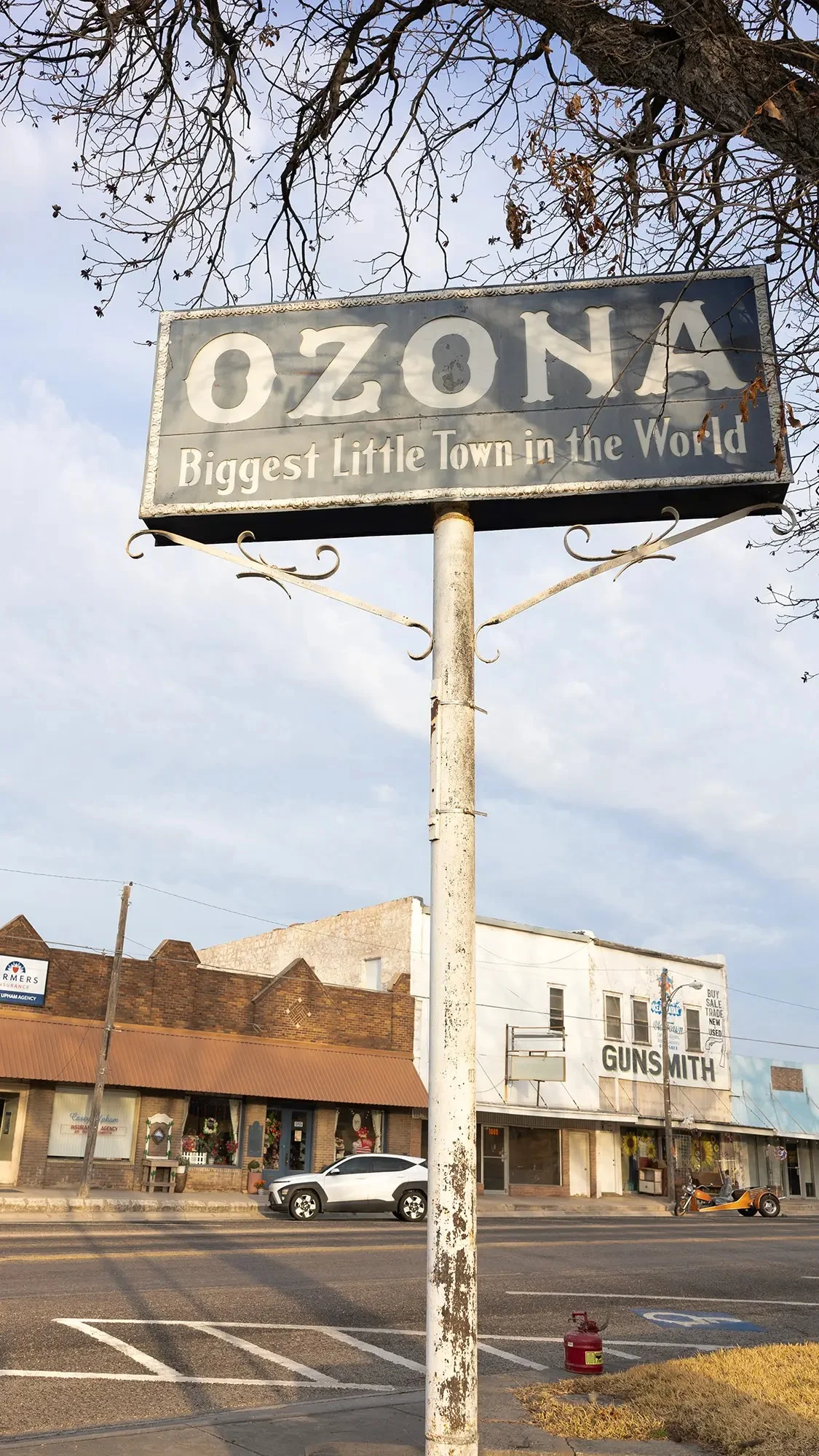
In the isolated expanse of Crockett County, Texas, where the horizon is defined by the rugged terrain of the Permian Basin and the steady rotation of massive wind turbines, a unique economic experiment is quietly securing the future for the region’s oldest residents. Ozona, an unincorporated community of 2,800 people and the only town in a county spanning 2,800 square miles, has long been a sentinel of the Texas oil and ranching industries. Today, however, it is emerging as a model for how renewable energy development can be leveraged to address the systemic challenges of rural aging, food insecurity, and medical isolation.

For residents like 75-year-old Cynthia Flores, the Crockett County Senior Center serves as more than a social hub; it is a vital infrastructure that allows her to "age in place." Flores, who has spent six decades preparing meals for her family and cutting hair for the local community, represents a demographic that is increasingly vulnerable in rural America. In West Texas, where the nearest metropolitan area, San Antonio, is a three-hour drive away, the ability to remain in one’s home depends entirely on the strength of local support networks.
The Rural Challenge: Isolation and Resource Scarcity
The struggle to maintain a high quality of life for seniors in remote areas is a growing national concern. According to data from the Rural Health Information Hub and the U.S. Department of Agriculture, approximately 10.2 percent of seniors in rural areas lack sufficient access to healthy and nutritious food, a figure notably higher than the 8.5 percent recorded in metropolitan areas. This disparity is exacerbated by "food deserts," where the cost of groceries is inflated by transportation expenses and limited competition.

In Ozona, these logistical hurdles are a daily reality. The local grocery store often carries higher prices than those in San Angelo, located 90 minutes away. For seniors on fixed incomes, the cost of fuel and the physical toll of long-distance driving create significant barriers to accessing both nutrition and specialized healthcare.
"We’re very vulnerable here," says Eligio Martinez, a former county commissioner. Martinez’s personal experience caring for his mother during her cancer treatment in 2013 highlighted the fragility of the rural safety net. Without a flexible job or family support, many seniors are forced to choose between relocating to urban centers or neglecting their health.

The Wind Power Boom and the Texas Abatement Act
The economic salvation for Ozona’s senior services has arrived in the form of the wind. Texas is currently the national leader in wind energy, with the sector generating 29 percent of the power distributed by the state’s independent grid. As of 2023, the state hosted more than 15,300 wind turbines across 239 projects. In Crockett County, these turbines—many owned and operated by NextEra Energy—do more than feed the state’s power grid; they feed the community’s elders.
The mechanism driving this support is Section 312 of the Texas Tax Code, also known as the Texas Abatement Act. This legislation allows counties to offer temporary property tax breaks—typically lasting up to 10 years—to attract large-scale capital investments like wind farms or data centers. While these abatements temporarily reduce the tax revenue that would otherwise flow into public coffers, they provide local governments with a powerful bargaining tool.

In Crockett County, Judge Frank Tambunga has utilized these negotiations to secure direct investment in the community’s social fabric. Rather than focusing solely on traditional infrastructure like roads, Tambunga has pushed for "PILOT" (Payment in Lieu of Taxes) agreements and charitable contributions that specifically target local nonprofits.
"As we negotiate, we ask that, during the term of the abatement, they make charitable contributions to nonprofit organizations to help the local groups," Tambunga explained. "It allows us to provide support for these organizations that help people within the community."

Strengthening the Safety Net: Meals and Transportation
The impact of this funding is most visible at the Crockett County Senior Center and its "Helping Hands" program. This initiative, which evolved from a local church outreach effort into a sophisticated delivery network, provides daily hot meals to approximately 42 homebound seniors.
In late 2023, as pandemic-era federal appropriations expired and a potential government shutdown threatened the stability of the Older Americans Act funding, the Ozona program faced a critical shortfall. A timely $20,000 donation from NextEra Energy—negotiated as part of the county’s energy partnerships—filled the gap, ensuring that meal deliveries continued without interruption.

Beyond nutrition, the influx of energy-related funds has bolstered medical transportation services. Martinez founded "In Care of Ozona" (Coz 4 Oz), a nonprofit that provides gas cards and hotel funds for residents who must travel to San Antonio, Dallas, or Houston for specialized medical care—trips that can take between three and seven hours one way. Recently, NextEra contributed $3,000 to the organization, effectively covering its entire current operating budget and ensuring that no senior is forced to miss a chemotherapy or dialysis appointment due to a lack of funds.
The Economic Transition: From Oil to Wind
The integration of wind energy revenue represents a significant shift in the economic philosophy of West Texas. For over a century, the region’s wealth has been dictated by the "boom and bust" cycles of the oil and gas industry. While fossil fuels remain a cornerstone of the local economy, their revenue can be volatile. Natural gas wells, for instance, often see a sharp decline in productivity after the first two years of operation.

Wind energy, by contrast, offers a more consistent, long-term revenue stream. While the royalties for landowners may take years to materialize, the presence of the turbines provides a stable tax base for the school district and a steady source of charitable capital for the county.
Ranchers like Steve Wilkins, whose family has operated the 6,000-acre Flying W Ranch for four generations, view wind energy with a mix of pragmatism and skepticism. Wilkins is currently negotiating a lease for wind turbines on his land, viewing it as a generational investment. "Maybe my kids can keep the ranch," he says, noting that at 70, the royalties may not benefit him personally, but they could preserve the family’s heritage in an era where traditional ranching margins are razor-thin.

Broader Implications and Future Demographics
The success of Ozona’s model comes at a critical time for the state of Texas. According to data from AARP, the number of Texans aged 65 and older is projected to more than double from 3.9 million in 2020 to 8.3 million by 2050. This demographic shift will place unprecedented strain on rural healthcare and nutrition systems.
Jeremy Everett, director of the Baylor Collaborative on Hunger and Poverty, argues that the "coalition-based approach" seen in Crockett County is essential for the future of rural America. "Without the ability to safely and reliably access affordable food, senior adults may no longer be able to live in the rural communities they have called home," Everett stated. He emphasizes that partnerships between local governments, private industry, and nonprofits are the only way to build resilient food systems from the ground up.

Analysis: A Template for Rural Resilience
The Ozona case study suggests that the "green energy transition" can provide benefits that extend far beyond carbon reduction. In conservative, oil-rich regions where the politics of renewable energy are often contentious, the tangible social benefits—such as funded senior centers and medical travel grants—create a powerful argument for diversification.
However, the reliance on tax abatements and corporate charity also highlights the fragility of rural funding. While Section 312 provides a temporary boost, the long-term sustainability of these programs will eventually depend on the permanent tax revenue generated once the abatement periods expire. Furthermore, as wind technology matures and the most viable sites are developed, the bargaining power of small counties may shift.

For now, the wind blowing across the Crockett County mesas is providing a lifeline. On the floor of the senior center’s Valentine’s Day dance, the music and the laughter are a testament to a community that has found a way to bridge the gap between its ranching past and its renewable future. For Cynthia Flores and her peers, the presence of the "towering neighbors" on the horizon means they can stay in the town they love, supported by a system that values their presence as much as the energy they produce.
As the sun sets over the Biggest Little Town in the World, the wind turbines continue their silent rotation, turning West Texas gusts into the meals, rides, and social connections that allow a generation to age with dignity in the place they call home.
About the Author