For more than a century, the Jocko River in Northwestern Montana was forced into a state of unnatural confinement, its meandering paths straightened into rigid channels and its floodplains severed to accommodate the expansion of industrial agriculture. Today, a landmark legal settlement and a multi-generational restoration effort led by the Confederated Salish and Kootenai Tribes (CSKT) are reversing this environmental degradation. By blending Indigenous traditional ecological knowledge with modern hydraulic engineering, the CSKT is not only reclaiming its ancestral water rights but also setting a global precedent for how tribal sovereignty can drive large-scale ecosystem recovery.
The restoration of the Jocko River—known as nisisutetkʷ ntx̣ʷe in the Séliš-Ql̓ispé language—is the centerpiece of a broader movement to revitalize the Flathead Indian Reservation. This movement gained significant momentum with the implementation of the 2015 Confederated Salish and Kootenai-Montana Compact Water Rights Compact. Effectively enacted in 2021 after decades of intense negotiation, the compact represents one of the most complex and significant tribal water settlements in United States history. It reauthorizes the water rights originally promised to the tribes in the 1855 Hellgate Treaty while establishing a collaborative, unitary management system between the state and the tribes to ensure the sustainability of water resources for all users.
The Historical Erosion of Tribal Wealth and Watersheds
The current restoration efforts are a response to a century and a half of systematic displacement and environmental alteration. The aboriginal territory of the Séliš (Salish), Ksanka (Kootenai), and Ql̓ispé (Pend d’Oreille) tribes once spanned 22 million acres across western Montana, extending into parts of present-day Idaho, Wyoming, and Canada. This landscape was defined by an intricate network of over 980 miles of rivers and streams, providing a level of natural abundance that led Salish elder Mitch Smallsalmon to famously describe the tribes as "wealthy from the water."
This wealth was targeted for redistribution during the era of westward expansion. The 1855 Hellgate Treaty confined the tribes to the Flathead Indian Reservation, a fraction of their original homeland. The situation worsened in 1887 with the passage of the Dawes Act, also known as the General Allotment Act. Designed to force Indigenous people into a Western model of sedentary farming, the act opened reservation lands to non-Indigenous homesteaders, creating a "checkerboard" of private and tribal land ownership that complicated resource management for decades.
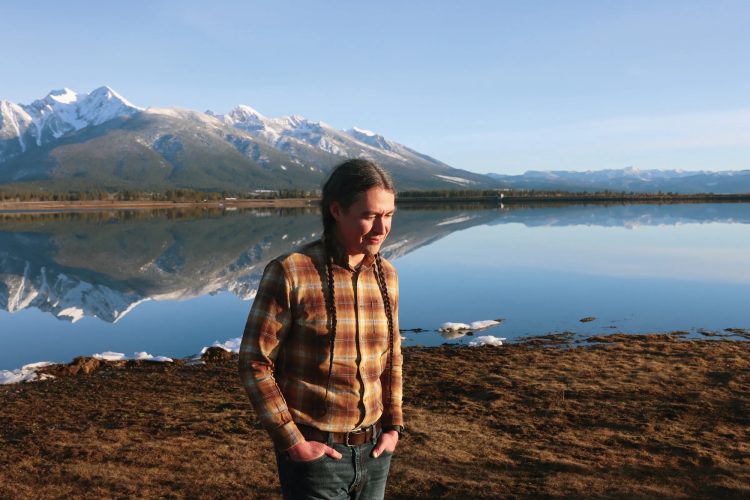
As settlers arrived, the Mission Valley was transformed. To support new agricultural ventures, the federal government initiated the Flathead Indian Irrigation Project (FIIP) in 1908. While ostensibly intended to benefit tribal members, the project primarily served to redirect the region’s water to homesteaders. The Jocko River, once a complex system of side channels and cold-water tributaries, was channelized—effectively turned into a straight drainage ditch—to maximize land for grazing and crops. This disconnection from the floodplain caused the water table to drop, destroyed vital fish habitats, and stripped the land of its ecological resilience.
The Legal Battle for Prior Appropriation and Tribal Sovereignty
Central to the conflict over Montana’s water is the legal doctrine of "prior appropriation," commonly summarized as "first in time, first in right." In the arid West, water rights are granted to those who first put the water to "beneficial use." Historically, the federal government and state courts often ignored tribal rights in favor of settler claims, despite the fact that tribal rights date back to "time immemorial" or, at the very least, the signing of treaties in the mid-19th century.
Throughout the 20th century, the overlapping claims of tribal members, federal agencies, and private irrigators created a legal quagmire. In response, the Montana Legislature created the Montana Water Court in the late 1970s, a specialized judicial body tasked with adjudicating more than 219,000 outstanding water rights claims across the state. The CSKT, supported by the federal government, spent decades litigating and negotiating to quantify their rights.
The resulting CSKT-Montana Compact is a unique legal instrument. Unlike many other settlements that result in perpetual litigation, this compact creates a Joint Water Management Board, allowing the tribes and the state to co-manage the resource. It protects the "instream flows" necessary for fish and wildlife while honoring the historic deliveries of water to farmers and ranchers. This "unitary" system acknowledges that water does not recognize property lines and must be managed as a single, interconnected resource.
The ARCO Settlement and the Bull Trout Recovery
The catalyst for physical restoration on the ground preceded the finalization of the Water Compact. In the 1980s, the CSKT filed a lawsuit against the Atlantic Richfield Company (ARCO) over the contamination of the Upper Clark Fork River Basin. Decades of mining and milling had turned the river—a primary tribal hunting and fishing ground—into one of the largest Superfund sites in the nation.

In a historic victory, the tribes and the state secured a $187 million settlement for environmental damages. The CSKT directed a significant portion of these funds toward the Jocko River Restoration Project. The tribes prioritized the South Fork of the Jocko because it served as a critical habitat for the bull trout (Salvelinus confluentus), a species deeply woven into the cultural and spiritual fabric of the CSKT.
The bull trout was listed as a threatened species under the Endangered Species Act in 1998. Historically, these fish provided a vital food source for the tribes during harsh winters when other game was scarce. By the late 20th century, habitat loss and water pollution had pushed the species to the brink. The Jocko River remains one of the last strongholds for the migratory bull trout population in the region. The restoration project involved purchasing private land within the floodplain, removing structures, and re-establishing the river’s natural curves to create the deep, cold pools the trout require for spawning.
Modern Engineering and Adaptive Management
With the 2021 implementation of the Water Compact, the CSKT Division of Engineering and Water Resources has significantly expanded its operations. The focus has shifted to rehabilitating the aging infrastructure of the Flathead Indian Irrigation Project (FIIP), which includes over 1,000 miles of canals and 14 major reservoirs.
Casey Ryan, manager of the Division of Engineering and Water Resources, notes that much of the original FIIP infrastructure was inefficient, losing vast amounts of water to seepage and evaporation. By modernizing these systems, the tribes can ensure that farmers receive the water they need for agriculture while leaving enough water in the river to maintain healthy instream flows.
The tribes utilize a strategy known as "adaptive management." This involves constant monitoring of hydrological data and biological health to adjust restoration tactics in real-time. A key component of this strategy is the integration of Indigenous traditional ecological knowledge. For example, tribal crews have constructed natural filtration zones using native wetland plants like cattails. These living buffers act as a biological kidneys for the watershed, capturing and neutralizing nitrogen and phosphorus runoff from agricultural fields before the pollutants can reach the river.
Cultural Reclamation and Long-term Implications
For the CSKT, the restoration of the Jocko River is not merely a technical or environmental victory; it is an act of cultural preservation. Sadie Peone-Stops, director of the Séliš-Ql̓ispé Culture Committee, emphasizes that the recovery of the water is synonymous with the recovery of tribal lifeways. The committee, guided by a board of tribal elders, ensures that every restoration project aligns with the tribes’ historical relationship with the land.
In 2021, the CSKT took another step toward permanent protection by establishing the Lower Flathead River as a cultural waterway through a specific Tribal Ordinance. This designation functions similarly to the federal Wild and Scenic Rivers Act, prohibiting development that would alter the river’s free-flowing nature. By treating natural resources as cultural resources, the tribes are asserting that the health of the ecosystem is inseparable from the health of their people.
The implications of the CSKT’s work extend far beyond the borders of the Flathead Indian Reservation. As the American West faces an era of unprecedented water scarcity driven by climate change and population growth, the CSKT-Montana Compact offers a potential blueprint for conflict resolution. It demonstrates that through the recognition of tribal sovereignty and the application of both Western science and Indigenous wisdom, it is possible to balance the competing demands of industry, agriculture, and conservation.
The restoration of the Jocko River serves as a living testament to the resilience of the Confederated Salish and Kootenai Tribes. By reconnecting the river to its floodplain and restoring the "backbone of the world," the tribes are ensuring that future generations will remain "wealthy from the water," not in the sense of commodified profit, but in the enduring health of the source that sustains all life.
About the Author