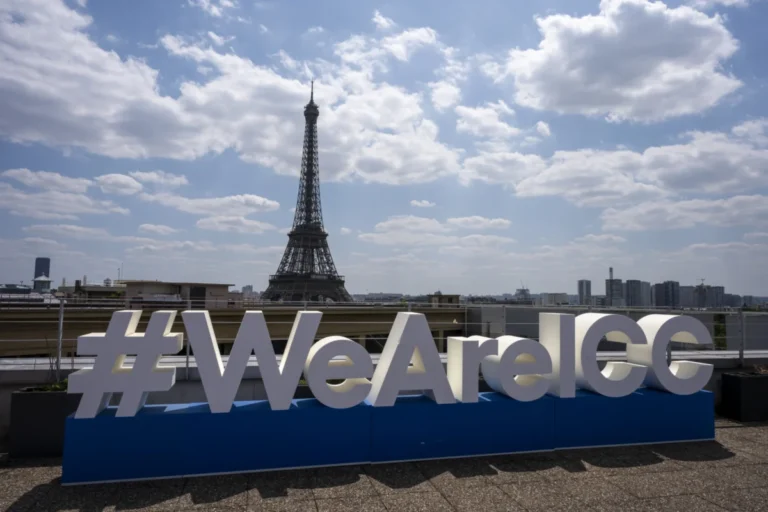
The International Chamber of Commerce (ICC) has officially announced a comprehensive rebranding and strategic evolution of its primary trade finance data resource, transitioning the long-standing ICC Trade Register into the new ICC Global Trade Intelligence Report. This transformation, announced today, signifies a fundamental shift in how the organization approaches the dissemination of market data, moving beyond traditional risk benchmarking to provide a holistic view of the forces driving the global economy. The new identity is designed to reflect the report’s growing role as a critical analytical tool for decision-makers who must navigate an increasingly fragmented and volatile international trading environment.
Since its inception in 2008, the ICC Trade Register has served as the definitive industry benchmark for trade finance, offering banks, regulatory bodies, and market participants a reliable repository of data regarding the performance and resilience of trade finance products. However, as the global landscape has been reshaped by systemic shocks—including the COVID-19 pandemic, heightened geopolitical tensions, and the rapid digitalization of financial services—the ICC recognized that raw data alone is no longer sufficient for institutional needs. The ICC Global Trade Intelligence Report aims to fill this gap by blending high-level risk metrics with deep-dive analysis of the economic shifts and policy developments that influence trade flows across the world.
A Chronology of Evolution: From Crisis Response to Strategic Intelligence
The history of the ICC’s data initiative is rooted in the aftermath of the 2008 global financial crisis. During that period, trade finance liquidity contracted significantly as banks reassessed their risk appetites and regulatory requirements became more stringent. In response, the ICC Banking Commission established the Trade Register to provide empirical evidence of the low-risk nature of trade finance compared to other asset classes. By documenting low default rates and high recovery rates for instruments such as Letters of Credit and Guarantees, the ICC helped prevent a complete withdrawal of capital from the trade sector.
Over the subsequent decade and a half, the Register expanded its scope. By 2015, it had become an essential reference point for the Basel Committee on Banking Supervision and other international regulators, helping to inform capital adequacy requirements. In the early 2020s, the report began incorporating qualitative analysis to explain the disruptions caused by supply chain bottlenecks and the shifting "just-in-time" manufacturing model. The current rebranding to the ICC Global Trade Intelligence Report represents the final stage of this evolution, acknowledging that the "intelligence" aspect—understanding the ‘why’ behind the ‘what’—is now the primary value proposition for the global trade ecosystem.
The first edition under the new name is scheduled for release in September 2026. This timeline allows the ICC and its contributing partners to refine their data collection methodologies and integrate more sophisticated analytical frameworks that can account for emerging variables like ESG (Environmental, Social, and Governance) compliance and the impact of artificial intelligence on trade processing.
Expanding the Contributor Network and Data Breadth
Central to the success of this intelligence-driven approach is the expansion of the network of contributing financial institutions. The ICC has announced that BBVA and Intesa Sanpaolo have joined the project as new contributing members. This brings the total number of participating global banks to 22, representing a significant portion of the world’s trade finance transactions.
The addition of BBVA and Intesa Sanpaolo is particularly strategic. BBVA provides deep insights into the Latin American and Spanish markets, while Intesa Sanpaolo offers a comprehensive view of the Italian and broader European industrial sectors. By integrating the proprietary data from these 22 institutions, the ICC Global Trade Intelligence Report will offer an unprecedented level of granularity. This expanded participation ensures that the report captures a diverse range of products, market dynamics, and regional trade corridors, thereby reducing "information asymmetry" and allowing for more accurate global comparisons.
Tomasch Kubiak, Policy Manager of the ICC Global Banking Commission, emphasized that the shift is a direct response to the needs of modern institutions. According to Kubiak, while the ICC Trade Register has provided trusted data for over a decade, the current market requires a more nuanced approach. The new report is intended to combine industry-leading analysis with deeper insights into the specific trends and risks that are shaping the future of global trade.
Supporting Data: The Vital Role of Trade Finance
To understand the importance of the ICC’s announcement, one must look at the scale of the trade finance market and the challenges it currently faces. According to the World Trade Organization (WTO), approximately 80% to 90% of global trade relies on trade finance, insurance, and guarantees. However, there remains a persistent "trade finance gap"—the difference between the demand for trade finance and the availability of credit. The Asian Development Bank (ADB) recently estimated this gap at a staggering $2.5 trillion, a figure that disproportionately affects Small and Medium-sized Enterprises (SMEs) in emerging markets.
The ICC Global Trade Intelligence Report serves as a primary tool for narrowing this gap. By providing regulators with robust evidence that trade finance is a safe and resilient asset class, the ICC encourages the implementation of more favorable capital treatment for these products. For instance, historical data from the ICC has shown that the default rate for import Letters of Credit is consistently below 1%, significantly lower than the default rates for standard corporate loans. The 2026 report will continue to track these metrics, providing updated recovery and default rates that reflect the post-pandemic economic environment.
Beyond Risk Benchmarks: Analyzing Geopolitical and Economic Shifts
The "Intelligence" portion of the new report will focus heavily on the "new normal" of global trade: fragmentation. The rise of "friend-shoring" (sourcing from politically allied nations) and "near-shoring" (moving production closer to the end consumer) has fundamentally altered trade corridors. The 2026 report will provide contextual analysis to help decision-makers understand these shifts.
For example, the report will look at the resilience of trade in the face of:
- Geopolitical Tensions: Analyzing how trade flows are diverted in response to sanctions or regional conflicts, such as those affecting the Red Sea shipping routes or Eastern European logistics.
- Economic Shifts: Examining the impact of fluctuating interest rates and inflation on the affordability of trade credit, particularly for importers in developing nations.
- Policy Developments: Assessing the impact of new trade agreements or protectionist measures on specific industry sectors.
Samuel Mathew, Chair of the ICC Global Trade Intelligence Steering Group and Managing Director at Standard Chartered, noted that the report is built on the principle that better data leads to better business and risk decisions. He highlighted that as global trade faces increasing complexity, the report provides a unique, data-driven perspective that equips industry leaders and policymakers with the insights needed to support sustainable growth.
Impact and Implications for the Global Trade Ecosystem
The rebranding of the ICC Trade Register is expected to have several long-term implications for the financial and commercial sectors. First, it will likely lead to more informed policy-making. When regulators have access to comprehensive intelligence rather than just isolated data points, they can create more nuanced frameworks that protect the financial system without stifling the flow of goods and services.
Second, the move toward "intelligence" aligns with the broader digital transformation of trade. As the industry moves away from paper-based processes toward electronic transferable records, the volume of data available will grow exponentially. The ICC Global Trade Intelligence Report is positioning itself to be the primary filter for this data, turning a "firehose" of information into actionable insights.
Third, the report will be a vital resource for the investor community. As trade finance increasingly becomes an attractive asset class for institutional investors looking for low-volatility returns, the ICC’s intelligence will provide the transparency necessary to attract more private capital into the market. This could prove essential in closing the $2.5 trillion trade finance gap mentioned earlier.
Finally, the 2026 edition’s structure—offering a Global Overview alongside regional and product-specific reports—ensures that the intelligence is accessible to various stakeholders. A regional treasurer in Southeast Asia will find value in the specific corridor analysis, while a global Chief Risk Officer will focus on the macro trends and default benchmarks.
Looking Toward 2026
The transition from the ICC Trade Register to the ICC Global Trade Intelligence Report marks the beginning of a new era for the International Chamber of Commerce. By leveraging 15 years of historical data and the collective expertise of 22 of the world’s largest banks, the ICC is reinforcing its commitment to its role as the "World Business Organization."
As the first edition of the new report prepares for its September 2026 launch, the global trade community will be watching closely. In an era where uncertainty is the only constant, the ability to turn trade finance data into global trade intelligence may well be the difference between stagnation and sustainable growth. The ICC’s proactive approach ensures that while the methods of trade may change, the clarity of the data supporting them will remain a constant anchor for the global economy.
About the Author