The global struggle against plastic pollution has reached a critical juncture as international delegates, industrial leaders, and environmental advocates converge on a shared realization: the traditional hierarchy of waste management is no longer sufficient to stem the tide of synthetic waste entering the biosphere. While the tripartite strategy of "Reduce, Reuse, and Recycle" has served as the bedrock of environmental policy for decades, these measures primarily address the downstream symptoms of a systemic material crisis. As the United Nations moves toward a legally binding international instrument to end plastic pollution, a new strategic pillar—Replacement—is emerging as the essential "Fourth R." This shift represents a transition from managing waste to redesigning the very foundation of industrial material science.
Karin Forsberg, Vice President of the Energy Division and Head of Strategic Partnerships at the Swedish industrial giant Alfa Laval, emphasizes that the current focus on downstream intervention faces diminishing returns. In a recent dialogue regarding the future of the circular economy, Forsberg noted that the structural limitations of recycling—particularly in sectors where plastic leakage is nearly impossible to prevent—necessitate an upstream revolution. By integrating "Replacement" into the global strategy, industries can move toward a "sustainability-by-design" model that prioritizes alternative materials capable of matching the performance of traditional polymers while offering viable, non-toxic end-of-life solutions.
The Evolution of the Global Plastic Response
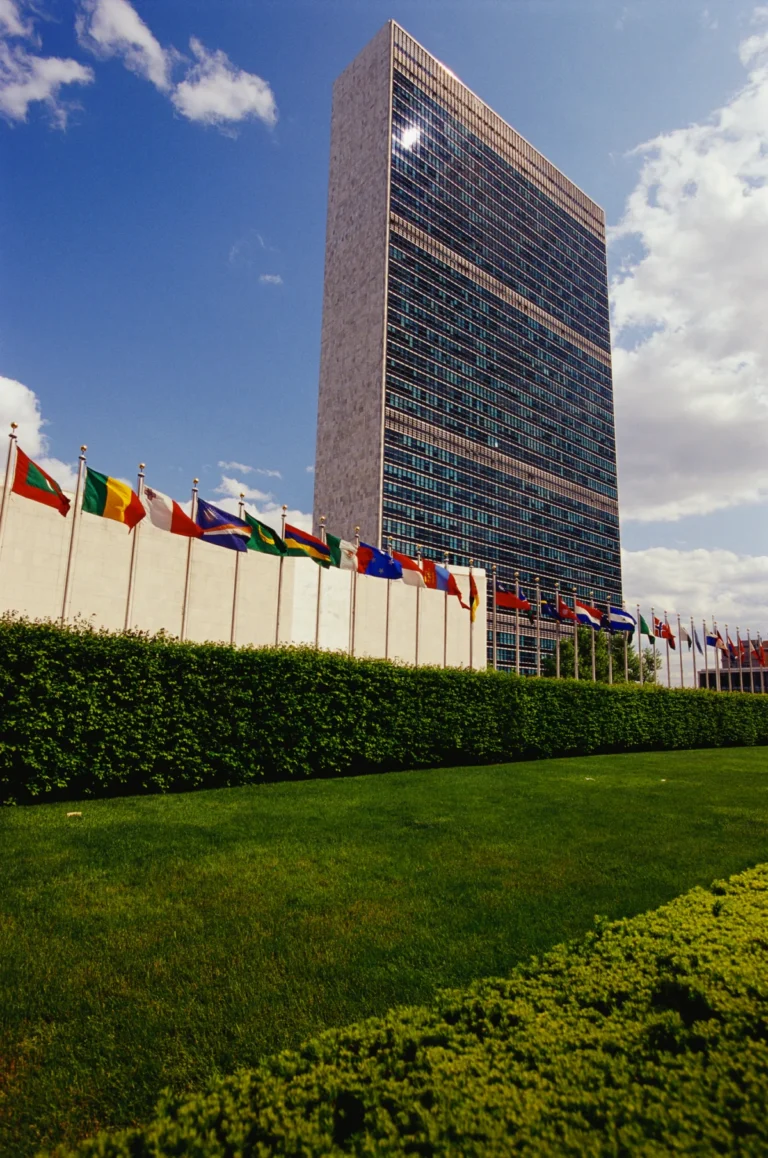
The push for a replacement-centric strategy arrives amidst the high-stakes negotiations of the United Nations Intergovernmental Negotiating Committee (INC). Since the adoption of Resolution 5/14 by the UN Environment Assembly in March 2022, the international community has been working at an unprecedented pace to develop a treaty that addresses the full lifecycle of plastics. The International Chamber of Commerce (ICC), which represents over 45 million companies globally, has been a vocal proponent of harmonized principles within this treaty. The ICC’s stance, echoed by leaders like Forsberg, is that a fragmented regulatory landscape will only stifle the innovation required to bring alternatives to market.
The timeline of this global effort underscores the urgency of the matter. Following the initial mandate in early 2022, the INC-1 session in Punta del Este, Uruguay, set the stage for a comprehensive approach. Subsequent meetings in Paris (INC-2) and Nairobi (INC-3) highlighted the deep divide between nations favoring a cap on primary plastic production and those focusing on waste management improvements. As the process moves toward its final stages, the role of technical feasibility and industrial scalability—the core expertise of companies like Alfa Laval—has become the central theme of the discourse.
The Industrial "Valley of Death" for Material Innovation
A significant barrier to the "Replacement" strategy is not a lack of scientific creativity, but rather the immense difficulty of scaling laboratory successes into industrial realities. Thousands of bio-based and biodegradable polymers have shown promise in controlled environments, yet the vast majority fail to reach the market. This phenomenon, often referred to as the "Industrial Valley of Death," occurs when a material that is technically feasible cannot find the investment or the infrastructure necessary to reach commercial volumes.
For a new material to be viable, it must navigate a complex web of uncertainties. Forsberg identifies these as process stability, product consistency, and capital expenditure (CAPEX) risks. Traditional plastics like polyethylene (PE) and polypropylene (PP) have benefited from nearly a century of optimization, massive infrastructure investments, and mature global supply chains. A first-of-a-kind (FOAK) production facility for a biogenic alternative cannot compete with these entrenched systems on cost alone.
According to industry data, global plastic production exceeds 400 million tonnes annually, while bioplastics and viable alternatives currently account for less than 1% of the total market share. To move from a few thousand tonnes to millions of tonnes requires more than just a better molecule; it requires a fundamental shift in how industrial equipment is designed and how risk is shared across the value chain.
From Supplier to Strategic Partner: The Alfa Laval Model
Alfa Laval, with a 140-year history in process technology and heat transfer, is positioning itself as a bridge across this "Valley of Death." The company’s approach involves moving beyond the traditional role of an equipment supplier to becoming a strategic development partner. This is exemplified by their ongoing collaboration with RWDC Industries, a biotechnology firm specializing in the production of polyhydroxyalkanoates (PHA)—a class of biogenic, biodegradable polyesters produced through microbial fermentation.
PHAs are often cited as a "holy grail" of plastic replacement because they are marine-biodegradable and can be produced from renewable feedstocks like used cooking oil. However, scaling PHA fermentation from a pilot plant to a massive industrial facility introduces significant mechanical and thermal challenges. In the partnership between Alfa Laval and RWDC, the two entities have integrated their engineering teams to co-develop production systems. This collaboration allows for the refinement of production conditions and the adaptation of centrifugal and thermal equipment in real-time.
By sharing expertise early in the development cycle, the cost of experimentation is lowered. When a single actor bears the entire burden of a failed trial, the financial impact can be catastrophic for a startup. When managed collectively through a partnership, these failures become data points that accelerate the path to a stable, bankable industrial process. Forsberg asserts that industrial transformation moves faster when risks are reduced collaboratively and partnerships are built with scale in mind from the outset.
Economic and Policy Implications of Material Substitution
The transition to plastic alternatives is as much an economic challenge as it is a technical one. Current market dynamics favor the status quo due to the low cost of fossil-fuel-derived feedstocks and the absence of standardized global regulations on plastic waste. For "Replacement" to succeed, the "green premium"—the higher cost of sustainable materials—must be addressed through both operational learning and policy incentives.
Industry analysts suggest that cost optimization for new materials typically follows a "learning curve" where costs drop by a certain percentage for every doubling of cumulative production. However, to reach the first few doublings, early-stage facilities need an enabling environment. This includes:
- Harmonized Standards: Global agreement on what constitutes "biodegradable" or "circular" to prevent greenwashing and provide certainty for manufacturers.
- Extended Producer Responsibility (EPR): Policies that hold producers financially responsible for the end-of-life of their products, thereby incentivizing the use of materials that are cheaper to process in waste streams.
- Incentives for FOAK Facilities: Government-backed loan guarantees or tax credits that lower the cost of capital for the first generation of industrial-scale alternative plastic plants.
The ICC and Alfa Laval both emphasize that overly complex or fragmented national requirements can unintentionally slow down the deployment of these solutions. A global treaty that provides a clear, long-term regulatory signal will give investors the confidence to move capital into the bio-economy.
Analysis of the Broader Impact
The implications of successfully scaling plastic replacements extend far beyond environmental protection. A shift toward biogenic materials could catalyze a new "bio-industrial" revolution, creating decentralized supply chains where plastic feedstocks are grown or recovered locally rather than shipped globally as petroleum derivatives. This has significant potential for enhancing material security and creating high-tech manufacturing jobs in regions that currently rely on imported polymers.
Furthermore, the "Replacement" strategy addresses the pervasive issue of microplastics. Even the most efficient recycling systems cannot prevent the shedding of microfibers from synthetic textiles or the abrasion of tire particles. By focusing on "sustainability-by-design," engineers can develop materials that, even if they escape the waste management system, do not persist in the environment for centuries.
Conclusion: The Path to the 2024 Treaty
As the international community prepares for the final rounds of negotiations for the UN plastic treaty, the insights from industrial leaders like Karin Forsberg provide a pragmatic roadmap. The treaty cannot simply be a list of bans and restrictions; it must be a framework for innovation. It must acknowledge that the technical capacity to replace conventional plastics exists, but the industrial capacity is still in its infancy.
The "Fourth R" of Replacement offers a way forward that aligns environmental imperatives with economic growth. By fostering partnerships that distribute risk and leveraging a century of industrial expertise, the distance between a laboratory breakthrough and a global solution can be bridged. The success of the upcoming global instrument will ultimately be measured by its ability to turn these technical possibilities into an industrial reality, ensuring that the materials of the future are as sustainable as they are functional.
About the Author