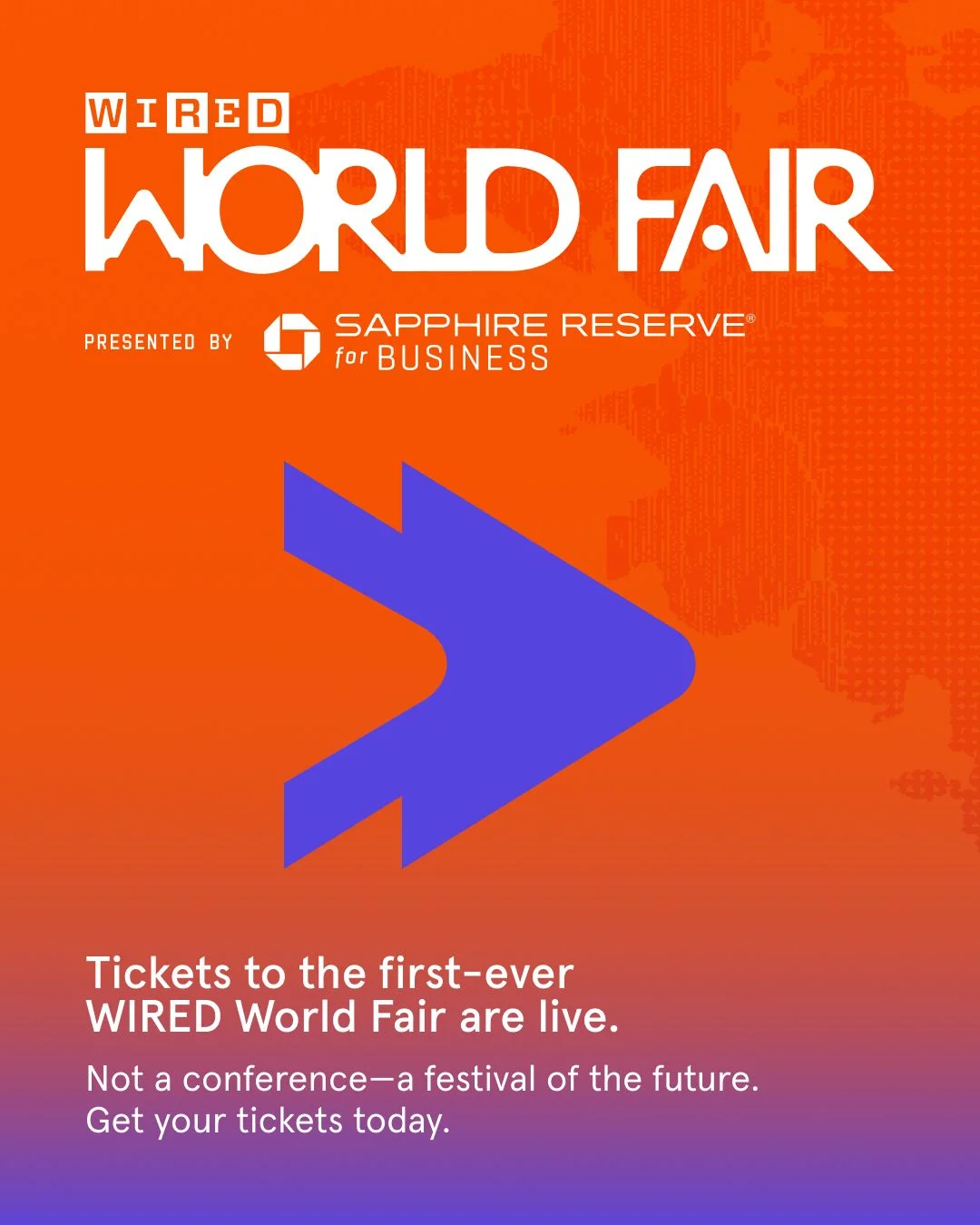
The tradition of the World’s Fair, an institution that for over 170 years has served as the premier stage for human ingenuity and the unveiling of future-defining technologies, is being reinvented for the modern era. On November 4, the city of Miami will host the inaugural WIRED World Fair, a concentrated one-day event designed to transition the cutting-edge reportage of the long-standing publication from the digital and printed page into a tangible, immersive experience. Set against the backdrop of the Sacred Space in Miami’s vibrant Wynwood district, the event aims to gather a diverse assembly of scientists, political figures, cultural icons, and technologists to address the most pressing advancements and challenges of the 21st century.
Since the Great Exhibition of 1851 in London’s Crystal Palace, World’s Fairs have introduced the public to inventions such as the telephone, the television, and the Ferris wheel. However, as the pace of technological development has accelerated, the format of these global gatherings has struggled to remain relevant in a world of instant digital communication. The WIRED World Fair seeks to bridge this gap by focusing on the convergence of biotechnology, artificial intelligence, and human culture, providing a curated physical forum where the theoretical becomes practical.
A Strategic Location: Miami and the Rise of the Silicon Tropics
The selection of Miami as the host city is a calculated reflection of the shifting geography of the global technology sector. Over the past five years, Miami has undergone a significant transformation, evolving from a tourism-centric economy into a burgeoning hub for finance and technology, often referred to by industry insiders as the "Silicon Tropics." This migration was catalyzed by a massive influx of venture capital and a strategic push by local government to attract talent from traditional tech corridors like Silicon Valley and New York.
According to data from the Miami-Dade Beacon Council, the region saw a 40% increase in tech jobs between 2020 and 2023. By hosting the event in the Wynwood district, an area renowned for its transition from an industrial warehouse zone to a global center for street art and creative innovation, organizers are tapping into an environment that mirrors the fair’s theme of transformation. The Sacred Space, known for its focus on wellness and high-concept events, provides a modular environment capable of hosting both high-level geopolitical debates and immersive technological demonstrations.
Thematic Pillars: AI, Biotechnology, and the Future of Governance
The core of the WIRED World Fair revolves around three primary pillars that are currently reshaping the global landscape: artificial intelligence (AI), biotechnology, and the evolving nature of political discourse.
The AI segment of the fair arrives at a critical juncture. As generative AI models reach new heights of capability, the conversation has shifted from mere novelty to questions of regulation, ethics, and economic impact. Analysts expect the event to feature discussions on the "alignment problem"—the challenge of ensuring AI systems act in accordance with human values—as well as the role of AI in geopolitical competition.
Simultaneously, the biotechnology track will highlight breakthroughs in longevity, genetic engineering, and neurotechnology. With the global biotechnology market projected to reach a valuation of over $3.8 trillion by 2030, the fair serves as a platform for researchers to discuss how editing the human genome or interfacing with the brain could solve chronic diseases or enhance human capability. These discussions are expected to include insights from leading researchers who are moving beyond laboratory theory into clinical applications.
Deciphering Non-Human Intelligence: The Dolphin Research Project
One of the more unconventional highlights of the fair is the inclusion of interspecies communication research. Specifically, the event will feature a researcher dedicated to decoding the language of dolphins. This field of study has seen a resurgence in recent years due to the application of machine learning algorithms to acoustic data.
Interspecies communication research, such as that conducted by organizations like Project CETI (Cetacean Translation Initiative), utilizes advanced hydrophones and AI to identify patterns in marine mammal vocalizations. By presenting this work at the World Fair, WIRED is highlighting the potential for AI to bridge the gap between human and non-human intelligence, a breakthrough that would have profound philosophical and scientific implications. If successful, such technology could fundamentally alter the human relationship with the natural world, moving from observation to actual dialogue.
Space Exploration and the Path to Mars
The fair will also provide attendees with a glimpse into the next frontier of human habitation: deep space. As NASA’s Artemis program aims to return humans to the lunar surface and eventually establish a presence on Mars, the technology required for astronaut readiness has become increasingly sophisticated.
The event will feature the same training software currently utilized by astronauts to prepare for the unique challenges of lunar and Martian environments. This software involves high-fidelity virtual reality (VR) simulations and complex logic engines designed to mimic low-gravity physics and the psychological stressors of long-duration spaceflight. By making this technology accessible to the public, the fair underscores the transition of space exploration from a purely government-funded endeavor to a collaborative effort involving private enterprise and advanced software development.
Cultural Intersections: Art, Satire, and Documentary
True to the tradition of World’s Fairs, the Miami event will integrate cultural and artistic expressions that provide a critique or reflection of technological progress. The inclusion of Marina Abramović, a pioneer in performance art, signifies an exploration of the human body and consciousness in a digital age. Abramović’s work often demands physical presence and endurance, serving as a stark contrast to the ephemeral nature of the internet.
Furthermore, the fair will address the complexities of modern media through the presence of The Onion. As satire becomes increasingly difficult to distinguish from reality in a polarized information environment, the participation of the world’s most famous satirical outlet offers a meta-commentary on the state of truth and information. This will be complemented by a screening of the documentary Musk, a film that examines the life and influence of Elon Musk, a figure who embodies the intersection of technology, wealth, and controversy. Analysts suggest that the screening will likely spark debate regarding the role of "Great Man" theory in modern innovation and the ethical responsibilities of tech titans.
Historical Context and the Evolution of the Fair
To understand the significance of the WIRED World Fair, it is necessary to look at the chronology of such events.
- 1851: The Great Exhibition (London): Focused on industrial machinery and the raw materials of the British Empire.
- 1893: World’s Columbian Exposition (Chicago): Introduced the world to alternating current (AC) electricity and the first Ferris wheel.
- 1939: New York World’s Fair: Established the "World of Tomorrow" theme, introducing television and the concept of a highway-centric future.
- 1962: Century 21 Exposition (Seattle): Focused on the Space Age, leaving behind the Space Needle as a permanent icon.
- 2024: WIRED World Fair (Miami): Shifts the focus from physical infrastructure to digital, biological, and cognitive infrastructure.
While historical fairs were often multi-month extravaganzas requiring the construction of entire cities, the WIRED model represents a move toward the "pop-up" intellectual summit. This format reflects the modern preference for high-density, high-impact events that can be easily documented and distributed through social and digital media.
Broader Implications and Economic Impact
The implications of the WIRED World Fair extend beyond the one-day event. For the tech industry, it serves as a barometer for public sentiment regarding controversial technologies like AI and genetic editing. For the city of Miami, it reinforces its status as a global destination for intellectual capital, potentially attracting further investment from firms looking to capitalize on the proximity to such high-level discourse.
Economists note that events of this nature often lead to "knowledge spillovers," where the informal interactions between speakers and attendees result in new partnerships and startups. Furthermore, the inclusion of robotics and immersive art installations suggests a future where technology is not merely a tool used in isolation but is integrated into the very fabric of physical space and human experience.
As the event approaches, organizers have indicated that additional programming will be announced, further expanding the scope of the fair. The convergence of these disparate fields—from marine biology to astronautics—suggests a holistic approach to the future. The WIRED World Fair is not merely a showcase of gadgets; it is an attempt to synthesize the various forces that will define human existence in the coming decades. By returning to the tradition of the World’s Fair, WIRED is asserting that even in an age of digital saturation, the physical gathering of minds remains the most effective catalyst for innovation.
About the Author