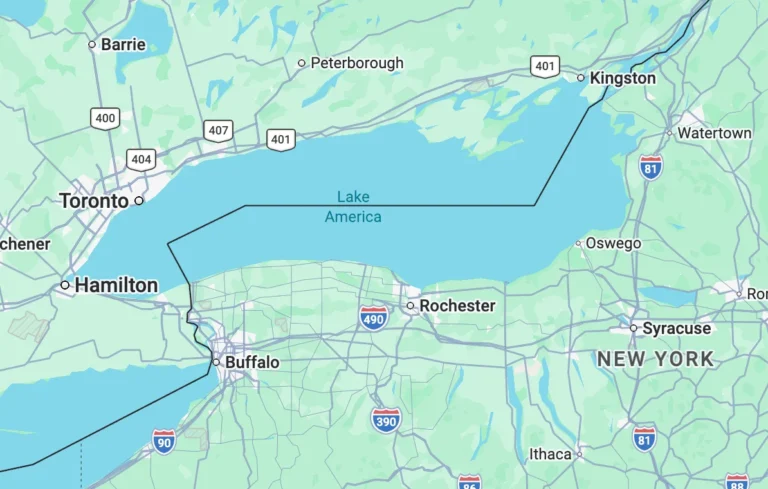
Two hours west of Beijing by high-speed rail, the landscape undergoes a dramatic transformation, shifting from the dense urban sprawl of the capital to the rolling grasslands and ancient cinder cones of Inner Mongolia. Historically recognized as a center for sheep farming and coal extraction, the region is currently undergoing a radical industrial pivot. The city of Ulanqab, home to approximately 1.5 million residents, has emerged as the premier destination for China’s rapidly expanding artificial intelligence (AI) data center sector. Since 2016, nearly 100 data centers have either been commissioned or have entered the construction phase within the city limits. This surge represents a fundamental shift in the global compute landscape, as Chinese technology giants race to secure the physical infrastructure necessary to power the next generation of generative AI models.
The scale of this development is unprecedented. According to recent research from Goldman Sachs, Chinese corporations have pledged to develop projects in Ulanqab with a combined estimated capacity of 12.5 gigawatts (GW). Notably, over 70 percent of these commitments were announced within the last 12 months, marking Ulanqab as one of the fastest-growing compute clusters in Asia. To put this figure into a global perspective, OpenAI’s highly publicized "Stargate" project is projected to reach a total capacity of 10 GW upon completion. Ulanqab’s planned capacity already exceeds this benchmark, signaling China’s intent to match or surpass American investments in high-density compute infrastructure.
The Strategic Shift: From Cloud Tenants to Infrastructure Owners
For much of the last decade, the Chinese AI sector operated on a model of capital efficiency, with most startups and mid-sized firms renting compute power from established cloud service providers. However, the current "gold rush" in Ulanqab reveals a significant strategic evolution. For the first time, major AI developers are transitioning from tenants to landlords, investing billions into their own proprietary physical infrastructure.
Leading this charge is DeepSeek, the high-profile AI startup that recently disrupted global markets with its efficient model training techniques. Reports indicate that DeepSeek is developing a massive, dedicated AI data center in Ulanqab to support its future research and development. It is joined by industry titans such as ByteDance, Alibaba, and the social media platform Xiaohongshu. This move toward self-owned infrastructure suggests that Chinese firms now view compute capacity as a core strategic asset that must be controlled directly rather than outsourced. Historically, Chinese AI companies spent significantly less on physical hardware than their Silicon Valley counterparts; the current boom in Inner Mongolia suggests that this gap is closing rapidly as the requirements for training and inference scale exponentially.
A Chronology of Development: From Backup Storage to AI Hub
The transformation of Inner Mongolia into a tech hub did not happen overnight. The region’s journey began nearly a decade ago, long before the 2022 explosion of interest in Large Language Models (LLMs).
- 2016: Huawei establishes the first major data center in Ulanqab, recognizing the region’s potential for low-cost operations.
- 2017–2019: Two dedicated fiber-optic cables are installed, connecting Ulanqab directly to Beijing. These upgrades were critical, reducing average latency speeds to less than five milliseconds—a threshold fast enough to support real-time data exchange and AI inference.
- 2019: Apple follows Huawei’s lead, opening a major data facility in the region to comply with Chinese data localization laws.
- 2021: The central government formalizes the region’s role by designating it a primary hub in the "Eastern Data, Western Compute" project. This national strategy aims to balance China’s digital economy by moving energy-intensive data processing to the resource-rich western provinces while serving the populous eastern markets.
- 2022–Present: The rise of generative AI changes the utility of these remote sites. While they were previously used for "cold storage" (backup data that is rarely accessed), they are now being repurposed for "hot compute" tasks like model training, where latency is less critical than raw power and cooling efficiency.
The Economic Logic: Cooling, Latency, and Power Costs
The migration to Ulanqab is driven by a trifecta of geographic and economic advantages. First is the climate. Situated on the Inner Mongolian Plateau at a high elevation, Ulanqab experiences long, frigid winters. This allows data center operators to utilize "free cooling" techniques—circulating outside air to dissipate the immense heat generated by AI chips—rather than relying on energy-intensive mechanical refrigeration. This significantly lowers the Power Usage Effectiveness (PUE) ratio, a key metric for data center efficiency.
Second is the geographic proximity to Beijing. Unlike other remote data hubs in China’s far west or deep south, Ulanqab is close enough to the capital to ensure that data can be transmitted with minimal delay. This proximity is vital for "inference"—the process of an AI model responding to a user’s prompt in real-time.
Third, and perhaps most importantly, is the cost of electricity. Inner Mongolia offers some of the lowest power rates in China. This is the result of a unique energy mix: an abundant, indigenous supply of coal combined with a massive build-out of wind and solar farms. For data centers, where electricity can account for up to 70 percent of operational costs, these savings are a decisive competitive advantage.
The Environmental Paradox: Renewable Aspirations vs. Resource Realities
The Chinese government views the Ulanqab cluster as a "win-win" for its industrial and environmental goals. By placing data centers in Inner Mongolia, the state can absorb excess capacity from the region’s burgeoning renewable energy sector. Wind and solar farms often produce more power than the local grid can handle, a problem known as curtailment. Data centers provide a steady, 24/7 demand that can theoretically "soak up" this clean energy. This month, Envision, a leading global wind turbine manufacturer, announced plans to build a 2 GW AI data center in Ulanqab powered directly by its own renewable installations.
However, the reality on the ground is more complex. Despite the renewable push, Inner Mongolia remains "coal country." Research indicates that approximately 37 percent of Ulanqab’s electricity is still derived from coal-fired power plants. Because AI training requires a constant, uninterrupted power supply, operators often rely on coal as a "baseload" to compensate for the intermittent nature of wind and solar. While analysts suggest the region could transition to 100 percent renewables within three to five years, the current expansion is still heavily subsidized by fossil fuels.
Furthermore, a more immediate crisis looms: water scarcity. Data centers, even those using air cooling, require significant amounts of water for humidity control and supplemental cooling during peak summer months. Ulanqab is an arid region, receiving only about 14 inches of rainfall annually—comparable to the semi-arid climate of Denver, Colorado.
The local government is already struggling to balance industrial needs with residential demand. In a stark example of this tension, Ulanqab’s local water utility was recently forced to implement nightly seven-hour shutoffs for several waterworks to mitigate peak demand. While data centers in the region only require intensive water cooling for approximately two months of the year, the sheer volume of planned infrastructure threatens to outpace the local ecosystem’s carrying capacity.
Broader Impact and Global Implications
The Ulanqab boom is more than a local real estate story; it is a barometer for the global AI arms race. The concentration of 12.5 GW of capacity in a single city suggests that China is building at a density that may soon rival Northern Virginia, the current data center capital of the world.
From a geopolitical perspective, this infrastructure provides China with a degree of resilience against external pressures. By owning the physical stacks and the energy supply, Chinese firms are less vulnerable to shifts in global cloud pricing or service availability. Furthermore, the integration of data centers with the "Eastern Data, Western Compute" framework demonstrates a level of state-coordinated industrial planning that is difficult to replicate in more fragmented markets.
However, the sustainability of this growth depends on solving the "water-energy-compute" trilemma. If Ulanqab cannot secure its water supply or accelerate its transition to a purely renewable grid, it risks becoming a victim of its own success. For now, the rolling grasslands of Inner Mongolia remain the most active construction site in the digital world, a place where the ancient landscape is being rapidly overwritten by the silicon and steel of the AI age. As Chinese startups like DeepSeek and Moonshot AI attract more users, the demand for Ulanqab’s resources will only intensify, forcing a difficult reckoning between technological ambition and environmental limits.
About the Author