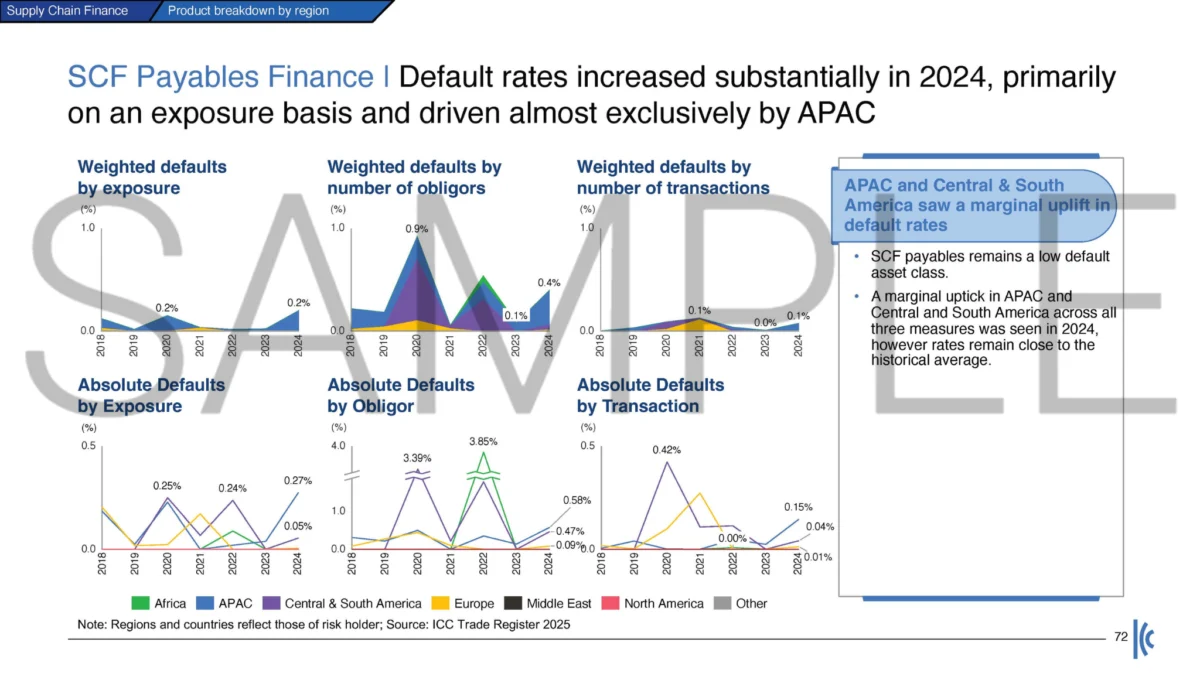
The International Chamber of Commerce (ICC) has announced the upcoming release of the 2026 ICC Global Trade Intelligence Report, a comprehensive analysis designed to serve as the definitive benchmark for the global trade and supply chain finance industry. Building upon more than a decade of empirical data collection, the report arrives at a critical juncture for the global economy, as financial institutions grapple with geopolitical volatility, high interest rates, and the rapid digitalization of international commerce. This year’s edition, supported by a massive dataset encompassing over $25.7 trillion in transactions, is poised to offer unparalleled insights into risk performance, default rates, and emerging market opportunities across the globe.
The ICC Global Trade Intelligence Report, formerly known as the ICC Trade Register, has evolved from a specialized data collection project into a strategic asset for the world’s leading financial institutions. By aggregating data from 22 of the world’s largest global banks, the report provides a statistical foundation that allows banks to make more informed decisions regarding credit risk and capital allocation. The transition to the "Global Trade Intelligence" branding reflects a broader scope, moving beyond mere default tracking to provide proactive intelligence on market trends and the structural health of global trade.
Historical Context and the Evolution of Trade Intelligence
The origins of this initiative date back to the aftermath of the 2008 global financial crisis. During that period, the trade finance industry faced significant challenges as regulatory bodies, under the Basel Committee on Banking Supervision, began implementing stricter capital adequacy requirements. There was a growing concern among trade finance practitioners that these regulations did not accurately reflect the low-risk nature of trade finance compared to general corporate lending.
To address this data gap, the ICC launched the Trade Register in 2009. The objective was to provide objective, third-party evidence of the low default rates associated with trade finance products, such as Letters of Credit (L/Cs) and Guarantees. Over the last 15 years, the project has grown exponentially. What began as a modest collection of data from a handful of banks has transformed into a massive repository of over 40 million transactions.
The upcoming 2026 report represents the latest iteration of this effort, incorporating advanced data analytics and a wider geographical reach. By partnering with the Boston Consulting Group (BCG) and Global Credit Data (GCD), the ICC ensures that the methodology remains robust and that the insights are relevant to both risk managers and C-suite executives.
Methodology and the Power of Aggregated Data
The strength of the ICC Global Trade Intelligence Report lies in its methodology. The data is contributed by 22 member banks, which include some of the most influential names in global finance. These institutions provide granular details on their trade finance portfolios, including transaction types, borrower profiles, and default outcomes. This data is then anonymized and aggregated to ensure confidentiality while providing a macro-level view of the industry.
The report focuses on several key product categories:
- Import Letters of Credit: Instruments that guarantee payment to exporters, provided they meet specific documentary requirements.
- Export Letters of Credit: Facilitating the flow of goods by ensuring exporters receive payment from foreign buyers.
- Performance Bonds and Guarantees: Financial instruments that protect against non-performance of contracts.
- Supply Chain Finance (SCF): A growing suite of solutions, including payables finance and receivables discounting, which optimize working capital for both buyers and sellers.
By analyzing $25.7$ trillion in transactions, the ICC can calculate "Expected Loss" (EL) and "Probability of Default" (PD) with high precision. Historically, the report has consistently demonstrated that trade finance products have a significantly lower risk profile than traditional corporate loans. For instance, past reports have shown that the default rate for trade finance products often hovers below 1%, compared to significantly higher rates for unsecured commercial debt.
What to Expect in the 2026 Edition
The 2026 report is expected to introduce several new dimensions to its analysis. According to the ICC, the complete package will consist of a Global Overview Report, regional data analysis, and product-specific reports. This modular approach allows users to tailor the insights to their specific business needs, whether they are focused on emerging markets in Southeast Asia or established trade corridors in Europe and North America.
A key focus of the 2026 report will be the impact of digitalization. As the industry moves away from paper-based processes toward Electronic Bills of Lading (eBLs) and digital trade documents, the risk landscape is shifting. The report will likely explore how digitalization affects fraud rates and operational efficiency.
Furthermore, the 2026 edition is expected to delve deeper into Environmental, Social, and Governance (ESG) metrics. With increasing pressure from regulators and investors for banks to report on the "green" credentials of their portfolios, the ICC is working toward integrating sustainability data into its intelligence framework. This will help banks identify "green trade" opportunities and align their lending practices with global climate goals.
The Regulatory Imperative: Basel III and Beyond
One of the most significant applications of the ICC Global Trade Intelligence Report is its role in regulatory advocacy. The data provided by the report is used by financial institutions to engage with regulators regarding the "Basel III Endgame" and the forthcoming Basel IV standards.
Under the Basel framework, banks must hold a certain amount of capital against their assets to protect against potential losses. If trade finance is treated the same as riskier corporate debt, banks are forced to hold more capital, which increases the cost of trade finance for businesses. The ICC report provides the empirical evidence needed to argue for "Credit Conversion Factors" (CCFs) that reflect the actual risk levels of trade products.
By demonstrating that trade finance is a safe and resilient asset class, the report helps ensure that capital remains available to support global commerce. This is particularly vital for Small and Medium-sized Enterprises (SMEs), which are the backbone of the global economy but often face the greatest hurdles in accessing affordable trade credit.
Addressing the Global Trade Finance Gap
The publication of the 2026 report also comes at a time when the "trade finance gap"—the difference between the demand for trade finance and the available supply—remains a major concern. According to recent estimates by the Asian Development Bank (ADB), the global trade finance gap has widened to approximately $2.5 trillion.
This gap disproportionately affects SMEs and businesses in emerging economies. The ICC Global Trade Intelligence Report plays a crucial role in narrowing this gap by providing banks with the confidence to lend in markets that might otherwise be perceived as too risky. By providing clear data on default rates in specific regions and sectors, the report allows banks to price risk more accurately and expand their footprints in developing markets.
Collaborative Partnership and Industry Support
The production of the report is a collaborative effort that extends beyond the ICC. The strategic partnership with the Boston Consulting Group (BCG) brings high-level strategic analysis to the data, while Global Credit Data (GCD) provides the technical infrastructure for credit risk benchmarking.
For the 22 member banks, participation is not just about contributing data; it is about gaining access to a community of experts. Membership includes access to exclusive webinars, deep-dive data sessions, and the ability to influence the future direction of the research. Non-bank corporations and technology providers also have opportunities to engage through sponsorship, allowing them to raise their visibility within the global banking sector.
While the specific names of all 22 banks are often kept confidential in public promotional materials, the group typically includes major international players such as HSBC, Standard Chartered, Citigroup, BNP Paribas, and Deutsche Bank, all of whom have a vested interest in the stability and transparency of the trade finance market.
Broader Impact and Future Implications
The implications of the ICC Global Trade Intelligence Report extend far beyond the banking sector. For policymakers and international organizations like the World Trade Organization (WTO), the report provides a pulse check on the health of global trade. In an era of "near-shoring" and "friend-shoring," understanding the flow of trade finance is essential for mapping the reorganization of global supply chains.
The report also serves as a vital tool for insurance companies and institutional investors. As trade finance increasingly becomes an investable asset class for non-bank investors, the ICC’s data provides the transparency required for institutional capital to enter the market. This influx of new capital is one of the most promising avenues for closing the $2.5 trillion trade finance gap.
As the industry looks toward the official launch of the 2026 report, the consensus among experts is that data-driven intelligence is no longer an optional luxury but a fundamental necessity. In a world characterized by "permacrisis"—a state of constant flux and uncertainty—the ICC Global Trade Intelligence Report provides a rare anchor of empirical certainty.
Conclusion: A Roadmap for Resilient Trade
The forthcoming 2026 ICC Global Trade Intelligence Report is more than just a collection of statistics; it is a roadmap for the future of global commerce. By leveraging over a decade of data and the collective expertise of the world’s leading banks, the ICC is providing the tools necessary to build a more resilient, inclusive, and efficient trade finance ecosystem.
As institutions prepare for the report’s release, the focus remains on transforming raw data into actionable strategy. Whether it is navigating regulatory hurdles, exploring new market opportunities, or transitioning to digital and sustainable trade, the intelligence provided by the ICC will be at the heart of the industry’s most critical decisions. The global trade community now awaits the full report, which promises to redefine the benchmarks for success in the years to come.
About the Author