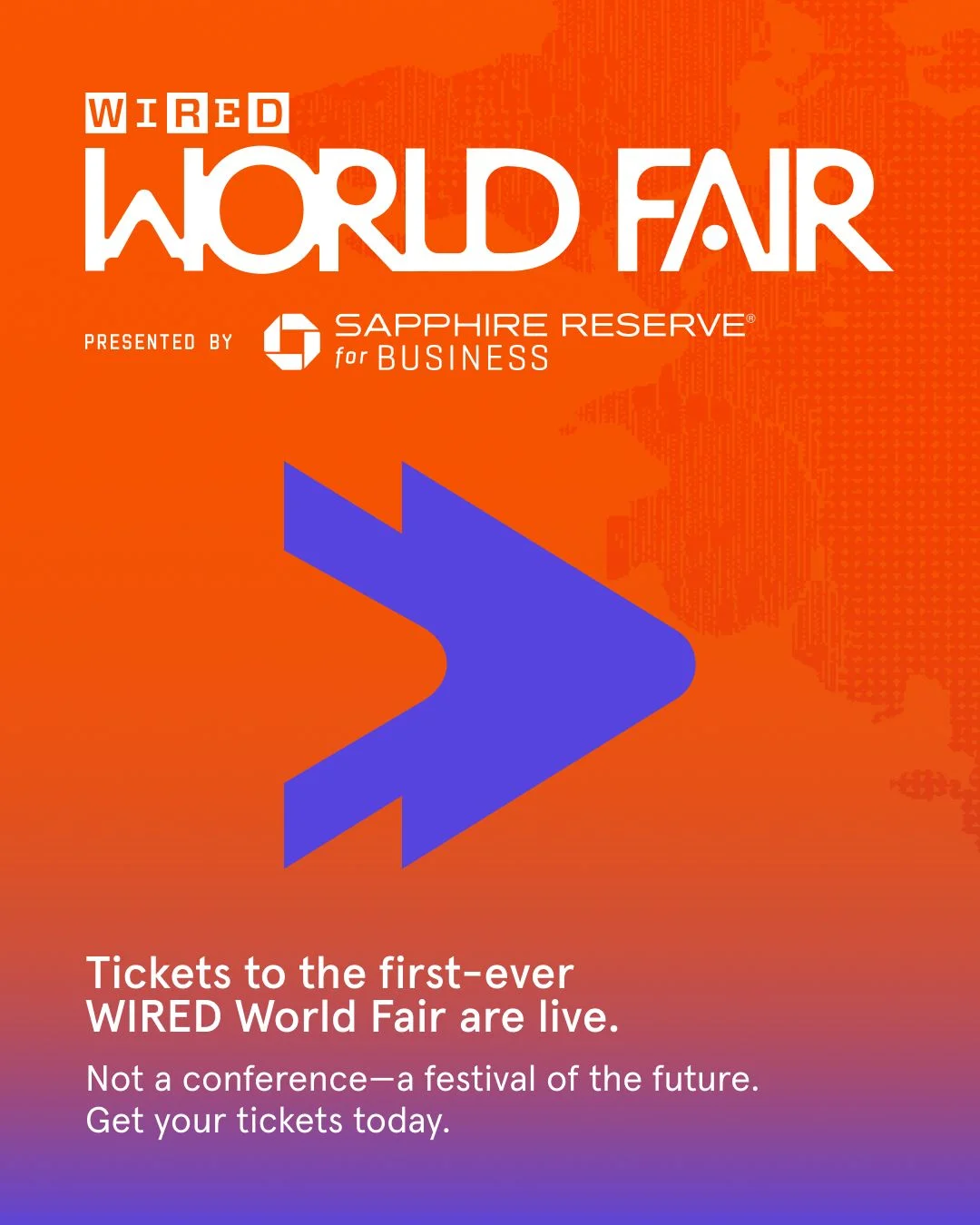
The global media landscape and the tech industry are set to converge in Florida this autumn as the WIRED World Fair prepares to launch on November 4 in Miami’s Wynwood district. Hosted at the Sacred Space, this one-day event is designed to translate the publication’s long-standing digital and print coverage of emerging trends into a physical, immersive experience. The fair marks a significant shift in how technological breakthroughs are presented to the public, moving away from traditional trade shows toward a multidisciplinary format that blends biotechnology, artificial intelligence, political discourse, and contemporary art. By selecting Miami as the host city, organizers are tapping into a metropolitan area that has seen a 271% increase in venture capital investment over the last several years, positioning the event at the center of a burgeoning secondary tech hub.
A Legacy of Innovation: From the Crystal Palace to the Modern Fair
The WIRED World Fair arrives as a modern reimagining of a tradition that dates back to the mid-19th century. Historically, World’s Fairs—or International Expositions—served as the primary vehicle for introducing the general public to transformative technologies. The Great Exhibition of 1851 in London’s Crystal Palace showcased the heights of the Industrial Revolution, while the 1893 World’s Columbian Exposition in Chicago introduced the world to large-scale alternating current electricity. Throughout the 20th century, these events debuted everything from the television and the telephone to the touch screen and the IMAX cinema.
In the 21st century, the rapid pace of digital innovation often occurs behind closed doors or within specialized online communities. The November 4 event seeks to restore the tactile and communal nature of discovery. By curating a physical space where attendees can interact with robotic systems and astronaut training software, the fair aims to bridge the gap between abstract scientific concepts and their real-world applications. This transition from "page to life" reflects a broader trend in journalism where publications seek to diversify their revenue streams and deepen audience engagement through experiential events.
Programming Highlights and Key Participants
The fair’s schedule is structured around high-level conversations and interactive demonstrations. Among the notable participants is the creative team from The Onion, the long-standing satirical news organization. Their presence underscores the fair’s commitment to exploring the cultural and political implications of technology, particularly in an era defined by concerns over misinformation and the role of satire in public discourse. The intersection of media and technology is a recurring theme, as seen in the scheduled screening of the documentary Musk, which explores the influence of Elon Musk on the global aerospace, automotive, and social media sectors.
In the realm of hard science, the fair will feature a researcher dedicated to decoding the language of dolphins. This segment highlights the growing field of interspecies communication, which increasingly utilizes machine learning and advanced acoustics to interpret non-human signals. The inclusion of such research signifies a move toward "nature-tech," where human ingenuity is applied to understanding and preserving the biological world.
The event will also provide a platform for discussions on artificial intelligence and biotechnology. These two sectors have seen unprecedented growth; the global AI market is projected to reach nearly $2 trillion by 2030, while biotechnology continues to revolutionize healthcare through gene editing and synthetic biology. By hosting luminaries from these fields, the fair provides a venue for debate on the ethical and regulatory frameworks necessary to manage such rapid advancement.
Interactive Installations and Technological Demonstrations
A cornerstone of the WIRED World Fair is its focus on "first-hand" experiences. Unlike a standard conference, the event emphasizes immersion. Attendees will have access to the same training software utilized by astronauts to prepare for missions to the moon and Mars. This software, which incorporates high-fidelity simulations and spatial computing, offers a glimpse into the logistical and psychological preparation required for the next phase of human space exploration, including NASA’s Artemis program.
The integration of robotics is another key feature. As robotic systems move from industrial settings into domestic and service environments, the fair allows for a direct observation of these machines’ capabilities. This comes at a time when the global robotics market is expanding at a compound annual growth rate (CAGR) of approximately 17%, driven by labor shortages and advancements in autonomous navigation.
Complementing the technological displays are immersive art installations, most notably from Marina Abramović. A pioneer of performance art, Abramović’s work often explores the limits of the human body and the relationship between performer and audience. Her involvement, alongside other artists, suggests that the future of living is not merely a matter of hardware and software, but also of how these tools alter human perception, presence, and emotional connection.
Strategic Context: Why Miami and Wynwood?
The choice of Miami’s Wynwood district as the venue is a calculated move that reflects the city’s recent transformation. Once an industrial warehouse district, Wynwood has become a global destination for street art and creative industries. More broadly, Miami has aggressively marketed itself as a tech alternative to Silicon Valley and New York City. Since 2020, the city has seen a significant influx of tech workers and firms, supported by local government initiatives and a lack of state income tax.
According to data from Refresh Miami, tech companies in the South Florida region raised upwards of $5 billion in 2022. While the "tech exodus" to Florida has moderated in the wake of shifting interest rates and remote work policies, the region remains a vital node for international business, particularly as a gateway to Latin American markets. The Sacred Space, a venue known for its focus on wellness and sustainability, provides a backdrop that aligns with the fair’s themes of holistic living and the responsible application of technology.
Industry Implications and Future Outlook
The WIRED World Fair is more than a public exhibition; it serves as a litmus test for the future of live events in the post-pandemic era. Industry analysts note that as digital saturation increases, there is a growing premium on high-quality, in-person gatherings that offer "un-Googleable" experiences. For WIRED, the event represents a physical manifestation of its brand identity, which has spent thirty years documenting the "digital revolution."
From a broader economic perspective, events like the World Fair stimulate local economies and foster networking between venture capitalists, founders, and the public. The collaboration between satirical outlets like The Onion and serious scientific researchers suggests a cross-pollination of ideas that is essential for solving complex global challenges. For instance, the use of AI in decoding animal languages could have profound implications for conservation efforts and our understanding of cognitive science.
As the November 4 date approaches, organizers have indicated that additional programming and speakers will be announced. This "rolling" disclosure strategy is common in the event industry to maintain momentum and capture shifting news cycles. For the tech and media sectors, the fair will be closely watched as an indicator of which ideas are currently capturing the public imagination and which technologies are truly ready for "the everyday."
Summary of Impact
The WIRED World Fair stands as a bridge between the historical legacy of grand expositions and the decentralized, rapid-fire nature of 21st-century innovation. By bringing together the disparate threads of aerospace, marine biology, satire, and performance art, the event provides a comprehensive look at the "state of the future."
The broader implications of the event include:
- Cultural Synthesis: Demonstrating how art and satire can provide necessary critique and context for technological growth.
- Public Literacy: Increasing general understanding of complex systems like AI and astronautical training through direct interaction.
- Regional Growth: Cementing Miami’s reputation as a serious contender in the global tech and culture dialogue.
- Journalistic Evolution: Establishing a model for how traditional media brands can remain relevant and profitable by curating physical experiences.
As the fair opens its doors in Wynwood, it will likely serve as a microcosm of the tensions and triumphs of modern life, offering a rare opportunity to see the "what’s next" that has defined the World’s Fair tradition for over 170 years. Detailed information regarding tickets, full speaker bios, and the final schedule remains available through the official WIRED World Fair digital portal, ensuring that while the event is physical, its reach remains global.
About the Author