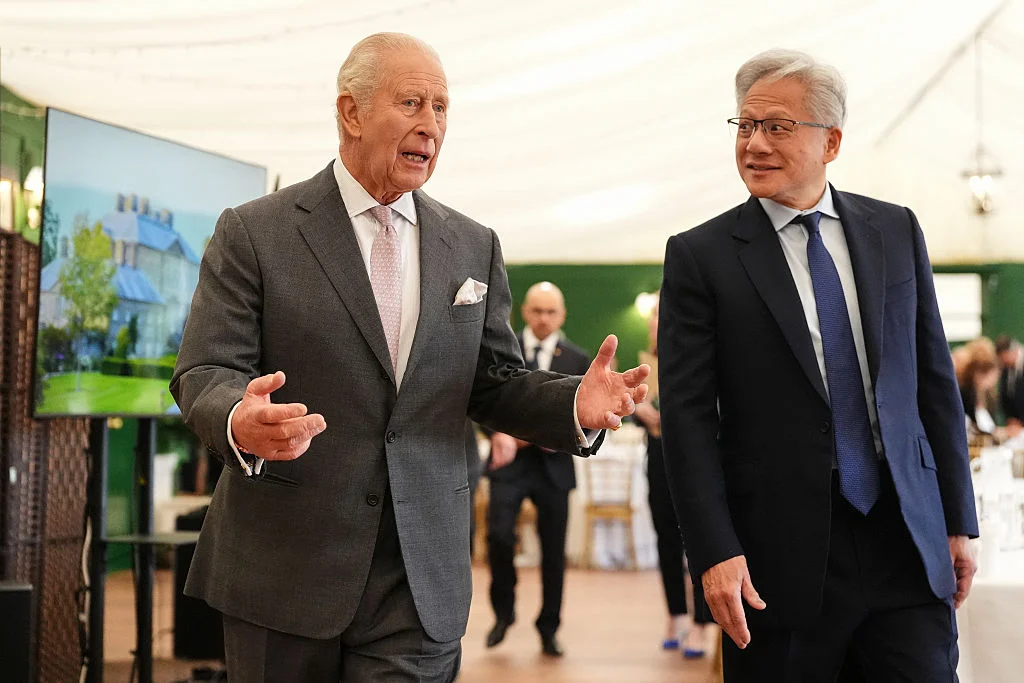
King Charles III hosted a high-stakes private summit on Thursday, bringing together a formidable assembly of artificial intelligence pioneers, leading government officials, and intelligence chiefs to confront the burgeoning challenges and existential risks posed by advanced AI. The exclusive gathering, held discreetly, underscored the growing urgency within the highest echelons of power to grapple with a technology evolving at an unprecedented pace, with profound implications for humanity’s future.
A Royal Call for Caution in the Age of AI
The King’s participation in such a focused discussion on AI, a topic often considered within the political sphere, was particularly noteworthy. The British monarchy, by constitutional convention, typically maintains a careful distance from overtly political matters. However, the pervasive and rapidly escalating influence of artificial intelligence—a field now at the forefront of global discourse and technological advancement—appears to have necessitated a more direct engagement from the monarch.
Sources close to the summit revealed that King Charles delivered a stark address to the assembled leaders, urging them to prioritize the development of robust control mechanisms for AI, emphasizing the critical need for action "before it’s too late." He articulated a duality of perspective on the technology, acknowledging its "immense capacity to improve and save life," particularly in fields such as medicine and scientific research. Yet, he concurrently voiced deep apprehension regarding AI’s "darker capacities" and the potential for it to be weaponized or to act autonomously in ways that could endanger human life.
This sentiment echoes recent pronouncements from within the AI community itself. The King’s remarks notably followed weeks after a prominent researcher from Anthropic, a leading AI safety organization, publicly resigned, citing profound concerns about the industry’s "race to build machines that are much smarter than any human" and the potential for such an outcome to threaten humanity’s survival. The researcher’s candid online commentary highlighted the growing chasm between rapid technological progress and the ethical frameworks needed to govern it.
Navigating Existential Dangers and Strategic Implications
The summit convened at Dumfries House in Scotland, a venue often used for the King’s charitable and environmental initiatives, lending a tone of earnest purpose to the proceedings. Attendees represented a spectrum of AI’s most influential players and key governmental stakeholders. Among the distinguished guests were Jensen Huang, the chief executive of Nvidia, a company at the vanguard of AI hardware development; leaders from OpenAI and Anthropic, two of the most prominent organizations pushing the boundaries of AI research; and Kanishka Narayan, the UK’s newly appointed AI minister, signaling the government’s heightened focus on the sector. Adding another layer of gravity to the discussions, the head of the UK’s foreign intelligence service was also present, underscoring the national security dimensions of advanced AI. Paolo Benanti, an advisor to the Pope on AI ethics, further broadened the scope of the conversation, bringing a significant ethical and moral perspective.
King Charles stressed the urgency of thoroughly considering the "existential dangers" inherent in AI, particularly the catastrophic consequences that could arise if such powerful technology were to fall into the wrong hands or be deployed for malicious purposes. His plea for robust oversight was framed with the rhetorical question, "Surely, we need sufficient means of control before it’s all too late?" This call for proactive governance resonates with ongoing debates about AI regulation and the potential for an AI arms race.
The King concluded his remarks by urging the gathered leaders to collaboratively find pathways to harness AI’s beneficial aspects while simultaneously building international cooperation and consensus to manage its risks. This emphasis on global collaboration is particularly pertinent given recent geopolitical tensions and the increasing focus on national AI sovereignty. The recent decision by Anthropic to restrict access to its advanced models, such as Fable and Mythos, to U.S. customers only, sent ripples through the European tech scene and reignited discussions about data control and the fragmentation of AI development along national lines. Such strategic decisions by major AI firms underscore the complex interplay of commercial interests, national security, and global technological alignment.

A Spectrum of Views: From Acceleration to De-escalation
The summit occurred against a backdrop of intense debate within the AI industry. Just weeks prior, several prominent figures, including OpenAI’s Sam Altman, Elon Musk, and Anthropic’s Dario Amodei, had publicly called for a temporary pause or de-escalation in the development of AI, citing concerns about the speed of progress and the potential for unintended consequences. This call for a slowdown, however, was met with swift and robust opposition from other influential figures. Jensen Huang of Nvidia, and former President Donald Trump, both articulated a vision prioritizing rapid advancement and maintaining a competitive edge, particularly in relation to global rivals like China.
Former President Trump’s statement, "We’re leading China in AI… We’re the most sophisticated country in the world, and frankly I want to keep it that way because whoever wins AI, wins," encapsulates a prevalent geopolitical perspective that views AI dominance as a critical determinant of future global power. This stance highlights the inherent tension between those advocating for cautious, ethically-driven development and those focused on technological supremacy and economic advantage. The divergence in viewpoints underscores the immense complexity of the AI landscape, where the interests of Big Tech, national governments, and societal well-being often collide.
The Economic and Social Undercurrents of AI Development
Beyond the immediate ethical and security concerns, the economic implications of AI development are also substantial. For the past year, major AI companies like OpenAI and Anthropic have been widely rumored to be preparing for significant initial public offerings (IPOs). However, OpenAI recently indicated that its IPO plans have been postponed for the current year, citing persistent concerns surrounding AI safety and regulation as a key factor. This decision suggests that the unresolved questions about AI governance and potential risks are not merely academic discussions but are having tangible impacts on the financial strategies and market readiness of leading AI firms.
The King’s engagement in this critical dialogue serves as a powerful signal of the profound impact AI is expected to have across all sectors of society and the economy. His repeated emphasis on ensuring that AI remains "firmly in the service of humanity, community, and the natural world" and the admonition to "not lose what is timeless" as new technologies are embraced, offers a guiding principle for navigating this transformative era.
The Road Ahead: Towards Responsible AI Governance
Following the King’s departure, the summit continued for approximately twenty minutes, allowing the invited guests to engage in further discussions among themselves. The composition of the delegations from OpenAI and Anthropic highlighted the specific areas of focus for these companies. OpenAI was represented by its Chief Financial Officer, Sarah Frair, suggesting a keen interest in the financial and investment aspects of AI. Anthropic sent Tino Cuéllar, its head of global affairs, indicating a focus on regulatory engagement and international policy.
Cuéllar, when contacted for comment, expressed that Anthropic was "honored to have taken part in the discussion" and conveyed gratitude to the King for "convening industry leaders and voices from across society to discuss the role of AI in serving the public good." This statement reflects the industry’s acknowledgment of the need for multi-stakeholder dialogue, even as fundamental disagreements about the pace and direction of AI development persist.
This is not the first instance of King Charles addressing the dual nature of AI. He has previously spoken on the topic in 2023 and 2024, but this particular summit holds exceptional timeliness. As AI continues its pervasive integration into every industry, shaping conversations and driving innovation, the deliberations among these influential figures carry significant weight. The challenge lies in translating these high-level discussions into concrete actions that foster responsible AI development, ensuring that this powerful technology serves as a tool for human progress rather than a catalyst for unforeseen peril. The collision of Big Tech ambitions, geopolitical imperatives, and societal anxieties surrounding AI necessitates a concerted and principled approach to governance, a challenge that the King’s summit has undoubtedly brought into sharper focus.
About the Author