The digital landscape is undergoing a seismic shift as consumers increasingly bypass traditional search engine results pages (SERPs) in favor of direct answers from generative AI tools. Platforms like ChatGPT, Perplexity, and Google’s nascent AI Overviews are rapidly becoming the preferred method for users seeking information, fundamentally altering the dynamics of online discovery and demanding a strategic reevaluation from marketers worldwide. The familiar question of "Do we rank?" on Google is rapidly being supplanted by a more critical query: "Are we even mentioned?" This comprehensive analysis delves into the nature of these AI search tools, the evolving behavior of buyers, and the essential strategies marketers must adopt to navigate this transformative era.
The Rise of the AI Answer Engine
At its core, an AI search tool, or AI search software, encompasses any application leveraging artificial intelligence to facilitate information crawling, discovery, retrieval, or synthesis. While this definition is broad, it effectively categorizes tools into three primary functions: research, visibility, and optimization. Understanding these distinctions is crucial for marketers seeking to align their strategies with the new information-seeking paradigm.
The most prominent category, "Answer Engines," represents the vanguard of this transformation. These are sophisticated platforms, exemplified by ChatGPT and Google Gemini, where users pose queries in natural language and receive synthesized, direct answers. Unlike traditional search engines that present a list of links for users to sift through, answer engines aim to provide a singular, comprehensive response, drawing information from a multitude of sources. While some of these engines transparently cite their sources, others operate more opaquely, relying on their vast training data. The underlying objective remains consistent: to deliver a concise answer rather than a directory of potential resources.
This shift has profound implications for consumer behavior. Research from Forrester indicates a significant trend: 94% of B2B buyers utilized AI during their recent purchasing journeys. Of this group, a substantial 55% employed AI for vendor comparison, 54% for product research, and 47% for building internal business cases – all occurring before any direct engagement with a sales representative. McKinsey research further underscores this trend, revealing that approximately 50% of consumers across all demographics, including older generations, now employ AI-powered search for purchasing decisions. Adobe Digital Insights reported that 56% of U.S. consumers used generative AI during the 2025 holiday shopping season, a notable increase from the previous year.
The consequence is a dramatically altered buyer journey. By the time a prospect initiates contact or fills out a demo request form, they have likely already engaged with an AI engine, potentially forming initial opinions and narrowing down their choices. Forrester’s findings assert that AI answer engines have now ascended to the number one source for vendor research, eclipsing traditional sources like vendor websites, sales representatives, and product experts. For marketers, the established playbook of achieving high rankings on Google to drive traffic is becoming insufficient. Visibility within these AI-generated answers is emerging as the primary layer of discovery, particularly for queries driven by purchase intent.
Categorizing the AI Search Arsenal
To effectively strategize, marketers must differentiate between the types of AI search tools and their specific applications:
1. Answer Engines: The New Information Hubs
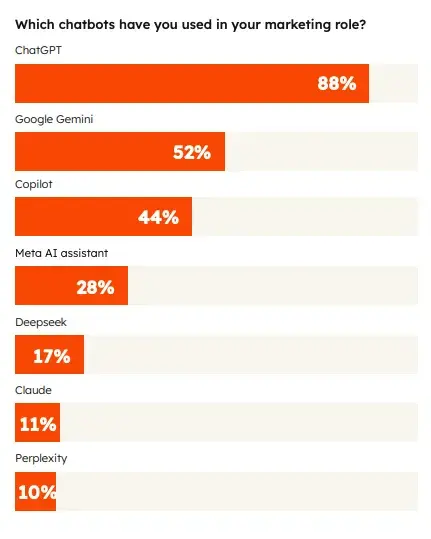
These are the generative AI chatbots and conversational interfaces that provide direct, synthesized answers. They are used by buyers for initial discovery, comparative analysis, and follow-up research. Simultaneously, marketers are increasingly leveraging these tools for their own research, data analysis, and content generation. HubSpot’s AI Trends Report highlights that 40% of marketers utilize answer engines for these purposes, making them the most popular AI tool among marketing professionals. While marketers cannot directly control what answer engines publish about their brands, they can influence it through Answer Engine Optimization (AEO) and by consistently providing credible, well-sourced content that these AI models are likely to cite.
2. AI Site Search Tools: Enhancing On-Site Navigation
These tools are integrated directly into a company’s website, application, or internal knowledge base. Their purpose is to help users locate specific information, products, or answers without leaving the current page. Prominent examples include Algolia and Coveo. AI site search is particularly vital for SaaS companies, e-commerce platforms, and enterprises managing extensive content libraries. A subpar on-site search experience can lead visitors to seek answers externally, potentially from competing AI engines, thereby reducing engagement and conversion opportunities.

3. AEO (Answer Engine Optimization) Tools: The Marketer’s Compass
AEO tools represent the fastest-growing segment of AI search technology, specifically designed for marketers. These platforms monitor brand presence within AI-generated answers, benchmark visibility against competitors, and provide actionable recommendations for improvement. Bain & Company research indicates that approximately 60% of searches now conclude without a user clicking through to a website, with AI search being a significant contributor to this trend. Brands that achieve prominence in AI-generated answers are the ones that capture the attention of potential customers in this new paradigm.
Evolving Buyer Behavior and the Diminishing Click-Through
The traditional internet user’s journey often involved a search query on a platform like Google, followed by an examination of the blue links on the Search Engine Results Page (SERP). This process involved exploration, comparison, and deliberation across multiple websites. However, the advent of sophisticated AI answer engines has introduced a more direct route. Users can now pose complex questions and receive a consolidated, synthesized answer, often eliminating the need to navigate to individual web pages.
This phenomenon has been observed across both B2B and B2C sectors. In the B2B realm, Forrester’s research paints a stark picture: AI is no longer a peripheral tool but a central component of the procurement process. Buyers are leveraging AI for critical tasks such as vendor evaluation and product comparison before ever speaking with a sales representative. This pre-qualification stage, fueled by AI, means that by the time a lead reaches a vendor, a significant portion of their decision-making has already occurred.
On the consumer front, the adoption is equally dramatic. McKinsey’s findings suggest widespread use of AI for purchasing decisions across all age groups. The rapid integration of generative AI into the holiday shopping season, as evidenced by Adobe’s data, signals a cultural shift towards relying on AI for consumer guidance. The implication for marketers is clear: the traditional metrics of website traffic and search engine rankings, while still relevant, are no longer the sole indicators of success. The ability of a brand to be accurately and favorably represented within AI-generated answers is rapidly becoming paramount.
Strategic Tool Selection for Marketers
Choosing the right AI search tool hinges on aligning the technology with specific marketing objectives. A one-size-fits-all approach is unlikely to yield optimal results.
Measuring Brand Visibility: HubSpot AEO
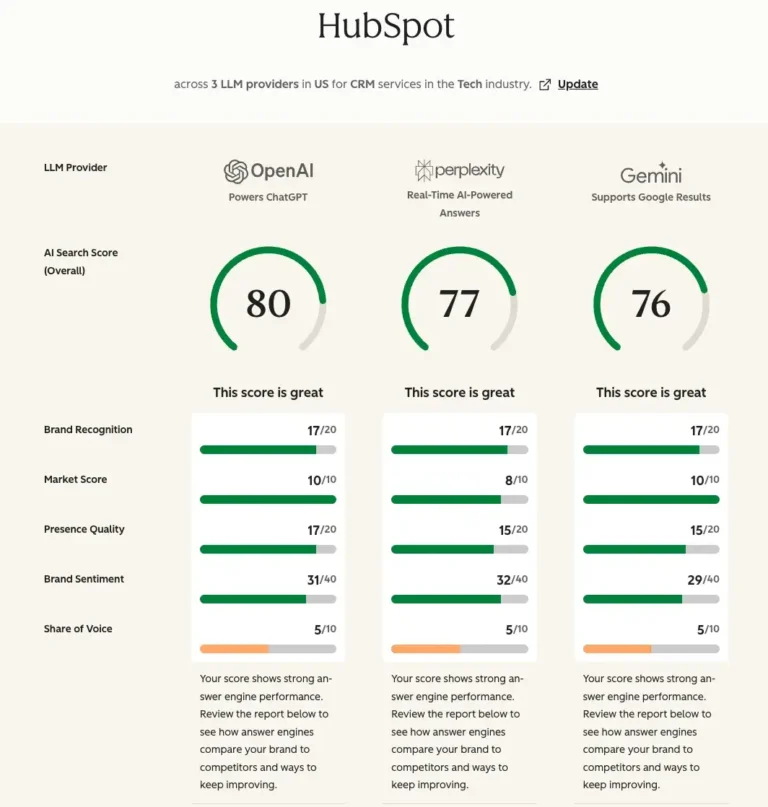
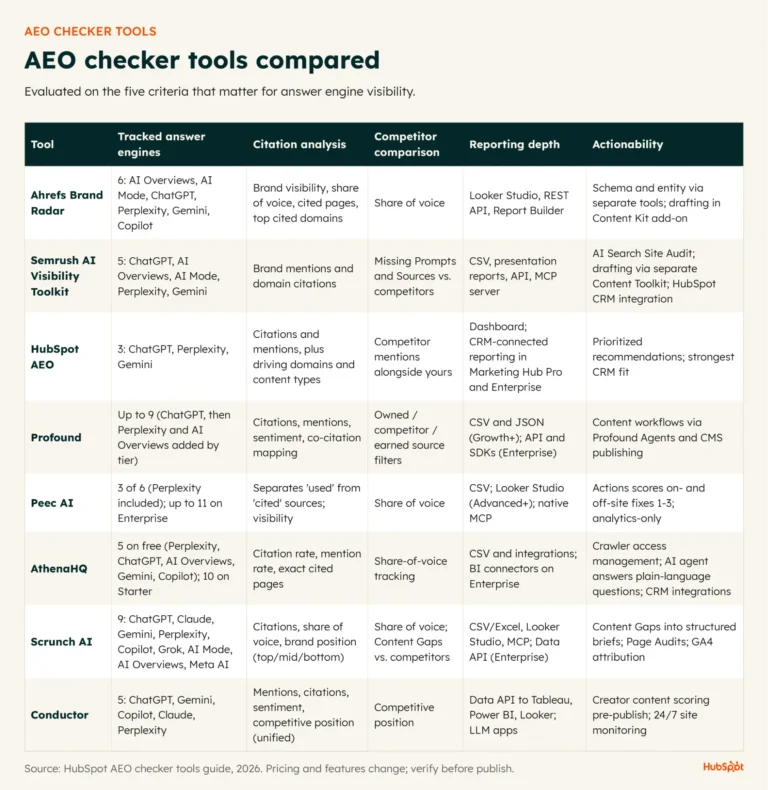
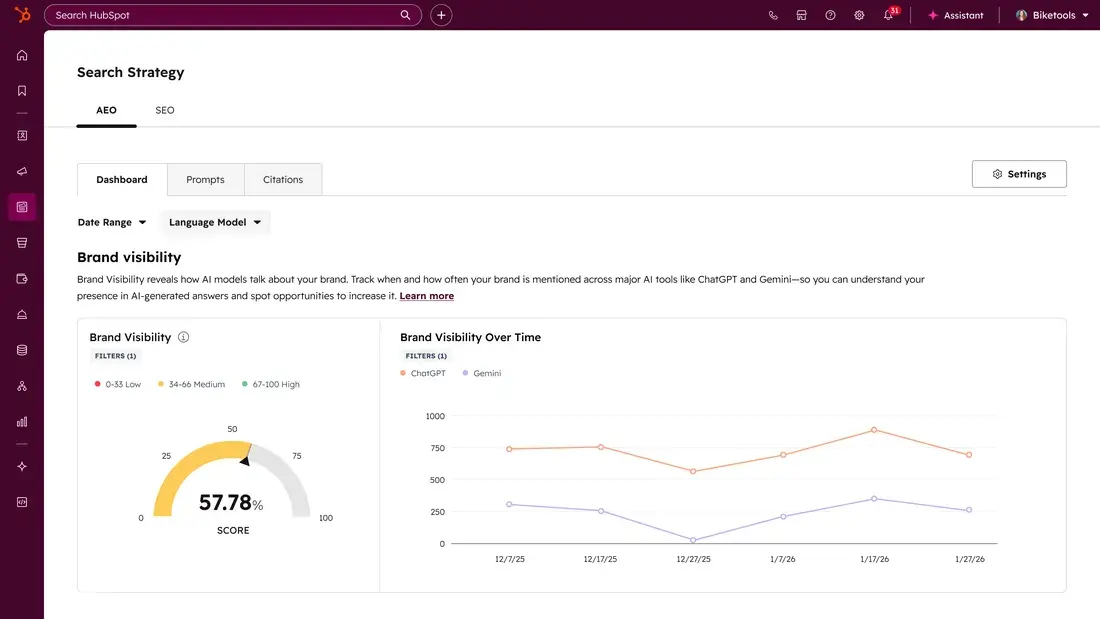
For marketers focused on understanding their brand’s presence in AI-generated answers, HubSpot’s Answer Engine Optimization (AEO) tool offers a specialized solution. Unlike generic AI search tools, HubSpot AEO is designed with marketers in mind, tracking brand visibility across major answer engines like ChatGPT, Perplexity, and Gemini. A key differentiator is its integration with CRM data, enabling it to predict prompts that actual buyers are likely to use. This grounds recommendations in specific customer insights rather than broad industry assumptions. Early adopters of the AEO beta have reported significant increases in AI referral traffic, even amidst overall declines in organic search traffic.
Best for: HubSpot customers; marketers requiring continuous visibility tracking, competitor benchmarking, citation analysis, and actionable recommendations across dominant answer engines.
Pricing: Available with Marketing Hub Pro and Enterprise, or as a standalone at $50/month.
Getting Started: HubSpot’s free AI Search Grader provides a one-time diagnostic snapshot of brand appearance in AI search results, serving as an accessible entry point.
Everyday Research and Synthesis: ChatGPT
When it comes to versatile AI assistance for daily research, competitive intelligence, content ideation, or rapid information synthesis, ChatGPT remains the most widely adopted platform. Its extensive usage among marketers, even exceeding other popular tools like Google Gemini, highlights its pervasive influence. Processing billions of prompts daily, ChatGPT excels in tasks ranging from creative writing and market analysis to coding and complex data interpretation. Its utility in research and information gathering is well-established, making it an indispensable tool for many professionals.

Best for: Marketers, writers, and researchers seeking a flexible AI assistant for open-ended exploration, drafting, and information consolidation.
Pricing: Free tier available. ChatGPT Plus at $20/month.
Pro Tip: HubSpot’s deep research connector with ChatGPT allows for the integration of CRM customer data, enabling AI-driven insights and actions based on specific customer profiles.
Accuracy and Sourcing: Perplexity
For tasks where accuracy and verifiable sourcing are critical, Perplexity emerges as a strong contender. While similar in interface to ChatGPT, Perplexity is architected around real-time, sourced answers. Every response is accompanied by inline citations, making source attribution a fundamental aspect of its design. This focus on credibility is particularly valuable for B2B buyers engaged in in-depth vendor evaluations or for any research where factual accuracy is paramount. Columbia Journalism Review’s testing indicated Perplexity had the lowest error rate among tested AI search tools for citation accuracy, positioning it as a highly reliable option for sourcing information.
Best for: Fact-checking, competitive research, academic or technical inquiries, and any scenario where rigorous sourcing is essential.
Pricing: Free tier available. Perplexity Pro at $20/month.
Internal and Site Search Enhancement: Algolia or Coveo
When the challenge lies in enabling users to efficiently find information within a company’s own digital properties, AI site search tools become indispensable. Algolia is favored for its speed and developer flexibility, particularly for e-commerce and SaaS platforms. Its recent integration of generative AI capabilities, such as NeuralSearch and Ask AI, further enhances its offering.

Coveo, on the other hand, is a more robust solution for enterprises managing complex knowledge bases and requiring deep integration with systems like Salesforce or SAP. Its strength lies in personalized recommendations across customer-facing portals and its native connectors, which simplify integration for organizations heavily invested in these enterprise platforms.
Best for: E-commerce sites, SaaS documentation portals, large knowledge bases, and enterprise intranets requiring intelligent, AI-powered internal search functionalities.
Algolia Pricing: Free to start; contact for a quote.
Coveo Pricing: Contact for a quote.
Evaluating AI Search Tools: Key Considerations for Marketers
The AI search market is dynamic and often crowded with similar-sounding solutions. Marketers should focus on evaluating tools based on crucial functional criteria:
- Accuracy and Reliability: Does the tool consistently provide correct and verifiable information?
- Source Transparency: Are sources clearly cited and easily accessible?
- Data Integration Capabilities: Can the tool integrate with existing marketing stacks (e.g., CRM, analytics platforms)?
- Scalability: Can the tool grow with the evolving needs of the business?
- User Experience: Is the interface intuitive for both internal users and end customers (in the case of site search)?
- Reporting and Analytics: Does the tool offer insights into performance and areas for improvement?
- Vendor Support and Roadmap: Is the provider committed to ongoing development and customer success?
Frequently Asked Questions About AI Search Tools
Are AI search tools the same as chatbots?
While many AI search tools utilize conversational interfaces, they are not identical to all chatbots. The defining characteristic of an AI search tool is its focus on information retrieval and synthesis. Chatbots may be designed for broader conversational purposes, task completion, or customer service. Tools like ChatGPT and Gemini bridge both worlds, acting as conversational AIs with powerful research and search capabilities.
What is the difference between AI search tools and AEO tools?
AI search tools, such as ChatGPT and Perplexity, are the platforms end-users interact with to find information. AEO tools, conversely, are designed for marketers to measure and optimize their brand’s visibility within these AI search tools. They represent two sides of the same coin: the channel and the optimization layer for that channel.
How can marketers measure brand visibility in AI answers?
Traditional search analytics do not capture AI search visibility. There is no direct equivalent to a "ChatGPT Search Console." AEO tools are essential for this measurement. They simulate user prompts, record brand appearances, and track changes over time. HubSpot AEO, for instance, monitors major answer engines and uses CRM data to prioritize relevant prompts. For a preliminary assessment, HubSpot’s free AI Search Grader offers a one-time diagnostic.
When does AI site search matter more than web search?
AI site search is crucial when users are actively on a company’s website or within its product and need to locate specific information. For sites with extensive content, complex documentation, or large product catalogs, an effective AI-powered internal search directly impacts user engagement, conversion rates, and customer support costs. A poor on-site search experience can lead to user frustration and a higher likelihood of them abandoning the site to seek answers elsewhere, potentially from external AI engines.
The Imperative for Marketers: Adapting to the AI-Driven Future
The proliferation of AI search tools signifies a fundamental restructuring of how information is discovered and consumed online. The days of solely optimizing for traditional search engines are fading. Brands that fail to adapt risk becoming invisible in the burgeoning AI-driven discovery ecosystem.

The tools discussed—answer engines for general research, AI site search for on-site engagement, and AEO tools for visibility measurement—offer distinct pathways for marketers to address this evolving landscape. The immediate priority for most marketers should be understanding their brand’s presence within the leading answer engines. Without this awareness, strategies for visibility and customer acquisition will be fundamentally incomplete.
Initiating this process can be as simple as utilizing a free diagnostic tool like HubSpot’s AI Search Grader. This provides an initial benchmark, highlighting areas where a brand may be underrepresented or misrepresented in AI-generated answers. Subsequently, adopting a continuous monitoring and optimization solution, such as HubSpot AEO, becomes essential for sustained success.
The era of "search no more" is upon us, not in the sense of information scarcity, but in the shift from a multi-step search process to direct, synthesized answers. The fundamental principles of creating credible content, ensuring transparency in sourcing, and building strong brand authority remain vital. However, the critical new requirement is measurement and adaptation. By embracing the tools and strategies outlined, marketers can navigate this transformative period and ensure their brands remain discoverable and relevant in the age of AI-powered search. The time for observation has passed; the time for proactive engagement is now.
About the Author