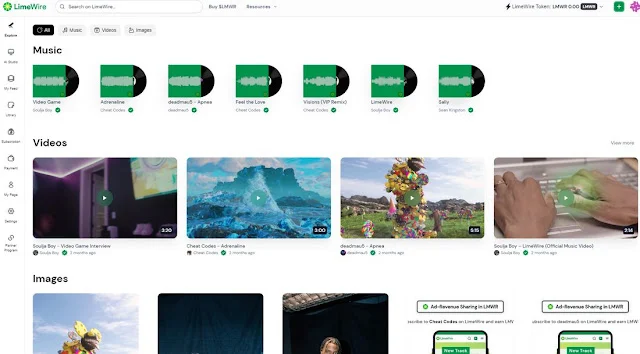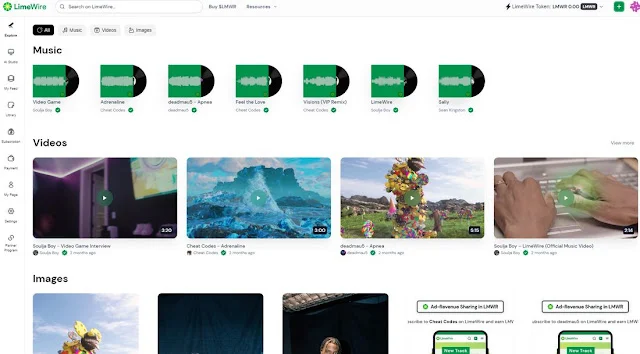
The digital landscape is witnessing a significant historical pivot as LimeWire, a name once synonymous with the peer-to-peer file-sharing era of the early 2000s, completes its transformation into a sophisticated AI-driven content publishing platform. This rebirth represents more than a simple brand acquisition; it is a strategic entry into the generative AI sector, combining automated content creation with blockchain-based ownership and decentralized finance. The new LimeWire AI Studio serves as a comprehensive ecosystem where creators can generate, publish, and monetize digital assets, effectively bridging the gap between artificial intelligence and the creator economy.
The Historical Evolution of the LimeWire Brand
To understand the magnitude of LimeWire’s current trajectory, one must look back at its origins and subsequent legal challenges. Launched in 2000 by Mark Gorton, LimeWire was a pioneer of the Gnutella network, allowing millions of users to share music and software. However, the platform became a primary target for the Recording Industry Association of America (RIAA). Following a protracted legal battle, a federal judge issued an injunction in 2010, leading to the platform’s shutdown and a subsequent $105 million settlement in 2011.
For over a decade, the brand remained dormant until it was acquired in 2022 by entrepreneurs Julian and Paul Zehetmayr. Their vision was to strip the brand of its controversial past while retaining its high name recognition to launch a legal, blockchain-integrated marketplace. By 2023, the platform pivoted further, recognizing the explosive growth of generative AI. Today, the platform operates as a legitimate gateway for artists, musicians, and creators to leverage high-end machine learning models without requiring extensive technical expertise.
Technical Infrastructure of the LimeWire AI Studio
The core of LimeWire’s current offering is the AI Studio, which currently specializes in image generation but is slated for rapid expansion into audio and video sectors. Unlike many proprietary AI tools that lock users into a single model, LimeWire functions as an aggregator of leading industry standards.
The studio integrates several high-performance models, including:
- Stable Diffusion (2.1 and XL): Known for its versatility and ability to produce photorealistic or highly stylized imagery based on complex text prompts.
- DALL-E 2 and 3: OpenAI’s flagship models, integrated to provide users with high-fidelity outputs and nuanced understanding of descriptive language.
- Proprietary Models: LimeWire is currently developing its own in-house AI models to offer unique aesthetics and faster processing speeds tailored specifically to its user base.
The interface allows users to toggle between these models seamlessly, applying various design styles such as "Cinematic," "Pixel Art," "Anime," and "Analog Film." This multi-model approach provides a safety net for creators; if one model fails to capture a specific artistic vision, another can be utilized within the same workflow.
Blockchain Integration and Automated NFT Minting
A distinguishing factor of LimeWire is its "create-to-mint" pipeline. In traditional digital art workflows, a creator must generate an image, export it, and then manually navigate a secondary marketplace like OpenSea or Rarible to mint it as a Non-Fungible Token (NFT). LimeWire collapses these steps into a single action.
When a user publishes content within the LimeWire Studio, the platform automatically mints the asset on either the Polygon or Algorand blockchains. These networks were selected for their low environmental impact and minimal transaction (gas) fees compared to the Ethereum mainnet. This automation serves two primary purposes:
- Proof of Provenance: It establishes a verifiable record of when the AI content was created and by whom.
- Secondary Market Utility: Because the content is minted as a token, it can be traded within the LimeWire community. Creators retain a 2.5% royalty on all secondary sales, providing a long-term passive income stream as their popularity grows.
The Economic Model: LMWR Tokens and Ad Revenue Sharing
LimeWire has introduced a multi-layered monetization strategy designed to compete with established platforms like Patreon and Midjourney. This model is centered around the LMWR token, an ERC-20 utility token that powers the ecosystem.
The revenue-sharing structure is particularly aggressive. Creators receive up to 70% of all advertising revenue generated from users who view their content on the platform. This democratizes earnings; whereas platforms like Instagram or X (formerly Twitter) have historically kept the majority of ad revenue, LimeWire’s model incentivizes creators to build public portfolios.
The LMWR token serves several functions:
- Currency of Exchange: It can be used to purchase "credits" for AI generation.
- Payout Mechanism: Ad revenue and NFT sales are distributed in LMWR, which can be traded on major global exchanges such as Kraken, ByBit, and UniSwap.
- Governance: Token holders may eventually have a say in platform updates and model integrations, according to the company’s whitepaper.
Subscription Tiers and Resource Allocation
To sustain its heavy computational requirements, LimeWire utilizes a tiered subscription model. While a free tier exists, it is limited in scope to allow for casual experimentation.
- Free Tier: Provides 10 credits daily (up to 20 images) and a 50% ad revenue share. This tier is designed for onboarding and testing the interface.
- Basic Plan ($9.99/mo): Scales to 1,000 credits and 2,000 image generations, providing a professional entry point for hobbyists.
- Advanced and Pro Plans ($29 – $49/mo): These tiers increase credit limits significantly (up to 5,000 credits) and raise the ad revenue share to 60-70%.
- Pro Plus ($99/mo): Targeted at power users and small agencies, offering 11,250 credits and up to 22,500 generations monthly.
All premium plans remove advertisements for the user and grant a "Pro" badge, which serves as a social signal within the community to enhance the perceived value of their minted NFTs.
Strategic Impact on the Creator Economy
The re-emergence of LimeWire as an AI powerhouse suggests a broader shift in how digital content is valued. By integrating AI generation directly with a social feed and a marketplace, LimeWire is challenging the "siloed" nature of current tools. Typically, a user generates an image in a Discord server (Midjourney), edits it in Photoshop, and then posts it to a social network. LimeWire’s "all-in-one" approach aims to capture the entire lifecycle of a digital asset.
Furthermore, the inclusion of mainstream artists like Deadmau5 and Sean Kingston indicates that the platform is seeking to move beyond "AI enthusiasts" and into the realm of professional music and celebrity branding. These artists use the platform to distribute exclusive content to "subscribers only," mirroring the business models of platforms like OnlyFans or Substack but with a focus on digital collectibles.
Future Roadmap: Music and Video Generation
Industry analysts are closely watching LimeWire’s promised expansion into AI-generated music and video. The music industry, in particular, has a complicated history with LimeWire. The irony of the brand now offering legal AI music tools is not lost on market observers.
The upcoming video tools are expected to leverage models similar to Runway Gen-2 or Pika Labs, allowing users to animate their generated images or create short clips from text. In the music sector, the platform aims to allow users to generate beats, melodies, and full tracks, which can then be minted and sold as limited-edition digital vinyl or stems for other producers to use.
Analysis of Implications and Market Positioning
LimeWire’s pivot is a calculated gamble on the convergence of three major trends: the democratization of AI, the maturation of blockchain technology, and the rise of the "prosumer." By lowering the technical barriers to entry, LimeWire is positioning itself as a "Canva for the AI Age."
However, the platform faces significant competition. Established giants like Adobe are integrating AI (Firefly) directly into creative suites, and specialized platforms like Leonardo.ai offer similar multi-model image generation. LimeWire’s primary competitive advantage lies in its monetization engine. Most AI tools are a "cost center" for creators—they pay for the subscription to get the tool. LimeWire attempts to turn the tool into a "profit center" by providing a built-in marketplace and revenue-sharing from day one.
As the legal landscape surrounding AI-generated content continues to evolve—specifically regarding copyright and "fair use" of training data—LimeWire’s automated minting process will provide an interesting case study in digital ownership. By anchoring every creation to a blockchain timestamp, the platform offers a level of transparency that could become the industry standard for AI-assisted artistry.
In conclusion, the new LimeWire represents a sophisticated fusion of nostalgia and futurism. It has successfully shed its "outlaw" reputation to become a regulated, innovative hub for the next generation of digital creators. As it expands into music and video, its impact on the creator economy will likely grow, potentially redefining how we produce, share, and value art in an era dominated by machine learning.
About the Author