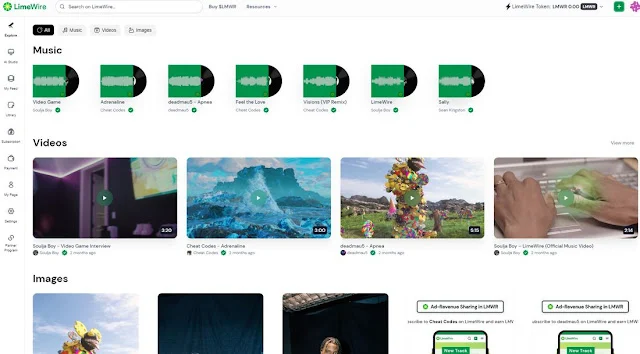
The digital landscape is witnessing a significant transformation as LimeWire, a brand once synonymous with the peer-to-peer file-sharing era of the early 2000s, completes its transition into a sophisticated generative artificial intelligence (AI) and content publishing platform. This strategic pivot moves the company away from its controversial history and into the forefront of the "Creator Economy 2.0," where AI-driven tools and blockchain-based monetization converge to empower independent artists, musicians, and designers. The newly launched LimeWire AI Studio represents a comprehensive suite of tools designed to democratize content creation, offering users the ability to generate, publish, and monetize digital assets through a unified interface.
The Evolution of a Digital Icon: From Gnutella to Generative AI
To understand the significance of LimeWire’s current trajectory, one must examine the brand’s historical context. Originally launched in 2000 by Mark Gorton, LimeWire became the dominant client for the Gnutella network, facilitating the exchange of music and software files. At its peak, the software was installed on over 50 million monthly active users’ computers. However, following a protracted legal battle with the Recording Industry Association of America (RIAA), the platform was served with a permanent injunction in October 2010, leading to its eventual shutdown.
The brand remained dormant for over a decade until it was acquired in 2022 by Austrian entrepreneurs Julian and Paul Zehetmayr. Unlike the original iteration, the new LimeWire was built from the ground up as a legitimate, copyright-compliant marketplace. The initial relaunch focused on a digital collectibles (NFT) marketplace, but the rapid advancement of generative AI in 2023 prompted a second evolution. The current LimeWire AI Studio is the culmination of this journey, positioning itself not as a peer-to-peer network, but as a centralized hub for AI-assisted creativity and decentralized ownership.
Technical Architecture of the LimeWire AI Studio
The LimeWire AI Studio distinguishes itself by integrating multiple state-of-the-art machine learning models into a single user experience. Rather than relying on a single proprietary algorithm, the platform offers a versatile toolkit that includes:
- Stable Diffusion 2.1 and XL: These models allow for high-resolution image synthesis based on text prompts, with the XL version offering improved photorealism and shorter prompt processing times.
- DALL-E 2 and 3: Integrated through OpenAI’s API, these models provide users with advanced stylistic variety and nuanced understanding of complex descriptive language.
- Proprietary LimeWire Models: The company has confirmed ongoing development of its own in-house AI models, intended to optimize the balance between processing speed and artistic quality.
The platform’s interface allows creators to toggle between these models seamlessly, applying various filters such as cinematic, digital art, pixel art, anime, and analog film. Advanced users can further manipulate outputs using samplers, guidance scales, and negative prompts, ensuring a high degree of control over the final aesthetic.
Automated Blockchain Integration and NFT Minting
A core differentiator for LimeWire is the automation of the "minting" process. In traditional digital art environments, moving a creation from a local drive to a blockchain requires technical knowledge of wallets, gas fees, and smart contracts. LimeWire eliminates these barriers by automatically minting generated content as Non-Fungible Tokens (NFTs) on either the Polygon or Algorand blockchains.
The choice of these specific blockchains is strategic. Polygon, a Layer-2 scaling solution for Ethereum, offers high compatibility with the broader NFT ecosystem while maintaining negligible transaction costs. Algorand, known for its "Pure Proof of Stake" consensus, provides environmental sustainability and near-instant finality. By utilizing these networks, LimeWire ensures that every piece of content generated on its platform has a verifiable digital signature, establishing provenance and ownership from the moment of creation.
The LMWR Token and the New Monetization Paradigm
Central to LimeWire’s economic model is the LMWR token, an ERC-20 utility token that facilitates transactions and rewards within the ecosystem. The monetization strategy is multifaceted, catering to both casual users and professional creators through the following channels:
- Ad Revenue Sharing: In a move that challenges the revenue splits of established platforms like YouTube or Instagram, LimeWire offers creators up to 70% of the advertising revenue generated from their content. When a user’s AI-generated image or video is viewed on the LimeWire Studio, the platform calculates the ad impressions and distributes the earnings in LMWR.
- Secondary Market Royalties: Because content is minted as an NFT, creators are entitled to a 2.5% royalty on all secondary sales. This ensures that as an artist’s reputation grows and their early works increase in value, they continue to benefit financially from the appreciation of their assets.
- Subscription Models: Creators can gate their content, offering exclusive access to "Premium Subscribers." This creates a recurring revenue stream similar to platforms like Patreon, but with the added benefit of blockchain-verified membership.
- Token Utility: LMWR is not merely a reward; it is a functional currency. Users can spend LMWR to purchase "credits" for AI generation, tip their favorite creators, or participate in governance decisions regarding the platform’s future features.
Subscription Tiers and Accessibility
LimeWire has adopted a "freemium" model to ensure the platform remains accessible to hobbyists while providing robust resources for professional power users. The current pricing structure is divided into several tiers:
- Free Plan: Provides 10 daily credits (roughly 20 image generations) and a 50% ad revenue share. This serves as an entry point for users to experiment with the AI tools without financial commitment.
- Basic Plan ($9.99/mo): Increases capacity to 1,000 credits per month and offers early access to new AI models.
- Advanced Plan ($29/mo): Designed for consistent creators, offering 3,750 credits and a 60% ad revenue share.
- Pro Plan ($49/mo): Provides 5,000 credits and increases the ad revenue share to the maximum 70%.
- Pro Plus Plan ($99/mo): The highest tier, offering 11,250 credits per month, intended for studios or high-volume digital artists.
All premium plans include a "Pro" profile badge, faster generation speeds, a full history of creations, and an ad-free browsing experience.
Market Context and Industry Implications
The pivot of LimeWire occurs at a time when the intersection of AI and copyright is under intense scrutiny. By creating a closed-loop system where content is generated, owned, and traded within a regulated platform, LimeWire attempts to solve some of the "Wild West" issues associated with early generative AI.
Industry analysts suggest that LimeWire’s model could set a precedent for how legacy brands can successfully pivot. While other 2000s-era brands like Napster and Winamp have attempted various "Web3" comebacks, LimeWire’s integration of generative AI provides a tangible utility that goes beyond nostalgia. The platform’s ability to attract high-profile artists like Deadmau5 and Sean Kingston suggests that the music industry, which once viewed LimeWire as its greatest threat, now sees it as a potential partner in the digital collectibles space.
Future Roadmap: Music and Video Generation
While the current focus of the LimeWire AI Studio is on image generation, the company has signaled an aggressive expansion into multi-modal AI. A roadmap released by the development team indicates that AI-powered music and video generation tools are in the final stages of beta testing.
The upcoming music tools are expected to allow users to generate beats, melodies, and full tracks based on text prompts, which can then be published as NFT music videos. This expansion is particularly poignant given LimeWire’s history with the music industry. By empowering users to create original, licensed music rather than sharing copyrighted files, the platform effectively brings its journey full circle—from a disruptor of the music industry to a facilitator of its next technological evolution.
Conclusion and Fact-Based Analysis
LimeWire’s transformation into an AI-centric publishing platform represents a broader trend in the tech industry: the shift from consumption to creation. By lowering the technical and financial barriers to entry for AI and blockchain technology, the platform is democratizing tools that were previously the domain of specialists.
The success of LimeWire will likely depend on its ability to maintain a vibrant community of creators and the stability of the LMWR token. However, the data indicates a strong start; with a revenue-sharing model that exceeds industry standards and a suite of tools that integrate the world’s leading AI models, LimeWire has successfully shed its "piracy" label to become a legitimate contender in the generative AI space. As the platform moves into video and audio generation, it remains a key entity to watch in the evolving narrative of how humans and machines collaborate to produce the digital culture of the future.
About the Author