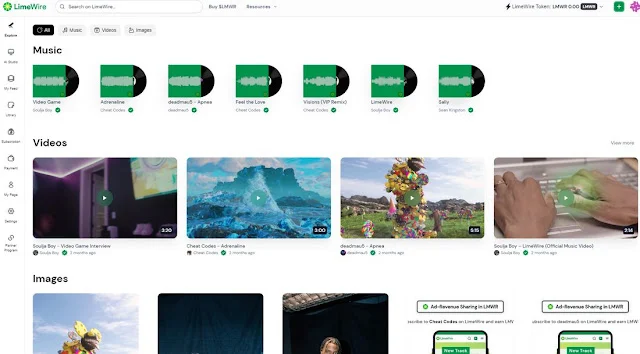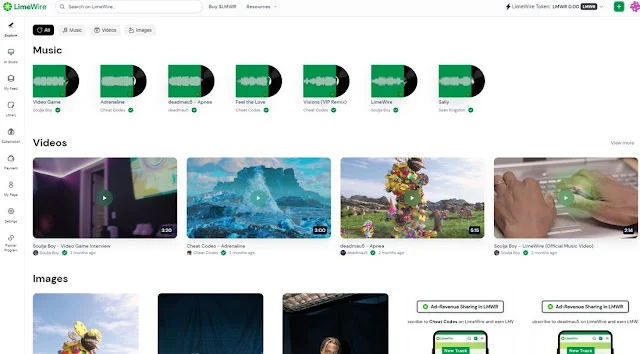
The digital content landscape is witnessing a significant transformation as LimeWire, a brand once synonymous with the early era of peer-to-peer file sharing, re-emerges as a sophisticated ecosystem for generative artificial intelligence and blockchain-integrated content distribution. This pivot represents a fundamental shift from its historical roots, moving away from decentralized file swapping toward a structured, AI-powered studio designed to empower creators through automated monetization and digital ownership. The platform now functions as a comprehensive hub where users can generate, publish, and monetize AI-driven assets, signaling a new chapter in the intersection of creative technology and decentralized finance.
The Evolution of LimeWire: From P2P Pioneer to AI Innovator
To understand the significance of the current LimeWire platform, one must examine its complex historical trajectory. Originally launched in May 2000 by Mark Gorton, LimeWire became the dominant client for the Gnutella network, facilitating the exchange of music, software, and video files among millions of users worldwide. However, the platform faced nearly a decade of legal challenges from the Recording Industry Association of America (RIAA) and various record labels. This culminated in a 2010 permanent injunction and a subsequent $105 million out-of-court settlement, which effectively shuttered the original service.
In 2022, the brand underwent a radical transformation following the acquisition of its intellectual property rights by entrepreneurs Paul and Julian Zehetmayr. The duo sought to leverage the brand’s global recognition to build a legitimate, artist-centric platform. The relaunch initially focused on a Non-Fungible Token (NFT) marketplace before expanding into its current form: the LimeWire AI Studio. This transition marks a strategic attempt to solve the copyright and monetization issues that plagued the original service by utilizing blockchain technology to ensure transparent ownership and revenue distribution.
Technical Architecture of the LimeWire AI Studio
The core of the current LimeWire offering is its AI Studio, a multi-model generative environment that provides users with access to industry-leading artificial intelligence tools. Currently, the platform specializes in high-fidelity image generation, integrating several prominent models to provide a diverse creative suite:
- Stable Diffusion (2.1 and XL): Known for its flexibility and high-quality artistic outputs, Stable Diffusion allows creators to generate detailed imagery based on text prompts.
- DALL-E 2: Developed by OpenAI, this model is utilized for its ability to understand complex linguistic nuances and translate them into coherent visual representations.
- Proprietary Models: LimeWire has signaled the ongoing development of its own internal AI models, aiming to reduce reliance on third-party APIs and offer unique stylistic outputs exclusive to the platform.
The user interface is designed to cater to both novice users and professional designers. It includes advanced settings such as "samplers," which allow for the fine-tuning of image denoising and detail levels. Furthermore, users can select from various aesthetic styles, including cinematic, pixel art, anime, and analog film, ensuring that the generated content meets specific creative requirements.
Blockchain Integration and the Automated NFT Ecosystem
One of the most distinctive features of the LimeWire platform is the seamless integration of blockchain technology into the content publishing workflow. When a creator finalizes an AI-generated image, the platform offers an automated "minting" process. This converts the digital file into an NFT on either the Polygon or Algorand blockchains.
The choice of these specific blockchains is a strategic decision based on scalability and environmental considerations. Polygon, a Layer 2 scaling solution for Ethereum, offers high transaction speeds and negligible gas fees, making it ideal for high-volume content creation. Algorand, a pure proof-of-stake (PPoS) blockchain, provides a carbon-neutral infrastructure that appeals to environmentally conscious creators.
By automating the NFT minting process, LimeWire removes the technical barriers typically associated with Web3 technologies. Creators do not need extensive knowledge of smart contracts or crypto wallets to secure their intellectual property. Once minted, these assets carry a unique digital signature that proves authenticity and ownership, enabling them to be traded within the LimeWire community or on external marketplaces.
Economic Models and Creator Monetization
LimeWire has introduced a multi-layered revenue model that departs from traditional social media structures, where platforms typically retain the vast majority of advertising income. On LimeWire, the monetization strategy is divided into three primary streams:
Ad Revenue Sharing
The platform implements a transparent revenue-sharing model where creators receive up to 70% of the advertising revenue generated by their content. When other users view an image, video, or music piece on the LimeWire Studio, the resulting ad impressions contribute to the creator’s earnings. This provides a passive income stream that scales with the creator’s popularity and engagement levels.
Secondary Market Royalties
Because content is minted as NFTs, creators benefit from secondary market transactions. LimeWire enforces a 2.5% royalty fee on all subsequent trades of a creator’s work. This ensures that as an artist’s reputation grows and their early works appreciate in value, they continue to receive financial compensation for the ongoing circulation of their assets.
Subscription-Based Access
Creators have the autonomy to choose between public and restricted publishing. While public posts help build a following and maximize ad revenue, the platform also supports a "subscriber-only" model. This allows creators to lock exclusive content behind a paywall, providing a direct monetization route through a dedicated fan base.
The LMWR Token and Platform Tokenomics
At the center of LimeWire’s economic ecosystem is the LMWR token, the platform’s native cryptocurrency. Launched via a successful public sale, LMWR serves several critical functions within the studio environment:
- Payment for Services: Users can utilize LMWR to purchase additional AI generation credits or to tip their favorite creators.
- Payout Mechanism: All earnings, including ad revenue shares and royalties, are distributed to creators in LMWR.
- Liquidity and Exchange: The token is listed on several major cryptocurrency exchanges, including Kraken, ByBit, and UniSwap, allowing creators to convert their earnings into other digital assets or fiat currency.
Subscription Tiers and Resource Allocation
To accommodate a wide range of users, from casual hobbyists to professional content agencies, LimeWire utilizes a credit-based subscription system. The pricing structure is designed to provide increasing value and revenue-sharing percentages at higher tiers:
- Free Tier: Offers 10 credits daily (up to 20 images) and a 50% share of ad revenue. This serves as an entry point for users to test the AI tools without financial commitment.
- Basic Plan ($9.99/month): Increases the monthly allowance to 1,000 credits and provides early access to new AI models while maintaining a 50% revenue share.
- Advanced Plan ($29/month): Provides 3,750 credits and increases the ad revenue share to 60%, targeting growing creators.
- Pro Plan ($49/month): Offers 5,000 credits and a 70% revenue share, including a "Pro" profile badge and faster generation speeds.
- Pro Plus Plan ($99/month): The highest tier, providing 11,250 credits and 70% revenue share, designed for high-volume professional use.
All premium plans include benefits such as a full creation history, the removal of advertisements for the user, and prioritized processing for AI tasks.
Strategic Adoption and Industry Impact
The relaunch of LimeWire has attracted significant attention from the entertainment industry. High-profile artists such as Deadmau5, Soulja Boy, and Sean Kingston have utilized the platform to release exclusive content, ranging from NFT-backed music videos to limited-edition digital art. This celebrity involvement has helped validate the platform’s transition from a legacy file-sharing site to a modern, legal, and innovative creative hub.
Industry analysts view LimeWire’s pivot as a reflection of a broader trend in the "Creator Economy 2.0." In this new paradigm, the focus shifts from centralized platform control to decentralized ownership and AI-assisted production. By lowering the barrier to entry for high-quality digital art creation, LimeWire is effectively democratizing the tools of production.
Future Outlook: Expansion into Audio and Video
While the current focus of the LimeWire AI Studio is on static imagery, the platform’s roadmap includes ambitious expansions into other media formats. Development is currently underway for AI-powered music and video generation tools. These additions are expected to utilize similar generative principles, allowing users to create full-length tracks or short-form video content through text-to-media prompts.
The expansion into audio is particularly poignant given LimeWire’s history with the music industry. By providing tools that allow artists to create and monetize music legally, LimeWire is attempting to come full circle, transforming from an industry disruptor into a strategic partner for the next generation of musical talent.
Conclusion and Market Analysis
LimeWire’s re-emergence represents one of the most notable brand pivots in the history of the internet. By integrating generative AI with blockchain-based monetization, the platform addresses two of the most significant challenges in the modern digital age: the difficulty of producing high-quality content at scale and the struggle for creators to receive fair compensation.
As AI technology continues to evolve, platforms like LimeWire are positioned to become the new gatekeepers of digital expression. The combination of established brand recognition, a robust technical stack, and a creator-first economic model provides a compelling alternative to traditional content platforms. For the broader technology sector, LimeWire serves as a case study in how legacy brands can successfully navigate the transition into the Web3 and AI eras, provided they offer tangible value and a clear path to monetization for their users.
About the Author