The intricate dance of American time zones, often a source of mild annoyance for travelers, has become a critical operational challenge for businesses in an era of remote work and nationwide interconnectedness. With employees, clients, and partners scattered across the vast geographical expanse of the United States, understanding and effectively managing these temporal divides is no longer a mere logistical convenience, but a strategic imperative. This article delves into the complexities of U.S. time zones, their profound impact on business operations, the nuances of Daylight Saving Time, and practical strategies for ensuring seamless collaboration across the nation’s temporal landscapes.
The Pervasive Impact of Time Zones on Business Operations
In today’s hyper-connected business environment, the geographical boundaries that once dictated operational hours are increasingly blurred. The widespread adoption of remote work, accelerated by recent global events, has amplified the necessity for businesses to navigate multiple time zones with precision. This temporal complexity touches nearly every facet of business interaction, from the mundane to the mission-critical.
Consider the daily workflows: placing an order with a supplier located in a different state might mean missing their closing hours if the time difference isn’t accounted for. Scheduling a crucial meeting with a remote team requires careful consideration to ensure all participants can attend without undue burden, whether it means an early morning call for some or a late evening one for others. Project deadlines, client communications, and even internal reporting can become sources of confusion and potential errors if time zone discrepancies are not proactively managed.
The implications extend beyond simple scheduling inconveniences. Misunderstandings can lead to missed opportunities, delayed project completion, and eroded client trust. For businesses operating on national or even global scales, a lack of temporal awareness can translate directly into financial losses and damage to reputation. The sheer volume of remote workers in the U.S. underscores this challenge; according to Gallup, approximately 45% of full-time U.S. employees work from home, a significant portion of whom are likely distributed across various time zones. This trend necessitates a robust understanding of temporal dynamics to maintain productivity and cohesion within dispersed teams.
The Temporal Tapestry of the United States: Six Distinct Zones
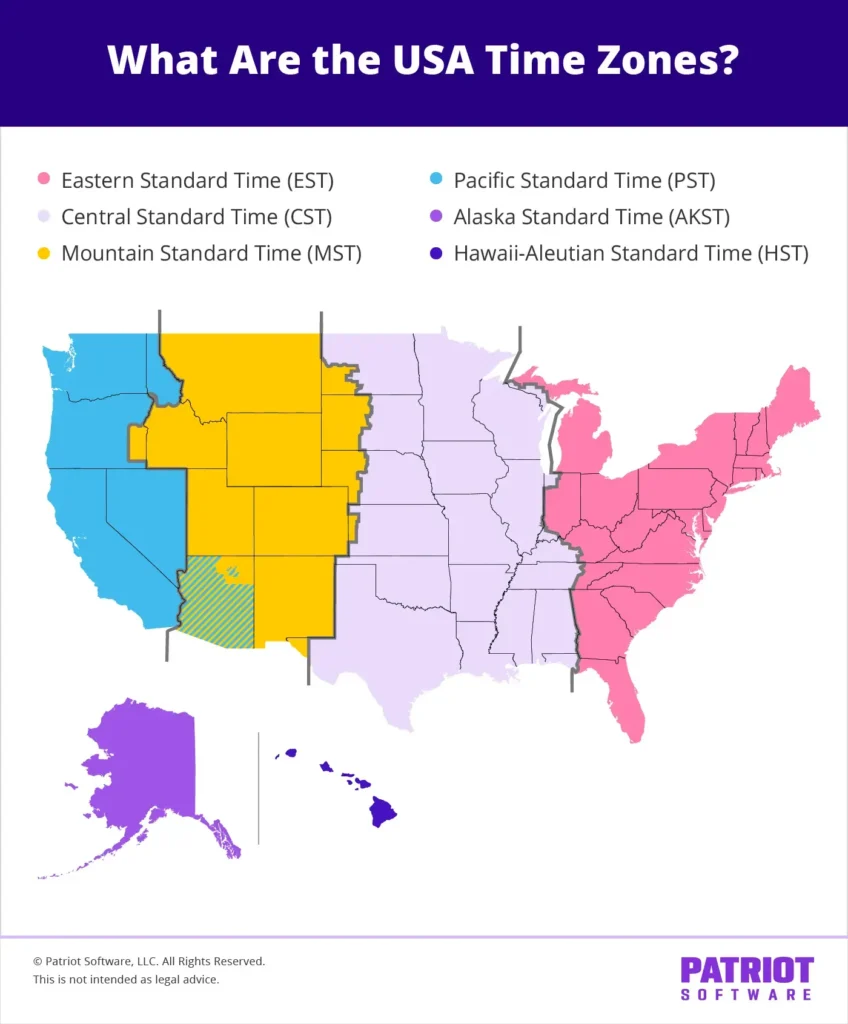
The United States, in its continental expanse and island territories, is governed by six primary time zones. These zones are not merely abstract divisions but represent the standardization of time across vast geographical areas to facilitate daily life and commerce. Each zone is typically offset by one hour from its neighboring zones, creating a cascading effect across the country.
The six main time zones are:
- Eastern Standard Time (EST): This zone covers the easternmost portion of the United States, including states like New York, Florida, and Maine. It is UTC-5 during standard time.
- Central Standard Time (CST): Stretching across the central part of the country, CST encompasses states such as Texas, Illinois, and Wisconsin. It is UTC-6 during standard time.
- Mountain Standard Time (MST): This zone predominantly covers the Rocky Mountain region, including states like Colorado, Utah, and Montana. It is UTC-7 during standard time.
- Pacific Standard Time (PST): This zone encompasses the West Coast states, including California, Oregon, and Washington. It is UTC-8 during standard time.
- Alaska Standard Time (AKST): This zone covers the majority of Alaska and is UTC-9 during standard time.
- Hawaii-Aleutian Standard Time (HST): This zone includes Hawaii and a portion of the Aleutian Islands in Alaska. It is UTC-10 during standard time.
It is crucial to note that the boundaries of these time zones are not always perfectly aligned with state lines. Some states, due to their size or historical development, are divided into two time zones. For example, Florida and Michigan have portions that observe both Eastern and Central time, while states like Idaho and Oregon span both Mountain and Pacific time. These intra-state variations add another layer of complexity that businesses must acknowledge.
The Disruptive Influence of Daylight Saving Time (DST)
Adding another layer of temporal intricacy is the practice of Daylight Saving Time (DST). Instituted in many parts of the United States, DST involves advancing clocks by one hour during the warmer months, typically from the second Sunday in March to the first Sunday in November. The stated purpose of DST is to make better use of daylight, extending daylight hours into the evening and potentially reducing energy consumption.
The implementation of DST means that time zone offsets can shift seasonally. For instance, during DST, EST becomes EDT (Eastern Daylight Time, UTC-4), CST becomes CDT (Central Daylight Time, UTC-5), and so forth. This shift can alter the perceived time difference between regions that observe DST and those that do not.
A significant point of divergence exists regarding DST observance. Not all U.S. states adhere to this practice. Notably, Hawaii and most of Arizona (with the exception of the Navajo Nation) remain on their standard time year-round. This creates a dynamic where the time difference between a DST-observing state and a non-DST-observing state can fluctuate. For example, during the summer months when Ohio is on EDT (UTC-4) and Arizona is on MST (UTC-7), Ohio is three hours ahead of Arizona. However, when Ohio "falls back" to EST (UTC-5) in November, while Arizona remains on MST, the time difference narrows to two hours. This seasonal alteration in time differences necessitates continuous awareness for businesses operating across these boundaries.
The future of DST is also a subject of ongoing debate. Several legislative proposals have been introduced in Congress to make DST permanent, which would eliminate the twice-yearly clock changes. However, as of early 2026, these proposals remain stalled. If enacted, such legislation could potentially allow states like Arizona and Hawaii to remain on their current standard time, further shaping inter-state temporal dynamics.
A Visual Guide: Mapping Time Zones Across the Nation
To facilitate a clearer understanding of these temporal divisions, visual aids are invaluable. A comprehensive map illustrating the U.S. time zones provides an immediate overview of their geographical distribution. Such maps often depict the standard time zones – Eastern, Central, Mountain, Pacific, Alaska, and Hawaii-Aleutian – and highlight the areas within states that may fall into different zones.
[Image of a U.S. time zone map would be ideal here, visually representing the information.]
For businesses requiring a more granular breakdown, detailed charts categorizing states by their respective time zones are essential resources. These charts can be presented in two formats: one organized by time zone, listing all states within each category, and another organized alphabetically by state, allowing users to quickly identify the time zone(s) applicable to a specific location.
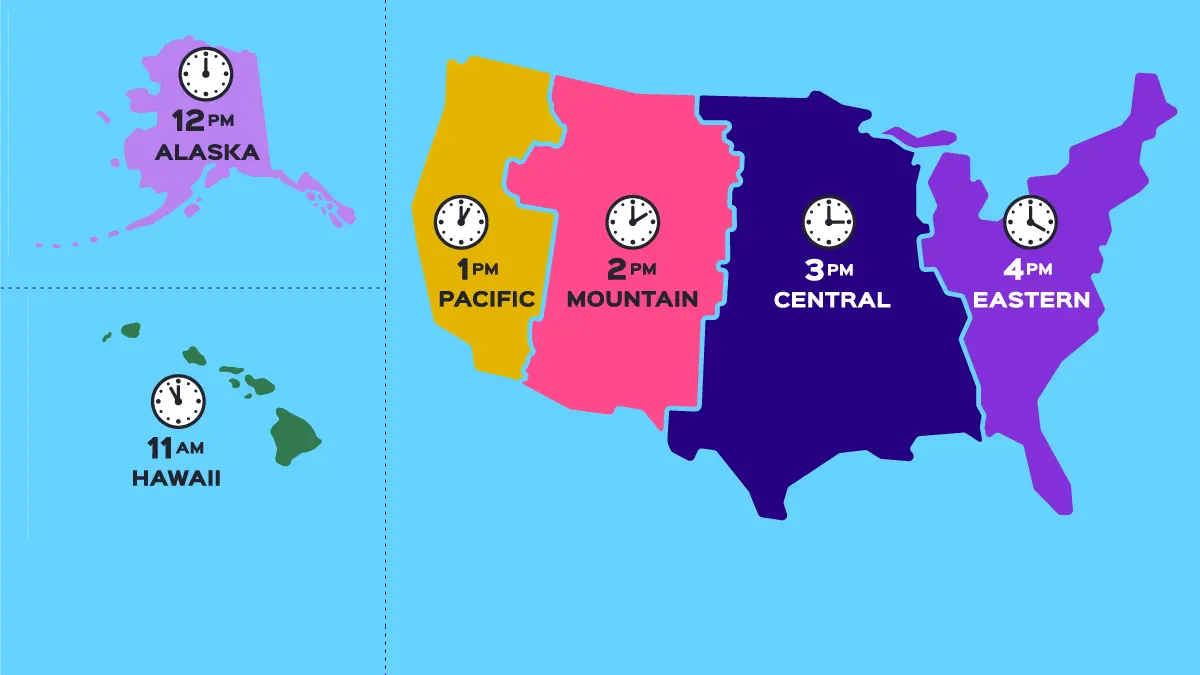
Chart 1: States Categorized by Time Zone
| Eastern Standard Time | Central Standard Time | Mountain Standard Time | Pacific Standard Time | Alaska Standard Time | Hawaii-Aleutian Standard Time |
|---|---|---|---|---|---|
| Connecticut | Alabama | Arizona | California | Alaska | Hawaii |
| Delaware | Arkansas | Colorado | Idaho* | ||
| D.C. | Florida* | Idaho* | Nevada* | ||
| Florida* | Illinois | Kansas* | Oregon* | ||
| Georgia | Indiana* | Montana | Washington | ||
| Indiana* | Iowa | Nebraska* | |||
| Kentucky* | Kansas* | Nevada* | |||
| Maine | Kentucky* | New Mexico | |||
| Maryland | Louisiana | North Dakota* | |||
| Massachusetts | Michigan* | Oregon* | |||
| Michigan* | Minnesota | South Dakota* | |||
| New Hampshire | Mississippi | Texas* | |||
| New Jersey | Missouri | Utah | |||
| New York | Nebraska* | Wyoming | |||
| North Carolina | North Dakota* | ||||
| Ohio | Oklahoma | ||||
| Pennsylvania | South Dakota* | ||||
| South Carolina | Tennessee* | ||||
| Tennessee* | Texas* | ||||
| Vermont | Wisconsin | ||||
| Virginia | |||||
| West Virginia |
*Indicates states with counties or towns that may fall into different time zones.
Chart 2: States Categorized Alphabetically
| State | Time Zone(s) |
|---|---|
| Alabama | Central Standard Time |
| Alaska | Alaska Standard Time |
| Arizona | Mountain Standard Time (excluding Navajo Nation) |
| Arkansas | Central Standard Time |
| California | Pacific Standard Time |
| Colorado | Mountain Standard Time |
| Connecticut | Eastern Standard Time |
| Delaware | Eastern Standard Time |
| D.C. | Eastern Standard Time |
| Florida | Eastern Standard Time, Central Standard Time |
| Georgia | Eastern Standard Time |
| Hawaii | Hawaii-Aleutian Standard Time |
| Idaho | Mountain Standard Time, Pacific Standard Time |
| Illinois | Central Standard Time |
| Indiana | Eastern Standard Time, Central Standard Time |
| Iowa | Central Standard Time |
| Kansas | Central Standard Time, Mountain Standard Time |
| Kentucky | Central Standard Time, Eastern Standard Time |
| Louisiana | Central Standard Time |
| Maine | Eastern Standard Time |
| Maryland | Eastern Standard Time |
| Massachusetts | Eastern Standard Time |
| Michigan | Eastern Standard Time, Central Standard Time |
| Minnesota | Central Standard Time |
| Mississippi | Central Standard Time |
| Missouri | Central Standard Time |
| Montana | Mountain Standard Time |
| Nebraska | Central Standard Time, Mountain Standard Time |
| Nevada | Pacific Standard Time, Mountain Standard Time |
| New Hampshire | Eastern Standard Time |
| New Jersey | Eastern Standard Time |
| New Mexico | Mountain Standard Time |
| New York | Eastern Standard Time |
| North Carolina | Eastern Standard Time |
| North Dakota | Central Standard Time, Mountain Standard Time |
| Ohio | Eastern Standard Time |
| Oklahoma | Central Standard Time |
| Oregon | Pacific Standard Time, Mountain Standard Time |
| Pennsylvania | Eastern Standard Time |
| Rhode Island | Eastern Standard Time |
| South Carolina | Eastern Standard Time |
| South Dakota | Central Standard Time, Mountain Standard Time |
| Tennessee | Central Standard Time, Eastern Standard Time |
| Texas | Central Standard Time, Mountain Standard Time |
| Utah | Mountain Standard Time |
| Vermont | Eastern Standard Time |
| Virginia | Eastern Standard Time |
| Washington | Pacific Standard Time |
| West Virginia | Eastern Standard Time |
| Wisconsin | Central Standard Time |
| Wyoming | Mountain Standard Time |
Strategies for Seamless Cross-Time Zone Collaboration
Effectively managing time zone differences is crucial for preventing miscommunication and ensuring operational efficiency. The prevalence of remote work exacerbates this challenge, requiring businesses to adopt proactive strategies.
1. Establish Clear Communication Protocols:
- Explicitly State Time Zones: Always specify the time zone when scheduling meetings, setting deadlines, or communicating any time-sensitive information. For example, instead of "meeting at 3 p.m.," use "meeting at 3 p.m. EST."
- Use Universal Coordinated Time (UTC): For critical international or inter-time zone communications, using UTC can eliminate ambiguity, as it is a global standard.
- Provide Equivalent Times: When communicating deadlines or meeting times, consider providing equivalent times for other relevant time zones to ensure everyone understands the exact moment in their local context.
2. Leverage Technology and Tools:
- Time Zone Converters: Utilize online time zone converters or built-in calendar features that automatically adjust meeting times based on participants’ locations.
- Collaboration Platforms: Employ project management and communication tools that display team members’ current time zones. Platforms like Slack, Microsoft Teams, and Asana often integrate such features.
- Time and Attendance Software: For businesses with hourly employees across different zones, specialized software can accurately track work hours, accounting for time zone shifts and overtime calculations.
3. Foster Temporal Awareness within the Team:
- Team-Wide Time Zone Chart: Create and share a readily accessible chart or digital resource detailing each team member’s primary time zone.
- Meeting Scheduling Best Practices: When scheduling meetings, rotate inconvenient times to ensure no single group is consistently burdened with early morning or late evening calls. Consider using scheduling polls that allow participants to indicate their availability across different time zones.
- Encourage Time Zone Check-ins: During team meetings, start with a brief acknowledgment of the different time zones represented to set a collaborative tone.
4. Strategic Planning and Operational Adjustments:
- Consider Business Hours Overlap: Identify periods when business hours for different time zones overlap to schedule synchronous activities like team meetings or critical client calls.
- Document Processes with Temporal Considerations: For workflows that are time-sensitive, clearly document the expected timings and any necessary temporal adjustments.
- Client and Vendor Communication: When engaging with external parties, proactively inquire about their primary time zones and preferred communication times.
The Evolving Landscape of Time Management in Business
The challenge of managing disparate time zones is an ongoing one, particularly as the nature of work continues to evolve. The increasing reliance on distributed teams and the globalized economy mean that temporal awareness will only grow in importance. Businesses that proactively address these complexities are better positioned to foster effective collaboration, enhance productivity, and maintain strong relationships with their employees, clients, and partners, regardless of geographical location. By embracing clear communication, leveraging appropriate technology, and cultivating a culture of temporal awareness, organizations can transform the potential pitfalls of time zone differences into opportunities for more inclusive and efficient operations.
Frequently Asked Questions About U.S. Time Zones
What are the main time zones in the United States?
The primary time zones in the United States are Eastern, Central, Mountain, and Pacific. Additionally, Alaska has its own time zone (Alaska Standard Time), and Hawaii shares a time zone with a portion of the Aleutian Islands (Hawaii-Aleutian Standard Time).
Why are there different time zones?
Time zones were established to standardize time across geographical regions, ensuring that local time generally corresponds with the position of the sun. This system aims to maximize daylight hours for daily activities and commerce.
How many time zones are in the United States?
There are six official time zones in the United States: Eastern, Central, Mountain, Pacific, Alaska, and Hawaii-Aleutian. Four of these are located within the contiguous U.S.
How can businesses manage employees working in different time zones?
Businesses can effectively manage employees across different time zones by implementing clear communication protocols that specify time zones, utilizing collaboration tools that display team members’ time zones, scheduling meetings thoughtfully to accommodate various availabilities, and providing clear deadlines with zone specifications. Time and attendance software can also be crucial for accurate payroll.
What is Daylight Saving Time (DST)?
Daylight Saving Time is the practice of advancing clocks by one hour during warmer months (spring forward) and setting them back in the fall (fall back) to extend daylight into the evening.
Do all U.S. states observe Daylight Saving Time?
No. Hawaii and most of Arizona (with the exception of the Navajo Nation) do not observe Daylight Saving Time.
What tools help teams work across time zones?
Tools that aid teams working across time zones include:
- Time and attendance software: For tracking work hours accurately.
- Project management platforms: Such as Asana, Trello, or Monday.com, which often have features for managing global teams and deadlines.
- Communication tools: Like Slack or Microsoft Teams, which can display user time zones and facilitate cross-time zone communication.
- Calendar applications: With built-in time zone conversion capabilities (e.g., Google Calendar, Outlook Calendar).
About the Author