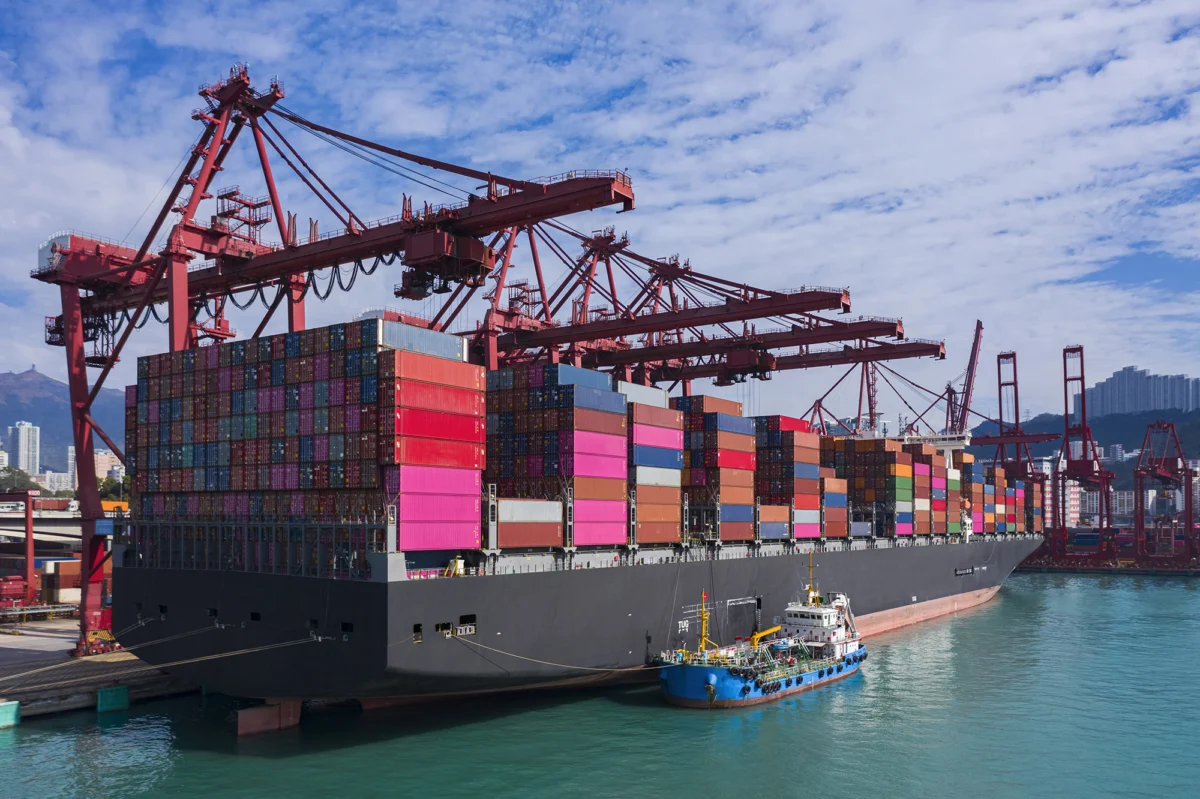
The global maritime industry, responsible for moving more than 80 percent of world trade by volume, has become a primary frontier in the battle against financial crime and international sanctions evasion. As geopolitical tensions rise and sanctions regimes become increasingly intricate, financial institutions are facing unprecedented pressure to identify and mitigate risks hidden within the vast and often opaque networks of ocean-borne commerce. A comprehensive new industry report has highlighted the growing complexity of this task, noting that while technological advancements have provided new tools for detection, the methods used by illicit actors—including the use of "shadow fleets" and sophisticated AIS manipulation—are evolving at a rapid pace.
Financial institutions, particularly those involved in trade finance, occupy a unique vantage point in the global supply chain. Unlike standard retail or corporate banking, trade finance transactions often involve detailed documentation such as bills of lading, certificates of origin, and insurance documents. This visibility provides banks with a critical opportunity to detect discrepancies that might indicate money laundering, terrorism financing, or the circumvention of trade barriers. However, the sheer volume of data and the fragmented nature of maritime information make vessel compliance checks a resource-intensive endeavor that requires a high degree of specialization and cross-industry cooperation.
The Evolving Landscape of Maritime Financial Crime
The landscape of maritime compliance has shifted dramatically over the last decade. Historically, financial institutions focused primarily on screening the names of vessels, owners, and ports against lists provided by bodies such as the U.S. Office of Foreign Assets Control (OFAC) or the United Nations Security Council. Today, mere list-matching is insufficient. The emergence of "deceptive shipping practices" (DSPs) has forced a move toward behavioral analysis, where the movement and technical signals of a ship are as important as its registered ownership.
Recent regulatory advisories have identified several key deceptive practices that financial institutions must now monitor. These include ship-to-ship (STS) transfers, where cargo is moved between vessels at sea to hide its origin; AIS (Automatic Identification System) manipulation, where a vessel’s transponder is turned off or altered to provide false location data; and "flag hopping," the frequent changing of a vessel’s registry to avoid oversight. The rise of the so-called "shadow fleet"—a collection of older, often poorly insured vessels with anonymous ownership structures used to transport sanctioned oil—has further complicated the risk profile of maritime trade.
A Chronology of Regulatory Escalation and Maritime Oversight
The current regulatory environment is the result of a multi-year escalation in how international bodies view the intersection of shipping and finance.
In 2011, the focus was largely on the physical interdiction of prohibited goods. However, by 2014, following the annexation of Crimea, the scope of sanctions began to target specific sectors of the economy, including energy and shipping logistics. The turning point for financial institutions occurred in May 2020, when OFAC, the U.S. Department of State, and the U.S. Coast Guard issued a landmark global advisory on deceptive shipping practices. This document specifically called on "financial institutions that facilitate trade-related transactions" to implement more rigorous "know your vessel" (KYV) and "know your cargo" (KYC) protocols.
By 2022 and 2023, the onset of the conflict in Ukraine led to the imposition of a price cap on Russian oil and an unprecedented expansion of the Specially Designated Nationals (SDN) list. This era marked a shift from targeting individual bad actors to targeting entire systemic loopholes. In 2024, regulatory focus has further tightened around the "dark fleet," with enforcement agencies increasingly penalizing not just the vessel owners, but the service providers—including insurers and banks—that facilitate their operations, even if the facilitation was unintentional.
Supporting Data: The Scale of the Maritime Risk
The scale of the challenge is reflected in the sheer volume of data that financial institutions must process. According to the United Nations Conference on Trade and Development (UNCTAD), the world merchant fleet consists of over 103,000 vessels of 100 gross tons or more. Monitoring this fleet requires real-time tracking and historical data analysis.
Industry data from maritime analytics firms suggests that "dark" activity—instances where vessels disable their AIS transponders without a clear safety justification—increased by nearly 25 percent in certain high-risk corridors over the last two years. Furthermore, the "shadow fleet" is estimated to comprise between 10 percent and 15 percent of the global tanker fleet. These vessels often operate through shell companies registered in jurisdictions with minimal transparency, making it nearly impossible to identify the ultimate beneficial owner (UBO) through traditional corporate registry searches.
For a bank processing thousands of letters of credit monthly, the probability of encountering a vessel with a history of suspicious behavior is statistically significant. A single documentary trade transaction can involve up to 20 different parties and over 100 pages of documentation, each presenting a potential point of failure in the compliance chain.
Official Responses and Industry Reactions
Regulators and industry bodies have been vocal about the need for a collaborative approach. Representatives from major financial hubs have emphasized that the burden of compliance cannot rest solely on the banking sector. In a recent roundtable discussion, compliance officers from leading global banks noted that while they have invested millions in satellite tracking technology and AI-driven screening tools, they still rely on the accuracy of data provided by port authorities and shipping registries.
"Financial institutions are often the last line of defense, but we are not maritime investigators," noted a senior compliance executive from a major European bank. "We require standardized, high-quality data from the point of origin. When a bill of lading is forged or a vessel’s AIS is spoofed, the bank is often working with compromised information from the start."
Maritime insurers, particularly the International Group of P&I Clubs, have also reacted to the increased scrutiny. They have implemented more stringent clauses in their policies that allow for the immediate withdrawal of cover if a vessel is found to be engaging in deceptive practices. This "de-risking" by insurers indirectly aids banks, as an uninsured vessel is generally ineligible for trade finance, providing an additional layer of automated filtering.
Analysis of Implications for the Financial Sector
The implications of these developments for the financial sector are twofold: increased operational costs and a shift toward a risk-based approach. The "zero-tolerance" environment for sanctions breaches means that banks can no longer rely on sample-based testing. They must implement comprehensive screening for every maritime-linked transaction.
- The Rise of "RegTech" in Maritime Finance: To handle the data load, banks are increasingly turning to Regulatory Technology (RegTech) providers that integrate satellite imagery with Lloyd’s List Intelligence or IHS Markit data. These systems can automatically flag when a vessel’s reported position deviates from its projected course or when it lingers in a known STS transfer zone.
- The Danger of De-risking: There is a growing concern that the complexity of maritime compliance will lead some institutions to "de-risk" entire jurisdictions or commodities. If banks perceive the cost of compliance to be higher than the profit from the trade, they may withdraw from certain markets, potentially driving legitimate trade into less regulated, "underground" financial channels, which paradoxically increases global financial crime risk.
- Redefining "Reasonable Due Diligence": The industry is currently debating what constitutes "reasonable" due diligence. While regulators expect banks to identify obvious red flags, there is an acknowledgment that banks cannot be expected to have the same capabilities as national intelligence agencies. The focus is shifting toward ensuring that banks have robust processes in place, rather than demanding they catch every single instance of sophisticated deception.
Strategic Recommendations for Enhanced Compliance
The report outlines several key recommendations for financial institutions looking to strengthen their maritime compliance frameworks. Central to these recommendations is the adoption of a tiered risk model. Not all maritime trade is created equal; for instance, a shipment of bulk grain between two non-sanctioned ports carries a vastly different risk profile than a crude oil shipment passing through the Strait of Hormuz.
Implementation of Advanced Vessel Screening: Institutions should move beyond static screening and incorporate dynamic data. This includes monitoring for "AIS gaps"—periods where a ship disappears from tracking systems—and analyzing whether those gaps occur near sanctioned territories.
Enhanced Documentation Review: Compliance teams must be trained to recognize the "red flags" in shipping documents. This includes checking for inconsistent ports of call, mismatched vessel names, or certificates of origin that appear to have been altered. The use of Optical Character Recognition (OCR) technology is becoming essential for scanning and cross-referencing these documents against global databases.
Public-Private Partnership and Information Sharing: The report stresses that the most effective way to combat maritime crime is through the sharing of "typologies" and "red flags" between the public and private sectors. Financial Information Sharing Units (FISUs) are increasingly being used to circulate information about known deceptive vessels and the shell companies that support them.
Standardization of Data: There is a pressing need for a global standard in maritime data. Currently, vessel names and ownership structures can be recorded differently across various registries. A move toward a "Legal Entity Identifier" (LEI) for vessels and their owners would significantly reduce the ambiguity that illicit actors currently exploit.
Conclusion and Future Outlook
As the world moves toward a more fragmented geopolitical order, the use of maritime trade to circumvent sanctions is likely to increase. Financial institutions find themselves at the center of this struggle, tasked with the monumental job of policing the world’s oceans through the lens of financial transactions.
The future of maritime compliance will likely be defined by the "arms race" between deceptive shipping techniques and AI-driven detection tools. While the challenges are significant, the movement toward greater transparency, improved data standards, and deeper collaboration offers a path forward. For financial institutions, the goal is clear: to foster a robust compliance culture that protects the integrity of the global financial system while ensuring that the vital arteries of international trade remain open and secure. The successful integration of technology, specialized expertise, and cross-border cooperation will be the hallmark of the next generation of trade finance and maritime oversight.
About the Author