The modern business landscape is defined by its interconnectedness, a reality amplified by the surge in remote work. As companies expand their reach and embrace flexible work arrangements, understanding and effectively managing diverse time zones has transitioned from a logistical nuance to a critical operational imperative. This shift, often leading to what can be termed "time zone fatigue," necessitates a clear grasp of the temporal divisions that span the United States. From coordinating daily tasks to fostering team cohesion across geographical distances, the implications of time zones are profound, impacting everything from client communication to internal project management. This comprehensive guide aims to demystify the complexities of U.S. time zones, offering practical insights and essential knowledge for businesses navigating this multifaceted challenge.
The Business Imperative of Time Zone Awareness
In an era where a single company can have employees in California, Wisconsin, and Maine, the need for precise temporal coordination is paramount. The ability to accurately gauge the time in different regions directly influences the efficiency of operations, the responsiveness to client needs, and the smooth execution of collaborative projects. Misunderstandings can lead to missed deadlines, delayed responses, and ultimately, a detrimental impact on productivity and customer satisfaction. For instance, attempting to contact a vendor in New York at 3 p.m. Pacific Time might result in a missed connection if the vendor’s business day has already concluded. Similarly, scheduling a team meeting without considering the varying work hours can lead to underrepresentation or exhaustion for some participants.
The proliferation of remote and hybrid work models has only intensified this challenge. According to a 2023 report by Upwork, 59% of U.S. businesses now utilize remote workers, a significant increase from previous years. This trend means that businesses are increasingly likely to have team members, clients, and partners operating across multiple time zones simultaneously. The seamless functioning of these distributed teams hinges on a shared understanding of temporal realities. The ability to schedule calls, set deadlines, and initiate communications with an awareness of the recipient’s local time is no longer a courtesy but a fundamental aspect of effective business practice.
Understanding the Six U.S. Time Zones
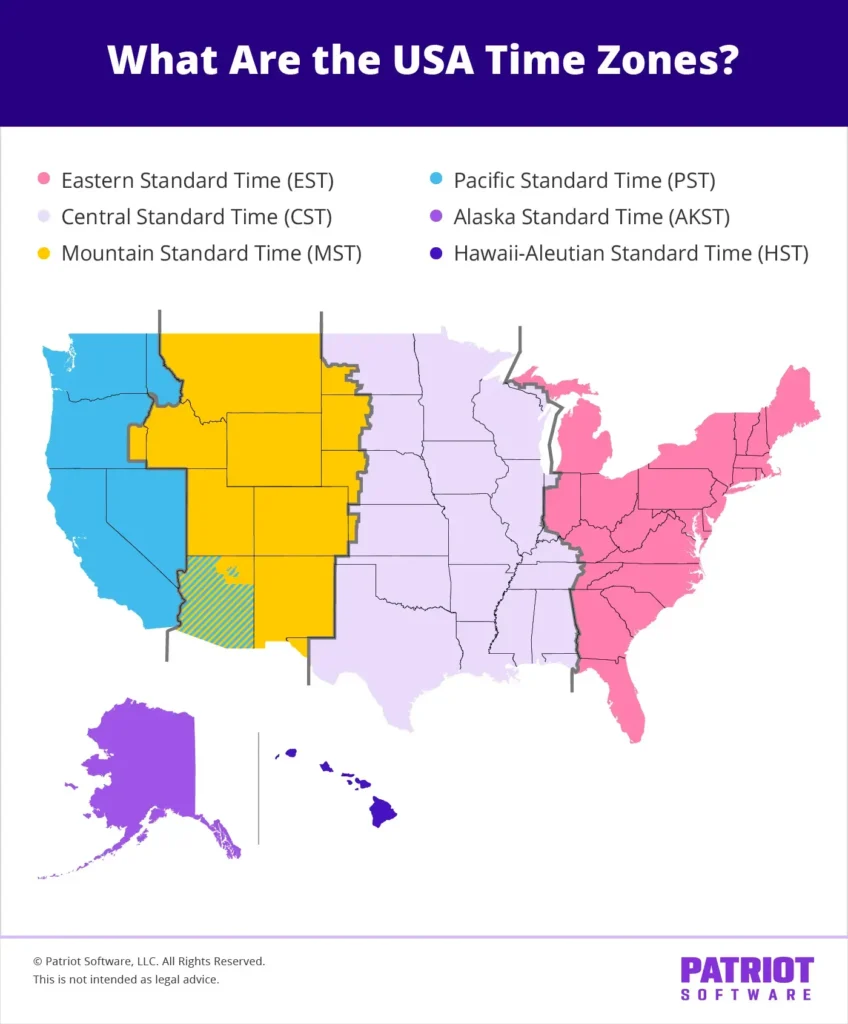
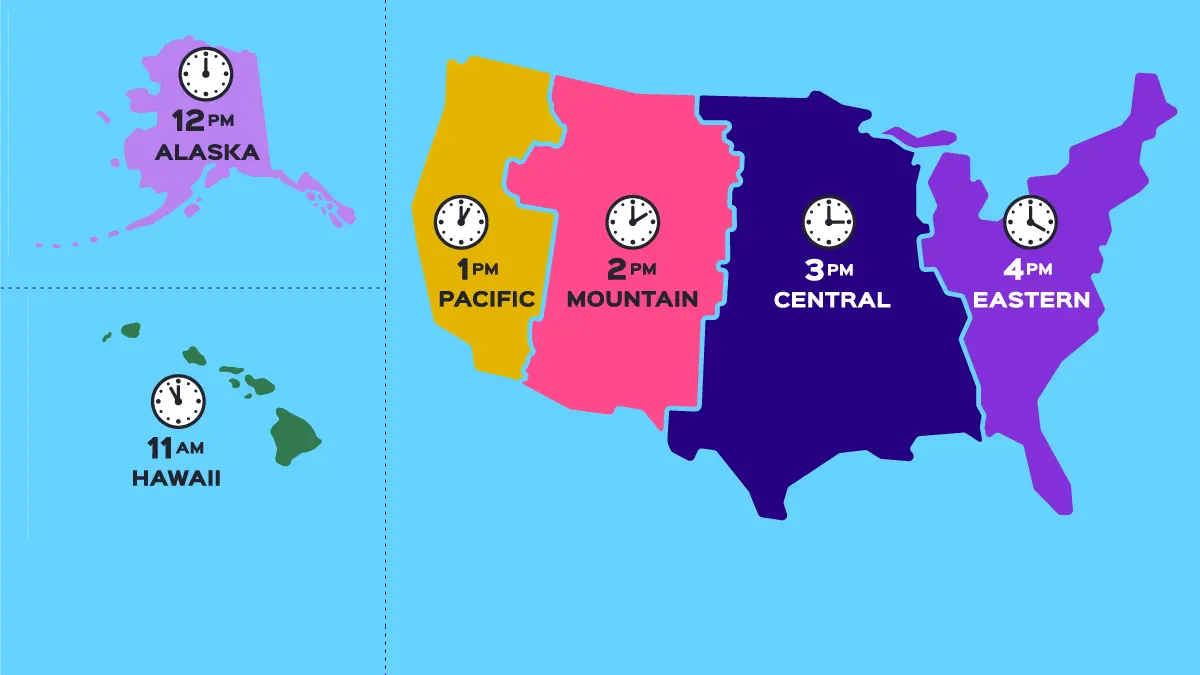
The United States, including its territories and the District of Columbia, is divided into six primary time zones, each with its own designated standard time. These zones are designed to align civil time with the solar day, ensuring that noon generally falls around the time the sun is at its highest point in the sky. While the contiguous United States is primarily covered by four of these zones, Alaska and Hawaii also have their own distinct temporal frameworks.
- Eastern Standard Time (EST): This is the easternmost time zone in the United States and covers states from Maine down to Florida, and as far west as Michigan and Indiana. Its UTC (Coordinated Universal Time) offset is UTC-5.
- Central Standard Time (CST): Located west of EST, CST spans a significant portion of the central United States, including states like Texas, Illinois, and Wisconsin. Its UTC offset is UTC-6.
- Mountain Standard Time (MST): This zone covers much of the Rocky Mountain region, including states like Colorado, Arizona (with notable exceptions), and Utah. Its UTC offset is UTC-7.
- Pacific Standard Time (PST): Encompassing the West Coast states of California, Oregon, Washington, and parts of Idaho and Nevada, PST is the westernmost time zone in the contiguous U.S. Its UTC offset is UTC-8.
- Alaska Standard Time (AKST): This zone covers the majority of Alaska, with a UTC offset of UTC-9.
- Hawaii-Aleutian Standard Time (HST): This time zone includes Hawaii and a portion of the Aleutian Islands in Alaska. Its UTC offset is UTC-10.
It is crucial to note that several states, due to their geographical size or historical administrative decisions, are divided into multiple time zones. For instance, Florida observes both EST and CST, with the western panhandle falling into CST. Similarly, parts of Idaho, Nebraska, and South Dakota are split between MST and CST or MST and PST. These internal divisions add another layer of complexity to time zone management.
The Complicating Factor: Daylight Saving Time (DST)
Adding another layer of complexity to the temporal landscape is Daylight Saving Time (DST). Observed in most U.S. states, DST involves advancing clocks by one hour during the warmer months, typically from March to November. The practice aims to maximize the use of natural daylight, pushing evening daylight later into the day. This means that during DST, clocks are set forward by one hour, shifting the UTC offset for participating zones. For example, EST becomes EDT (Eastern Daylight Time) with a UTC offset of UTC-4, CST becomes CDT (UTC-5), MST becomes MDT (UTC-6), and PST becomes PDT (UTC-7).
However, not all states participate in DST. Hawaii and most of Arizona (excluding the Navajo Nation, which does observe DST) remain on their standard time year-round. This discrepancy creates dynamic shifts in time differences throughout the year. For example, during DST, Ohio (EST/EDT) is three hours ahead of Arizona (MST). But when Ohio reverts to EST in November, the time difference shrinks to two hours, as Arizona remains on MST. This annual fluctuation requires businesses to remain vigilant and update their temporal calculations accordingly.
The debate surrounding the continuation of DST is ongoing, with several legislative proposals in Congress aiming to make it permanent. If enacted, such legislation could standardize time across many regions but would also require states currently exempt from DST, like Arizona and Hawaii, to adjust their practices, potentially creating new logistical considerations. As of early 2024, these proposals remain under discussion, leaving the current DST framework in place.
Navigating Time Zone Differences: Strategies for Success
Effectively managing operations across different time zones requires a proactive and systematic approach. The potential for miscommunication is high, particularly in daily interactions such as placing orders, scheduling meetings, or responding to client inquiries. Here are several strategies that businesses can implement to mitigate time zone-related challenges:
1. Establish Clear Communication Protocols
- Specify Time Zones in All Communications: When scheduling meetings, setting deadlines, or issuing any time-sensitive information, always explicitly state the time zone. For example, instead of "Meeting at 2 p.m.," use "Meeting at 2 p.m. EST." This simple practice can prevent significant confusion.
- Utilize World Clocks and Time Zone Converters: Encourage employees to use readily available tools like world clocks integrated into operating systems or online time zone converters to quickly ascertain local times in different regions.
- Designate Primary Communication Times: For teams spread across multiple zones, identify core hours when most team members are likely to be available for synchronous communication. This might require some individuals to adjust their schedules slightly, but it can significantly improve collaboration.
2. Leverage Technology and Tools
- Collaboration Platforms with Time Zone Features: Many modern collaboration tools, such as Slack, Microsoft Teams, and Google Workspace, offer features that display the local time of team members, simplifying scheduling and communication.
- Project Management Software: Tools like Asana, Trello, or Monday.com can be configured to display deadlines and task due dates in the user’s local time or a designated company-wide time zone, reducing ambiguity.
- Time and Attendance Software: For businesses with hourly employees across different zones, specialized software can accurately track work hours, ensuring compliance with labor laws and simplifying payroll processing.
3. Foster a Culture of Awareness and Flexibility
- Educate Your Team: Conduct regular training sessions or provide resources that explain the different U.S. time zones and the implications of DST. Ensure all employees understand the importance of time zone awareness.
- Encourage Empathy and Understanding: Promote a workplace culture where team members are mindful of their colleagues’ time zones. This might involve being patient with response times or being willing to accommodate meeting requests outside of standard business hours when necessary.
- Document and Centralize Information: Maintain a shared document or internal wiki that clearly outlines the time zones of all team members, key clients, and important vendors. This serves as a readily accessible reference for everyone.
4. Strategic Scheduling and Planning
- Overlap Core Business Hours: When scheduling important calls or meetings, aim for times that fall within the core business hours of the majority of participants. This often means early mornings for some and late afternoons for others.
- Consider Time Zone Impact on Deliverables: When setting project deadlines, factor in the time zone of the team responsible for the deliverable and the time zone of the recipient. A deadline of "end of day" can mean very different things depending on the location.
- Build in Buffers: When interacting with external partners or vendors, assume that there might be slight delays due to time zone differences. Build reasonable buffers into project timelines to account for this.
Understanding the Geographical Distribution: Time Zone Charts
To further clarify the geographical distribution of these time zones, the following charts provide a detailed breakdown. Chart 1 categorizes states by their primary time zone, while Chart 2 lists states alphabetically with their corresponding time zone(s). It’s important to remember that asterisks (*) denote states or regions within states that may observe more than one time zone.
Chart 1: States by Time Zone
| Eastern Standard Time (EST) | Central Standard Time (CST) | Mountain Standard Time (MST) | Pacific Standard Time (PST) | Alaska Standard Time (AKST) | Hawaii-Aleutian Standard Time (HST) |
|---|---|---|---|---|---|
| Connecticut | Alabama | Arizona | California | Alaska | Hawaii |
| Delaware | Arkansas | Colorado | Idaho* | ||
| D.C. | Florida* | Idaho* | Nevada* | ||
| Florida* | Illinois | Kansas* | Oregon* | ||
| Georgia | Indiana* | Montana | Washington | ||
| Indiana* | Iowa | Nebraska* | |||
| Kentucky* | Kansas* | Nevada* | |||
| Maine | Kentucky* | New Mexico | |||
| Maryland | Louisiana | North Dakota* | |||
| Massachusetts | Michigan* | Oregon* | |||
| Michigan* | Minnesota | South Dakota* | |||
| New Hampshire | Mississippi | Texas* | |||
| New Jersey | Missouri | Utah | |||
| New York | Nebraska* | Wyoming | |||
| North Carolina | North Dakota* | ||||
| Ohio | Oklahoma | ||||
| Pennsylvania | South Dakota* | ||||
| South Carolina | Tennessee* | ||||
| Tennessee* | Texas* | ||||
| Vermont | Wisconsin | ||||
| Virginia | |||||
| West Virginia |
Chart 2: States Alphabetically by Time Zone
| State | Time Zone(s) |
|---|---|
| Alabama | Central Standard Time |
| Alaska | Alaska Standard Time |
| Arizona | Mountain Standard Time (excluding Navajo Nation) |
| Arkansas | Central Standard Time |
| California | Pacific Standard Time |
| Colorado | Mountain Standard Time |
| Connecticut | Eastern Standard Time |
| Delaware | Eastern Standard Time |
| D.C. | Eastern Standard Time |
| Florida | Eastern Standard Time, Central Standard Time |
| Georgia | Eastern Standard Time |
| Hawaii | Hawaii-Aleutian Standard Time |
| Idaho | Mountain Standard Time, Pacific Standard Time |
| Illinois | Central Standard Time |
| Indiana | Eastern Standard Time, Central Standard Time |
| Iowa | Central Standard Time |
| Kansas | Central Standard Time, Mountain Standard Time |
| Kentucky | Central Standard Time, Eastern Standard Time |
| Louisiana | Central Standard Time |
| Maine | Eastern Standard Time |
| Maryland | Eastern Standard Time |
| Massachusetts | Eastern Standard Time |
| Michigan | Eastern Standard Time, Central Standard Time |
| Minnesota | Central Standard Time |
| Mississippi | Central Standard Time |
| Missouri | Central Standard Time |
| Montana | Mountain Standard Time |
| Nebraska | Central Standard Time, Mountain Standard Time |
| Nevada | Pacific Standard Time, Mountain Standard Time |
| New Hampshire | Eastern Standard Time |
| New Jersey | Eastern Standard Time |
| New Mexico | Mountain Standard Time |
| New York | Eastern Standard Time |
| North Carolina | Eastern Standard Time |
| North Dakota | Central Standard Time, Mountain Standard Time |
| Ohio | Eastern Standard Time |
| Oklahoma | Central Standard Time |
| Oregon | Pacific Standard Time, Mountain Standard Time |
| Pennsylvania | Eastern Standard Time |
| Rhode Island | Eastern Standard Time |
| South Carolina | Eastern Standard Time |
| South Dakota | Central Standard Time, Mountain Standard Time |
| Tennessee | Central Standard Time, Eastern Standard Time |
| Texas | Central Standard Time, Mountain Standard Time |
| Utah | Mountain Standard Time |
| Vermont | Eastern Standard Time |
| Virginia | Eastern Standard Time |
| Washington | Pacific Standard Time |
| West Virginia | Eastern Standard Time |
| Wisconsin | Central Standard Time |
| Wyoming | Mountain Standard Time |
Frequently Asked Questions About U.S. Time Zones
What are the main time zones in the United States?
The primary time zones in the United States are Eastern, Central, Mountain, and Pacific. Alaska and Hawaii-Aleutian are also distinct zones.
Why are there different time zones?
Time zones were established to standardize civil time across vast geographical areas, aligning local time with solar noon to make better use of daylight hours and facilitate commerce and transportation.
How many time zones are in the United States?
There are six standard time zones in the United States: Eastern, Central, Mountain, Pacific, Alaska, and Hawaii-Aleutian. Four of these are within the contiguous United States.
How can businesses manage employees working in different time zones?
Businesses can mitigate confusion by using time and attendance software, clearly stating the time zone when scheduling meetings or deadlines, listing equivalent times for other zones, and employing collaboration tools that automatically display team members’ current time zones.
What is Daylight Saving Time (DST)?
Daylight Saving Time is the practice of advancing clocks by one hour in the spring and setting them back by one hour in the fall to extend daylight hours into the evening during warmer months.
Do all U.S. states observe Daylight Saving Time?
No, Hawaii and most of Arizona do not observe DST.
What tools help teams work across time zones?
Effective tools include time and attendance software, project management platforms with time zone features, and communication tools that display team members’ local times.
In conclusion, mastering the nuances of U.S. time zones is no longer an optional skill but a fundamental requirement for businesses operating in today’s dispersed and interconnected environment. By understanding the distinctions, embracing technological solutions, and fostering a culture of temporal awareness, companies can transform potential logistical hurdles into opportunities for enhanced efficiency, stronger team collaboration, and ultimately, sustained business success.
About the Author