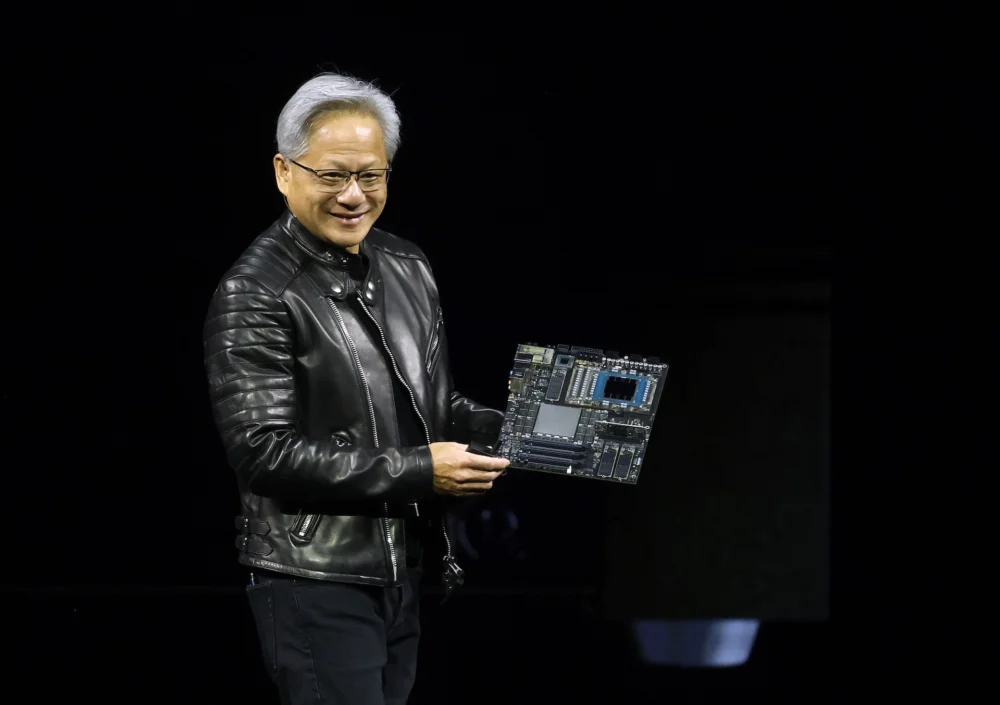
Nvidia is poised to unveil its latest advancements and strategic vision at its annual GPU Technology Conference (GTC) in San Jose, California, commencing next week. The flagship event, a cornerstone for developers, researchers, and industry leaders, will kick off with a highly anticipated keynote address from CEO Jensen Huang on Monday at 11 a.m. PT / 2 p.m. ET. This address is expected to delineate Nvidia’s pivotal role in shaping the future trajectory of computing and artificial intelligence, offering insights into upcoming product launches, strategic partnerships, and the company’s overarching philosophy for technological evolution.
The GTC Ecosystem: A Hub for Innovation
GTC, an acronym for GPU Technology Conference, has long served as Nvidia’s premier platform for showcasing its technological prowess and setting the agenda for the computing industry. Historically, the conference has been the venue for groundbreaking announcements, from the introduction of new GPU architectures that redefine processing capabilities to the strategic collaborations that expand the reach of Nvidia’s ecosystem. This year’s event, spanning three days, is particularly focused on the burgeoning applications of AI across a diverse spectrum of industries, including but not limited to healthcare, robotics, and the development of autonomous vehicles. The conference aims to foster a deeper understanding of the next wave of AI innovation and its potential to revolutionize various sectors.
The physical venue for the keynote, the SAP Center, will accommodate attendees eager to witness Huang’s pronouncements firsthand. For those unable to attend in person, Nvidia is providing a comprehensive livestream of the two-hour keynote on the official GTC website, ensuring global accessibility to this critical industry discourse. This commitment to broad dissemination underscores the significance of GTC as a global forum for technological dialogue.
Whispers of Innovation: NemoClaw and the AI Agent Frontier
Adding to the anticipation, industry rumors suggest that Nvidia may leverage GTC to introduce "NemoClaw," an open-source platform designed for enterprise AI agents. As initially reported by Wired, this platform, if launched, would represent a significant step towards democratizing the creation and deployment of sophisticated AI agents. These agents are software entities capable of executing multi-step tasks autonomously, a capability that is rapidly becoming a cornerstone of advanced business operations.
The introduction of NemoClaw would strategically position Nvidia to compete directly with emerging offerings from other AI heavyweights, such as OpenAI, which has also been developing frameworks for enterprise AI agent management. By providing a structured and accessible environment for businesses to build and deploy these intelligent agents, Nvidia could solidify its influence in a rapidly evolving AI landscape. The open-source nature of NemoClaw would further encourage broad adoption and customization, potentially accelerating the development of AI-powered solutions across various enterprises. This move would be a testament to Nvidia’s strategy of not only providing the foundational hardware but also the software tools that empower developers and businesses to harness its capabilities fully. The implications for businesses are profound, offering the potential for increased automation, enhanced decision-making, and the creation of entirely new operational paradigms.
Hardware Advancements: Accelerating AI Inference
On the hardware front, speculation is rife regarding the unveiling of a new chip engineered to significantly accelerate the AI inference process. This critical phase of AI operation involves an AI model applying its learned knowledge to generate responses or make decisions, a process distinct from the computationally intensive training phase. While AI model training demands immense processing power, efficient and cost-effective inference is widely recognized as a key bottleneck in scaling AI applications to widespread adoption.
Nvidia’s purported new chip would represent a strategic bid to dominate not only the AI training market, where it currently holds an estimated 80% market share, but also the increasingly competitive inference market. This market is witnessing intensified competition from custom-designed chips developed by tech giants like Google and Amazon, who are seeking to optimize AI workloads for their specific needs. A breakthrough in inference acceleration could further cement Nvidia’s leadership by offering superior performance and efficiency, thereby lowering the operational costs associated with deploying AI at scale. The development of such a chip would be a direct response to the growing demand for faster, more responsive AI systems that can be integrated seamlessly into everyday applications and services.
Strategic Alliances and Future Synergies
Beyond product announcements, GTC is a crucial forum for strategic partnerships. A key area of interest for attendees and market observers alike is Nvidia’s evolving relationship with Groq, an inference company. Reports suggest that Nvidia made a substantial investment of $20 billion late last year to license Groq’s technology. This significant financial commitment, coupled with the reported move of Groq’s founder, Jonathan Ross, and other key team members to Nvidia to advance and scale the licensed technology, has generated considerable curiosity.
The synergy between Nvidia’s robust GPU architecture and Groq’s specialized inference accelerators could unlock unprecedented levels of performance for AI workloads. Understanding the strategic implications of this collaboration, including how Nvidia plans to integrate and leverage Groq’s expertise, will be a focal point of discussions at GTC. This partnership could signal a significant shift in how AI inference is approached, potentially leading to more specialized and efficient hardware solutions that cater to the demanding requirements of modern AI applications. The financial scale of the reported deal underscores the perceived strategic importance of Groq’s technology in Nvidia’s long-term roadmap.
Industry Impact and Future Outlook
The broader three-day GTC event is designed to showcase the tangible impact of AI across a multitude of industries. Sessions and demonstrations will highlight how Nvidia’s technologies are empowering advancements in:
- Healthcare: From accelerating drug discovery and personalized medicine to improving diagnostic accuracy through AI-powered imaging analysis, Nvidia’s contributions are transforming patient care and medical research. Data from industry reports indicate a significant increase in AI adoption within the pharmaceutical sector, with companies leveraging AI for faster clinical trial analysis and molecular simulation.
- Robotics: The development of more intelligent and autonomous robots for manufacturing, logistics, and even domestic use is heavily reliant on advanced AI and GPU computing. Nvidia’s platforms are instrumental in training and deploying the complex perception and control algorithms that enable robots to navigate, interact, and perform tasks in dynamic environments.
- Autonomous Vehicles: The race towards fully autonomous driving is a prime example of AI’s transformative potential. Nvidia’s Drive platform, powered by its GPUs, is a critical component in developing the sophisticated sensor fusion, path planning, and decision-making systems required for self-driving cars. The company’s ongoing work in this area is supported by substantial investments in AI research and development, evidenced by its leading position in the automotive AI market.
These industry-specific applications underscore Nvidia’s pervasive influence and its commitment to democratizing AI capabilities. The company’s ability to provide both the foundational hardware and the comprehensive software stack is a key differentiator, enabling rapid innovation and deployment across diverse sectors.
Analyst Perspectives and Market Implications
Industry analysts are keenly observing Nvidia’s strategic moves at GTC. Kevin Cook, a senior equity strategist at Zacks Investment Research, noted that "attendees should also expect to learn what the company plans to do with its relationship with Groq… There’s a lot of curiosity around this tie-up, given that Jonathan Ross, Groq’s founder, Sunny Madra, Groq’s President, and other members of the Groq team agreed to join Nvidia to help advance and scale that licensed tech." This sentiment reflects a broader market understanding that strategic acquisitions and partnerships are as crucial as internal product development for maintaining a competitive edge in the fast-paced AI landscape.
The implications of Nvidia’s potential announcements are far-reaching. A successful launch of NemoClaw could redefine enterprise AI agent development, while a new inference chip could significantly lower the barrier to entry for AI adoption across industries by reducing operational costs. The ongoing evolution of Nvidia’s hardware and software offerings directly influences the pace of AI innovation globally, impacting everything from scientific research to consumer-facing applications.
The company’s sustained focus on both the training and inference markets highlights a comprehensive strategy to capture value across the entire AI lifecycle. As AI continues its inexorable march into every facet of modern life, Nvidia’s role as a key enabler is likely to grow, making events like GTC crucial indicators of future technological trends and market dynamics. The continued investment in research and development, coupled with strategic partnerships and a keen eye on emerging market needs, positions Nvidia to remain at the forefront of the AI revolution. The global AI market is projected to grow exponentially in the coming years, and Nvidia’s innovations at GTC will undoubtedly play a significant role in shaping its trajectory. For instance, market research firm Statista projects the global AI market size to reach over $1.8 trillion by 2030, underscoring the immense economic potential and the critical importance of companies like Nvidia in realizing it. The company’s ability to continuously innovate and adapt to the evolving demands of this dynamic market will be key to its sustained success.
About the Author