The landscape of American artificial intelligence policy shifted significantly this week as more than 30 prominent researchers and engineers from OpenAI and Google DeepMind joined forces to support Anthropic in its legal confrontation with the federal government. This unusual alliance, which includes Google DeepMind’s chief scientist Jeff Dean, filed an amicus brief on Monday in the U.S. District Court, arguing that the Department of Defense’s (DoD) recent actions against Anthropic could stifle innovation and jeopardize the United States’ standing in the global AI race. The legal filing comes in response to a decision by the Pentagon to designate Anthropic as a "supply-chain risk," a move that effectively blacklists the startup from critical military and governmental collaborations.
The researchers, who signed the document in their personal capacities, warned that the government’s attempt to "punish" a leading AI developer would have ripple effects throughout the industry. "If allowed to proceed, this effort to punish one of the leading US AI companies will undoubtedly have consequences for the United States’ industrial and scientific competitiveness in the field of artificial intelligence and beyond," the employees stated in the brief. This collective action highlights a growing rift between the ethical guardrails prioritized by AI developers and the operational requirements demanded by the modern defense establishment.
The Genesis of the Legal Dispute
The conflict originated from a breakdown in negotiations between Anthropic, a San Francisco-based AI safety and research company, and the Department of Defense. Anthropic, founded by former OpenAI executives with a mission centered on "Constitutional AI" and safety-first development, had been in discussions to provide its frontier models to various military branches. However, these talks reportedly collapsed when Anthropic insisted on specific "red lines" regarding the use of its technology.
According to court documents, Anthropic requested contractual guarantees that its AI systems would not be utilized for mass domestic surveillance or the development and deployment of autonomous lethal weapons. When the Pentagon refused to agree to these constraints, the relationship soured. Shortly thereafter, the Department of Defense, along with other federal agencies, designated Anthropic a "supply-chain risk" (SCR). This designation is a severe administrative sanction typically reserved for foreign entities or companies suspected of espionage; in this context, it prevents Anthropic from working with major military contractors and limits its access to federal procurement channels.
Anthropic responded by filing a lawsuit against the Department of Defense, seeking a temporary restraining order (TRO) to halt the enforcement of the SCR designation. The company argues that the designation was not based on any actual security vulnerability but was instead a retaliatory measure intended to coerce the company into dropping its ethical safeguards.
A Rare Coalition of Industry Experts
The amicus brief—a legal document filed by parties with a strong interest in the subject matter but who are not direct litigants—serves as a powerful endorsement of Anthropic’s position. The list of signatories is a "who’s who" of the modern AI era. Beyond Jeff Dean, the brief includes Google DeepMind researchers such as Zhengdong Wang, Alexander Matt Turner, and Noah Siegel. From the OpenAI camp, notable signatories include researchers Gabriel Wu, Pamela Mishkin, and Roman Novak.
The involvement of these individuals is particularly noteworthy given the intense competition between Google, OpenAI, and Anthropic. The brief argues that the Pentagon’s decision introduces a level of "unpredictability" that undermines the stability of the entire AI sector. By labeling a domestic company a supply-chain risk over a contractual disagreement, the government creates a precedent where any firm that refuses certain military applications could find itself effectively excommunicated from the federal marketplace.
The signatories emphasized that Anthropic’s request for "red lines" is a legitimate and necessary exercise of corporate responsibility. In the absence of comprehensive federal laws governing the use of AI in warfare, the brief argues that the "contractual and technological requirements that AI developers impose on the use of their systems represent a vital safeguard against their catastrophic misuse."
Chronology of the Anthropic-DoD Escalation
The timeline of the dispute illustrates a rapid deterioration of trust between the startup and the defense sector:
- Early 2023: Anthropic begins preliminary discussions with defense agencies regarding the integration of its Claude models into non-combat logistics and data analysis frameworks.
- Late 2023: Negotiations expand to include broader applications. Anthropic introduces its "Responsible Scaling Policy" and insists on strict prohibitions against lethal autonomous weapon systems (LAWS) and domestic surveillance.
- January 2024: The Department of Defense signals that such restrictions are incompatible with the "flexibility" required for national security operations. Negotiations reach an impasse.
- February 2024: The Pentagon officially notifies Anthropic of its intent to designate the company as a "supply-chain risk" under Section 889 of the National Defense Authorization Act, citing concerns over "operational reliability" and "mission alignment."
- March 2024 (Early): Anthropic files its lawsuit against the DoD, alleging that the designation is "arbitrary, capricious, and an abuse of discretion."
- March 2024 (Current): Researchers from OpenAI and Google DeepMind file their amicus brief in support of Anthropic’s motion for a temporary restraining order.
Supporting Data and Economic Context
The stakes for Anthropic—and the broader AI industry—are immense. The U.S. government is one of the largest potential customers for AI services, with the Department of Defense alone requesting over $1.8 billion for AI-related research and development in its FY2024 budget. A supply-chain risk designation does more than just cancel current contracts; it serves as a "black mark" that can scare off private investors and international partners who fear secondary sanctions or loss of compatibility with U.S.-aligned infrastructure.
Furthermore, the AI industry is currently grappling with a "brain drain" and intense competition for talent. Researchers often join companies like Anthropic specifically because of their commitment to safety and ethics. If the government is perceived as punishing companies for these values, it could discourage top-tier talent from working on projects that intersect with national security, ultimately weakening the U.S. defense posture.
Industry analysts point out that the SCR designation is typically used for companies like Huawei or ZTE, where there is documented evidence of foreign state influence. Applying this to a domestic firm like Anthropic, which is backed by billions in American venture capital (including significant investments from Amazon and Google), is a departure from historical norms.
Official Responses and Industry Reactions
While OpenAI and Google did not issue official corporate statements regarding the amicus brief, the sentiment among leadership is becoming increasingly public. OpenAI CEO Sam Altman expressed his concerns on social media, stating that "enforcing the SCR designation on Anthropic would be very bad for our industry and our country." Altman’s support is particularly striking because OpenAI recently moved in the opposite direction, softening its own ban on "military and warfare" use cases and signing a contract with the DoD for cybersecurity tools. This move by OpenAI was criticized by some as opportunistic, but Altman’s defense of Anthropic suggests a shared concern over government overreach.
The Department of Defense has maintained a stoic stance, citing ongoing litigation as the reason for its lack of comment. However, sources close to the Pentagon suggest that the "supply-chain risk" label is based on the concern that a company refusing to provide full access to its models could be a liability during a time of conflict, where "unfettered access" is deemed a requirement for mission success.
Strategic Implications and the "Chilling Effect"
The amicus brief warns of a "chilling effect" on professional debate. If AI researchers feel that expressing concerns about the risks of frontier systems could lead to their employer being blacklisted, the internal safety culture of these companies could erode. The brief argues that the Pentagon could have simply walked away from the contract if it did not like the terms, rather than resorting to a designation that carries such heavy legal and reputational weight.
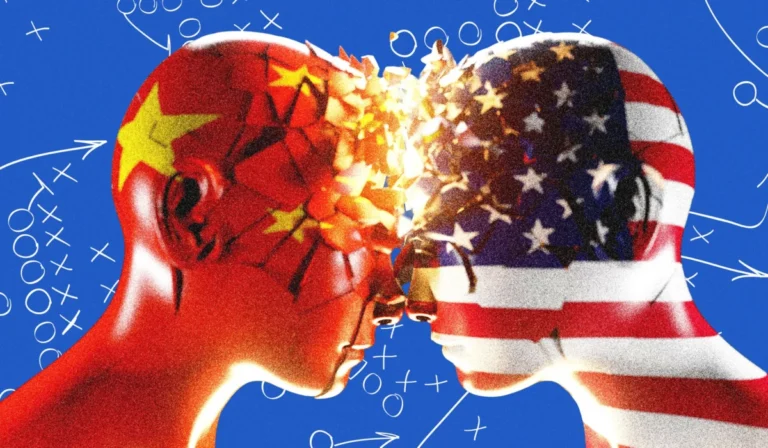
From a geopolitical perspective, the lawsuit highlights the tension in the "AI arms race" with China. While the U.S. government wants to move fast to maintain a technological lead, domestic AI companies are increasingly wary of how their tools might be used. If the U.S. government alienates its own most advanced AI labs, it may inadvertently slow the development of the very technologies it deems essential for national security.
Broader Impact on AI Governance
The outcome of Anthropic PBC v. US Department of Defense will likely set a major precedent for how AI companies interact with the state. If the court grants the temporary restraining order, it will signal that the government cannot use security designations as a tool for contract negotiation. If the government prevails, it may force AI startups to choose between their ethical missions and their ability to participate in the federal economy.
For now, the amicus brief stands as a rare moment of solidarity in a hyper-competitive industry. It underscores a fundamental belief among the creators of these systems: that the power of artificial intelligence is too great to be deployed without clear, enforceable boundaries—even when the customer is the most powerful military in the world. As the legal proceedings continue, the tech world and Washington alike will be watching closely to see where the line between national security and corporate ethics is finally drawn.
About the Author