
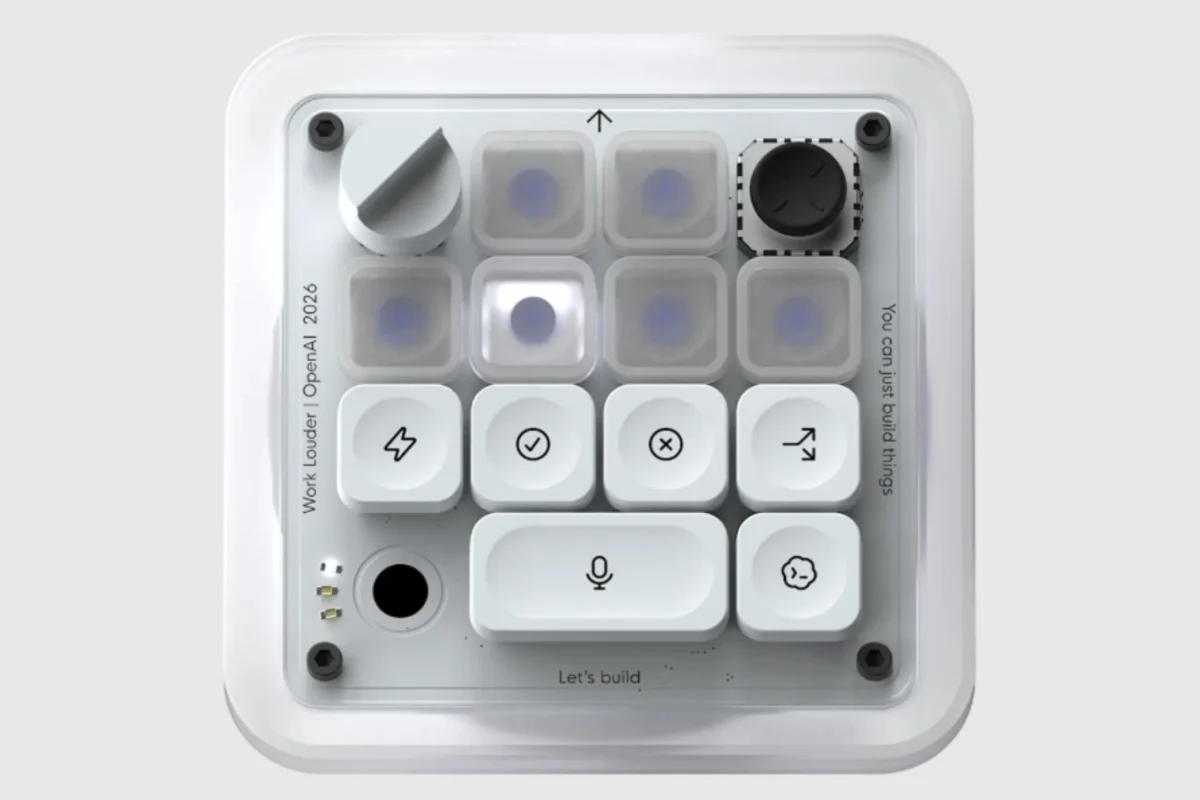
OpenAI, the artificial intelligence research and deployment company, has ventured into the physical product market with the recent launch of its first hardware device, dubbed "Micro." This specialized keypad, developed in collaboration with artisanal keyboard designer Work Louder, is designed to enhance user interaction with OpenAI’s flagship AI model, ChatGPT. The device, however, has emerged amidst a backdrop of significant legal challenges and mixed reception, raising questions about its market viability and OpenAI’s broader hardware ambitions.
A Novel Entry into a Crowded Ecosystem
Micro presents itself as a sophisticated, desk-centric accessory for those deeply engaged with generative AI tools. It features a compact design with a row of six customizable "agent" keys at the top, intended for triggering specific ChatGPT functionalities or tasks within AI coding tools like Codex. Below these are six "command" keys designed for direct control over these programs. The keypad can connect to a user’s computer via Bluetooth or USB, offering a tactile interface for AI interactions.
The device’s aesthetic, characterized by its immaculate white packaging and clean lines, has drawn comparisons to Apple’s product design language. This is particularly noteworthy given the ongoing legal dispute between OpenAI and Apple, which was initiated several weeks prior to the Micro’s unveiling. Apple has accused OpenAI of trade secret theft, alleging that the AI company misappropriated proprietary information to develop its AI models. This lawsuit casts a shadow over OpenAI’s expansion into new product categories, including hardware.
Escalating Legal and Strategic Challenges
The legal confrontation with Apple is not the only external pressure OpenAI faces. Reports have also surfaced regarding another hardware product in development: a screenless smart home speaker designed to integrate with ChatGPT. The intriguing aspect of this reported project is the alleged involvement of former Apple engineers in its development. This confluence of legal entanglements and the recruitment of talent from a direct competitor fuels speculation about OpenAI’s strategic direction and its potential to disrupt established tech markets.
The Micro keypad, therefore, represents OpenAI’s initial, tangible foray into the hardware landscape, while its more ambitious projects are still in nascent stages or shrouded in legal uncertainty. This debut product, while polished, appears engineered to appeal to a niche segment of the tech community – developers and AI enthusiasts who are already invested in the OpenAI ecosystem.
Unpacking the Micro Experience
Upon receiving a test unit of the Micro keypad, initial impressions highlight its substantial build quality. The device feels robust, lending itself to being described as a potential paperweight should its primary function as an AI accessory prove less compelling. The deliberate, minimalist packaging, reminiscent of premium tech releases, further underscores OpenAI’s aspirations to position Micro as a high-end peripheral.
The functional core of Micro lies in its customizable keys. Users can program the "agent" keys to execute specific commands, launch predefined ChatGPT sessions, or control workflows within AI-powered development tools. This programmability is managed directly within ChatGPT’s interface, where a dedicated "Micro" tab allows for granular adjustments, including key assignments, light intensity, and integration with specific projects.

A particularly lauded feature is the dedicated voice dictation button. This function allows users to articulate their requests to ChatGPT, which the AI then transcribes and processes. By holding down the dictation button and speaking, followed by tapping a "send" button, users can initiate tasks without extensive typing. This feature aims to streamline the interaction process, making it more fluid and conversational.
Performance and User Reception: A Divided Landscape
In practical use, the Micro keypad can offer a noticeable efficiency boost for dedicated ChatGPT users. Assigning different AI sessions or complex commands to specific keys allows for rapid toggling between tasks and projects. When combined with the voice dictation, this can lead to a more integrated and, for some, enjoyable workflow. The visual feedback provided by the key lights – white for idle, blue for processing, green for completion, and red for errors – adds another layer of intuitive understanding to the AI’s status.
However, the Micro’s reception within its intended target audience has been far from universally positive. Online forums, particularly Reddit, have seen a significant number of critical reviews. Many users have dismissed the device as a novelty or "a prank," questioning its necessity and practical utility for serious development work. Some have argued that experienced coders will not adopt such a peripheral, preferring established workflows.
Furthermore, the $230 price tag has been a major point of contention. Independent reviews have pointed out that the cost is substantial when compared to a plethora of more affordable DIY macropads or off-the-shelf alternatives that offer similar or even greater customization without the AI-specific integration. One particularly scathing review from the outlet Aftermath declared, "OpenAI’s expensive macropad feels engineered to piss me off specifically," highlighting the perceived disconnect between the product’s cost and its perceived value proposition.
The Learning Curve and the Existential Question
The learning curve associated with Micro is undeniable. New users need to invest time understanding its functionality, memorizing the color-coded light indicators, and meticulously mapping projects and commands to the physical keys. This raises a fundamental question: is the effort required to learn and operate the Micro keypad genuinely more efficient than continuing to use a standard laptop keyboard and mouse? For users already proficient with their existing computer interfaces, the added complexity of a dedicated AI peripheral may not offer a compelling enough advantage to justify the investment in time and money.
Ultimately, the Micro’s utility appears heavily contingent on an individual’s reliance on and engagement with ChatGPT. For those who do not use AI extensively in their daily professional or personal lives, the Micro may indeed feel like an extraneous gadget. Its value proposition diminishes significantly for casual users who interact with AI tools sporadically.
A Niche Appeal for the Dedicated User
Despite the criticisms, the Micro keypad is not without its potential merits, particularly for a very specific user base. For power users of ChatGPT who find themselves spending significant portions of their day interacting with the AI, and who have the disposable income of $230, the Micro could offer a unique and potentially enjoyable enhancement to their workflow. The appeal of vintage-style hardware, combined with the tactile satisfaction of "clicky" buttons, might resonate with a segment of the tech enthusiast market. For these individuals, the Micro could indeed "brighten their day a little," offering a novel and personalized way to engage with advanced AI.
The long-term success of OpenAI’s hardware initiatives, however, remains to be seen. As the company navigates its legal challenges and continues to develop its broader hardware roadmap, the Micro keypad serves as an early indicator of its ambitions in the physical product space, a space that OpenAI is entering with both innovation and considerable scrutiny. The company’s ability to bridge the gap between cutting-edge AI and accessible, practical hardware will be a critical factor in its future trajectory within this evolving market.
About the Author





