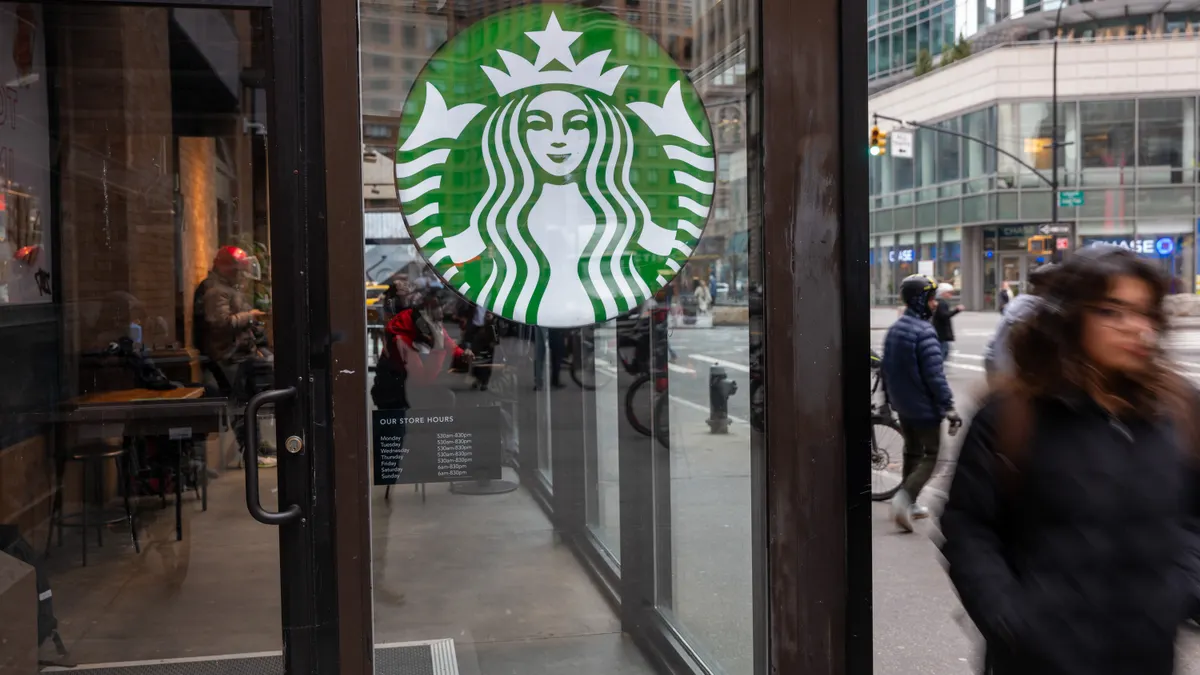
Starbucks has agreed to a $1 million settlement to resolve a lawsuit filed by Florida Attorney General James Uthmeier, who alleged the coffee giant maintained illegal race-based hiring and advancement policies that disfavored nonminorities. The resolution, announced by the Attorney General’s office on Thursday, September 18, 2026, brings to a close a legal challenge that mirrored a broader federal trend of scrutinizing Diversity, Equity, and Inclusion (DEI) initiatives within corporations.
The lawsuit, initiated by the Florida Attorney General’s office in late 2025, contended that Starbucks’ employment practices and programs systematically excluded or disadvantaged individuals who were not members of minority groups. Specific allegations included the implementation of racial quotas for hiring, differential wage payments based on race, the tying of executive compensation to participation in race-based mentorship programs, and the exclusion of individuals from certain racial backgrounds from crucial networking and mentorship opportunities.
Allegations of Discriminatory Practices
Central to Florida’s legal action were public documents and statements released by Starbucks. The state highlighted a 2020 report where the company reportedly stated its intention to hire people of color for 40% of its retail and distribution center positions and 30% of its corporate roles. Further scrutiny was placed on a 2024 regulatory filing, which indicated that 7.5% of an executive’s compensation for the then-current fiscal year would be contingent upon their role as a mentor to individuals identifying as Black, Indigenous, or People of Color (BIPOC).
These figures, according to the Attorney General’s office, represented concrete evidence of policies that prioritized race in employment decisions, potentially violating civil rights statutes. The lawsuit claimed that these practices created a system where nonminority candidates were systematically overlooked or received less favorable treatment in hiring, promotion, and development opportunities.
Timeline of the Legal Challenge
The legal proceedings against Starbucks began in earnest in late 2025 when the Florida Attorney General’s office formally filed its lawsuit. This action followed a period of increasing scrutiny of corporate DEI programs across the United States, fueled by concerns that some initiatives might inadvertently lead to reverse discrimination.
- Late 2025: Florida Attorney General’s office files a lawsuit against Starbucks, alleging discriminatory hiring and advancement policies.
- Throughout 2026: Legal discussions and negotiations occur between the parties. Public statements from the Attorney General’s office and Starbucks’ legal counsel offer glimpses into the core of the dispute.
- September 18, 2026: Starbucks agrees to a $1 million settlement to resolve the lawsuit. The company commits to complying with Florida’s Civil Rights Act and will undergo a four-year compliance certification period.
The voluntary resolution, as described by the Attorney General’s office, signifies Starbucks’ agreement to adhere strictly to Florida’s Civil Rights Act, which prohibits such alleged discriminatory conduct. As part of the agreement, Starbucks has also pledged not to participate in organizations that mandate increased racial diversity on its board. Over the next four years, the company’s chief legal officer will be required to submit annual certifications affirming ongoing compliance with these commitments.
Starbucks’ Stance and the Settlement
In a statement released concurrently with the Attorney General’s announcement, Pilar Ramos, Starbucks’ Executive Vice President and Chief Legal Officer, emphasized that the company did not admit any wrongdoing as part of the settlement. Ramos stated, "We will continue to focus on offering great jobs and career opportunities to our partners who wear the green apron, while making a positive impact on the communities we serve in Florida and around the world." This assertion underscores Starbucks’ position that the settlement is a resolution of a legal dispute rather than an admission of guilt regarding discriminatory practices.
The $1 million settlement, while significant, represents a fraction of the company’s overall revenue, suggesting a strategic decision to resolve the legal challenge and avoid prolonged litigation, which can often incur higher costs and reputational damage. The voluntary nature of the resolution implies that Starbucks sought to manage the outcome proactively.
Broader Context: The Federal Crackdown on DEI
Attorney General Uthmeier’s enforcement action against Starbucks did not occur in a vacuum. It aligns with a broader and sustained campaign at the federal level, particularly under the Trump administration, that has aimed to curb what is perceived as discriminatory DEI. Agencies such as the U.S. Equal Employment Opportunity Commission (EEOC) and the U.S. Department of Justice (DOJ) have issued guidance and pursued enforcement actions that highlight how certain DEI programs could potentially be construed as discriminatory under federal law.

This federal posture has sent ripples through corporate America, prompting many organizations to re-evaluate their DEI strategies. The underlying legal principle often cited is Title VII of the Civil Rights Act of 1964, which prohibits employment discrimination based on race, color, religion, sex, or national origin. While DEI initiatives are generally intended to promote diversity and inclusion, legal challenges arise when specific programs are seen to create preferences or disadvantages based on protected characteristics.
Precedents and High-Dollar Payouts
The Starbucks case is one of several high-profile instances where allegations of DEI-based discrimination have led to substantial financial settlements. In the week preceding the Starbucks announcement, the DOJ revealed a $25 million settlement with Accenture. The federal agency had alleged that Accenture took race and sex into account when making hiring and promotion decisions, thereby favoring candidates who helped the company meet its demographic targets.
Similarly, in August 2026, the DOJ finalized a $21.5 million agreement with Deloitte over claims of discrimination in hiring, promotion, and staffing decisions attributed to its DEI programs. These substantial payouts underscore the significant financial risks companies face when their DEI initiatives are perceived as violating anti-discrimination laws.
The EEOC has also been actively involved, launching numerous investigations into employers facing similar allegations. Attorneys have previously indicated to HR Dive that the EEOC is likely to succeed in compelling employers to cooperate with its investigations, including providing data related to their DEI programs. This prediction has been largely borne out in court rulings. For example, in July 2026, a federal judge ordered Northwestern Mutual to comply with an EEOC probe into its DEI policies, demonstrating the commission’s authority to access such information.
Implications for Corporate DEI Strategies
The Starbucks settlement, alongside other recent legal actions, serves as a critical reminder for corporations about the need for careful design and implementation of DEI programs. While the intent to foster a diverse and inclusive workplace remains a widely shared objective, the methods employed are under intense legal and public scrutiny.

Key considerations for companies moving forward include:
- Focus on Meritocracy: Ensuring that all hiring, promotion, and development decisions are primarily based on qualifications, skills, and performance, rather than protected characteristics.
- Objective Metrics: While tracking diversity metrics is common, the focus should be on identifying barriers to opportunity and removing them, rather than setting rigid quotas or targets that could be misconstrued.
- Legal Review: Subjecting DEI policies and programs to rigorous legal review to ensure compliance with all applicable civil rights laws.
- Transparency: Clearly communicating the goals and mechanisms of DEI initiatives to all employees, fostering understanding and mitigating potential misunderstandings or perceptions of unfairness.
- Training and Education: Providing comprehensive training to hiring managers and HR professionals on non-discriminatory practices and the legal boundaries of DEI initiatives.
The resolution of the Florida lawsuit against Starbucks highlights a delicate balancing act for businesses. The drive for diversity is often seen as essential for innovation, market understanding, and corporate social responsibility. However, the legal landscape demands that these efforts be executed in a manner that strictly adheres to anti-discrimination laws, ensuring that all individuals are afforded equal opportunities. The ongoing legal and regulatory environment suggests that companies must remain vigilant in their approach to DEI, prioritizing compliance and fairness to avoid costly legal challenges and reputational damage.
About the Author