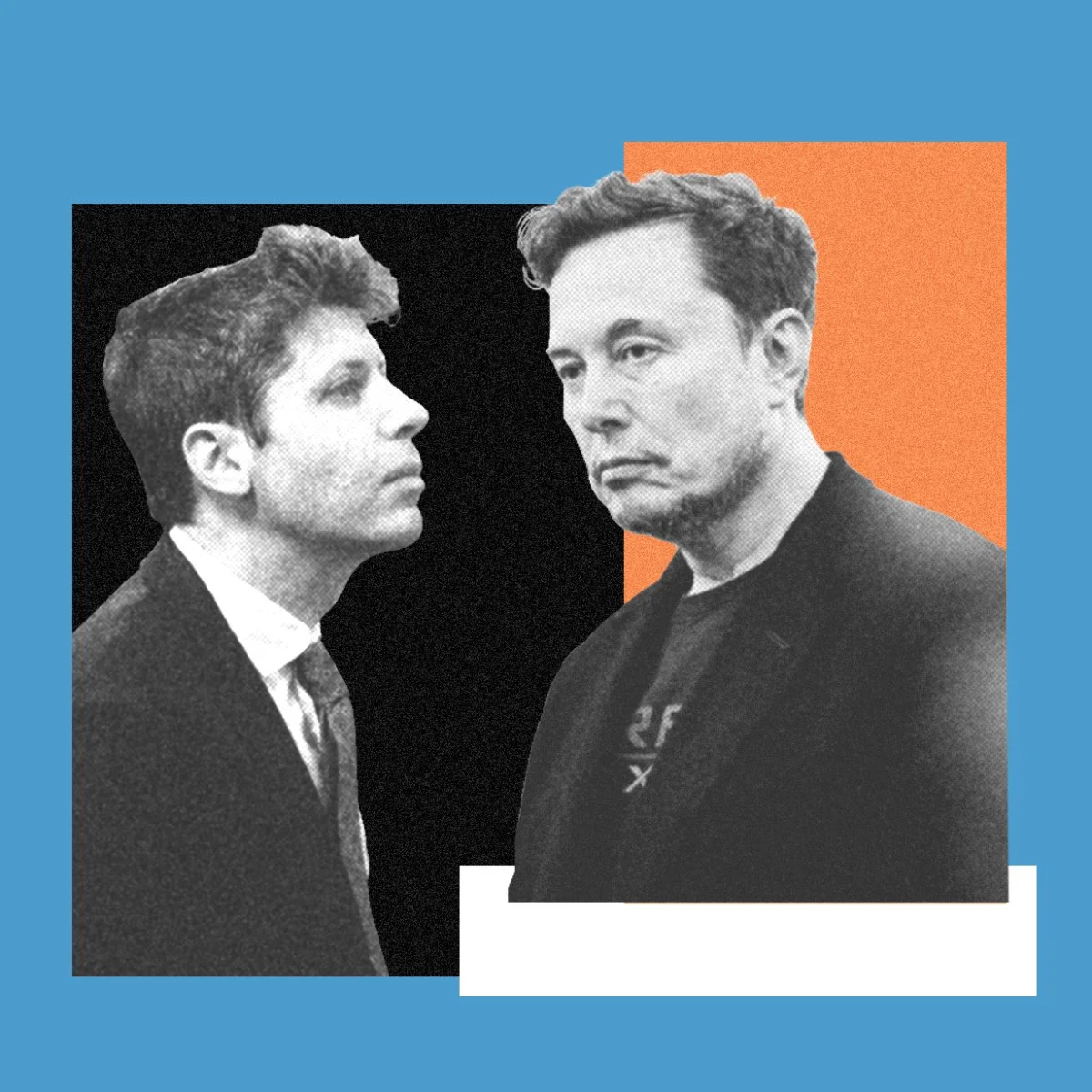
The high-stakes legal confrontation between Elon Musk and OpenAI is set to reach a critical juncture this month as the case moves to a federal courtroom in Oakland, California. A jury of nine citizens will be tasked with resolving a multi-year dispute that strikes at the heart of the artificial intelligence industry: whether the world’s most prominent AI developer has abandoned its original altruistic mission in favor of commercial dominance. While legal battles between billionaire tech moguls are common in Silicon Valley, the case of Musk v. Altman is being watched with unprecedented scrutiny by former employees, non-profit watchdogs, and federal regulators. The outcome of this trial could fundamentally redefine how transformative technologies are governed, distributed, and monetized in the 21st century.
At the center of the litigation is the question of whether OpenAI, led by CEO Sam Altman and President Greg Brockman, breached a "founding agreement" to develop artificial general intelligence (AGI) for the benefit of humanity rather than for private profit. Musk, an original co-founder who provided the critical early funding that allowed the lab to compete with giants like Google, alleges that the company’s current trajectory—characterized by a multi-billion-dollar partnership with Microsoft and a shift toward closed-source proprietary models—is a betrayal of its charitable roots.
The Core Allegations: Breach of Trust and Fraud
The lawsuit, which has undergone several revisions since its initial filing, now focuses on three primary legal pillars: breach of charitable trust, fraud, and unjust enrichment. Musk’s legal team argues that OpenAI’s transition from a transparent, non-profit research collective to a secretive, profit-oriented corporate entity was achieved through deception.
The first claim regarding the breach of charitable trust asserts that Musk’s early investments, totaling approximately $38 million between 2015 and 2018, were predicated on the guarantee that OpenAI would remain a non-profit dedicated to open-source principles. Musk contends that by withholding the source code for its most advanced models, such as GPT-4, OpenAI has effectively privatized technology that was intended to be a public good.
The second claim of fraud suggests that Altman and Brockman intentionally misled Musk about their long-term intentions. The lawsuit alleges that the defendants leveraged Musk’s reputation and capital to build the foundation of the company, only to restructure it into a "for-profit" subsidiary once the technology became commercially viable.
Finally, the claim of unjust enrichment argues that the defendants, along with their primary investor, Microsoft, have unfairly profited from assets that were developed using donor funds and public-interest resources. Musk is seeking remedies that include the removal of Altman and Brockman from their leadership positions, the return of "ill-gotten gains" to the non-profit wing, and a permanent injunction preventing OpenAI from operating as a public benefit corporation in its current for-profit capacity.
A Chronology of the OpenAI Schism
To understand the weight of the current trial, one must examine the decade-long timeline of OpenAI’s evolution and the subsequent deterioration of the relationship between its founders.
2015: The Foundation
OpenAI is established as a non-profit research laboratory. The founding mission is to ensure that AGI—AI that surpasses human intelligence across a wide range of tasks—does not become a tool for corporate or state monopoly. Musk, Altman, and Brockman are the primary architects of this vision.
2017: Internal Fractures
Tensions begin to surface regarding the immense capital required to train large-scale neural networks. Internal documents suggest that leadership began discussing the necessity of a for-profit arm to attract the billions of dollars needed for compute power. OpenAI claims Musk was aware of and even encouraged this transition at the time.
2018: Musk’s Departure
Elon Musk officially resigns from the OpenAI board. While the public reason cited was a conflict of interest with Tesla’s own AI development, insiders have since revealed that Musk had attempted to take control of the lab to accelerate its progress, a move rebuffed by Altman and the other founders.
2019: The Microsoft Era Begins
OpenAI creates a "capped-profit" subsidiary, allowing it to take massive investments. Shortly after, Microsoft invests $1 billion, securing a position as the exclusive cloud provider and a primary commercial partner for the lab’s technologies.
2022–2023: The ChatGPT Explosion and Boardroom Coup
The release of ChatGPT brings OpenAI into the global spotlight, leading to a valuation exceeding $80 billion. In November 2023, the non-profit board briefly fired Sam Altman, citing a lack of "candor" in his communications. The move backfired, leading to Altman’s swift reinstatement and a restructuring of the board to include more pro-commercial voices, including a non-voting seat for Microsoft.
2024: The Legal Reckoning
Musk files his lawsuit, coinciding with his own launch of xAI and its chatbot, Grok. As the case moves to trial, OpenAI prepares for a potential Initial Public Offering (IPO), a move that would solidify its status as a corporate titan but further complicate its non-profit legacy.
Supporting Data: The Financial Stakes of AGI
The financial figures surrounding OpenAI illustrate why the stakes of this trial are so high. Since its inception, OpenAI has moved from a lab surviving on tens of millions in donations to a corporate entity with projected annual revenues exceeding $3.4 billion. Microsoft’s total investment in the company is estimated to be over $13 billion, granting the tech giant a 49% stake in the for-profit arm.
This valuation puts OpenAI in direct competition with other AI "frontier" labs. Anthropic, founded by former OpenAI employees who left over similar concerns regarding commercialization, has raised over $7 billion from investors like Amazon and Google. Meanwhile, Musk’s xAI recently closed a $6 billion Series B funding round, valuing the company at $24 billion.
The trial comes at a moment when OpenAI is reportedly seeking a new funding round that could value the company at $150 billion. Legal experts suggest that a negative verdict or a prolonged trial could jeopardize these valuation targets and delay the company’s rumored plans for a late-2024 or early-2025 IPO.
Witness List and Evidence: What the Trial Will Reveal
The Oakland courtroom is expected to host a "who’s who" of the technology world. Beyond the primary trio of Musk, Altman, and Brockman, the witness list includes several figures whose testimony could provide rare insight into the secretive world of AI development.
Ilya Sutskever, OpenAI’s former chief scientist who was instrumental in the brief ouster of Altman, is expected to testify regarding the internal debates over AI safety versus commercial speed. Mira Murati, the former CTO who briefly served as interim CEO, and Satya Nadella, the CEO of Microsoft, are also slated to appear.
The discovery process has already unearthed hundreds of internal communications. Among the evidence are emails from 2015 to 2018 where Altman and Sutskever discuss the risks of Google’s AI monopoly, as well as excerpts from Greg Brockman’s personal diaries. Perhaps most intriguing to the public are text exchanges between Musk and Meta CEO Mark Zuckerberg, which may shed light on the competitive landscape and the shifting alliances within the industry.
Official Responses and Defensive Strategy
OpenAI has maintained a firm defensive posture, dismissing the lawsuit as a meritless attempt by a disgruntled competitor to interfere with their success. In a public blog post, the company characterized Musk’s actions as being "motivated by jealousy" and "regret for walking away."
"Elon has spent years harassing OpenAI through baseless lawsuits and public attacks," an OpenAI spokesperson stated. The defense team is expected to argue that no formal "founding agreement" in the form of a signed contract ever existed, and that the non-profit’s mission—to benefit humanity—is best served by having the resources to build safe and powerful systems, which requires a for-profit structure.
Attorneys for Microsoft have also pushed back, arguing that the partnership is a standard commercial arrangement that does not violate any charitable trusts. They contend that Musk, as a private citizen, lacks the "standing" to sue on behalf of a non-profit’s mission, a role usually reserved for state Attorneys General.
Broader Impact and Implications for the Future of AI
The implications of Musk v. Altman extend far beyond the bank accounts of billionaires. The case raises fundamental questions about the "Public Benefit Corporation" (PBC) model. If a company can start as a non-profit, collect tax-deductible donations, and then pivot to a for-profit model while keeping its intellectual property private, it sets a precedent that legal experts like Jill Horowitz of Northwestern University find troubling.
"It’s not a great precedent for nonprofit law if an aggrieved founder can override the actions of the attorney general," Horowitz noted, referring to the fact that the Attorneys General of Delaware and California have already reviewed and allowed OpenAI’s restructuring.
Furthermore, the trial will address the "Open Source vs. Closed Source" debate. If the jury finds in favor of Musk, OpenAI could be forced to release the technical details of its models to the public. While Musk argues this is necessary for transparency and safety, OpenAI maintains that releasing such powerful technology into the wild without safeguards would be catastrophic.
As the trial begins, the AI industry stands at a crossroads. A victory for Musk could force a massive restructuring of OpenAI and potentially slow the pace of commercial AI development. A victory for Altman would solidify the current trend of "Big Tech" partnerships as the standard model for frontier AI research. Regardless of the outcome, the proceedings in Oakland will offer the public its most transparent look yet at the people and the politics shaping the future of human intelligence.
About the Author