
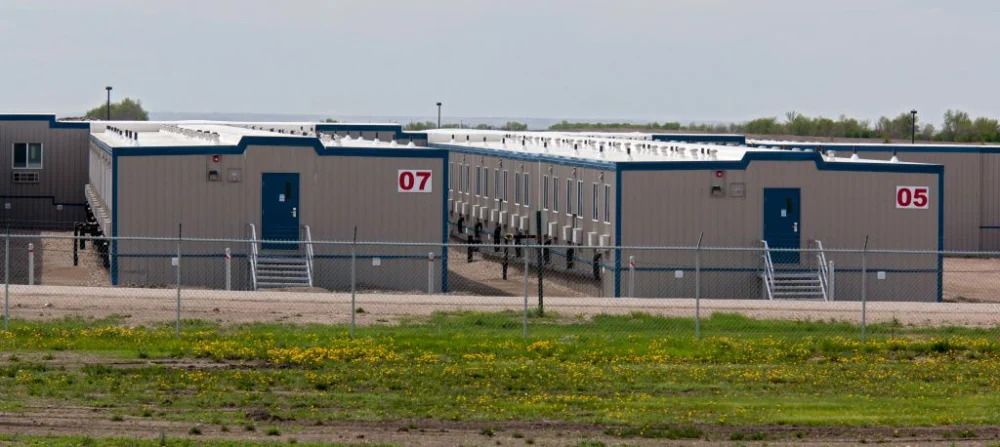
The insatiable global demand for artificial intelligence (AI) is driving an unprecedented boom in data center construction across the United States. As these massive facilities, requiring thousands of construction workers for their development, spring up in remote and rural locations, a familiar housing solution from a previous industrial era is making a significant comeback: temporary worker villages, commonly known as "man camps." These self-contained communities, once popularized to house men working in the demanding conditions of oil fields, are now being repurposed and expanded to accommodate the transient workforce essential for building the infrastructure of the AI revolution.
The Rise of Man Camps in the AI Era
The current surge in data center development has created a critical bottleneck: housing for the influx of temporary laborers. Developers are increasingly turning to specialized companies to provide these workers with essential living accommodations, transforming remote landscapes into bustling temporary hubs. A prime example of this trend is unfolding in rural Dickens County, Texas, where a former Bitcoin mining facility is undergoing a massive transformation into a 1.6-gigawatt data center. According to a report by Bloomberg, the hundreds, and potentially thousands, of workers involved in this ambitious project are being housed in what are essentially modern-day man camps.
These contemporary worker villages are far removed from the rudimentary barracks of the past. The Dickens County camp, for instance, offers residents gray housing units equipped with amenities designed to support a demanding work schedule. These include access to a fitness center, a communal laundromat, recreational game rooms, and a cafeteria that boasts the impressive capability of grilling steaks on demand. This focus on providing a comfortable and well-serviced living environment aims to attract and retain a skilled workforce in areas where traditional housing is scarce and often prohibitively expensive due to the sudden influx of workers.
Target Hospitality: A Key Player in the Man Camp Market
At the forefront of providing these critical housing solutions is Target Hospitality, a company that has secured significant contracts for the development and operation of these worker villages. The company has entered into multiple agreements totaling $132 million to construct and manage the Dickens County camp, with projections indicating it could eventually house over 1,000 workers. This substantial investment underscores the growing reliance on such temporary housing solutions within the booming data center sector.
Target Hospitality’s chief commercial officer, Troy Schrenk, has openly expressed his company’s optimism regarding the current market conditions. Describing the U.S. data center construction boom as "the largest, most actionable pipeline I’ve ever seen," Schrenk highlights the immense growth potential that the company perceives in this sector. This sentiment suggests that Target Hospitality views the ongoing expansion of AI infrastructure as a primary driver for its future business, positioning itself as a crucial partner for developers seeking to overcome logistical challenges associated with large-scale construction projects.
Historical Precedents and Evolving Models
The concept of the "man camp" has deep roots in American industrial history, particularly during periods of rapid resource extraction and infrastructure development. The oil and gas industry, with its remote drilling sites and demanding work environments, was a significant adopter of this housing model. During the shale oil boom in North Dakota, for example, similar temporary villages emerged to house thousands of workers, leading to rapid demographic shifts and straining local resources. These historical precedents provide valuable context for understanding the current resurgence of man camps, albeit with modernized amenities and a new industrial focus.
The evolution of man camps reflects broader societal and economic shifts. While historically associated with a predominantly male workforce and often characterized by basic accommodations, the modern iteration appears to be adapting to a more diverse workforce and incorporating a wider range of services to enhance worker well-being and retention. The inclusion of recreational facilities and on-demand dining options suggests an acknowledgment of the importance of work-life balance, even within temporary living situations.
Controversies and Concerns Surrounding Man Camp Operations
Despite the apparent economic benefits and logistical advantages, the history of man camps is not without its controversies and ethical considerations. Target Hospitality, the company central to the Dickens County development, has faced scrutiny in the past for its operation of the Dilley Immigration Processing Center in Texas. This facility, which houses families detained by U.S. Immigration and Customs Enforcement (ICE), has been the subject of serious allegations.

Court filings have detailed disturbing conditions within the Dilley center, including reports of food contaminated with worms and mold. Furthermore, concerns have been raised about the inadequate accommodation of children’s specific needs, such as allergies and special dietary requirements. These past allegations cast a shadow over Target Hospitality’s current endeavors and raise questions about the company’s commitment to ethical operational standards across all its facilities, regardless of the demographic or purpose of the residents.
The juxtaposition of housing for temporary construction workers and the detention of asylum-seeking families highlights a complex aspect of Target Hospitality’s business model. While the former is driven by industrial development and labor needs, the latter involves individuals seeking refuge, often under stressful and precarious circumstances. The allegations of substandard conditions at Dilley prompt a critical examination of how such facilities are managed and the potential impact on the well-being of their inhabitants.
Broader Implications for Rural Communities and Infrastructure Development
The widespread adoption of man camps for data center construction carries significant implications for the rural communities where these facilities are being built. On one hand, these projects can bring substantial economic benefits, including job creation, increased local spending, and tax revenue. The influx of workers can revitalize local economies that may have previously struggled with depopulation or a lack of diverse employment opportunities.
However, the rapid establishment of large temporary worker populations can also strain local infrastructure, such as roads, utilities, and public services. Issues related to housing availability for permanent residents, potential increases in crime rates, and the social impact of a transient workforce are all concerns that rural communities must proactively address. Effective planning and collaboration between developers, local governments, and community stakeholders are crucial to mitigating potential negative consequences and ensuring that the benefits of these industrial projects are shared equitably.
The data center boom, fueled by the ever-increasing capabilities of AI, represents a significant technological and economic shift. The reliance on man camps as a housing solution underscores the practical challenges and logistical demands of building this new digital infrastructure. As the construction of these massive facilities continues, the ethical considerations surrounding worker welfare, community impact, and the operational practices of companies like Target Hospitality will remain subjects of vital public interest and journalistic scrutiny. The future of AI development is intrinsically linked to the effective and responsible management of the human and physical resources required to bring it to fruition, and the resurgence of the man camp model serves as a stark reminder of these interconnected realities.
The AI Infrastructure Race: A Global Phenomenon
The demand for data centers is not confined to the United States. Globally, countries are investing heavily in AI infrastructure to remain competitive in the rapidly evolving technological landscape. This has led to a similar construction boom in other regions, with potential implications for housing solutions and labor practices in those areas as well. For instance, as AI capabilities advance, the need for specialized hardware and the computational power to support it will only grow. This translates into a race to build more powerful and efficient data centers, requiring immense capital investment and vast amounts of labor.
The energy requirements of these facilities are also a significant factor. AI workloads are notoriously energy-intensive, prompting a greater focus on sustainable power sources and efficient cooling technologies. The location of data centers is often influenced by access to affordable and reliable energy, as well as favorable climate conditions for cooling. This strategic placement can sometimes lead to the development of these facilities in remote or less populated areas, further necessitating the use of temporary housing solutions like man camps.
The development of advanced AI, from large language models to sophisticated machine learning algorithms, relies on the continuous processing of massive datasets. This processing occurs within data centers, which are essentially the physical backbone of the AI revolution. As AI becomes more integrated into various industries – from healthcare and finance to transportation and entertainment – the demand for the computational power provided by these facilities will continue its upward trajectory.
Looking Ahead: Sustainability and Ethical Considerations
As the data center industry continues its rapid expansion, there will be an increasing focus on sustainable building practices and ethical labor standards. Developers and housing providers will face pressure to minimize their environmental footprint, both in the construction phase and in the ongoing operation of these facilities. This includes considerations around energy efficiency, water usage, and the sourcing of materials.
Furthermore, the reliance on temporary worker housing like man camps will necessitate a continued dialogue about worker rights, safety, and fair treatment. Companies like Target Hospitality will be under increased scrutiny to ensure that their operations meet or exceed industry standards and address any past criticisms. The long-term success and social acceptance of large-scale data center development will depend, in part, on the ability of the industry to demonstrate a commitment to both environmental responsibility and ethical labor practices. The lessons learned from historical industrial booms, including the potential pitfalls of rapid development and the importance of community engagement, will be crucial in navigating the complexities of the current AI-driven infrastructure build-out.
About the Author





