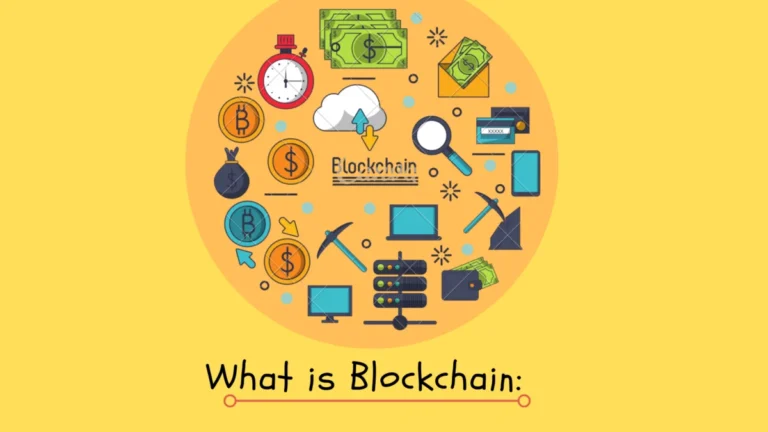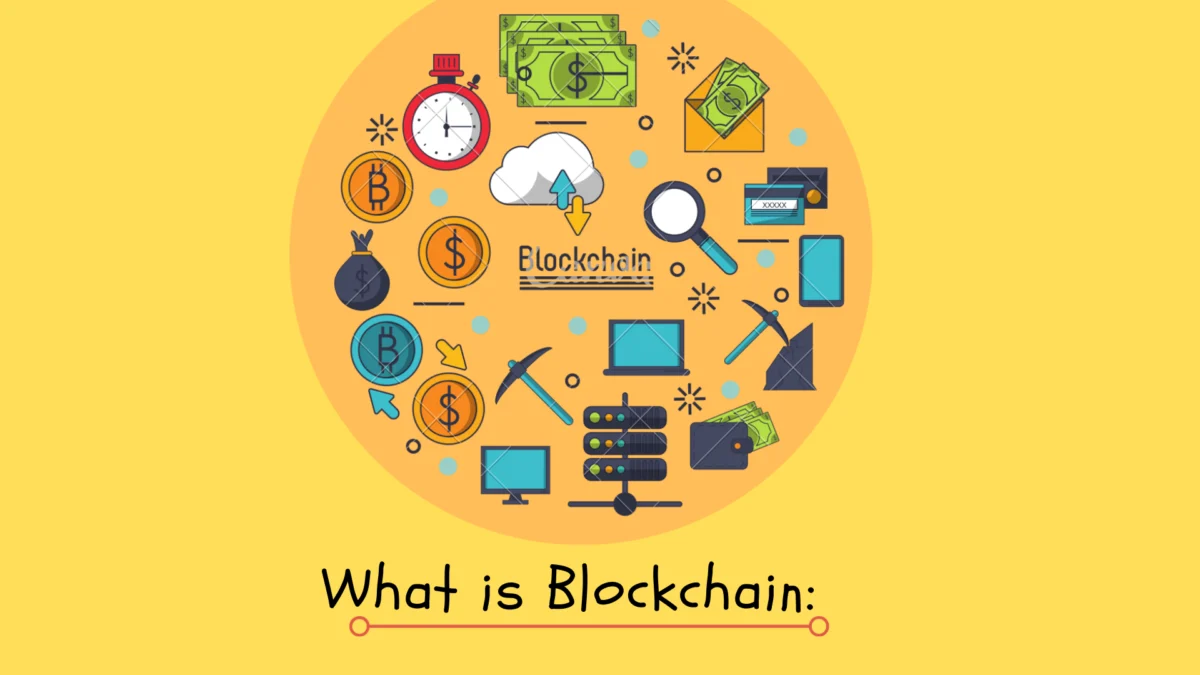
Blockchain technology has emerged as one of the most transformative digital innovations of the 21st century, fundamentally altering the landscape of data management, financial transactions, and digital trust. While the public often conflates blockchain with its most famous application, Bitcoin, the underlying technology represents a sophisticated method of recording information that renders it nearly impossible to change, hack, or cheat the system. As global industries transition toward more digitized frameworks, blockchain offers a decentralized alternative to traditional centralized databases, promising a future where intermediaries like banks or government clearinghouses may no longer be the sole gatekeepers of truth.
The Foundational Mechanics of Distributed Ledger Technology
At its core, a blockchain is a type of shared database that differs from a typical database in the way it stores information. While traditional databases structure data into tables, a blockchain stores data in "blocks" that are then strung together. When a block is filled with data, it is set in stone and becomes a part of the chronological timeline. Each block in the chain is given an exact timestamp when it is added to the network, creating an irreversible record of data.
This system is frequently referred to as Distributed Ledger Technology (DLT). In a standard centralized network, a single entity—such as a bank or a social media corporation—maintains a master ledger. If that central server is compromised, the data is at risk. Conversely, blockchain is decentralized. The ledger is spread out among various network nodes (computers) at different locations. This redundancy ensures that if one node contains an error or is subject to a cyberattack, the other thousands of nodes can use the majority consensus to identify the outlier and maintain the integrity of the record.
A Chronological History: From Conceptualization to Global Adoption
The trajectory of blockchain technology spans over three decades, evolving from a theoretical solution for document authentication to a global financial powerhouse.
1991: The Conceptual Birth
The first work on a cryptographically secured chain of blocks was described by research scientists Stuart Haber and W. Scott Stornetta. Their goal was to implement a system where document timestamps could not be tampered with. They utilized a hierarchy of hashes (Merkle trees) to link documents together, ensuring that any alteration to a single document would invalidate the entire subsequent chain.
1998: The Precursor to Digital Currency
Computer scientist Nick Szabo proposed "Bit Gold," a decentralized digital currency. Although Bit Gold was never successfully deployed, it introduced the concept of "proof of work" and decentralized consensus, providing the architectural blueprint for what would follow a decade later.
2008–2009: The Nakamoto Era
Following the global financial crisis, an anonymous individual or group known as Satoshi Nakamoto published a whitepaper titled "Bitcoin: A Peer-to-Peer Electronic Cash System." This was the first practical application of blockchain. Nakamoto’s design solved the "double-spending" problem—a major hurdle for digital currencies—without the need for a trusted third party. In January 2009, the first block, known as the "Genesis Block," was mined.
2014–Present: Blockchain 2.0 and Smart Contracts
The launch of Ethereum marked the transition from "Blockchain 1.0" (simple currency transactions) to "Blockchain 2.0." Ethereum introduced "Smart Contracts"—self-executing contracts with the terms of the agreement directly written into lines of code. This allowed blockchain to be used for more than just money, enabling decentralized applications (dApps) in voting, healthcare, and supply chain management.
Technical Analysis: The Architecture of Security
The security of a blockchain is derived from three primary components: cryptographic hashing, the consensus mechanism, and decentralization.
Every block contains its own unique cryptographic hash, which acts like a digital fingerprint. It also contains the hash of the block preceding it. If a malicious actor attempts to edit a transaction in a previous block, that block’s hash will change. Because the subsequent block contains the old hash, the link is broken. To successfully hack a blockchain, a perpetrator would need to change every block in the chain, across more than 50% of the computers in the network, simultaneously. This is computationally and financially prohibitive.
Furthermore, the "Consensus Mechanism" is the protocol through which the nodes agree on the validity of transactions. The two most common types are:
- Proof of Work (PoW): Used by Bitcoin, where "miners" solve complex mathematical puzzles to secure the network.
- Proof of Stake (PoS): Used by Ethereum 2.0, where validators are chosen based on the number of coins they "stake" or lock up, significantly reducing energy consumption.
Institutional Adoption and Real-World Applications
While the financial sector was the early adopter, blockchain’s utility in supply chain management has provided some of the most compelling data for its efficiency.
IBM’s Food Trust network is a primary example of industrial blockchain integration. Global conglomerates including Walmart, Unilever, and Nestlé use this technology to track the journey of food products from farm to shelf. In traditional systems, tracing the source of a contaminated food item—such as lettuce infected with E. coli—could take up to seven days. Using blockchain, Walmart demonstrated that the same trace could be completed in 2.2 seconds. This speed allows companies to perform targeted recalls, saving millions of dollars and potentially saving lives by preventing the spread of foodborne illnesses.
Beyond logistics, blockchain is being integrated into:
- Healthcare: Storing patient records securely to allow for seamless sharing between providers while maintaining patient privacy.
- Real Estate: Reducing the need for title insurance and manual deed searches by keeping a permanent, public record of property ownership.
- Governance: Implementing secure, tamper-proof voting systems that could eliminate concerns regarding electoral fraud.
Comparative Analysis: Blockchain vs. Traditional Databases
To understand the value proposition of blockchain, it must be contrasted with traditional database structures.
| Feature | Traditional Database | Blockchain (DLT) |
|---|---|---|
| Authority | Centralized (one administrator) | Decentralized (peer-to-peer) |
| Integrity | Can be edited or deleted | Immutable (cannot be changed) |
| Transparency | Private/Restricted | Public/Transparent (usually) |
| Performance | High speed, high volume | Slower due to consensus |
| Cost | Low initial cost, high security risk | High initial setup, low fraud risk |
The primary drawback of blockchain is scalability. Because every node must verify every transaction, the network can become congested. However, emerging "Layer 2" solutions and sharding techniques are currently being developed to increase transaction speeds to rival those of traditional processors like Visa.
Economic Implications and Market Projections
The economic impact of blockchain is projected to be substantial. According to market research reports from firms like PwC and Gartner, blockchain technology is expected to boost global GDP by over $1.7 trillion by 2030. This growth is driven by the demand for transparency and the reduction of "friction" in the global economy—meaning the removal of middleman fees and administrative delays.
Coinbase Global, currently the largest blockchain-focused company by market capitalization, serves as a bellwether for the industry. Its infrastructure supports the digital currency economy, but the company’s expansion into custodial services and institutional tools signals a broader shift toward blockchain as a foundational layer of the global financial system.
Challenges and Regulatory Responses
Despite its potential, blockchain faces significant hurdles. The most prominent is the regulatory environment. Governments worldwide are currently grappling with how to categorize digital assets and decentralized protocols. The U.S. Securities and Exchange Commission (SEC) and the European Union’s MiCA (Markets in Crypto-Assets) regulation represent efforts to bring order to a space often described as the "Wild West."
There is also the "Blockchain Trilemma," a term coined by Ethereum co-founder Vitalik Buterin. It suggests that it is difficult for a blockchain to achieve all three of the following simultaneously: security, scalability, and decentralization. Most networks must compromise on one to excel in the others.
Strategic Outlook and Conclusion
As we look toward the 2025–2030 window, blockchain is moving out of its "hype cycle" and into a period of mature utility. The transition from speculative asset classes to functional enterprise tools is well underway. For CEOs and entrepreneurs, the question is no longer whether blockchain is a viable technology, but how it can be leveraged to ensure data integrity and operational efficiency.
The democratization of data through decentralization offers a path toward a more equitable digital economy. By removing the necessity for centralized trust, blockchain empowers individuals and small businesses to engage in global trade with the same security as multi-national corporations. While the road to full integration remains complex, the fundamental shift toward immutable, transparent, and distributed records appears to be an inevitable evolution in the history of information technology.
About the Author