The global marketing sector is currently undergoing a systemic transformation driven by the rapid integration of artificial intelligence, with recent industry reports indicating that 61% of marketing professionals now view AI software as the foundational element of their data strategies. As enterprises face increasing pressure to deliver hyper-personalized consumer experiences while maintaining lean operational costs, the adoption of machine learning and natural language processing tools has shifted from an optional advantage to a competitive necessity. The current market for AI in marketing, valued at approximately $15.84 billion in 2023, is projected to expand at a compound annual growth rate (CAGR) of nearly 30% through 2030, reflecting a fundamental change in how brands interact with their audiences.
The Chronological Shift Toward Algorithmic Marketing
The transition toward AI-driven marketing did not occur in isolation. Historically, digital marketing relied on rules-based automation—simple "if-this-then-that" sequences that managed basic email triggers and scheduled social media posts. However, the period between 2018 and 2022 marked a significant pivot toward predictive analytics. During this window, platforms began leveraging neural networks to anticipate consumer behavior rather than merely reacting to it.
By 2023, the emergence of generative AI accelerated this evolution, moving the industry into an era of automated content creation and real-time strategic optimization. Today, the marketing technology (MarTech) stack is increasingly autonomous, capable of identifying high-value leads, generating creative assets, and optimizing ad spend with minimal human intervention.
Core Technologies Driving Modern Marketing Efficiency
To understand the current landscape, it is essential to examine the specific tools that have gained dominance by solving complex data and creative challenges.
1. Jasper AI: The Advancement of Generative Content
Formerly known as Jarvis, Jasper AI represents the vanguard of generative text. Unlike basic autocomplete features, Jasper utilizes large language models to synthesize brand-specific content across various mediums. Its primary utility lies in its ability to adapt to specific "brand voices," ensuring that AI-generated blog posts, social media captions, and ad copy remain indistinguishable from human-authored text. For enterprises, this translates to a significant reduction in the time-to-market for content-heavy campaigns.
2. Personalize: Behavioral Interest Tracking
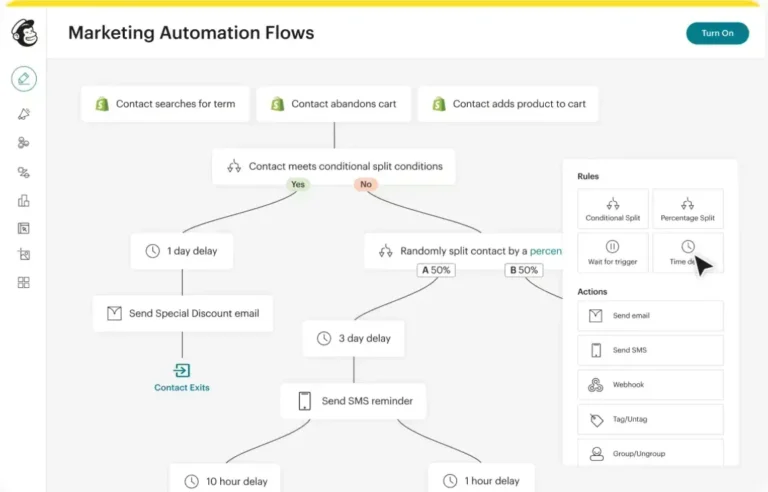
While traditional CRM systems track what a customer bought, Personalize focuses on what they are currently considering. The platform utilizes an algorithm to monitor real-time site activity, identifying the top three interests for each contact. By updating these interests dynamically, the software allows marketers to pivot their messaging based on a lead’s current digital footprint, significantly increasing the relevance of "abandoned cart" or "suggested product" communications.
3. Seventh Sense: Optimizing Delivery Chronology
The efficacy of email marketing is often dictated by the "send-time" variable. Seventh Sense addresses the saturation of consumer inboxes by utilizing behavioral analytics to determine the optimal moment for delivery on an individual basis. Rather than sending a mass blast at a generic time, the system staggers delivery based on when specific users historically engage with their mail. This tool is particularly integrated within the HubSpot and Marketo ecosystems, providing a layer of intelligence to established lead-nurturing workflows.
4. Phrasee: Natural Language Generation for Engagement
Subject lines are the primary gatekeepers of email ROI. Phrasee employs an end-to-end Natural Language Generation (NLG) system to draft subject lines and body copy. The system is designed to be self-optimizing; as engagement data returns to the platform, the prediction model rebuilds itself, progressively learning which linguistic triggers—such as urgency, curiosity, or directness—resonate most effectively with a specific brand’s demographic.
5. HubSpot SEO: Machine Learning in Search Visibility
The methodology of Search Engine Optimization has shifted from keyword stuffing to "topic clusters." HubSpot SEO leverages machine learning to help content teams understand how search engines categorize information. By identifying core subjects that search engines reward, the tool assists brands in building authority within specific niches, ensuring that content is structured in a way that aligns with the sophisticated algorithms used by modern search engines.
6. Evolv AI: Autonomous Experience Optimization
Traditional A/B testing is limited by human bandwidth, often allowing for the testing of only two variables at a time. Evolv AI utilizes advanced algorithms to facilitate "multivariate testing" at scale. The platform can test hundreds of different site elements simultaneously—ranging from button colors to header text—identifying the highest-performing combinations and automatically implementing them to improve the user experience and conversion rates in real-time.
7. Acrolinx: Enterprise Content Governance
For global corporations like Google and Amazon, maintaining a consistent brand voice across thousands of writers is a logistical challenge. Acrolinx serves as a content alignment platform that scores existing content against set benchmarks for style, grammar, and tone. By providing real-time guidance to writers, it ensures that every piece of content, regardless of the author, meets the enterprise’s quality and compliance standards.
8. MarketMuse: Algorithmic Content Strategy
MarketMuse functions as an automated content auditor. It compares a brand’s existing library against thousands of similar articles across the web to identify "content gaps." By highlighting topics that competitors are covering but the brand is missing, it provides a data-driven roadmap for content production, prioritizing topics based on their likelihood to impact search rankings.
9. Copilot: Real-Time Conversational Commerce
In the eCommerce sector, the speed of response is a critical factor in conversion. Copilot provides a suite of tools designed to maintain 24/7 communication via platforms like Messenger. Beyond simple chatbots, these tools are designed to recover abandoned shopping carts and provide personalized product recommendations, effectively acting as an automated sales force that operates without downtime.
10. Yotpo: Sentiment Analysis and Social Proof
Consumer reviews are a goldmine of data, but manually analyzing thousands of entries is inefficient. Yotpo uses deep learning to extract sentiment from customer reviews. It identifies specific product features that are frequently praised or criticized, allowing businesses to make informed product development decisions. Additionally, it automatically surfaces the most relevant positive reviews to prospective buyers, leveraging social proof to drive conversions.
11. Albert AI: Fully Autonomous Campaign Management
Perhaps the most comprehensive of the suite, Albert AI is a self-learning software that automates the entire campaign lifecycle. By plugging into an existing marketing stack, Albert analyzes vast datasets to identify potential customers, runs small-scale trial campaigns, and then scales the most successful versions autonomously. This reduces the need for manual media buying and allows human marketers to focus on high-level creative strategy rather than technical execution.
Supporting Data and Industry Analysis
The shift toward these tools is supported by compelling performance metrics. According to a 2023 study by PwC, 54% of business executives say that AI solutions implemented in their businesses have already increased productivity. In the marketing context, companies utilizing AI for lead generation have reported an increase in leads of more than 50% and a reduction in call time of 60-70%.
Furthermore, data from the Content Marketing Institute reveals that while 75% of marketers use AI tools for their work, there remains a significant gap in "AI literacy." Only about 22% of organizations have a formal policy regarding the use of AI, suggesting that while the tools are being adopted, the strategic framework governing them is still in a state of flux.
Stakeholder Perspectives and Market Reactions
Industry leaders have expressed a mixture of optimism and caution regarding this rapid technological ascent. Chief Marketing Officers (CMOs) from major tech firms have noted that AI is not a replacement for human creativity but a "force multiplier." The general consensus among digital strategists is that AI excels at "the heavy lifting" of data processing and iterative testing, which frees up human talent to focus on emotional resonance and brand storytelling.
However, the "black box" nature of some AI algorithms has led to calls for greater transparency. Regulatory bodies in the European Union and the United States are increasingly scrutinizing how AI marketing tools handle consumer data, particularly in the context of privacy laws like GDPR and CCPA. The industry reaction has been a move toward "Privacy-First AI," where tools are designed to deliver personalization without compromising individual anonymity.
Broader Implications for the Future of Marketing
The implications of these 11 tools extend beyond mere efficiency. We are witnessing the democratization of high-level data science; tools that were once only available to Fortune 500 companies with massive data science teams are now accessible to small and medium-sized enterprises via SaaS models.
As AI continues to evolve, the "Final Saying" for the industry is one of perpetual adaptation. The integration of these tools suggests a future where marketing is less about "broadcasting" to a mass audience and more about "predicting" and "serving" the individual. For the modern marketer, the challenge will no longer be the execution of campaigns, but the ethical and creative oversight of the machines that run them. The list of tools provided serves as the current baseline for an industry that is likely to look entirely different by the end of the decade, as new strategies—hitherto unimagined—emerge from the intersection of human intent and algorithmic precision.
About the Author