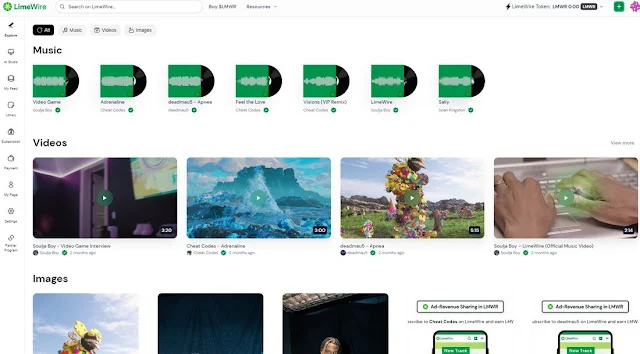
The digital landscape has witnessed a remarkable transformation as LimeWire, a brand once synonymous with the peer-to-peer file-sharing era of the early 2000s, has successfully pivoted into a sophisticated artificial intelligence content publishing platform. This strategic rebirth marks a significant departure from its historical roots, repositioning the entity as a central hub for generative AI tools, blockchain-integrated monetization, and creator-centric digital rights management. The current iteration of LimeWire, known as the LimeWire AI Studio, represents a convergence of three major technological trends: generative artificial intelligence, decentralized finance (DeFi), and the creator economy. By offering a streamlined workflow that encompasses content creation, distribution, and automated monetization, LimeWire aims to lower the barrier to entry for digital artists and musicians while providing a sustainable revenue model that differs from traditional social media structures.
A Historical Chronology of the LimeWire Brand
To understand the significance of LimeWire’s current trajectory, one must examine its historical context. Launched originally in 2000 by Mark Gorton, LimeWire became the leading Gnutella-based file-sharing client, facilitating the exchange of music and software globally. However, after years of legal disputes with the Recording Industry Association of America (RIAA), the platform was shut down by a federal court injunction in October 2010. The brand remained dormant for over a decade until it was acquired in 2022 by entrepreneurs Paul and Julian Zehetmayr.
The Zehetmayr brothers envisioned a platform that would correct the perceived imbalances of the original file-sharing era by prioritizing creator compensation and intellectual property rights. In mid-2022, LimeWire relaunched as an NFT marketplace, securing $10.4 million in a private token sale led by high-profile firms including Kraken Ventures, Arrington Capital, and GSR. By 2023, the platform expanded its scope significantly, launching the LimeWire AI Studio to integrate generative AI tools directly into its blockchain-backed ecosystem. This pivot was designed to address the burgeoning demand for AI-generated media, which is projected to become a multi-billion dollar industry within the next decade.
The Technological Infrastructure of LimeWire AI Studio
The LimeWire AI Studio functions as a multi-model environment, allowing users to leverage some of the most advanced neural networks currently available. Unlike platforms that tether users to a single proprietary algorithm, LimeWire provides access to a suite of established models, including Stable Diffusion 2.1, Stable Diffusion XL, and OpenAI’s DALL-E 2. This variety allows creators to experiment with different aesthetic outputs, ranging from photorealistic cinematic styles and analog film textures to digital art, pixel art, and anime-inspired visuals.
The technical architecture of the studio includes advanced parameters such as samplers, quality sliders, and prompt guidance tools. These features enable users to fine-tune the granularity of their images, adjusting the "noise" and "steps" involved in the diffusion process. Furthermore, LimeWire has confirmed the ongoing development of its own proprietary AI model. This move is intended to reduce reliance on third-party APIs and provide a unique "LimeWire signature" style that can be optimized for the platform’s specific community needs. While the current focus remains on image generation, the roadmap includes the imminent rollout of AI-driven music and video generation tools, which would make LimeWire one of the first platforms to offer a holistic, cross-media generative suite.
Integration of Blockchain and Automated NFT Minting
A defining feature of the LimeWire ecosystem is its seamless integration with blockchain technology, specifically the Polygon and Algorand networks. Both blockchains were selected for their low environmental impact, high transaction speeds, and minimal "gas" fees, which are essential for a platform catering to high-frequency content creation.
When a user generates an image or piece of content within the LimeWire AI Studio, the platform offers an automated "minting" process. This converts the digital file into a Non-Fungible Token (NFT) on the chosen blockchain. This process serves several functions:
- Provenance and Authenticity: It establishes a permanent, immutable record of when the content was created and by whom.
- Ownership Rights: It allows creators to maintain verifiable ownership of their work in a decentralized environment.
- Secondary Market Revenue: By minting the content as an NFT, creators can benefit from secondary market sales. LimeWire’s smart contracts are designed to ensure that creators receive a 2.5% royalty every time their content is traded among fans or collectors.
This automation removes the technical hurdles typically associated with Web3 technologies, allowing traditional artists to enter the NFT space without needing deep expertise in crypto-wallets or smart contract deployment.
The Economic Model: Ad Revenue and LMWR Tokens
LimeWire has introduced a dual-revenue stream model that distinguishes it from both traditional stock photo sites and standard NFT marketplaces. The first stream is based on an ad-revenue sharing program. When creators publish their AI-generated content to the LimeWire community, they become eligible to receive a portion of the advertising revenue generated by the platform. According to current platform specifications, creators can earn up to 70% of the ad revenue generated by users viewing their specific images, videos, or music.
The second stream is the LMWR token, LimeWire’s native cryptocurrency. Earnings from ad revenue and NFT sales are distributed in LMWR, which operates on the Ethereum blockchain as an ERC-20 token. This tokenization of rewards provides several advantages:
- Liquidity: LMWR is traded on several major cryptocurrency exchanges, including Kraken, ByBit, and UniSwap, allowing creators to convert their earnings into fiat currency or other digital assets.
- Utility: Within the platform, LMWR can be used to purchase additional "credits" for AI generation, allowing for a self-sustaining creative cycle.
- Governance: Holding LMWR often grants users a voice in the platform’s future development and access to exclusive community features.
Subscription Tiers and Accessibility
To accommodate a wide range of users—from casual hobbyists to professional design studios—LimeWire has implemented a tiered pricing structure based on monthly credits. Each credit typically corresponds to a set number of image generations or modifications.
- Free Tier: This entry-level option provides 10 credits per day, allowing for up to 20 image generations. Free users receive a 50% share of ad revenue but lack features such as ad-free browsing and full creation history.
- Basic Plan ($9.99/month): Provides 1,000 credits per month, supporting roughly 2,000 image generations. This tier includes early access to new AI models and a 50% ad revenue share.
- Advanced Plan ($29/month): Aimed at more frequent users, this plan offers 3,750 credits (up to 7,500 images) and increases the ad revenue share to 60%.
- Pro Plan ($49/month): Designed for serious creators, it provides 5,000 credits (up to 10,000 images) and a 70% ad revenue share.
- Pro Plus Plan ($99/month): The highest tier, offering 11,250 credits (up to 22,500 images) and the maximum 70% ad revenue share.
All premium tiers include a "Pro" profile badge, faster processing speeds, and the removal of third-party advertisements from the user interface.
Industry Adoption and Celebrity Partnerships
The transition of LimeWire has been bolstered by significant endorsements from the entertainment industry. Acclaimed musicians and artists, including Deadmau5, Soulja Boy, and Sean Kingston, have utilized the platform to release exclusive content. These artists have leveraged the platform to publish NFT-backed music videos and digital collectibles, signaling a growing interest among established creators for platforms that offer direct-to-fan monetization without the heavy commissions of traditional record labels or galleries.
Market analysts suggest that LimeWire’s strategy of using a well-known (albeit controversial) brand name has helped it gain immediate traction in a crowded AI market. By rebranding a name associated with "free content" into a platform for "compensated content," the company has executed a sophisticated narrative pivot that appeals to the nostalgia of older users while meeting the technological demands of a new generation.
Broader Impact and Ethical Considerations
The emergence of platforms like LimeWire AI Studio has broader implications for the creative industries. As generative AI becomes more accessible, the definition of "originality" and "authorship" is being challenged. LimeWire addresses some of these concerns by providing a closed ecosystem where content is tracked via blockchain, yet the industry at large continues to grapple with the ethics of training AI models on existing copyrighted works.
Furthermore, LimeWire’s model suggests a shift toward a "democratized" creator economy. By automating the technical aspects of art creation and monetization, the platform allows individuals without traditional graphic design or coding skills to participate in the digital economy. This could lead to a massive influx of digital content, potentially saturating the market but also discovering new forms of artistic expression that were previously hindered by technical or financial barriers.
As LimeWire continues to expand into AI-generated music and video, its impact on the entertainment sector is likely to grow. The ability for a user to generate a song, create a music video, and mint the entire package as a tradeable asset within a single afternoon represents a radical acceleration of the creative workflow. Whether this leads to a new "golden age" of digital creativity or further complicates the protection of intellectual property remains a subject of intense debate among legal experts and industry stakeholders. Nevertheless, LimeWire’s current trajectory confirms that it has successfully transitioned from a ghost of the internet’s past into a vanguard of its AI-driven future.
About the Author