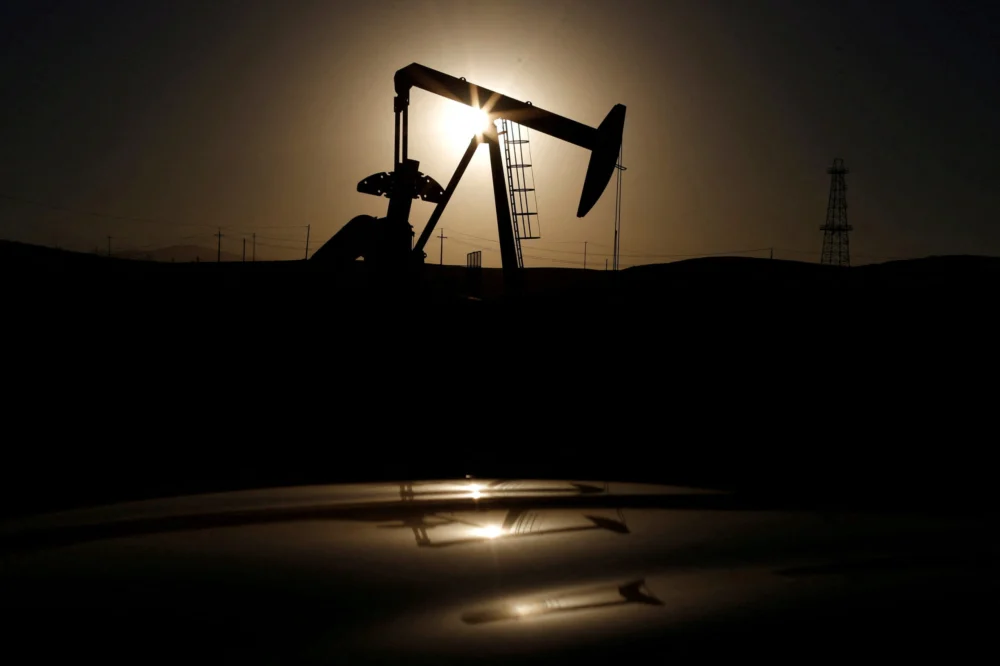
International oil markets experienced a significant upward swing on Thursday, with benchmark crude futures advancing sharply following reports of new attacks on cargo ships in the strategically vital Persian Gulf region. This surge occurred despite an unprecedented emergency release of government stockpiles by the International Energy Agency (IEA), underscoring deep market anxieties over persistent supply disruptions and geopolitical instability. Brent crude futures for May delivery traded 6.2% higher at $97.66 per barrel by midday London time, having earlier touched the $100 mark. Concurrently, U.S. West Texas Intermediate (WTI) futures for April delivery rose 5.6% to $92.19 per barrel, reflecting a widespread apprehension across the energy sector.
Heightened Tensions in the Persian Gulf Spark Supply Fears
The immediate catalyst for Thursday’s price rally was a series of reported incidents targeting commercial vessels in the Persian Gulf. Authorities confirmed that three foreign ships were struck overnight off the coasts of Iraq and the United Arab Emirates. This marks the latest in a troubling pattern of maritime security incidents in or near the Strait of Hormuz, a critical chokepoint for global oil flows.
According to reports from the United Kingdom Maritime Trade Operations (UKMTO) center, one container ship sustained damage from an unknown projectile near the bustling port city of Jebel Ali in the UAE on Thursday. Simultaneously, Iraqi authorities reported that two oil tankers were set ablaze in Iraqi waters after being struck near the port of Umm Qasr, a key deep-water port close to the city of Basra. These incidents, still under investigation, immediately fueled concerns about the safety of shipping and the reliability of supply routes through a region responsible for transporting approximately one-fifth of the world’s total oil supply. The Strait of Hormuz, linking the Persian Gulf to international markets, remains acutely vulnerable to such disruptions, with any impediment to its traffic carrying significant global economic consequences. The ongoing "flurry of incidents" suggests a deteriorating security environment, prompting shipping companies and insurers to reassess risks and potentially increase premiums, further impacting the cost of oil.
IEA’s Record Release Fails to Calm Markets
Paradoxically, the oil price rally occurred just hours after the IEA announced the largest emergency release of crude reserves in its history. On Wednesday, the IEA, an autonomous intergovernmental organization, confirmed that its 32 member countries would collectively release 400 million barrels of oil from their emergency reserves. This monumental decision represents the biggest coordinated drawdown since the agency’s inception in the aftermath of the 1973 oil embargo, a historical event that profoundly reshaped global energy policy.
The United States, a key IEA member, committed a substantial portion of this release, pledging 172 million barrels from its Strategic Petroleum Reserve (SPR). Energy Secretary Chris Wright stated that shipments from the U.S. SPR could commence as early as the following week, with the entire process expected to take approximately 120 days to complete. The IEA’s move was intended to alleviate immediate supply pressures and signal a united front against market volatility. However, the market’s muted, if not adverse, reaction underscores a deep-seated skepticism among traders regarding the efficacy of these measures in the face of persistent geopolitical risks.
Market Skepticism and the Persistence of a Risk Premium
Despite the sheer volume of the IEA’s proposed release, the market largely shrugged off the announcement, with prices continuing their ascent. This highlights a fundamental concern among traders: that even a massive injection of strategic reserves may be insufficient to bridge the widening supply gap, especially if disruptions to oil flows through the Strait of Hormuz persist or escalate.
Strategists at Dutch bank ING articulated this sentiment clearly in a research note published Thursday, stating, "The key question is, why is the market rallying despite this large release? First, there are no signs of de-escalation in the Persian Gulf, so there is no end in sight to the disruptions to oil flows through the Strait of Hormuz." They further emphasized, "As we have said repeatedly, the only way to see oil prices trade lower on a sustained basis is by getting oil flowing through the Strait of Hormuz. Failing to do so means that the market highs are still ahead of us." This analysis suggests that the current market dynamics are less about fundamental supply-demand balances and more about a significant "risk premium" being built into prices due to the acute uncertainty surrounding Middle Eastern stability.
Pavel Molchanov, a senior investment strategist at Raymond James, characterized the current market state as "panic mode." He elaborated that "There is a lot of emotion, fear, uncertainty built into the price that we see," indicating that psychological factors and geopolitical anxieties are heavily influencing trading decisions, overriding the conventional response to increased supply.
Logistical Hurdles and the "Acute Shortage Risk" Signal
Beyond the immediate geopolitical concerns, market unease is compounded by uncertainty surrounding the logistics and timing of the reserve release. While the IEA’s announcement marked an unprecedented intervention, the agency did not provide granular details on the speed at which individual member countries would release their reserves or the precise mechanisms for distributing the oil to where it is most needed.

Industry veterans have pointed out that strategic stockpiles are held separately by each IEA member country, implying potential technical and logistical constraints that could slow the physical flow of barrels to the market. Molchanov estimated that it could take anywhere from 60 to 90 days for the released oil to meaningfully reach the market and exert a calming influence on prices, a timeline longer than traders might have hoped for immediate relief. He stressed, "Four hundred million is a big number… but this is the largest oil supply disruption since at least the 1970s so we need a lot of oil, and we need it quickly."
Saul Kavonic, an energy analyst at MST Marquee, offered another critical perspective on the IEA’s decision. He noted that while the record strategic stock release would add much-needed volumes, it would only close up to a quarter of the estimated 20 million barrels per day supply gap posed by the potential closure or severe disruption of the Strait of Hormuz. More significantly, Kavonic argued, "But the IEA decision also signals how acute the oil shortage risk is, suggesting the IEA does not believe the war is [likely] to end soon, and stock draws now will need to be replaced later, portending higher prices even after the war ends." This implies that the IEA’s action, while necessary, also serves as a stark acknowledgment of a prolonged period of elevated risk and potential supply tightness, suggesting that the current crisis is not merely a transient phenomenon.
Broader Economic and Geopolitical Implications
The sustained rise in oil prices, driven by geopolitical instability and skepticism about mitigation efforts, carries significant broader implications for the global economy. Prior to these recent escalations, the global energy market was already navigating a complex recovery from the pandemic, characterized by robust demand rebound, underinvestment in new production capacity, and ongoing supply chain challenges. High oil prices exacerbate inflationary pressures across economies, impacting everything from transportation costs and manufacturing inputs to consumer goods. This inflationary impulse could force central banks worldwide to adopt more aggressive monetary tightening policies, potentially slowing global economic growth and increasing the risk of recession.
For oil-importing nations, particularly those in Europe and Asia heavily reliant on Middle Eastern crude, the current situation presents a severe economic challenge. Higher energy bills can strain national budgets, reduce disposable income for households, and hinder industrial activity. Conversely, oil-exporting nations, especially those within OPEC+ that are not directly embroiled in the conflict, might see increased revenues, though this could be offset by global economic slowdowns impacting overall demand.
The geopolitical ramifications extend beyond the immediate energy markets. The increased frequency of attacks in the Persian Gulf elevates regional tensions, complicating diplomatic efforts and potentially drawing in other global powers. The stability of the Middle East remains a cornerstone of global energy security, and any perceived weakening of that stability sends ripples through international relations. For the shipping industry, the heightened risk means increased insurance premiums, rerouting of vessels, and longer transit times, all contributing to higher operational costs that are ultimately passed on to consumers.
Furthermore, the crisis presents a complex dilemma for the global energy transition. While sustained high fossil fuel prices could theoretically accelerate the shift towards renewable energy sources by making them more economically competitive, the immediate imperative to secure energy supply might also lead to a renewed focus on conventional oil and gas production in the short term, potentially delaying longer-term climate goals. The challenge for policymakers will be to balance immediate energy security needs with the urgent requirement to decarbonize global energy systems.
The Uncertain Path Ahead
The outlook for oil markets remains highly uncertain. The current dynamic suggests that as long as the security situation in the Persian Gulf remains volatile and the threat of disruption to the Strait of Hormuz persists, a substantial risk premium will continue to underpin oil prices. The effectiveness of future IEA reserve releases or any potential actions by OPEC+ to increase production will be heavily weighed against the prevailing geopolitical climate.
De-escalation of tensions in the Persian Gulf, perhaps through concerted diplomatic efforts or a clear demonstration of improved maritime security, is widely seen as the primary pathway to a sustained reduction in oil prices. However, without such developments, market participants anticipate continued volatility and the potential for new market highs. The coming weeks will be critical in determining whether the global community can navigate this complex web of geopolitical risks, energy security imperatives, and economic challenges, or if the current "panic mode" will become a prolonged feature of the global energy landscape.
About the Author