The burgeoning demand for access to Earth’s orbit is creating a significant backlog, and the current pace of space infrastructure development is struggling to keep pace. As the global space industry grapples with this bottleneck, the realization is dawning that relying solely on Elon Musk’s SpaceX for launch capabilities is unsustainable. This burgeoning need is catalyzing a wave of investment in emerging players eager to fill the void and offer competitive alternatives, with The Exploration Company (TEC) emerging as a prominent European contender.
European Space Ambitions Fuel Record-Breaking Funding Round
The Exploration Company, a multi-national European entity with operations spanning Germany, France, Luxembourg, Spain, and Italy, has successfully secured a substantial $450 million in its Series C funding round. This achievement is being hailed as the largest Series C round ever raised by a European space company, underscoring a significant surge in investor confidence in the continent’s burgeoning private space sector. The capital infusion is earmarked for accelerating the development of a reusable European heavy-lift launcher, designed to provide an affordable and independent pathway to orbit.
This substantial investment reflects a broader global trend. The race to innovate in reusable space technology is intensifying, with U.S.-based rival Stoke Space reportedly raising an even larger $1 billion Series E round. While competition is fierce, these significant funding rounds on both sides of the Atlantic signal a unified investor belief in the transformative potential of reusable spacecraft. This technology, pioneered by SpaceX, is now seen as a critical component for democratizing access to space and ensuring national and continental strategic autonomy.
Strategic Imperatives Driving Investment in European Space Capabilities
The increasing strategic importance of space, encompassing everything from communication and navigation to national security, is a key driver behind the surge in investment. Governments and private entities alike are recognizing the vulnerabilities inherent in a space ecosystem heavily reliant on a single dominant provider. This concern for sovereignty and the desire to foster independent launch capabilities are creating a favorable environment for European companies like TEC.
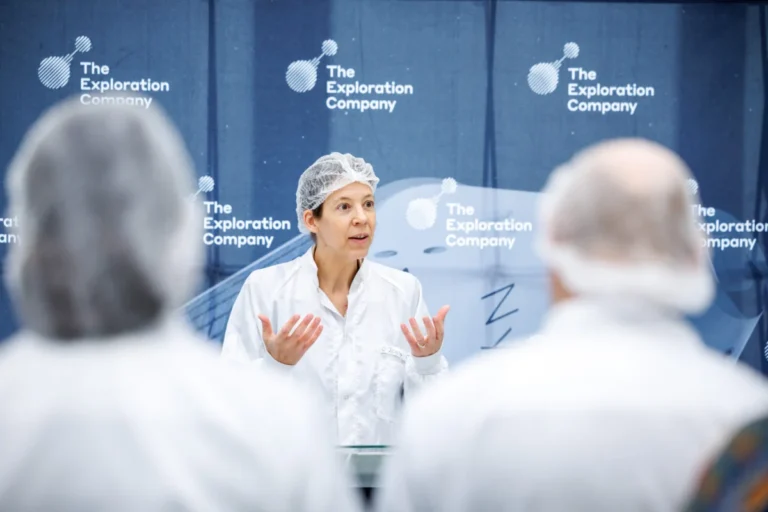
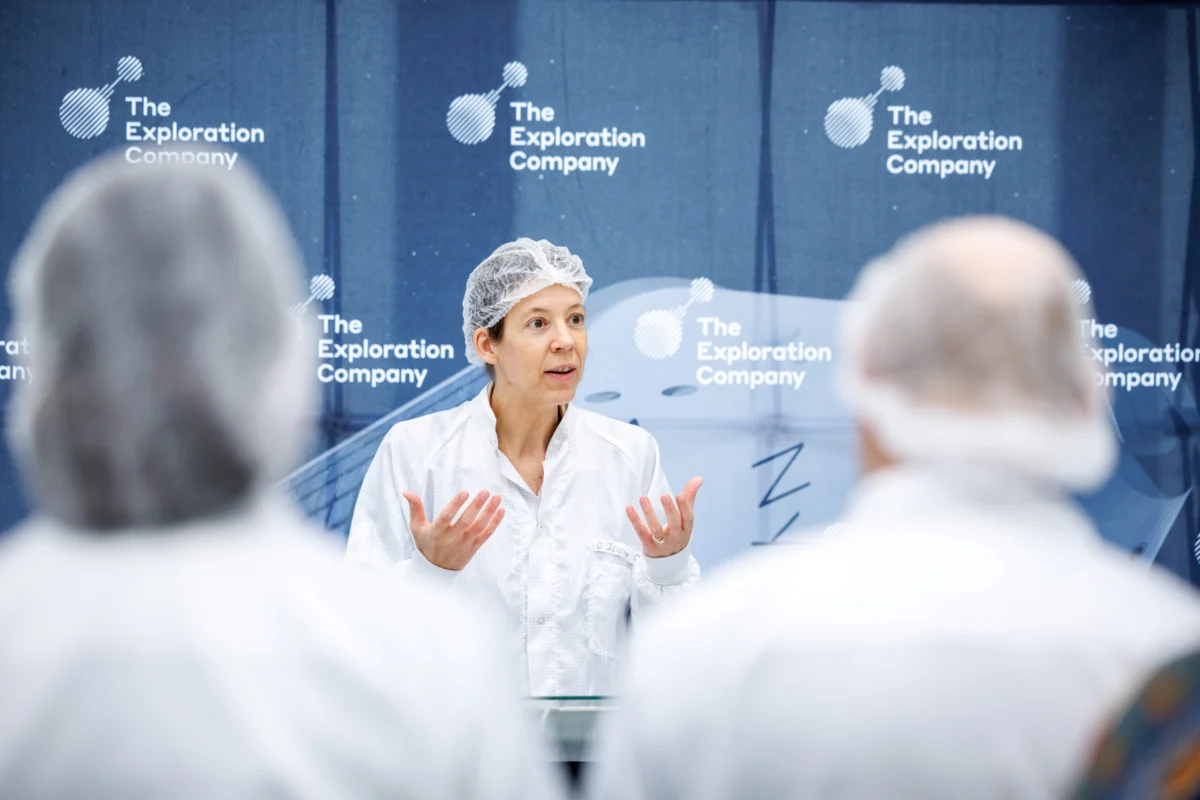
Hélène Huby, the French national leading The Exploration Company, brings a wealth of experience from her two decades at aerospace giants Airbus and ArianeGroup. Her leadership is central to TEC’s ambitious vision of establishing a robust European launch infrastructure. The $450 million raised will be instrumental in building the foundational elements of a reusable heavy-lift launcher, positioning TEC as a credible alternative to SpaceX’s existing offerings.
Addressing the Bottleneck: SpaceX’s Evolving Role and Emerging Demand
SpaceX, while instrumental in revolutionizing the launch industry with its reusable Falcon rockets and the development of Starship, faces its own set of challenges. Reports suggest that SpaceX’s launch capacity is increasingly being allocated to its own Starlink satellite constellation. This prioritization, coupled with the eventual retirement of the Falcon 9 and Falcon Heavy rockets in favor of the larger Starship system, creates a growing gap in the market for commercial and institutional payloads.
This dynamic presents a significant opportunity for companies like TEC. Even with an aggressive development timeline, the demand for launch services is outpacing current supply. Atomico, a prominent venture capital firm and investor in TEC, has highlighted the company’s strong commercial traction, noting that "10 Nyx missions are booked" with "more than $2 billion in contracts and commitments." This indicates a clear market appetite for the capabilities TEC aims to deliver.
Transatlantic Collaboration and Investor Confidence
The Series C round for The Exploration Company is characterized by significant transatlantic backing, underscoring the global nature of the space race. Key investors include Atomico, the EQT-managed Scaleup Europe Fund, and Bessemer Venture Partners. The participation of Bessemer Venture Partners, with its partner Alex Ferrara joining TEC’s board of directors, signifies strong institutional support and strategic guidance.
The backing from major venture capital firms further solidifies TEC’s position as a privately funded entity poised to make significant contributions to the European space sector. Huby has been vocal about the pragmatic approach TEC is taking. While she expressed a desire for Europe to pursue human spaceflight, she acknowledged the financial realities, noting that convincing venture capitalists to invest $4 billion in a crew capsule with a 10-year return timeline is currently unfeasible.
TEC’s Pragmatic Roadmap: Nyx and Storm Development
TEC’s immediate focus is on the development of Nyx, a reusable orbital spacecraft designed to carry cargo and, eventually, humans. This capsule is envisioned as a direct competitor to SpaceX’s Dragon spacecraft. The company’s ambitious timeline aims for Nyx to dock with the International Space Station (ISS) and return safely to Earth by November 2028. This objective aligns with the ISS’s planned decommissioning around 2030, highlighting the need for new cargo and crew transport solutions.
Funding from the Series C round will also support the "Storm" rocket engine program, a critical step towards future launch vehicle development. However, Huby candidly stated that "where we need more money is to build a launch pad, and to build the rocket itself," indicating that subsequent funding rounds will be crucial for realizing TEC’s full launch capabilities.
European Launch Landscape: Competition and Collaboration
The Exploration Company is not the sole European entity striving to establish independent launch capabilities. German startup Isar Aerospace recently achieved a significant milestone by successfully launching its Spectrum rocket from Norway, marking a historic moment for European commercial spaceflight. Huby lauded this achievement as "great news for the whole ecosystem," emphasizing the collaborative spirit within the European space industry.
However, TEC’s ambitions extend beyond Isar Aerospace’s current offerings. Huby indicated that TEC intends to develop a significantly larger rocket. This focus on heavy-lift capability is driven by the anticipated exponential growth in the demand for space-based services. As Ars Technica reported, "In the next five to 10 years, half of our broadband communication could come from space; data centers could be in space; and if this is the case, we need massive rockets and cadence." This foresight positions TEC to cater to the large-scale infrastructure projects anticipated in the coming decade.
The Engine of Reusability: Full-Flow Stage Combustion
The cornerstone of TEC’s strategy for achieving the necessary launch cadence and cost-effectiveness lies in reusability, a principle it shares with SpaceX and Stoke Space. The company is pursuing a cutting-edge technological approach: full-flow stage combustion. Huby explained, "It’s the most difficult, but also the most efficient engine cycle in the world. It is the first time ever in Europe that a company develops such a rocket engine." This advanced propulsion technology is critical for maximizing efficiency and enabling the rapid turnaround required for frequent launches.
Political Endorsement and Future Announcements
The significant progress made by The Exploration Company has garnered attention from high-level European political figures. French President Emmanuel Macron and European Commission President Ursula von der Leyen have both publicly lauded TEC’s Series C funding round. The timing of the announcement, on the eve of the International Space Summit in Paris, further emphasizes its strategic importance. At the summit, Huby hinted at further developments and announcements, suggesting that TEC’s momentum is likely to continue.
The successful culmination of this Series C round marks a pivotal moment for The Exploration Company and the broader European space sector. By securing substantial private investment and focusing on critical technologies like reusability and advanced propulsion, TEC is positioning itself to play a crucial role in shaping the future of space access, offering a vital European alternative in an increasingly dynamic and strategically vital domain. The path ahead involves significant engineering and manufacturing challenges, but the current funding and market validation provide a strong foundation for TEC’s ambitious trajectory.
About the Author