In an era where artificial intelligence is rapidly reshaping how users seek information, traditional Search Engine Optimization (SEO) practices are increasingly falling short. Marketing teams, despite their diligent efforts in conventional SEO, are finding their brands absent from the answers generated by sophisticated AI tools like ChatGPT, Perplexity, and Gemini. This disconnect is precisely the problem the newly articulated FSA Framework aims to solve, offering a strategic blueprint for brands to achieve visibility in the burgeoning landscape of AI-driven answer engines.
For the past decade, the prevailing marketing wisdom held that robust SEO was a sufficient, if not entirely encompassing, strategy for online success. This assumption, while beneficial for many brands and contributing significantly to revenue generation, is no longer a reliable path in the current digital climate. The fundamental shift lies in the differing priorities of traditional search engines and the emerging AI-powered answer engines. While search engines historically prioritized ranking the best resource for a query, answer engines are designed to provide the best answer, often synthesizing information from multiple sources into a concise, direct response. This divergence in function necessitates a reevaluation of how content is created, structured, and promoted.
Understanding the FSA Framework: Freshness, Structure, and Authority
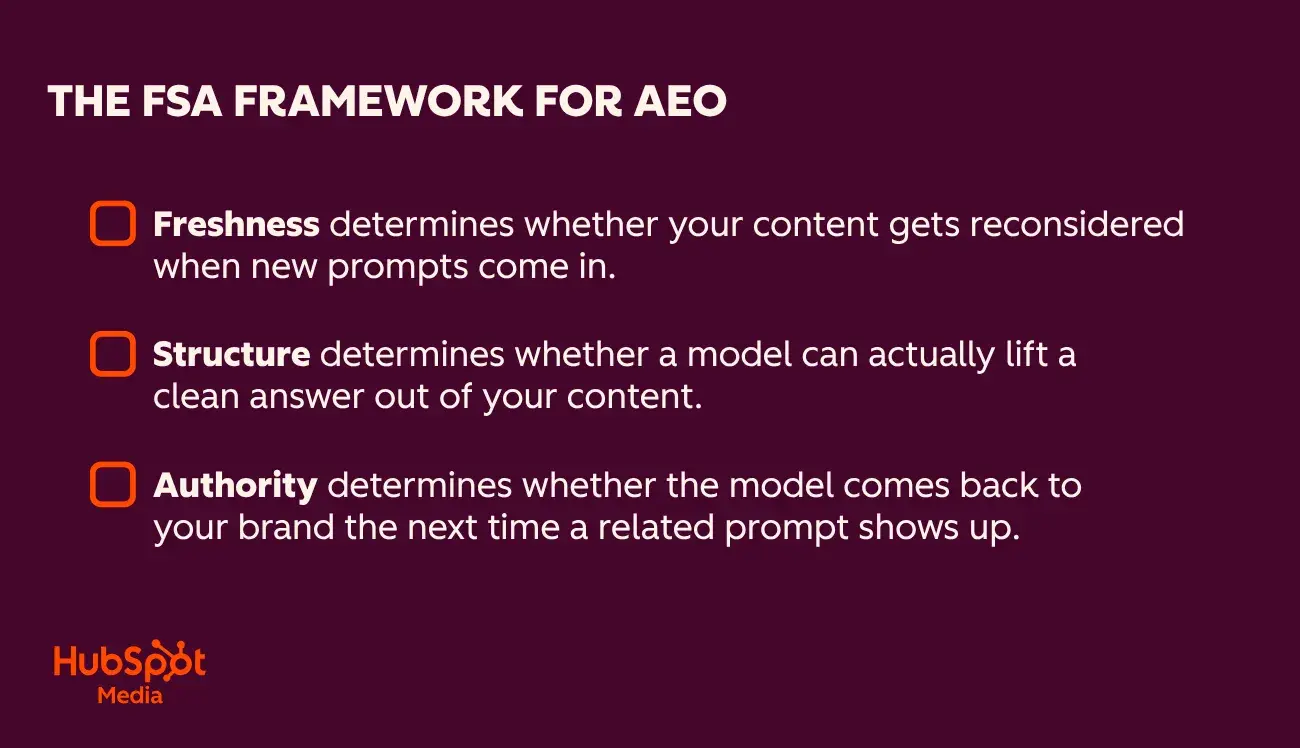
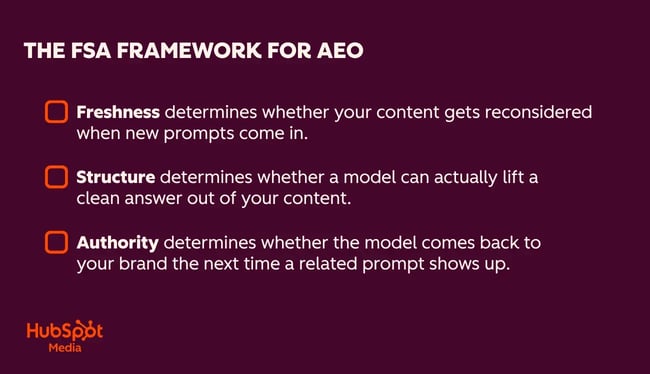
The FSA Framework is built upon three core pillars that answer engines critically evaluate when determining which content to cite within their generated responses: Freshness, Structure, and Authority. This framework serves as a diagnostic tool, enabling marketers to pinpoint why their brand may be invisible in AI-generated answers and to prioritize the most impactful areas for improvement.
- Freshness: This pillar addresses the recency, relevance, and reinforcement of content. It influences how readily an AI model will utilize a piece of content, how frequently it is reconsidered for new queries, and its ongoing eligibility to be included in compiled answers. Stale content, regardless of its historical SEO performance, is likely to be excluded from the AI’s consideration pool.
- Structure: This refers to how content is organized and presented. AI models parse content differently than traditional crawlers. They seek clear hierarchies, self-contained explanations, and easily extractable sections that can be integrated into an answer without requiring extensive contextual interpretation. Content optimized for AI structure prioritizes extractability over mere navigability.
- Authority: In the context of AI, authority has evolved from a domain-centric metric to an entity-centric one. It’s no longer solely about the strength of a website’s domain but rather about the brand’s consistent and recognized expertise on a specific topic across multiple platforms. This "entity authority" is built through repeated mentions and consistent presence in various online forums, indicating a reliable source of information.
The interplay of these three pillars is crucial. A deficiency in any one area can significantly undermine the effectiveness of the others. When all three are robustly addressed, content transitions from being merely a candidate to becoming the definitive choice for inclusion in an AI-generated answer.
The Genesis of the FSA Framework: Empirical Evidence in a Shifting Landscape
The development of the FSA Framework is rooted in practical experimentation. In 2025, the framework’s originator began utilizing their personal website as a laboratory for Answer Engine Optimization (AEO), a term coined to describe the strategic approach to gaining visibility within AI-powered answer systems. Driven by a perceived lack of empirical data on AEO, the experiments were conducted across major AI platforms, including ChatGPT, Perplexity, Gemini, and Google’s AI Overviews. The focus was on meticulously tracking what content surfaced for specific prompts and, perhaps more importantly, what content was conspicuously absent.
A pivotal experiment involved updating a single webpage using the nascent AEO principles. This page addressed a topic where a well-established publication, Search Engine Journal, with its considerable domain authority, had been the dominant cited source for months. Following the update, which involved no new backlinks or promotional campaigns, the website’s AI Share of Voice (ASOV) for that topic surged from approximately 27% to an impressive 72.7% within 96 hours. Simultaneously, Search Engine Journal’s visibility plummeted to 0%. This dramatic shift, occurring in a timeframe impossible under traditional SEO metrics, underscored the distinct logic of AI answer engines. The legacy page, while authoritative, had not been maintained and was structured for crawlers rather than for AI extraction.
Through a series of such tests, a consistent pattern emerged: AI engines frequently bypassed high-authority domains in favor of content that was recently updated, cleanly structured, consistently referenced across multiple sources, and easily extractable. These observations solidified the foundational signals of Freshness, Structure, and Authority.

The Imperative for a New Framework: Beyond Traditional SEO
The paradigm shift from traditional search to AI-driven answers necessitates a new framework because the underlying assumptions about user behavior and search engine functionality have changed. Traditional SEO was built on the premise that a user’s query would lead to a list of ranked pages, with the primary goal being to elevate a brand’s page higher on that list. This model assumed that users would navigate to a specific page to find their answer.
However, AI models operate on a different principle. They retrieve information from a multitude of sources, synthesize it into a coherent response, and present a single, confident answer to the user. The user receives a summary, not a list of links. Sources are cited within this summary not as a reward for ranking, but as evidence to support the accuracy and credibility of the provided answer. Consequently, the fundamental question an AI engine asks has transformed from "Which page should we show?" to "Which sources will best help us explain this clearly and accurately?"
This subtle yet profound change redefines content’s role from being a destination to becoming an input. Understanding this shift is key to recognizing why the FSA Framework is not merely a set of new tactics but a logical adaptation to the operational reality of AI answer engines.
Deconstructing the FSA Framework: A Deep Dive into Each Pillar
Freshness: The Currency of Recency and Relevance
In Answer Engine Optimization, freshness is not merely a matter of a "last updated" timestamp. AI models assess content currency by analyzing the language used, the presence of outdated references (like defunct tools), and whether the content’s subject matter has evolved beyond its scope. In rapidly changing sectors such as SaaS, AI, and fintech, content typically maintains its relevance for about 90 days before its signals begin to decline. For more stable, evergreen topics, this window extends to roughly six months. Beyond these periods, content risks exclusion from the AI’s active candidate pool.
The practical implication is a strategic shift from prioritizing sheer volume of new content to emphasizing consistent, substantive updates to existing high-performing assets. A meaningful update once per quarter is more impactful for AI visibility than multiple minor cosmetic changes each month. While freshness is crucial for re-engagement, it is insufficient on its own; the AI must also be able to effectively utilize the content.
Structure: Prioritizing Extractability for AI Consumption
The structural requirements for AI differ significantly from those optimized for traditional search crawlers. AI models parse content by scanning for clean hierarchies, self-contained explanations, and clearly delineated sections that can be easily extracted and integrated into an answer. Content that performs well in AI-generated answers typically exhibits:
- Concise Introductions: A clear summary or answer presented upfront.
- Self-Contained Sections: Each section should ideally offer a complete thought or explanation.
- Extractable Paragraphs: Key pieces of information should be presented in a way that can be lifted without requiring the reader to consume the entire page.
- Clear Hierarchies: Logical flow through headings and subheadings that aid AI in understanding content organization.
- Minimal Interpretive Work: Content that is straightforward and requires little inference from the AI.
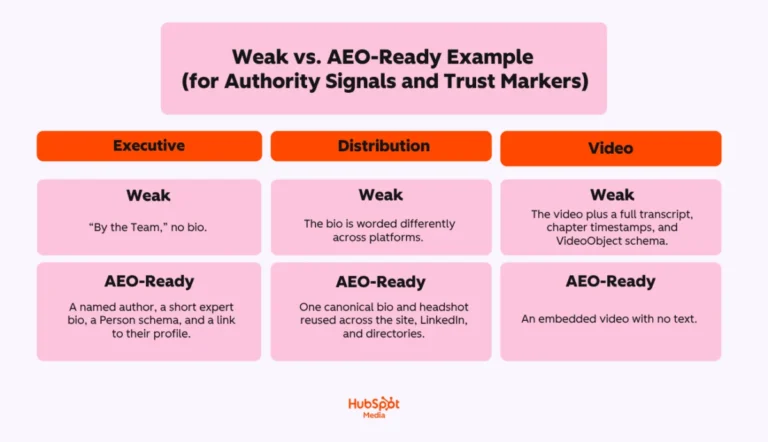
If a brand’s most valuable insights are buried deep within lengthy paragraphs or sections that depend heavily on preceding context, an AI model is likely to overlook them. The critical question for any piece of content is: "Can an AI model lift a clean, accurate answer from this without needing the rest of the page to make sense?" A negative answer indicates a structural problem, regardless of how well headings are nested for human readers. The common mistake is optimizing structure solely for crawlers, overlooking the distinct need for AI extractability.
Authority: The Rise of Entity Authority
Historically, SEO authority was synonymous with domain authority, a metric built over years through link acquisition. In the realm of AI, authority has evolved into "entity authority." The focus shifts from the strength of the domain to the brand’s consistent and recognized expertise on a specific topic across multiple channels. AI models assess entity authority by observing repeated mentions of a brand in similar contexts across various platforms—podcasts, forums, guest posts, third-party articles, social media, and the brand’s own website.

Each mention serves as a data point, and consistent, cross-channel presence builds a pattern that instills confidence in the AI model. This confidence is what leads to a brand being cited. Interestingly, smaller brands often excel in entity authority because they tend to focus their content creation on a niche audience and leverage social media or influencer marketing to build a concentrated presence. This targeted approach creates repeated exposure for the AI. In contrast, large publishers with numerous contributors writing on a vast array of topics may struggle to build a recognizable entity around a specific area, leading to a lack of anchor points for AI models. Thus, building entity authority is less about traditional link building and more about comprehensive reputation management across the digital ecosystem.
Implementing the FSA Framework: A Practical Guide for Marketers
To effectively leverage the FSA Framework, marketing teams must adopt a proactive and diagnostic approach. The core principle is that while traditional SEO may get a brand "into the room," Answer Engine Optimization (AEO) is what gets it "chosen" once there.
1. Conduct an Audit and Identify "Money Prompts"
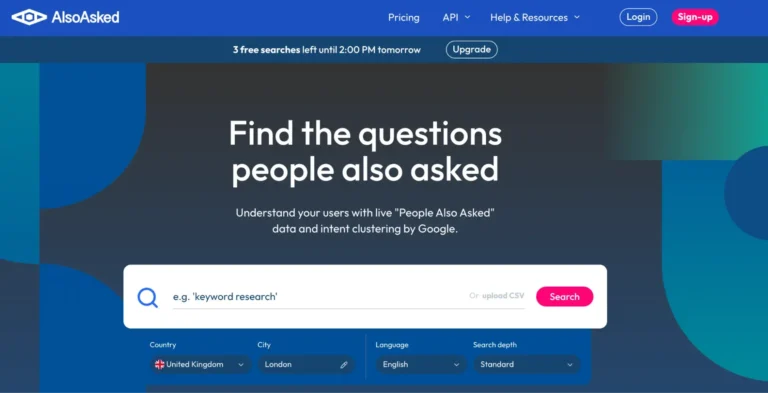
The foundational step involves auditing current visibility within AI answers. This means bypassing traditional keyword lists and instead focusing on "money prompts"—the actual questions buyers ask when evaluating solutions, comparing options, or determining suitability. These prompts often sound like:
- "What are the key considerations when choosing [product category]?"
- "How does [competitor A] compare to [competitor B] for [specific use case]?"
- "What are the common challenges faced by [target audience] and how can they be addressed?"
- "Is [specific feature] necessary for [achieving X outcome]?"
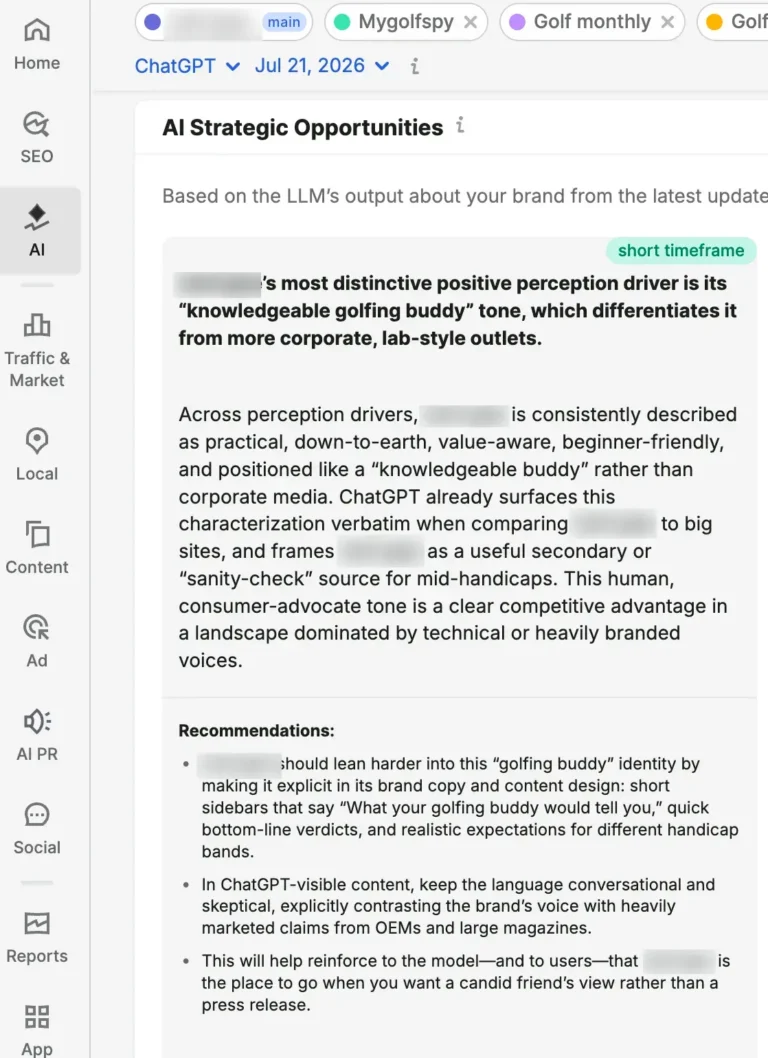
Running these money prompts across multiple AI engines—ChatGPT, Perplexity, Gemini—provides invaluable insights into brand visibility, identifies competing sources, and reveals the nature of AI-generated answers within a specific domain. This exercise offers a more accurate gauge of AI visibility than any keyword report. Tools like HubSpot’s AEO can aid in tracking these mentions across engines.
Following the initial scan, an honest audit of top-performing pages through the FSA lens is essential. This involves assessing strengths and weaknesses in each pillar:
- Freshness: Is the content up-to-date and relevant to current discussions?
- Structure: Is the content easily extractable and logically organized for AI consumption?
- Authority: Is the brand recognized as a consistent expert on this topic across various channels?
Diagnosis must precede tactical implementation.
2. Shift from Volume Targets to Refresh Targets
The emphasis in content strategy should move from publishing frequency to the consistent maintenance and updating of existing, high-performing content. Rebuilding editorial calendars around the number of key pages refreshed each month, rather than the number of new posts published, can yield greater returns for AI visibility.
3. Optimize for Extraction, Not Just Indexing
Content structure should be re-evaluated with a single question in mind: "Can an AI model lift a clean, complete answer from the first few hundred words?" If not, restructuring is necessary. This might involve:
- Front-loading Key Information: Placing the most critical answers or summaries at the beginning of the content.
- Using Bullet Points and Lists: Enhancing readability and extractability.
- Creating Self-Contained Subsections: Ensuring each section can stand alone.
- Employing Clear, Actionable Language: Minimizing ambiguity.
4. Cultivate Entity Authority Across Multiple Channels
A brand’s website is no longer the sole determinant of authority. AI answer engines learn from content diversification across various platforms. This includes:
- Guest Posting: Contributing expertise to reputable external sites.
- Podcast Appearances: Sharing insights on audio platforms.
- Social Media Engagement: Participating in relevant discussions and sharing valuable content.
- Third-Party Mentions: Securing quotes or references in industry articles.
- Community Forums: Engaging with users and demonstrating expertise.
Brands that maintain a consistent presence across these surfaces build trust and recognition with AI models.
5. Measure AI Share of Voice (ASOV)
ASOV is a critical metric that quantifies how often a brand appears in AI-generated answers relative to its competitors. It is a zero-sum metric: an increase in one brand’s share corresponds to a decrease for another. Tools that track ASOV provide a clear picture of a brand’s performance and identify areas where competitors are succeeding.
6. Prioritize One Pillar for Improvement
When addressing AI visibility gaps, it is often most effective to focus on improving one pillar at a time. Common issues include:
- Freshness: Content is outdated or lacks current relevance.
- Structure: Content is not easily extractable or logically organized for AI.
- Authority: The brand is not consistently recognized as an expert on the topic across multiple channels.
Many perceived visibility problems are, in fact, disguised authority issues. A targeted approach ensures resources are allocated efficiently.
The Future of Content Strategy: Adapting to the AI-Driven Era
The FSA Framework provides a vital diagnostic lens for understanding and improving brand visibility within AI answers. While the specific signals weighed by answer engines will continue to evolve with AI model advancements, and tactical approaches will need adjustment, the underlying logic remains constant: favor freshness, reward clarity, and trust consistency.
Brands that thrive in the AI answer engine landscape will be those that move beyond chasing fleeting tactics. They will be the ones who grasp the fundamental principles of AEO, conduct honest assessments of their visibility, and strategically address the most impactful pillar first. By building on these enduring principles, the FSA Framework offers an adaptable strategy that can evolve alongside the ever-changing AI-driven search landscape.
About the Author