
The once-celebrated Giving Pledge, launched in 2010 by titans of industry Warren Buffett and Bill Gates, is facing a profound crisis of relevance and commitment. Conceived as a moral imperative for the world’s wealthiest individuals to dedicate the majority of their fortunes to philanthropic causes, the initiative, which began with immense fanfare and billions in promised contributions, is now reportedly experiencing a significant decline in new signatories and a quiet exodus from some of its most prominent members. This shift mirrors broader societal trends of escalating wealth inequality and a growing ideological divide within the tech elite regarding the very definition and purpose of "giving back."
The Genesis of a Grand Promise
In the nascent stages of the 21st century, as the technological revolution rapidly minted billionaires at an unprecedented rate, a palpable sense of responsibility began to emerge. The sheer scale of wealth accumulating in the hands of a few, particularly within the burgeoning tech sector, prompted a fundamental question: how would these colossal fortunes shape society? It was against this backdrop that Buffett, the venerable investor, and Gates, the co-founder of Microsoft, introduced the Giving Pledge. The concept was disarmingly simple: a public commitment to bequeath more than half of one’s net worth to charitable endeavors, either during their lifetime or posthumously.
"We’re talking trillions over time," Buffett articulated in a candid interview with Charlie Rose in 2010, a prediction that, in hindsight, proved remarkably prescient regarding the magnitude of wealth generated. The trillions did indeed materialize, but the commensurate surge in philanthropic giving, as evidenced by the Pledge’s declining momentum, has not kept pace.
The Stark Reality of Wealth Inequality
The contemporary economic landscape presents a starkly different picture than the optimism that fueled the Giving Pledge’s inception. Data from the Federal Reserve reveals that the top 1% of American households now control as much wealth as the bottom 90% combined, a concentration not seen since the Fed began its wealth distribution tracking in 1989. Globally, the situation is equally alarming. Since 2020, billionaire wealth has surged by a staggering 81%, reaching an astonishing $18.3 trillion. This immense accumulation of capital stands in sharp contrast to the pervasive global hunger, with approximately one in four people worldwide lacking regular access to sufficient food.
It is within this context of escalating disparity that a select group of exceptionally wealthy individuals are now reportedly grappling with their commitment to the Giving Pledge. The voluntary and entirely unenforceable nature of the promise leaves them at a crossroads, with the option to either reaffirm their dedication or discreetly withdraw from the public commitment.
A Faltering Momentum: The Numbers Tell a Story
Recent reporting by The New York Times has illuminated a concerning trend in the Giving Pledge’s trajectory. In its inaugural five years, the initiative garnered 113 signatory families. This number dwindled to 72 in the subsequent five-year period, further decreasing to 43 in the following quinquennial span. The most alarming statistic, however, reveals that a mere four families joined the Pledge in all of 2024.
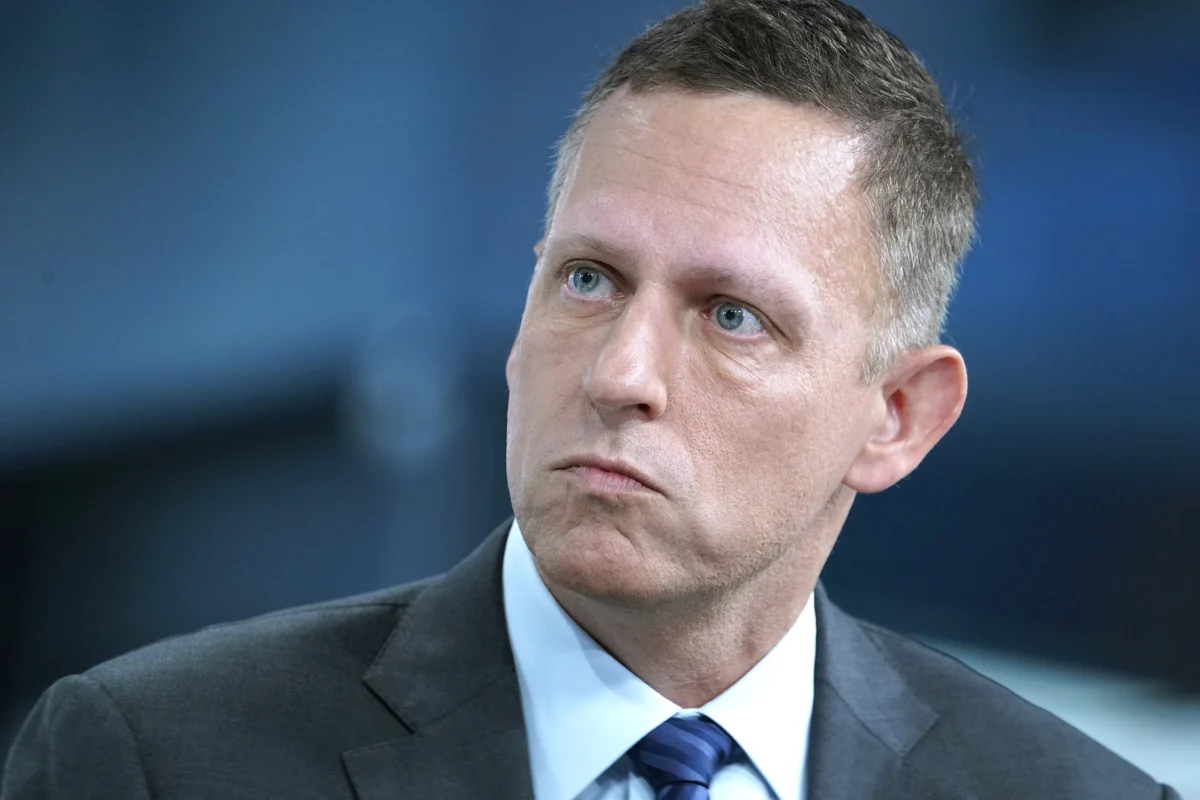
Among the high-profile individuals associated with the Pledge are Sam Altman, Mark Zuckerberg and Priscilla Chan, and Elon Musk. These figures command immense influence and represent the vanguard of global innovation. Yet, even within this rarefied circle, doubts are emerging. Peter Thiel, a prominent venture capitalist and a notable non-signatory of the Pledge himself, candidly shared his perspective with The Times, suggesting that the club has "really run out of energy." He further speculated that the "branding is outright negative" and that it "feels way less important for people to join."
The Erosion of "Making the World a Better Place"
The phrase "making the world a better place," once a ubiquitous mantra in Silicon Valley, has for years been subjected to increasing skepticism and satire. The HBO series "Silicon Valley," which premiered in 2014, relentlessly lampooned the tech industry’s penchant for this idealistic rhetoric, often juxtaposing it with the relentless pursuit of escalating valuations. So potent was the show’s critique that it reportedly influenced corporate communications. Clay Tarver, a writer for the series, recounted in an interview with The New Yorker how public relations departments at major tech firms had allegedly instructed employees to cease using the phrase due to its merciless portrayal in the show.
While the satirical critique was undoubtedly humorous, it underscored a deeper, more complex reality. The idealism that fueled the early days of Silicon Valley, embodied by figures like Steve Jobs, was often a genuine aspiration. However, as veteran tech investor Roger McNamee observed, the industry has since seen a shift. He recalled a conversation with "Silicon Valley" creator Mike Judge, who described the industry as being engaged in a "titanic battle between the hippie value system of the Steve Jobs generation and the Ayn Randian libertarian values of the Peter Thiel generation."
McNamee’s own assessment was more direct: "Some of us actually, as naive as it sounds, came here to make the world a better place. And we did not succeed. We made some things better, we made some things worse, and in the meantime the libertarians took over, and they do not give a damn about right or wrong. They are here to make money." This libertarian ethos, which prioritizes free markets and minimal government intervention, has increasingly influenced the narrative surrounding wealth creation and its societal obligations.
The Shifting Ideological Landscape
The libertarian perspective, gaining significant traction within the tech sector, posits that the act of building successful companies, creating jobs, and driving innovation are inherently valuable contributions to society. From this viewpoint, the expectation of layering philanthropic endeavors on top of these achievements is viewed as, at best, a social convention and, at worst, an undue pressure or "shakedown dressed up as virtue." This ideological divergence challenges the fundamental premise of the Giving Pledge, which is rooted in a belief that proactive wealth redistribution through philanthropy is a moral imperative.
Peter Thiel’s Influence and the "Fake Boomer Club"
Peter Thiel has emerged as a significant figure in this unfolding narrative. Never having signed the Giving Pledge himself, Thiel has been openly critical of Bill Gates and, by extension, the philanthropic model he champions. The Times reports that Thiel has privately encouraged a number of Pledge signatories to reconsider their commitments. He has reportedly described the Giving Pledge as an "Epstein-adjacent, fake Boomer club," a provocative label that dismisses its perceived influence and suggests a disconnect from contemporary realities and perhaps an allusion to certain controversial figures.
Thiel’s influence extends to urging prominent figures like Elon Musk to disavow their Pledge commitments, arguing that Musk’s wealth would otherwise be directed towards "left-wing nonprofits that will be chosen by" Gates. Conversely, when Coinbase CEO Brian Armstrong quietly removed his name from the Pledge website in mid-2024 without public explanation, Thiel reportedly sent him a congratulatory message.
However, Thiel also articulated a more nuanced point to The Times: that remaining on the Pledge’s public roster can feel like being "blackmailed." He suggests that some signatories may feel too exposed to public scrutiny to formally renounce a non-binding promise, even if they harbor reservations. This notion of public pressure influencing private decisions adds another layer of complexity to the situation.
Contrasting Public Perceptions and Ground-Level Realities
The assertion that individuals feel "blackmailed" into remaining on the Pledge’s public list is, however, difficult to reconcile with the public personas of some of its prominent members. Elon Musk, for instance, has consistently demonstrated a remarkable indifference to public opinion, with a majority of Americans reportedly viewing him unfavorably. Similarly, Mark Zuckerberg endured years of intense regulatory and public scrutiny, emerging seemingly more resolute rather than diminished.
Meanwhile, on the ground, a different narrative is unfolding. GoFundMe has reported a significant surge in fundraisers for basic necessities. In the past year, campaigns seeking assistance for rent, groceries, housing, and fuel saw a 17% increase. Keywords such as "work," "home," "food," "bill," and "care" dominated these campaigns. The impact of the 43-day federal shutdown, which disrupted food stamp distribution, further exacerbated the need, leading to a sixfold increase in related fundraising efforts. The CEO of GoFundMe stated, "Life is getting more expensive and folks are struggling, so they are reaching out to friends and family to see if they can help them through."
While a direct causal link between these on-the-ground struggles and decisions made in philanthropy boardrooms remains a subject of debate, the parallel timing of these trends is difficult to ignore. The growing need for basic sustenance and financial assistance occurring simultaneously with the apparent waning of high-profile philanthropic commitments raises critical questions about societal priorities and the distribution of resources.
The Evolving Landscape of Philanthropy
It is crucial to distinguish the fate of the Giving Pledge from the broader landscape of philanthropy. Many of the wealthiest individuals in the tech sector continue to engage in charitable giving, albeit through their own established vehicles and toward their own specific objectives. The Chan Zuckerberg Initiative (CZI), for instance, underwent a significant restructuring in early 2026, reducing its workforce by approximately 8% to pivot its focus from education and social justice toward its Biohub network, a collection of nonprofit biology-focused research institutes. Mark Zuckerberg stated last November that "Biohub is going to be the main focus of our philanthropy going forward."
While these CZI cuts may appear as a recalibration rather than a retreat from philanthropy, the Zuckerbergs, through their Pledge commitment, have indeed pledged to donate 99% of their lifetime wealth.
Not all prominent figures are redefining their philanthropic approaches. Bill Gates announced last year his intention to divest virtually all of his remaining wealth through the Gates Foundation over the next two decades, projecting a contribution of over $200 billion. The foundation is slated to permanently close on December 31, 2045. In a sentiment echoing Andrew Carnegie’s assertion that "the man who dies thus rich dies disgraced," Gates expressed his determination not to die wealthy.
Historical Parallels and Policy-Driven Corrections
The current standoff between concentrated wealth and the broader populace is not unprecedented. The last period of comparable wealth concentration, during the Gilded Age of the late 19th and early 20th centuries, saw corrections that were not driven by philanthropy. Instead, these shifts were the result of significant policy interventions, including trust-busting legislation, the introduction of the federal income tax and estate tax, and ultimately, the policies of the New Deal. These structural changes were enacted in response to overwhelming political pressure and were facilitated by robust institutions such as a functional Congress, a free press, and an empowered regulatory state – institutions that appear considerably different in today’s landscape.
The Pace of Change and the Widening Chasm
What remains undisputed is the extraordinary pace of wealth accumulation in the modern era. Fortunes are being amassed in years rather than generations, occurring at a time when social safety nets are being eroded. Oxfam’s 2026 global inequality report highlights the stark reality: the wealth accumulated by the world’s billionaires in 2025 alone would have been sufficient to provide every person on Earth with $250, while still leaving the billionaires with over $500 billion more than they had previously.
The Giving Pledge, from its inception, was explicitly defined by Warren Buffett as a "moral pledge" – devoid of enforcement mechanisms, consequences, or external accountability beyond individual conscience. That it once held significant sway speaks volumes about the era that birthed it. The current climate, where individuals like Peter Thiel can frame adherence to the Pledge as a form of coercion, and where major news outlets dedicate extensive coverage to such arguments, profoundly reflects the shifting socio-economic and ideological currents of our present moment. The question of whether this moral pledge can adapt and endure, or whether it will ultimately succumb to the pressures of evolving values and stark economic realities, remains a critical and unresolved aspect of contemporary discourse on wealth and responsibility.
About the Author





