Digital marketing and search engine dynamics are undergoing a seismic shift as users increasingly bypass traditional search engine result pages in favor of direct, generative responses from artificial intelligence. For over two decades, the "ten blue links" model championed by Google defined the architecture of the internet, creating a multi-billion dollar Search Engine Optimization (SEO) industry. However, the emergence of Large Language Models (LLMs) such as ChatGPT, Claude, and Perplexity has introduced a new paradigm: AI Optimization (AIO). This transition represents a fundamental change in how content is discovered, synthesized, and cited, forcing content creators to move beyond keyword density and backlink profiles to focus on "cite-ability" within AI-generated responses.
The Evolution of Search Behavior and the Emergence of AIO
The trajectory of online discovery has moved from manual navigation to algorithmic sorting, and now to conversational synthesis. In the traditional search model, a user enters a query and is presented with a list of websites, requiring the individual to click, read, and aggregate information themselves. This process is being rapidly replaced by AI platforms that perform the aggregation and synthesis on behalf of the user.
Industry data highlights the speed of this transition. ChatGPT reached 100 million monthly active users within just two months of its launch in late 2022, making it the fastest-growing consumer application in history. By early 2025, usage statistics indicated that ChatGPT alone was processing over 10 million web-browsing queries daily. This behavioral shift is not limited to tech enthusiasts; it has become a mainstream utility for research, shopping recommendations, and technical troubleshooting.
Unlike traditional SEO, which optimizes for an algorithm’s ranking of a URL, AIO focuses on how an LLM perceives the authority and utility of information. When a model like Perplexity or Claude answers a question, it acts as a digital curator. If a specific brand or resource is cited as the "best" answer, it receives a level of implied endorsement that traditional search results lack. This "pre-vetted" traffic often results in higher engagement and conversion rates, as the user arrives at the destination site already convinced of its relevance.
Google’s Strategic Pivot: AI Mode and Market Performance
The most significant validation of this shift came from Google itself. Facing an existential threat to its core business model, Google launched "AI Mode" (formerly known as Search Generative Experience) across 180 countries. This feature provides AI-generated summaries at the top of the search page, pushing traditional organic links further down the fold.
Financial reports from the first quarter of 2025 underscore the success of this pivot. Google reported a 10% increase in search revenue, reaching $50.7 billion, largely attributed to the integration of AI features that keep users engaged on the platform longer. Alphabet executives have indicated that while traditional search remains a pillar, the long-term roadmap favors a conversational, AI-first interface. For content creators, this means that appearing in the "AI Overview" is no longer an optional luxury but a requirement for maintaining visibility on the world’s most used search engine.
Chronology of the Search Revolution
The transition from SEO dominance to the AIO era can be traced through several key milestones:
- November 2022: OpenAI releases ChatGPT, introducing the public to conversational AI.
- February 2023: Microsoft integrates GPT-4 into Bing, marking the first major attempt to combine AI chat with web search.
- May 2023: Google announces Search Generative Experience (SGE) at its I/O conference, signaling the beginning of the end for the traditional "ten blue links."
- January 2024: Perplexity AI gains significant market traction as a "discovery engine," emphasizing real-time web citations.
- Late 2024 – Early 2025: "AI Mode" becomes a standard feature in global search markets, and third-party SEO tools begin introducing "AI Visibility" metrics to their dashboards.
Seven Core Strategies for AI Visibility
As the mechanics of discovery change, a new set of tactics has emerged as the standard for AIO. These strategies prioritize factual accuracy, structural clarity, and multi-platform authority.
1. Prioritization of Verifiable Data and Statistics
AI models demonstrate a measurable preference for quantitative data. Factual, data-backed content is perceived as more authoritative than generalized prose. Strategic content creation now involves grounding every major claim in specific numbers, percentages, and verifiable metrics. This precision acts as a "credibility signal" that LLMs use to determine which source to cite when multiple pages offer similar qualitative advice.
2. Community-Driven Authority Signals
LLMs are trained on massive datasets that include community discussions from platforms like Reddit and Quora. Participation in these forums is no longer just about direct referral traffic; it is about creating a "footprint" of expertise. When a brand or expert is consistently mentioned and upvoted in community discussions, AI models incorporate that sentiment into their knowledge base, increasing the likelihood of citing that brand in future responses.
3. Optimization for Natural Language Queries
Traditional SEO often relied on fragmented keywords (e.g., "best laptop 2025"). In contrast, AIO requires optimizing for full-sentence, conversational questions (e.g., "What is the best laptop for a graphic designer on a budget?"). Content that is structured to answer these specific, complex questions directly is more likely to be extracted by an AI agent.
4. Utilization of Structured Information Formats
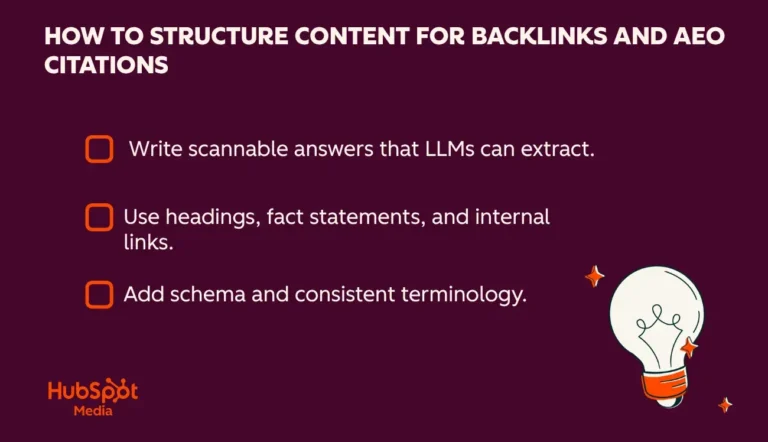
AI models excel at processing data organized in tables, bulleted lists, and step-by-step guides. By presenting comparisons and processes in these structured formats, creators make it easier for the AI to "scrape" and summarize the information. A well-formatted comparison table can often be the difference between being the cited source or being ignored in favor of a competitor.
5. Omni-Channel Brand Consistency
AI models with real-time web access often cross-reference information across multiple platforms to verify its accuracy. Maintaining a consistent message across a website, social media profiles, and guest publications reinforces the brand’s authority. Discrepancies in data or messaging can lead to an AI model de-prioritizing a source due to perceived unreliability.
6. Temporal Relevance and Freshness Signals
The "freshness" of content is a critical weight in AI selection. Explicitly stating "Last Updated" dates and referencing current events or the latest software versions signals to the AI that the information is relevant. This is particularly vital in fast-moving industries like technology, finance, and healthcare, where dated information can be harmful.
7. Implementation of JSON-LD Schema
From a technical perspective, JSON-LD (JavaScript Object Notation for Linked Data) remains the gold standard for machine-readability. Implementing detailed schema markup—such as FAQ, HowTo, and Product schema—provides a structured roadmap for AI crawlers, ensuring they correctly categorize the content’s purpose and context.
Measuring Success in an Opaque Environment
One of the primary challenges facing the digital marketing industry is the lack of standardized analytics for AI search. Unlike Google Search Console, which provides granular data on impressions and clicks, platforms like ChatGPT and Claude do not currently offer "creator dashboards."
To fill this vacuum, a new market of AIO tracking tools has emerged. Companies like Ahrefs and SE Ranking have introduced AI tracking features, while niche players like First Answer and Keyword.com offer specialized monitoring. Furthermore, many organizations are turning to no-code automation platforms like Make.com to build custom monitoring systems. These systems programmatically query AI models with target prompts and record how often their brand appears in the citations, providing a "share of voice" metric for the AI era.
Broader Impact and Industry Implications
The shift to AIO has profound implications for the digital economy. Critics argue that as AI models provide direct answers, "click-through rates" to websites may decline, potentially starving content creators of the ad revenue needed to produce high-quality information. This has led to ongoing legal and ethical debates regarding "fair use" and the compensation of publishers.
However, proponents of AIO suggest that while the quantity of traffic may decrease, the quality will increase. Users who click through from an AI response are often further along in the decision-making process, having already been educated by the AI’s summary.
Furthermore, AIO levels the playing field for smaller creators. In the traditional SEO world, high-authority domains often dominated the first page through sheer backlink volume. In the AIO world, a smaller site that provides the most accurate, well-structured, and specific answer to a niche question can leapfrog established giants.
Conclusion
The emergence of AI Optimization marks the beginning of a post-search engine era. As users move toward a future of personalized AI assistants and conversational discovery, the strategies used to gain visibility must evolve from algorithmic manipulation to the establishment of genuine authority and utility. Organizations that act early to optimize for AI citation will likely secure a dominant position in the next generation of digital traffic, while those clinging to traditional models risk becoming invisible in an increasingly synthesized internet. The transition is no longer a theoretical projection; it is a current market reality reflected in user behavior and corporate earnings alike.
About the Author