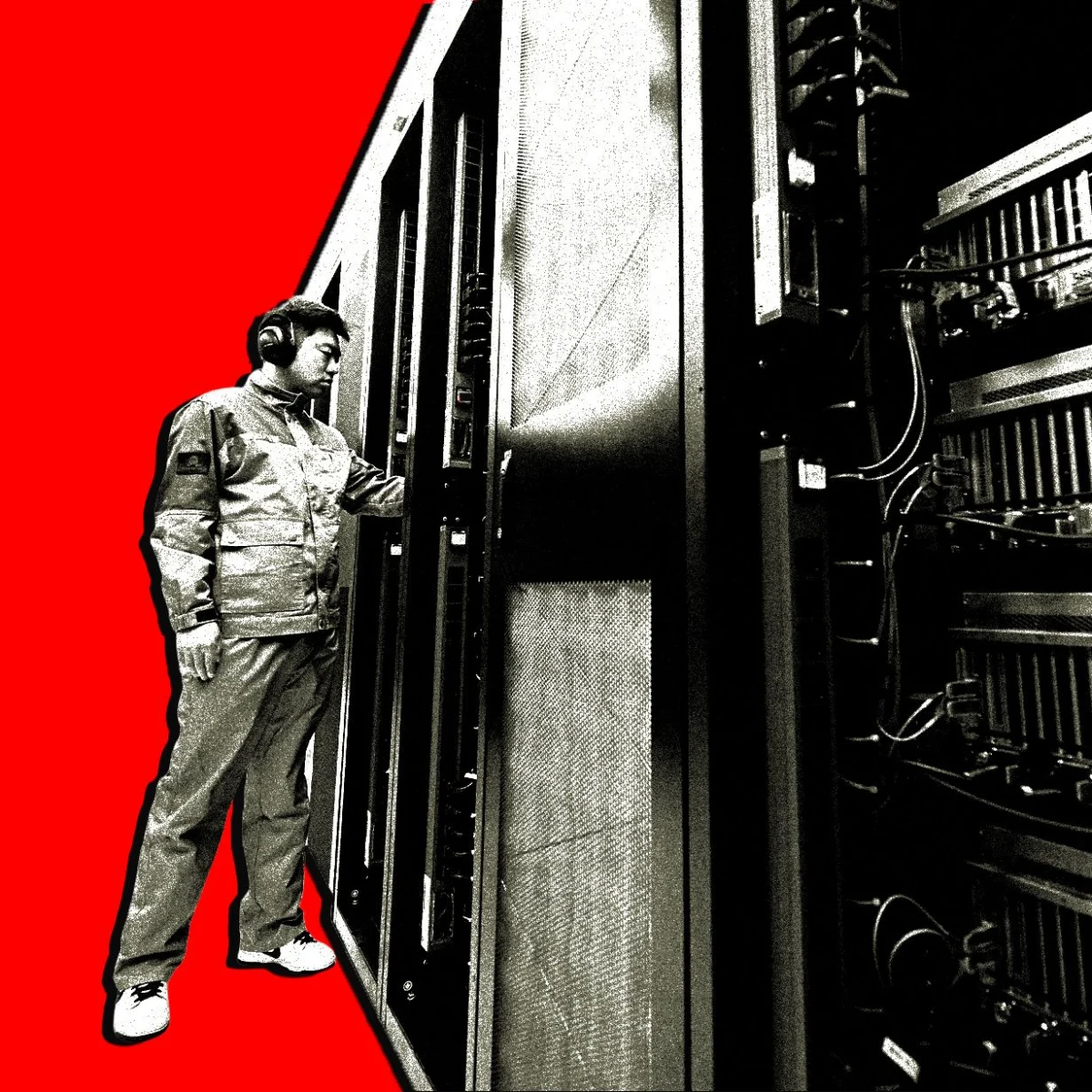
The rolling grasslands and ancient volcanic cinder cones of Inner Mongolia, traditionally defined by their nomadic heritage and vast coal reserves, have undergone a radical transformation into the primary engine of China’s artificial intelligence ambitions. Located just two hours west of Beijing by high-speed rail, the city of Ulanqab has transitioned from a quiet agricultural hub of 1.5 million people into a critical node in the global digital economy. Over the last decade, and with a significant surge in the past twelve months, Ulanqab has emerged as the most concentrated cluster for AI data centers in Asia, attracting billions of dollars in investment from China’s largest technology conglomerates and most promising AI startups.
According to a recent research note from Goldman Sachs, Chinese companies have pledged to construct projects in Ulanqab with a combined estimated capacity of 12.5 gigawatts (GW). To put this scale into perspective, OpenAI’s ambitious "Stargate" project, an AI supercomputer initiative estimated to cost $100 billion, is projected to reach approximately 10 GW upon completion. The sheer volume of development in Ulanqab is unprecedented; over 70 percent of these total commitments were announced within the last year alone, signaling an aggressive acceleration in China’s domestic compute capabilities. Since 2016, nearly 100 data centers have either opened or entered the construction phase in the city, cementing its reputation as the "Silicon Steppe."
The Strategic Geography of Ulanqab
The rapid ascent of Ulanqab as a data center powerhouse is the result of a convergence of geographical advantages and favorable economics. Situated on the high-elevation Inner Mongolian Plateau, the city experiences long, frigid winters and a dry climate. These environmental conditions provide a natural advantage for high-density computing: "free cooling." Data centers, which house thousands of heat-generating servers, typically consume massive amounts of energy for air conditioning. In Ulanqab, the naturally low ambient temperatures allow operators to use external air for cooling for much of the year, drastically reducing operational expenses and improving Power Usage Effectiveness (PUE) ratings.
Proximity to the capital is another decisive factor. Beijing is the headquarters for the majority of China’s AI research labs and technology giants. For years, the primary drawback of building in remote western regions was "latency"—the delay in data transmission over long distances. However, Ulanqab’s relative proximity to the Beijing-Tianjin-Hebei megalopolis, combined with significant infrastructure investments, has mitigated this issue. Two dedicated fiber-optic cables installed in 2017 and 2019 have reduced average latency speeds to less than five milliseconds. This speed is sufficient not only for background data storage but also for real-time AI inference, where users require immediate responses from AI models.
A Chronology of Industrial Evolution
The development of Ulanqab’s digital infrastructure has followed a distinct timeline, evolving from simple storage facilities to the sophisticated AI training hubs of today.
2016 – The Foundation: Huawei, one of China’s premier technology providers, established the first major data center in Ulanqab. This move signaled to the market that the region was viable for large-scale enterprise computing.
2017–2019 – Connectivity and Global Recognition: The installation of high-speed fiber-optic links connected Ulanqab directly to the national backbone. During this period, Apple Inc. announced it would build its first Chinese data center in the city to host iCloud services for domestic users, complying with Chinese data sovereignty laws.
2021 – National Strategic Integration: The Chinese government officially designated Inner Mongolia as a primary hub for the "Eastern Data, Western Compute" project. This national strategy aims to balance the country’s digital economy by processing data generated in the populous, energy-constrained eastern provinces within the resource-rich western regions.
2022–2023 – The Generative AI Pivot: The global rise of Large Language Models (LLMs) fundamentally changed the demand for compute. While low latency was once a barrier for remote centers, AI model training—which can take months and involves processing massive datasets—is less sensitive to millisecond delays. Ulanqab became the preferred destination for "training farms."
2024 – The Infrastructure Explosion: The current year has seen a pivot toward "sovereign infrastructure." Major players like DeepSeek, ByteDance (the parent company of TikTok), Alibaba, and Xiaohongshu have shifted from renting cloud space to building their own massive, proprietary data centers in the region.
The Corporate Shift: From Renting to Owning
For much of the last decade, Chinese AI firms trailed their American counterparts in physical infrastructure investment. While US giants like Microsoft, Google, and Meta were spending tens of billions annually on custom-built data centers, Chinese firms often relied on third-party cloud providers. That dynamic has fundamentally shifted.
The emergence of DeepSeek, a Chinese AI startup that recently released models capable of competing with the world’s best, highlights this trend. DeepSeek is reportedly developing a massive, dedicated AI data center in Ulanqab to support its next generation of models. By owning the hardware and the facility, these companies can optimize the environment specifically for the high-performance GPUs required for AI, reducing long-term costs and ensuring they have guaranteed access to compute power in an era of global chip shortages and trade restrictions.
Envision, a global leader in wind turbine manufacturing, recently announced a 2 GW AI data center project in the city. This project is particularly notable because it aims to connect the data center directly to Envision’s own renewable energy supply, creating a "green compute" ecosystem that bypasses the traditional grid.
Energy Dynamics: The Coal and Renewable Paradox
The attraction of Ulanqab is inextricably linked to the cost of electricity, which is among the lowest in China. This affordability is driven by a unique, if contradictory, energy mix. Inner Mongolia has long been considered the "West Virginia of China," a region built on coal mining. This provides a reliable, "baseload" power supply that can run 24/7—a necessity for data centers that cannot afford power fluctuations.
However, the region is also at the forefront of China’s renewable energy transition. The vast, windswept plains of Inner Mongolia are ideal for wind farms, and its high solar irradiance supports massive photovoltaic arrays. The Chinese government views data centers as a strategic solution to "curtailment"—the phenomenon where renewable energy is produced but cannot be used or stored because it is too far from demand centers. By building data centers in Ulanqab, the government can "consume" that excess green energy on-site.
Despite this "win-win" narrative, the transition is ongoing. Research by Andrew Stokols of Singapore Management University indicates that approximately 37 percent of Ulanqab’s electricity is still generated from coal. While the goal is to reach 100 percent renewable power, the intermittent nature of wind and solar means that, for the time being, the AI revolution in China remains partially fueled by fossil fuels.
The Environmental Constraint: A Thirsty Industry
The most significant threat to Ulanqab’s growth is not a lack of electricity, but a lack of water. Ulanqab is an arid region, receiving roughly 14 inches of rain annually—a climate similar to that of Denver, Colorado. While the cold climate allows for air cooling, the most efficient way to cool high-performance AI chips often involves evaporative cooling systems, which consume millions of gallons of water.
The local government is already facing a crisis in balancing industrial needs with residential demand. In a stark example of this tension, Ulanqab’s local water utility was forced to implement nightly water shutdowns for seven hours last month to manage peak demand. Local residents have expressed growing concern that the influx of "server farms" is depleting the region’s limited aquifers.
While data centers in Ulanqab typically only require supplemental water cooling during the two hottest months of the year, the sheer scale of the 12.5 GW planned capacity could push the local ecosystem to a breaking point. Experts suggest that if the city is to continue its growth, it will need to mandate "closed-loop" cooling systems or investment in expensive water-recycling technologies, adding a new layer of cost to the "cheap" Inner Mongolian compute model.
Broader Impact and Global Implications
The boom in Ulanqab is more than a local real estate story; it is a vital component of China’s broader strategy to achieve AI supremacy. By concentrating compute power in a single, cost-effective hub, China is attempting to create economies of scale that can rival the massive data center clusters in Northern Virginia or the Silicon Valley.
Furthermore, this infrastructure serves as a hedge against geopolitical uncertainty. As the United States continues to tighten export controls on advanced AI chips, Chinese companies are focused on maximizing the efficiency of the hardware they already possess. Large-scale, optimized data centers in places like Ulanqab allow for better resource pooling and more efficient training runs, potentially narrowing the gap between Chinese and American AI capabilities.
As Ulanqab continues to expand, it will serve as a global test case for whether the massive resource requirements of artificial intelligence can be reconciled with environmental sustainability in arid regions. For now, the city stands as a testament to China’s ability to mobilize industrial policy and geography to build the physical foundations of the digital future. The transformation of the Mongolian grasslands into a high-tech frontier is nearly complete, but the long-term sustainability of this "Silicon Steppe" will depend on how the region manages the delicate balance between power, water, and the insatiable thirst for compute.
About the Author