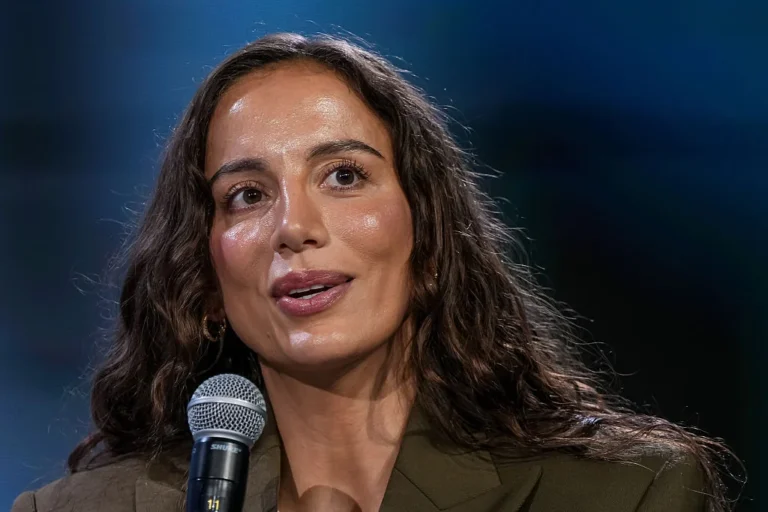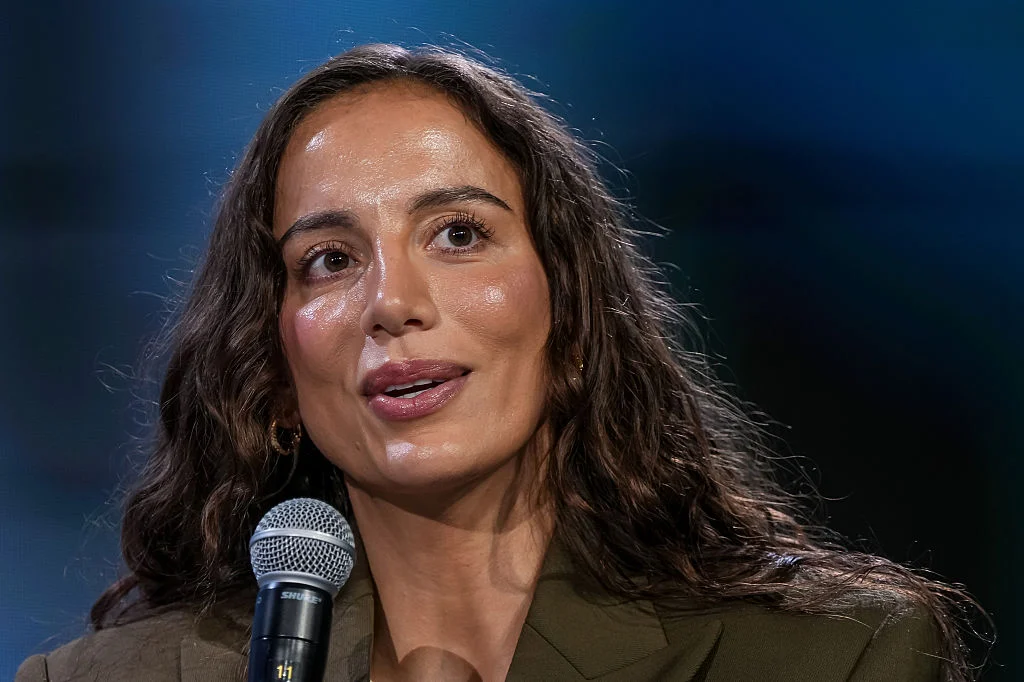
Thinking Machines, the artificial intelligence (AI) laboratory founded in early 2025 by former OpenAI Chief Technology Officer Mira Murati, is currently engaged in advanced discussions to secure a substantial funding round of $1 billion. This prospective investment aims to value the burgeoning company at a minimum of $40 billion, as reported by The Information on Thursday, September 3, 2026. Sources close to the negotiations, corroborated by The Information’s reporting, indicate that Accel, an existing backer of Thinking Machines, is in talks to lead this significant fundraising effort. The potential new capital infusion comes at a critical juncture for the company, as it seeks to solidify its market position and accelerate its ambitious research and development initiatives within the intensely competitive AI landscape.
This proposed funding round, if successfully concluded, would position Thinking Machines as one of the most highly valued privately held AI enterprises globally. However, it also represents a notable adjustment from the company’s earlier financial aspirations. Late last year, Thinking Machines was reportedly targeting a higher valuation of $50 billion. The current negotiations at a $40 billion valuation suggest a recalibration of market expectations or a strategic decision by the company and its investors, reflecting a maturing, and perhaps more discerning, investment climate within the AI sector.
Further insights into the company’s financial standing reveal that Thinking Machines currently boasts an annual revenue run rate exceeding $100 million, according to a source intimately familiar with the company’s financial data. When juxtaposed with the proposed $40 billion valuation, this revenue figure translates into an extraordinarily high revenue multiple. Such multiples are not uncommon in the nascent and rapidly evolving AI industry, where valuations are often predicated more on future potential, technological breakthroughs, and the intellectual capital of the founding team than on immediate profitability or established revenue streams. Nevertheless, this particular multiple is likely to draw considerable scrutiny from potential investors and market analysts alike, demanding robust justification based on projected growth, market penetration, and proprietary technology.
As of the time of reporting, neither Accel nor Thinking Machines has immediately responded to requests for comment regarding the ongoing funding discussions. This silence is typical for companies in the midst of sensitive financial negotiations, where discretion is often paramount until official announcements can be made.
The Genesis of Thinking Machines: A Star-Studded Launch
The founding of Thinking Machines in early 2025 was met with considerable anticipation and media attention, largely owing to the pedigree of its founder, Mira Murati. Murati, a pivotal figure in the development of OpenAI’s groundbreaking models like ChatGPT and DALL-E, brought with her an unparalleled understanding of frontier AI research and development, as well as a reputation for visionary leadership. Her departure from OpenAI, a company she helped steer to global prominence, to launch her own venture signaled a significant shift in the AI talent landscape and ignited speculation about her ambitions.
Murati was not alone in her entrepreneurial endeavor. She was joined by a cohort of highly regarded former OpenAI researchers and engineers, whose collective expertise and experience immediately lent credibility and a formidable competitive edge to Thinking Machines. This concentration of top-tier talent was a primary factor in attracting early investor interest and fueling the company’s initial, aggressive valuation targets. The promise of building the next generation of AI, unencumbered by the existing structures or strategic directions of larger, more established players, was a powerful draw for both talent and capital.
Record-Breaking Seed Funding and Early Ambitions
The initial investor confidence in Thinking Machines was unequivocally demonstrated in its prior fundraising round. The startup secured an astonishing $2 billion in seed financing, a sum that stands as one of the largest seed rounds in venture capital history across any industry, let alone AI. This monumental investment valued the nascent company at an impressive $12 billion, underscoring the extraordinary belief investors placed in Murati’s vision and the capabilities of her founding team.
The $2 billion seed round was spearheaded by Andreessen Horowitz (a16z), a venture capital firm renowned for its early and often prescient investments in transformative technology companies. They were joined by a consortium of other prominent investors, including Nvidia, a leading designer of graphics processing units (GPUs) essential for AI computation; GV (formerly Google Ventures), the venture capital arm of Alphabet; Lightspeed Venture Partners, a global multi-stage venture capital firm; and Conviction Partners. The collective participation of such influential players signaled not just financial backing but also strategic partnerships and access to crucial resources within the AI ecosystem.
At the time, investors largely backed the round based on the "pedigree" of Murati and the former OpenAI researchers who had joined her. This reflects a common trend in early-stage, high-tech investments, where the human capital and intellectual property of the founding team are often the most valuable assets, particularly when the product is still in its nascent stages. The market was experiencing an unprecedented AI boom, with investors eager to place bets on companies led by individuals with proven track records in developing disruptive AI technologies. This "gold rush" mentality contributed significantly to the willingness of VCs to commit such vast sums at high valuations, anticipating exponential growth and market dominance.
Strategic Product Launch: Inkling and the Tinker Platform
In July 2026, Thinking Machines made a tangible stride in its product development journey by introducing Inkling, an open-weight model. This launch provided the first public glimpse into the company’s technological direction and its strategy for market penetration and revenue generation. Inkling operates as an open-weight model, a strategic choice that differentiates it from purely proprietary, closed-source models. Open-weight models allow developers and enterprises to access and often modify the model’s underlying architecture, fostering a collaborative ecosystem and potentially accelerating adoption.
The revenue model for Inkling is designed around usage-based compute fees. Customers can adapt the Inkling model on their proprietary data using Thinking Machines’ proprietary Tinker platform. This approach offers several advantages: it allows enterprises to leverage a sophisticated AI model while maintaining control over their sensitive data, and it provides Thinking Machines with a scalable revenue stream tied directly to the utility and processing demands of its platform. The Tinker platform itself is positioned as a powerful, flexible environment for enterprises to customize, deploy, and manage AI solutions tailored to their specific needs, potentially carving out a niche in the increasingly crowded enterprise AI market. This strategy suggests a focus on practical, adaptable AI solutions rather than purely foundational model development, aiming to solve real-world business challenges.
Navigating Talent Dynamics and Competitive Pressures
Despite its impressive launch and significant financial backing, Thinking Machines has not been immune to the challenges inherent in building a cutting-edge AI company, particularly regarding talent retention. The company has experienced several high-profile departures since its inception. Notably, some of its co-founders, including Lilian Weng and Luke Metz, have chosen to return to OpenAI. Luke Metz, in particular, was reported to have subsequently moved to Google after his return to OpenAI, highlighting the intense competition for top AI talent across the industry’s leading players.

These departures, especially by co-founders, can signal various underlying dynamics, from differing strategic visions to the allure of returning to a more established ecosystem. For a startup built heavily on the "pedigree" of its founding team, such exits can raise questions among investors and within the industry about leadership stability and the long-term cohesiveness of the core research team. The phenomenon of top AI researchers moving between companies like OpenAI, Google, and now Thinking Machines underscores the fluidity of the AI talent market and the constant battle for the brightest minds, who are often driven by opportunities for impact, access to computational resources, and intellectual freedom. Successfully navigating these talent dynamics will be crucial for Thinking Machines to maintain its innovative edge and deliver on its ambitious promises.
Valuation Metrics: Scrutiny on Revenue Multiples
The proposed $40 billion valuation, when viewed against an annual revenue run rate of over $100 million, implies a revenue multiple of approximately 400x. To put this into perspective, even for high-growth tech companies, revenue multiples typically range from 10x to 50x, with exceptional cases reaching 100x during peak market euphoria. A 400x multiple is exceedingly high, even for a sector as hot as AI.
This valuation metric signals that investors are primarily valuing Thinking Machines on its future potential, intellectual property, and strategic market positioning rather than its current financial performance. It reflects a belief that the company’s technology, led by Murati, has the potential to generate massive revenue streams in the coming years, perhaps disrupting existing markets or creating entirely new ones. However, such a high multiple also places immense pressure on the company to execute flawlessly, achieve rapid and sustained growth, and quickly scale its revenue to justify the investment. Any missteps or slower-than-anticipated market adoption could lead to significant downward pressure on future valuations.
Industry analysts suggest that while AI companies have commanded premium valuations due to their disruptive potential, a 400x multiple indicates a deep level of conviction from its lead investor, Accel. It also potentially reflects the scarcity of truly foundational AI companies led by such prominent figures. The challenge for Thinking Machines will be to translate this investor confidence into tangible products, broad market adoption, and a revenue trajectory that begins to close the gap between its current revenue and its aspirational valuation.
The Broader AI Investment Landscape
The current funding discussions for Thinking Machines occur within a dynamic and evolving AI investment landscape. The initial fervor and speculative valuations seen in 2023 and early 2024, often dubbed the "AI gold rush," have begun to show signs of maturation. While investment in AI remains robust, there is a growing trend towards greater investor prudence and an increased focus on sustainable business models, clear paths to profitability, and verifiable revenue streams.
This shift is partly driven by the sheer volume of AI startups entering the market, making differentiation and defensibility more critical. Furthermore, the immense computational costs associated with developing and deploying advanced AI models necessitate significant capital, pushing companies to demonstrate a clear return on investment. The slight adjustment in Thinking Machines’ target valuation from $50 billion to $40 billion could be interpreted as a reflection of this broader market trend – a move towards more realistic valuations that still acknowledge transformative potential but demand more rigorous justification.
Despite this recalibration, the fact that a $1 billion round at a $40 billion valuation is still on the table underscores the continued, albeit more disciplined, investor appetite for disruptive AI technologies. Investors are increasingly looking for companies that offer unique intellectual property, strong go-to-market strategies, and leadership teams capable of navigating the complex technical and commercial challenges of the AI industry.
Implications for Thinking Machines and the AI Sector
For Thinking Machines, successfully closing this $1 billion funding round would provide a substantial war chest to fuel its ambitious research and development agenda. This capital is crucial for attracting and retaining top talent, acquiring necessary computing infrastructure, and expanding its Tinker platform and Inkling model’s capabilities. It would also send a strong signal to the market about the company’s resilience and continued investor backing, despite the competitive pressures and talent fluctuations.
The implications for the broader AI sector are also significant. This funding round, particularly its valuation trajectory, serves as a bellwether for the health of the private AI market. It suggests that while the stratospheric valuations of the initial AI boom might be moderating, substantial capital is still available for companies with compelling technology, strong leadership, and a clear vision. It also reinforces the idea that strategic investors like Accel are willing to make long-term bets on foundational AI companies, even if those bets carry high revenue multiples.
Moreover, the focus on Inkling as an open-weight model generating revenue through usage-based fees on the Tinker platform highlights a growing trend in the AI industry: moving beyond simply developing foundational models to creating platforms that enable enterprises to customize and deploy AI solutions responsibly and efficiently. This approach could be key to unlocking broader enterprise adoption of AI, transforming how businesses operate across various sectors.
Looking Ahead: Sustaining Innovation and Growth
As Thinking Machines moves forward, its primary challenges will revolve around sustaining its rapid pace of innovation, effectively competing for and retaining top-tier talent against industry giants, and demonstrating a clear path to scaling its revenue to align more closely with its valuation. The Tinker platform and Inkling model represent promising avenues for growth, especially in the enterprise sector where demand for tailored AI solutions is burgeoning.
Mira Murati’s leadership will be paramount in navigating these complexities. Her ability to articulate a compelling vision, foster a culture of innovation, and strategically position Thinking Machines in a rapidly evolving market will determine its long-term success. The AI industry is still in its early stages, with immense potential for disruption and value creation. Thinking Machines, with its substantial funding and formidable talent, is well-positioned to be a key player in shaping this future, provided it can execute on its ambitious promises and solidify its market position amidst intense competition and evolving investor expectations. The coming months will undoubtedly offer further insights into how this pioneering AI lab translates its vast potential into tangible market impact and sustainable financial growth.
About the Author