The year 2023 has emerged as a watershed moment for artificial intelligence, marking the transition of generative models from experimental laboratory projects to essential drivers of global economic productivity. As industries grapple with the rapid integration of automated systems, a specific suite of tools has risen to the forefront, fundamentally altering how professionals approach writing, coding, visual design, and data management. This technological surge is not merely a trend but a structural shift in the digital economy, characterized by the democratization of high-level computing power.
The 2023 AI Landscape: Context and Chronology
The current proliferation of AI tools can be traced back to a series of pivotal breakthroughs in transformer-based neural networks. While AI research has been ongoing for decades, the timeline accelerated significantly in late 2022 with the public release of ChatGPT by OpenAI. This event triggered what market analysts describe as an "AI arms race" among Big Tech firms, including Google, Microsoft, and Meta.
By early 2023, the focus shifted from pure research to utility. Organizations began seeking ways to mitigate the "blank page" problem in content creation and the "bottleneck" effect in software development. According to data from venture capital firm Sequoia Capital, investment in generative AI startups reached over $12 billion in the first half of 2023 alone, underscoring the massive financial backing behind these innovations.
Analysis of the Leading AI Tools
The following ten tools represent the pinnacle of AI utility in 2023, categorized by their primary function and impact on professional workflows.
1. ChatGPT: The Standard-Bearer for Conversational AI
Developed by OpenAI, ChatGPT remains the most influential tool in the current market. Utilizing the GPT-3.5 and GPT-4 architectures, it functions as a sophisticated large language model (LLM) capable of generating human-like text across a vast spectrum of domains.
Professional Utility: Beyond simple chat, it is used for summarizing legal documents, drafting emails, and simulating interview scenarios. However, the phenomenon of "hallucinations"—where the AI confidently asserts false information—remains a critical concern for users in high-stakes environments.
2. DALL-E: Redefining Digital Visuals
DALL-E, another OpenAI flagship, allows users to generate high-fidelity images from natural language descriptions. The 2023 iterations of this tool have significantly improved spatial reasoning and detail accuracy.
Market Impact: The tool has disrupted the stock photography and graphic design industries. While it offers unprecedented speed for conceptual artists, it has also sparked intense debate regarding copyright and the ethical use of training data sourced from human artists.
3. Lumen5: Automating Video Production
As video continues to dominate social media and corporate marketing, Lumen5 utilizes AI to bridge the gap between text and motion. The platform analyzes text-based content, such as blog posts, and automatically generates a video storyboard, complete with relevant stock footage and music.
Efficiency Data: Marketing teams using Lumen5 report a reduction in video production time by up to 80%, allowing for a "content-first" strategy where written ideas are repurposed into visual assets almost instantaneously.
4. Grammarly: From Correction to Generation
Long known for its spell-check capabilities, Grammarly integrated generative AI in 2023 through its "GrammarlyGO" feature. This allows the tool to not only fix errors but to rewrite entire paragraphs to adjust tone, clarity, and length.
Contextual Analysis: By embedding directly into browsers and word processors, Grammarly acts as a real-time editor. Its primary value proposition in 2023 is the "Tone Detector," which helps remote workers navigate the nuances of digital communication to avoid misunderstandings.
5. OpenAI Codex: The Engine of Automated Programming
OpenAI Codex is the specialized model that powers GitHub Copilot. It translates natural language into code, supporting dozens of programming languages including Python, JavaScript, and C++.
Developer Productivity: A study by GitHub found that developers using Codex-based tools completed tasks 55% faster than those who did not. This tool is effectively lowering the barrier to entry for software engineering, though it requires human oversight to ensure security and logic integrity.
6. Tabnine: Private and Secure Code Completion
While Codex relies on a broad cloud-based model, Tabnine offers an alternative for enterprises concerned with data privacy. It provides AI-driven code completion that can be trained on a company’s private codebase.
Operational Security: This tool is particularly favored by financial institutions and healthcare providers who require the efficiency of AI but cannot risk their proprietary code being processed on public servers.
7. Jasper AI: Scaling Enterprise Content
Jasper AI is specifically tailored for marketing teams and copywriters. Unlike general-purpose bots, Jasper includes templates for SEO-optimized blog posts, Facebook ads, and YouTube scripts.
Economic Growth: Jasper’s rise, supported by a $125 million Series A funding round, highlights the demand for "brand-aware" AI. It allows companies to upload their "brand voice" guidelines so the generated content remains consistent across different marketing channels.
8. Surfer SEO: Data-Driven Content Strategy
Surfer SEO integrates AI to analyze search engine results pages (SERPs) in real-time. It provides writers with a "Content Score" based on keyword density, structure, and readability compared to top-ranking competitors.
Strategic Implications: In an era where AI-generated content is flooding the internet, Surfer SEO provides the analytical rigor needed to ensure that content—whether human or AI-written—actually reaches its intended audience through organic search.
9. Zapier: The Glue of the AI Ecosystem
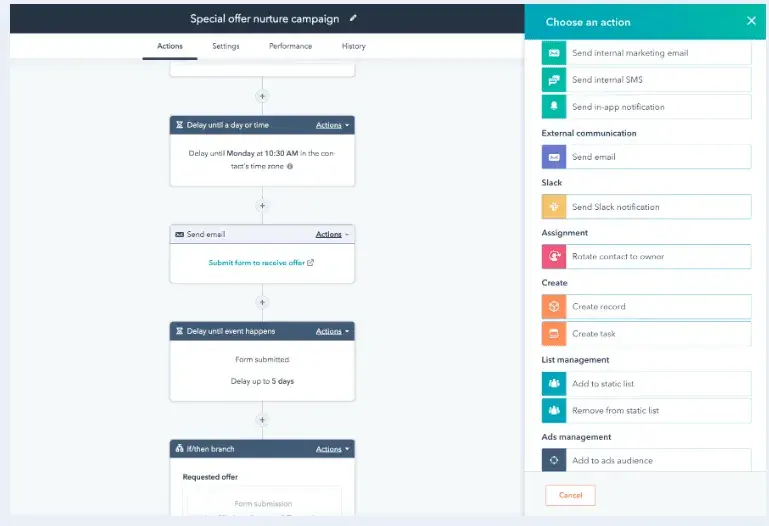
Zapier is an automation platform that connects different web applications. In 2023, it introduced "Natural Language Actions," allowing users to build complex automations (e.g., "When I get a new lead in Gmail, summarize it with ChatGPT and add it to Slack") using simple English commands.
Workflow Integration: Zapier’s role is crucial because it allows disparate AI tools to work in concert, creating a seamless "AI stack" that requires minimal manual intervention.
10. Compose AI: The Evolution of Autocomplete
Compose AI is a browser extension that focuses on "short-form" generation. It learns a user’s writing style to offer autocompletions for sentences in emails and documents, aiming to reduce the physical effort of typing by up to 40%.
Statistical Insights and Market Reactions
The adoption of these tools is reflected in recent labor statistics and corporate reports. A 2023 report by Goldman Sachs estimated that generative AI could automate tasks equivalent to 300 million full-time jobs, though the firm noted that this is more likely to lead to "task augmentation" rather than wholesale job replacement.
Industry leaders have expressed a mixture of optimism and caution. Satya Nadella, CEO of Microsoft, has stated that AI is the "defining technology of our time," likening its impact to the invention of the graphical user interface. Conversely, figures such as Elon Musk and various AI safety researchers have called for robust regulatory frameworks to prevent the misuse of these tools in spreading disinformation or creating cybersecurity threats.
Implications for the Future of Work
The emergence of these ten tools indicates a shift toward "augmented intelligence," where the value of a human professional is no longer found in the execution of repetitive tasks but in the "curation" and "prompting" of AI systems.
- Skill Acquisition: The most valuable skill in the 2023 job market is becoming "prompt engineering"—the ability to communicate effectively with AI models to elicit the best possible output.
- Quality Control: As the volume of content increases, the premium on "fact-checking" and "human-in-the-loop" verification is rising.
- Economic Disparity: There is a growing divide between "AI-enabled" firms that are seeing massive gains in margins and traditional firms that are slower to adopt these technologies.
Conclusion
The top AI tools of 2023—ranging from the conversational prowess of ChatGPT to the logistical automation of Zapier—represent a fundamental retooling of the global workforce. These applications have moved beyond the novelty phase, proving their worth through measurable increases in speed, creativity, and analytical depth. However, as these tools become more integrated into daily life, the responsibility of the user to navigate the ethical and factual challenges they present has never been greater. The future of business and technology will not be determined by AI alone, but by the synergy between human intuition and machine efficiency.
About the Author