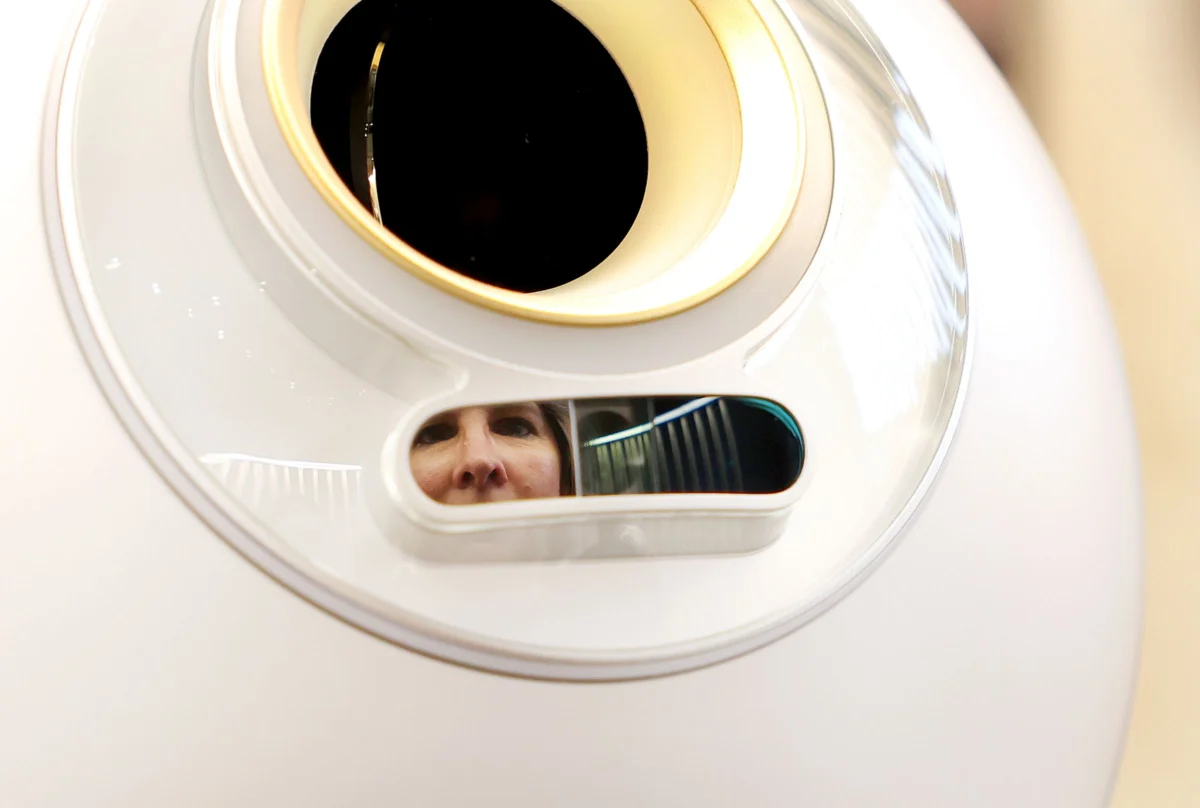
At a high-profile "Lift Off" event held in San Francisco on Friday, the World project—a biometric identity initiative co-founded by OpenAI CEO Sam Altman—announced a major global expansion of its partnership with the dating application Tinder. This collaboration marks a significant milestone for the project, which recently rebranded from Worldcoin to World, as it seeks to move its iris-scanning technology from the fringes of the cryptocurrency world into the center of mainstream digital life. Under the new agreement, Tinder users worldwide will have the option to display a digital badge on their profiles, certifying that they are "verified humans." To obtain this badge, users must undergo a biometric scan via one of the company’s proprietary "Orbs," the glossy, silver-and-white spherical devices designed to capture high-resolution images of the human iris to create a unique digital identity known as a World ID.
The Global Expansion of Biometric Dating Verification
The rollout to Tinder’s global user base follows a successful pilot program conducted in Japan earlier this year. The integration is designed to address a growing concern in the digital dating landscape: the proliferation of sophisticated bots and AI-generated personas used for "catfishing," financial scams, and harassment. By leveraging the World ID, Tinder aims to provide an additional layer of trust for its users, allowing them to filter for suitors who have proven their physical existence through World’s biometric hardware.
To incentivize adoption, Tools for Humanity, the developer behind the World project, announced that Tinder users who verify their accounts through an Orb will receive five free "boosts." In the economy of dating apps, boosts are a premium feature typically requiring payment; they increase a user’s profile visibility by up to 10 times for a 30-minute window. This move suggests that Tools for Humanity is pivoting toward a "value-add" model to attract users, moving beyond the initial strategy of offering cryptocurrency tokens as the primary sign-up incentive.
A Strategic Rebrand and the Evolution of World
The transition from "Worldcoin" to "World" represents a fundamental shift in the company’s identity. When Sam Altman and Alex Blania founded the project in 2019, it was initially perceived as a universal basic income (UBI) experiment powered by a new cryptocurrency. However, as generative artificial intelligence has advanced—driven in large part by Altman’s other venture, OpenAI—the project’s focus has sharpened on the "Proof of Personhood."
In an era where large language models (LLMs) can mimic human text and deepfake technology can replicate human likeness, the ability to distinguish between a biological human and an AI agent has become a critical infrastructure challenge. World’s leadership argues that the internet is rapidly approaching a "post-human" state where traditional verification methods, such as CAPTCHAs or email confirmation, are no longer sufficient. The World ID is positioned as a decentralized solution that allows individuals to prove they are human without needing to share sensitive personal information, such as government-issued IDs or home addresses, with every platform they visit.
Expanding the Enterprise Ecosystem: Zoom, Docusign, and Reddit
The Tinder announcement was part of a broader suite of enterprise partnerships unveiled during the San Francisco event. Tools for Humanity is aggressively seeking to integrate World ID into the tools used for professional and social interaction.
The videoconferencing giant Zoom has integrated World ID functionality, allowing meeting hosts to require participants to be "World Verified" before joining a call. This feature is intended to prevent "Zoom-bombing" and ensure that corporate communications remain secure from AI-driven intruders. Similarly, Docusign, the industry leader in electronic signatures, will allow users to require biometric identity verification for high-stakes contracts, adding a layer of non-repudiation that traditional digital signatures may lack.
In the realm of social media, Tiago Sada, Chief Product Officer at Tools for Humanity, confirmed that the company is in talks with several major platforms. Notably, Reddit has begun testing World ID as a mechanism to help moderators and users distinguish between human-led discussions and bot-driven influence campaigns. Sada emphasized that these partnerships are the key to making World a "mainstream identity-verification technology," drawing a parallel to the early days of Apple’s Face ID, which faced initial skepticism before becoming a global standard for mobile security.
Tackling the Bot Problem in Ticketing and Commerce
One of the most practical applications introduced at the event was "Concert Kit," a tool designed to solve the chronic issues plaguing the live entertainment industry. Bot-driven scalping has become a primary grievance for music fans, with automated programs often purchasing entire blocks of tickets within seconds of their release.
World’s Concert Kit allows artists to reserve ticket tiers specifically for verified humans. This feature will see its first major test during the upcoming Bruno Mars World Tour, featuring Anderson .Paak. On Friday night in San Francisco, Anderson .Paak, performing under his alias DJ Pee .Wee, was scheduled to play a "verified-humans-only" show to demonstrate the technology’s efficacy in creating a bot-free ticketing environment.
Furthermore, World is expanding its utility into the "agentic web." While the project seeks to verify humans, it also recognizes the role of AI agents. The company recently launched tools that allow a limited number of AI bots to operate on a human’s behalf, provided they are linked to a verified World ID. Tools for Humanity is currently working with e-commerce platform Shopify and cloud platform Vercel to ensure that these "human-backed agents" can navigate digital services without being flagged as malicious traffic.
Growth Metrics and Global Regulatory Hurdles
Despite the ambitious expansion, World continues to face significant headwinds, particularly from government regulators concerned about data privacy and biometric security. Since its launch, the project has reported a steady increase in users, growing from 12 million verified individuals last year to 18 million today. However, this growth has been unevenly distributed due to legal challenges.
In 2023, the Kenyan government suspended World’s operations, citing concerns over the security and financial implications of iris scanning. While some restrictions in various jurisdictions have been described as temporary pauses for investigation, other countries have taken a harder line. Spain and Portugal issued temporary bans earlier this year to assess compliance with the General Data Protection Regulation (GDPR), while Brazil has maintained a long-term ban that prevents the startup from deploying Orbs within its borders.
World’s leadership maintains that these regulatory issues stem from a misunderstanding of the technology. According to Sada, the World ID system is "one of the most private things you’ve ever used." The company explains that the Orb does not store the actual image of the iris. Instead, it processes the image locally to create a cryptographic hash—a string of numbers that represents the unique patterns of the eye—and then deletes the original image. This hash, the company claims, cannot be used to reconstruct the iris image or identify the person in the traditional sense, providing a "privacy-first" approach to biometrics.
The Broader Impact: A Shift in Digital Identity
The implications of World’s expansion extend beyond dating and concert tickets. If successful, the project could redefine the fundamental architecture of the internet. For decades, the "free" internet has relied on an advertising model that often incentivizes bot traffic and data harvesting. A shift toward a "Verified Human" internet could potentially disrupt this model, placing a higher premium on authentic human engagement.
However, critics remain wary. Privacy advocates argue that the centralization of biometric data—even in a hashed, decentralized format—creates a "honeypot" for hackers and state actors. There are also ethical concerns regarding the "digital divide," as those without access to an Orb or those living in countries where the technology is banned could find themselves locked out of an increasingly "verified" digital economy.
As Sam Altman continues to lead both OpenAI and World, industry analysts are closely watching for potential synergies between the two companies. While Sada reiterated that OpenAI and Tools for Humanity remain distinct entities, the philosophical link is clear: as Altman’s AI company makes it harder to tell who is human, his identity company provides the tool to solve the very problem the AI has created.
Timeline of Key World Project Milestones
- 2019: Worldcoin is founded by Sam Altman, Alex Blania, and Max Novendstern with the goal of creating a global ID and financial network.
- 2021: The "Orb" is first revealed to the public, sparking initial debates over biometric privacy.
- July 2023: Worldcoin officially launches its token and identity platform globally.
- August 2023: Kenya becomes the first major country to suspend operations over data collection concerns.
- March 2024: Spain’s data protection agency (AEPD) orders a temporary halt to Worldcoin’s data collection.
- October 2024: The project rebrands from "Worldcoin" to "World" and announces major partnerships with Tinder, Zoom, and Docusign at the San Francisco "Lift Off" event.
As the World project moves into its next phase, the success of the Tinder integration will serve as a bellwether for consumer sentiment. Whether the average internet user is willing to trade an iris scan for a "Verified Human" badge and five dating boosts may determine the future of biometric identity in the age of artificial intelligence.
About the Author