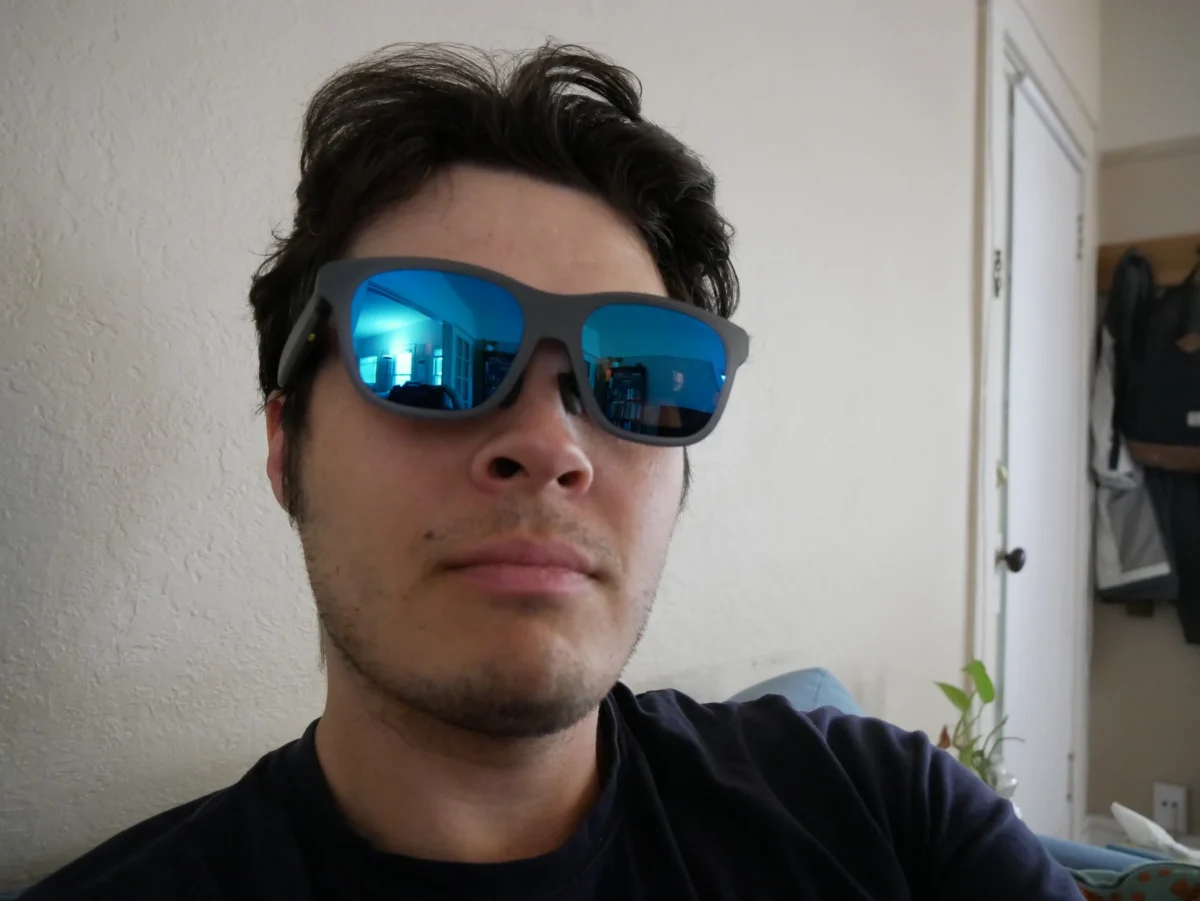
The landscape of personal entertainment and productivity is in constant flux, with wearable technology emerging as a significant frontier. XREAL, a company at the forefront of smart glasses development, has released its a01 model, a device positioned to offer consumers a novel way to consume media. This review delves into the a01’s capabilities, its limitations, and its place within the evolving augmented and virtual reality ecosystem, drawing parallels with its predecessors and anticipating future advancements.
XREAL a01: Unpacking the Hardware and Initial Impressions
The XREAL a01, launched in May of the current year, presents itself not as a fully fledged augmented reality (AR) headset, but rather as an external display solution. This distinction is crucial, as it differentiates the a01 from more complex and software-intensive AR devices like Meta’s Orion or Snap’s Spectacles. The a01 operates on a simpler premise: it functions as a portable, personal screen.
A key characteristic of the a01 is its reliance on external power. The device lacks an internal battery or power source, necessitating a USB-C cable connection to a host device. This host device – whether a laptop, smartphone, or handheld gaming console – not only powers the glasses but also provides the visual content. This design choice contributes to the a01’s accessible price point, reportedly around $300, making it a potentially attractive entry point into the immersive display market.
Optimized for Gaming, Targeted for Media Enthusiasts
While XREAL has highlighted the a01’s optimization for handheld gaming devices such as the Steam Deck, its marketing also prominently features its utility for movie and television viewing. For individuals, like the reviewer, who prioritize media consumption, this dual-purpose aspect holds considerable interest.
Initial testing involved connecting the a01 to a personal laptop and streaming content from the Criterion Channel. A viewing of David Lynch’s "Wild at Heart" provided an early demonstration of the visual fidelity. The experience, particularly during a scene featuring Nicolas Cage, offered a vivid, immersive quality.
The a01 is equipped with dual mini OLED panels, boasting a 1080p resolution and capable of delivering up to 1,600 nits of brightness. This specification suggests a potent visual output, characterized by vibrant colors. When aimed at a flat surface in a darkened environment, the effect can be likened to using a high-quality home projector or experiencing a drive-in movie, bringing users closer to an in-theater atmosphere.

The Immersion Paradox: Large Screen, Limited Utility?
Despite the impressive visual specifications, the a01 raises a fundamental question regarding its practical application in a media-consumption scenario: why wear glasses to watch a screen that is already playing on a nearby, larger display? XREAL contends that the glasses offer a superior sense of immersion, claiming the projected image is equivalent to viewing a 147-inch screen. However, the redundancy of watching content on the glasses while it simultaneously plays on a laptop screen positioned mere inches away prompts scrutiny of the device’s core purpose.
XREAL has also proposed the a01’s function as a "second monitor" or "wearable display." This concept, however, encounters practical limitations. The glasses are designed to project content so that it dominates the user’s field of vision. This makes it challenging to simultaneously view and interact with other applications, such as those on a laptop, while wearing the a01. This limitation could hinder productivity-focused use cases.
Connectivity and Portability: A Tale of Two Devices
The a01’s connectivity extends to smartphones, offering the potential for on-the-go entertainment. However, compatibility issues can arise, as demonstrated by the reviewer’s experience with an older iPhone model. The a01’s USB-C cable was not directly compatible with the iPhone’s port, necessitating an adapter. This highlights the importance of checking device compatibility before purchase.
When successfully connected to a smartphone, the a01 liberates users from the confines of a laptop’s portability limitations. This opens up possibilities for immersive viewing during travel, such as on airplanes or trains. The potential for entertainment extends even to casual movement, though the reviewer wisely cautions against using the glasses while walking in public due to safety concerns, such as the risk of traffic accidents.
Screen Mirroring and the Redundancy Loop
A significant caveat of the current smartphone integration is the reliance on screen mirroring. This means the smartphone’s display must remain active while the a01 is in use. This perpetuates the redundancy issue: a video plays on the glasses and simultaneously on the phone’s screen. While placing the phone in a pocket might seem like a solution, the risk of playback interruption due to movement remains a concern.
The XREAL Beam Pro: An Integrated Solution
To address some of these limitations, XREAL offers the Beam Pro, an optional accessory. This device functions as a portable streaming hub, essentially a mini-tablet onto which users can download content. By connecting the Beam Pro to the a01, users can create an isolated viewing experience without the need for a constantly active smartphone screen. However, this added functionality comes at an additional cost of approximately $200, increasing the overall investment.
Thermal Considerations: A Common Challenge
As with many wearable electronic devices, heat generation is a factor with the a01. Extended use can lead to a noticeable warming sensation on the bridge of the nose and around the eyes. This is a well-documented challenge in the XR industry, stemming from the density of computing components within compact form factors. While not unique to XREAL, this thermal output can be disconcerting for a device worn directly on the face.

Comfort and Design: A Step Forward
Despite the thermal concerns, the a01 is generally considered lightweight and comfortable to wear, especially when compared to some of its more cumbersome predecessors in the smart glasses market. A comparison with Snap’s Spectacles, which are noted for their significantly heavier build, underscores the a01’s progress in ergonomic design.
The Trajectory of XREAL: From a01 to Project Aura
XREAL’s commitment to iterative product development is evident in its ongoing efforts to refine its smart glasses technology. The company appears to be addressing some of the inherent limitations of the a01 in its upcoming device, codenamed Project Aura. Glimpses of Aura at Google I/O earlier this year suggest a significant leap forward in user experience, promising enhanced immersion and convenience.
Project Aura is slated to run on Android XR, an operating system developed collaboratively by Google and Samsung. Key features include native hand tracking, absent in the a01, and access to the Google Play Store, which will unlock a broader range of interactive capabilities and AR potential. Furthermore, Aura incorporates a tethered puck that serves as both a charging source and a compute node. This design allows for greater mobility, eliminating the need to remain tethered to a separate device for power and processing, a distinct advantage over the a01.
The Cinephile’s Perspective: Screen Size Matters
From the perspective of a dedicated movie enthusiast, the a01’s form factor presents a fundamental mismatch with traditional viewing preferences. The allure of cinema is often tied to the experience of a large, enveloping screen. In an era where large-format televisions, including 4K OLED displays, are widely available and increasingly affordable, the a01’s relatively small projected image struggles to compete with the comfort and satisfaction of a home viewing setup on a 55-inch screen, let alone the unparalleled immersion of a physical movie theater. While the a01 offers a novel sense of immersion through its proximity to the eyes, it does not, in its current iteration, replace the optimal viewing experience provided by traditional displays.
A Glimpse into the Future of Wearable Displays
The XREAL a01 serves as an important case study in the ongoing evolution of wearable display technology. It represents an industry that is actively seeking its place in the consumer market, grappling with the challenges of balancing functionality, comfort, and price. The development from the a01 to the anticipated Project Aura signals a clear direction toward more integrated, capable, and user-friendly augmented reality experiences. As XREAL continues to innovate, the definition of personal entertainment and productivity may well be redefined, prompting a reevaluation of our preferences for how we consume media and interact with digital content. The journey of XREAL’s smart glasses, from the current iteration to future advancements, will be a critical indicator of the broader consumer adoption of AR and VR technologies.
About the Author